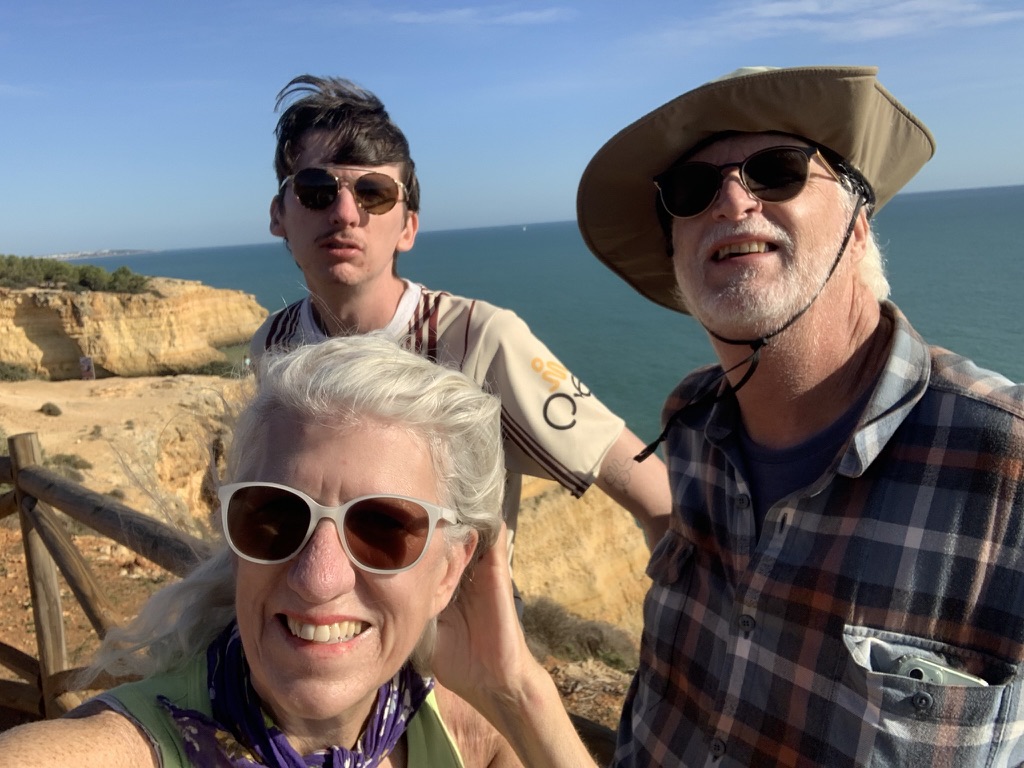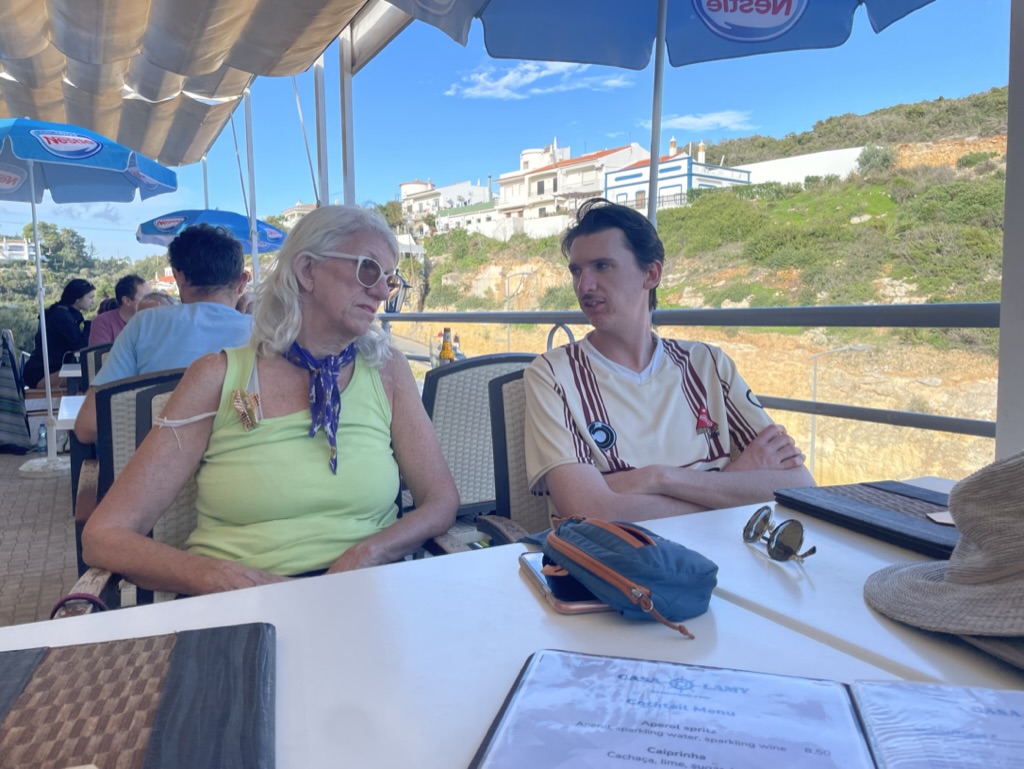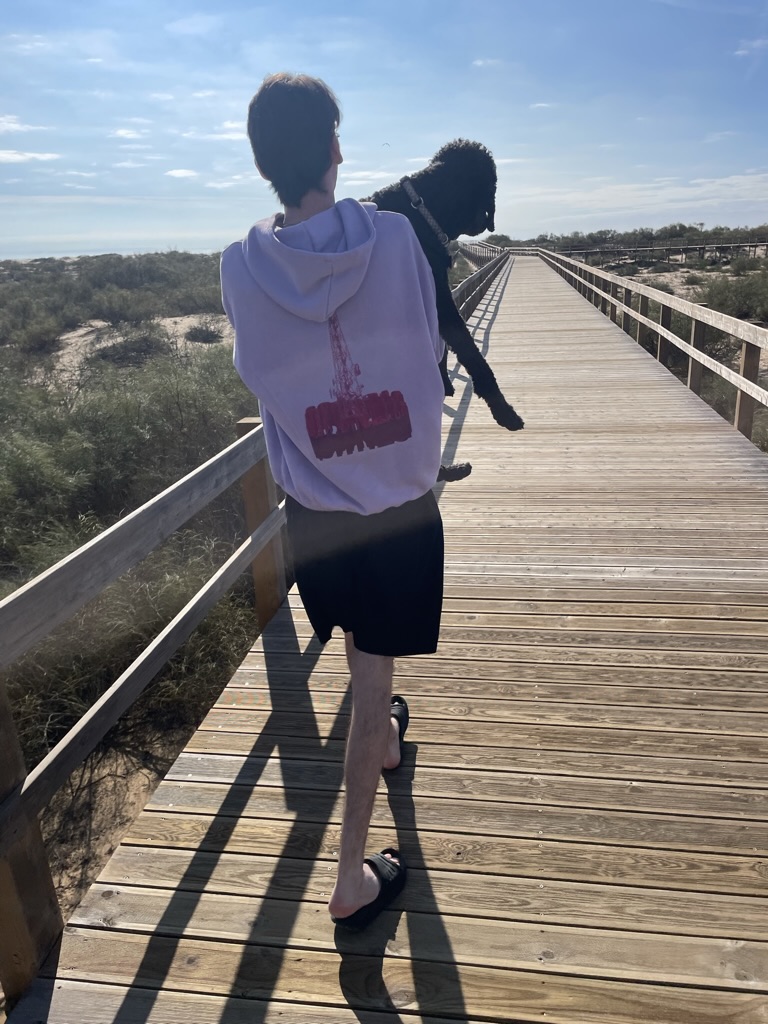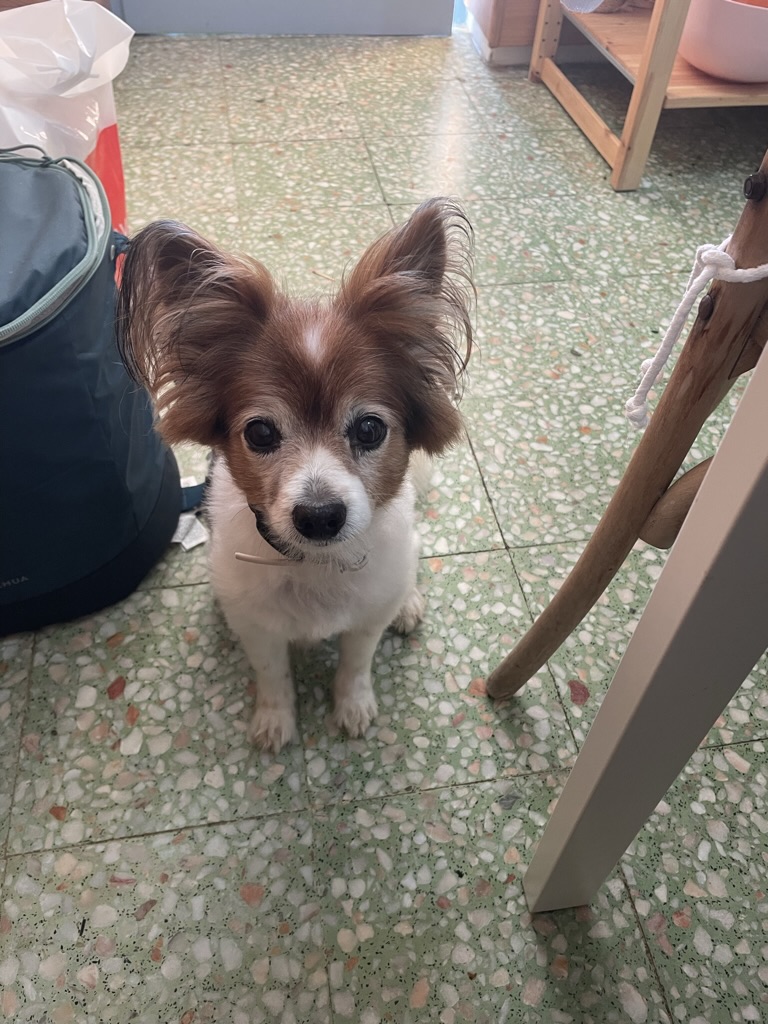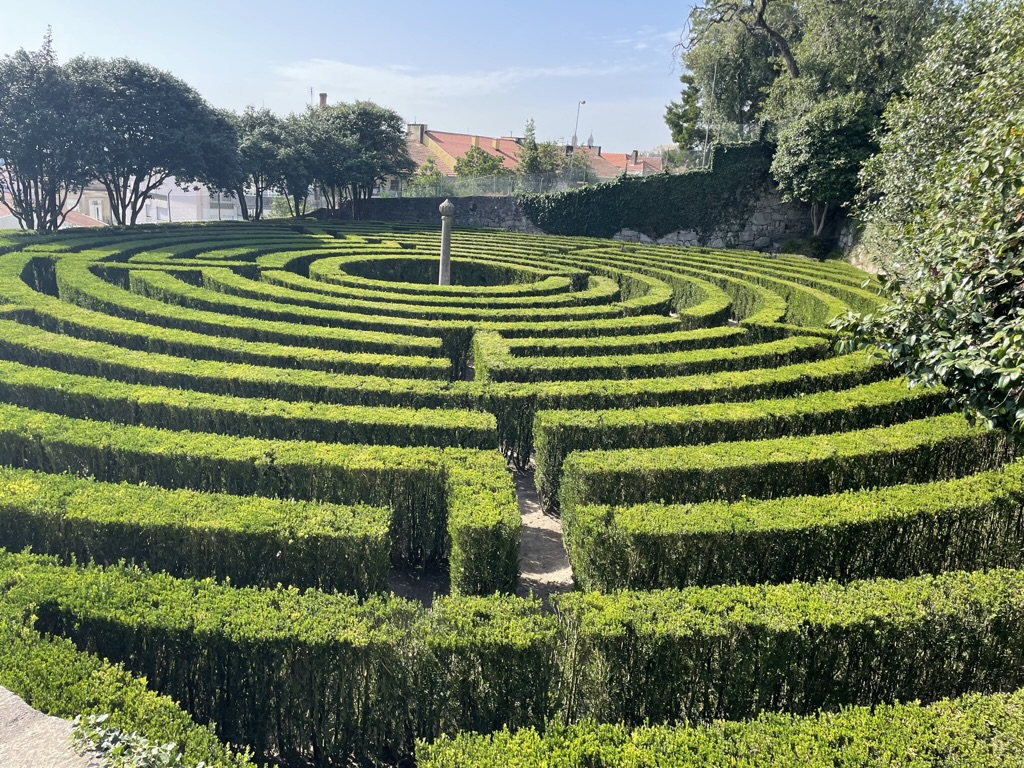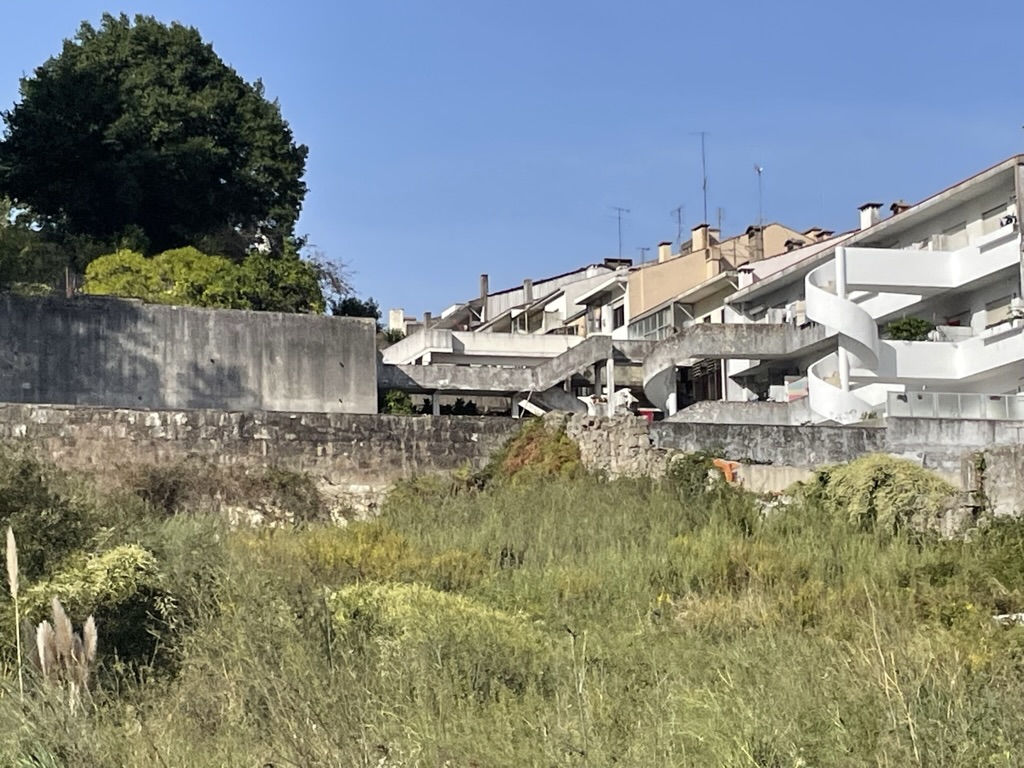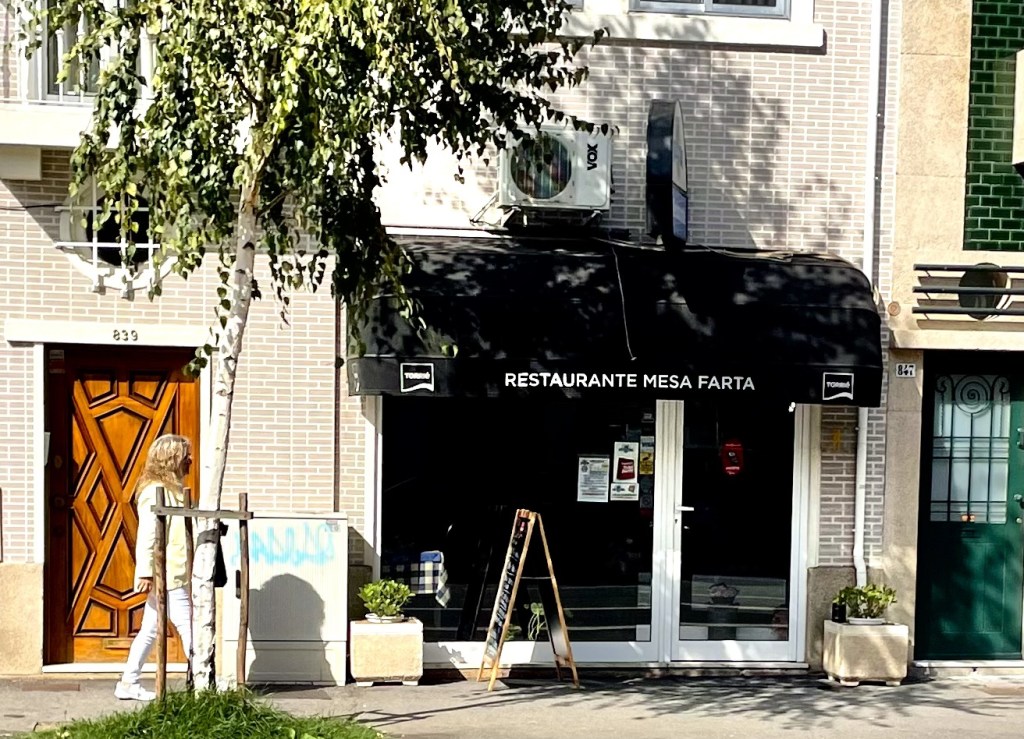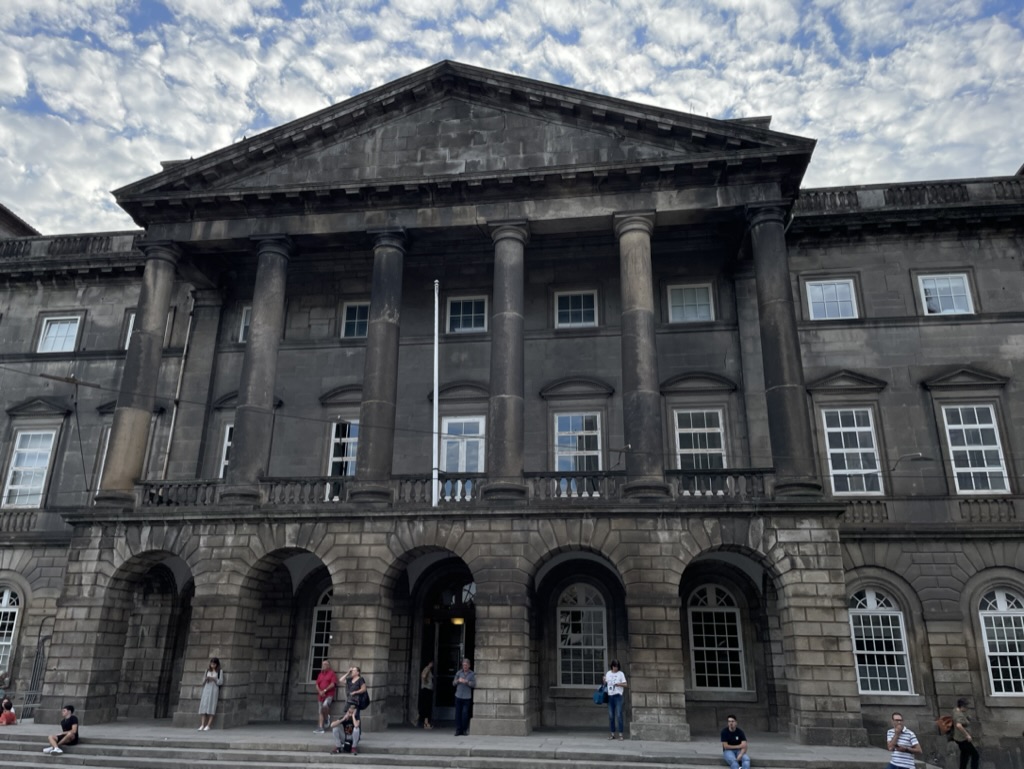
A bientôt…

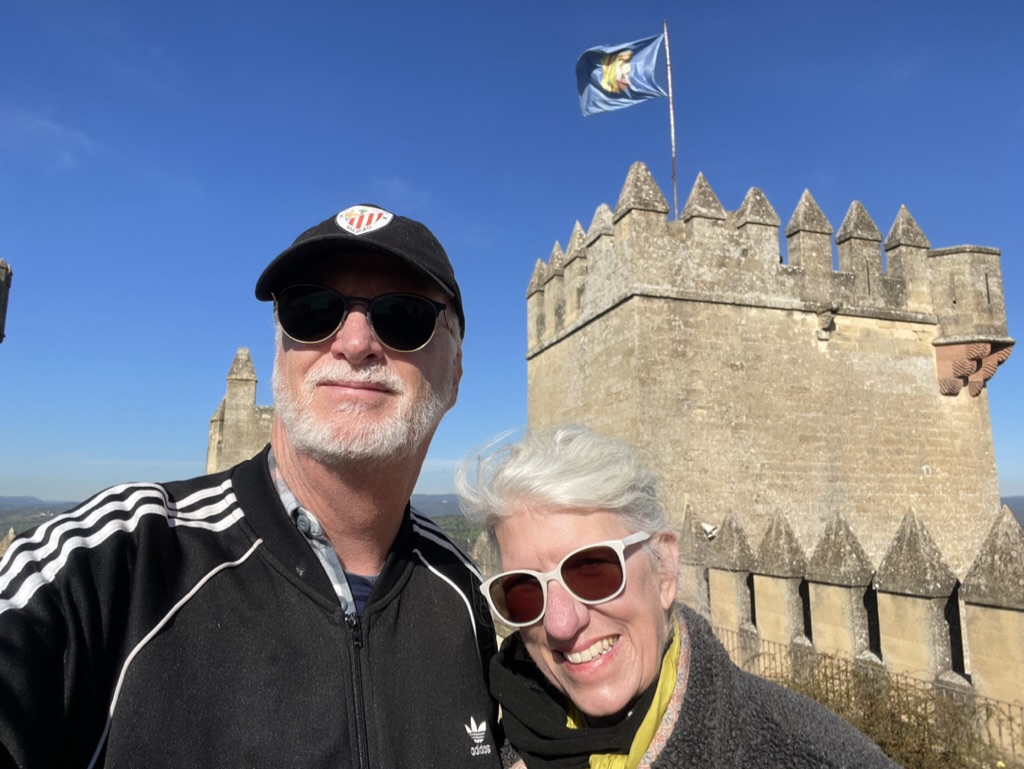
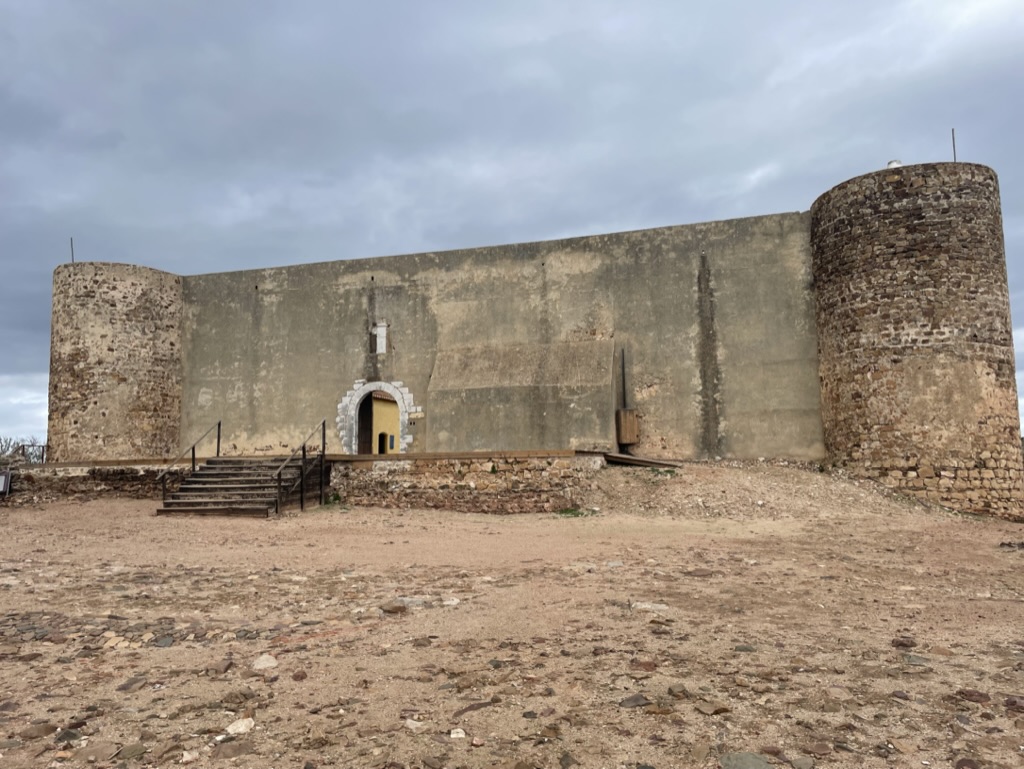
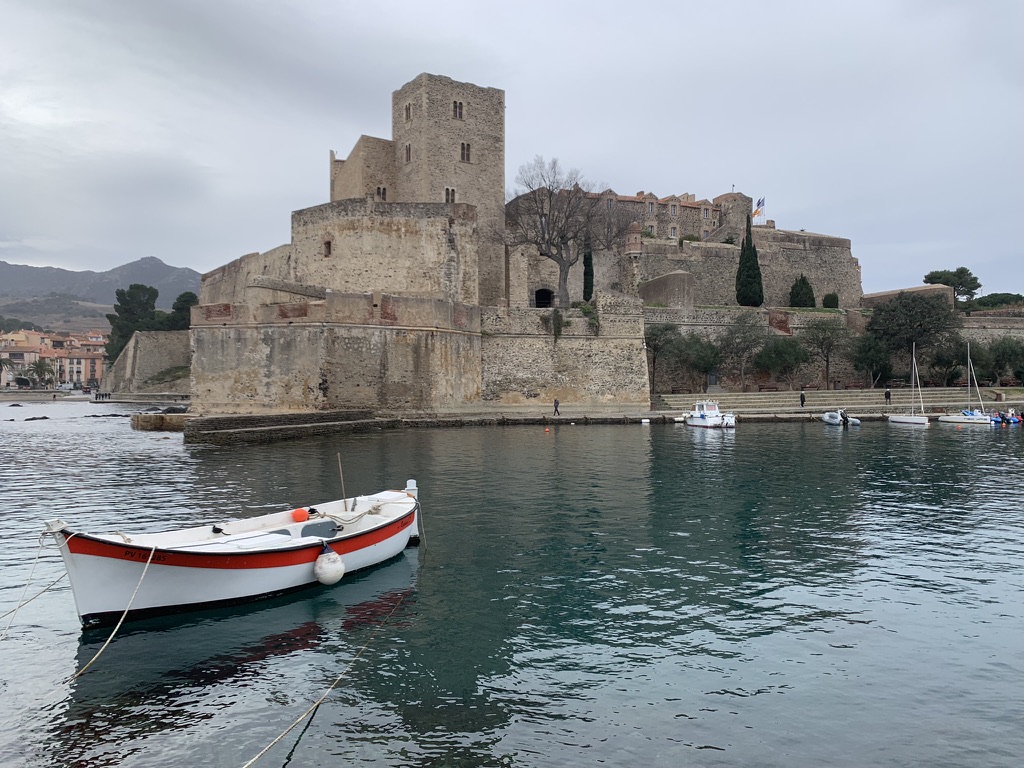
Here is a pic of the exceptional Royal Castle of Collioure. This time of year it’s very quiet and devoid of tourists.

How do you say goodbye in French?  Nah, JK, I know it. It’s just hard to express it at this moment, although it is one of a pocketful of French words and phrases I did actually manage to master during my magical stay in Port-Vendres, France. Saying goodbye has always been a difficult thing for me. I’m not good with transitions: I will famously linger at a party and say goodbye to everyone twice just to keep from leaving. That’s me right now. I’m saying goodbye to this little town and an entire country! 

I just want to preface this post with the following: I was alone in France, with Coco, for three weeks while Steve and I made preparations for me and our poodle to return home to Portland and also while we were waiting for Finn to be out of the hospital. Steve was keeping an eye on Finn and I spoke to him daily.  We can fill you in on those family matters apart from this space.  For now, I will tell you about the beauty of the Pyrénées-Orientales (not sure why they’re called that — the other side is the Pyrenees Atlantique. 

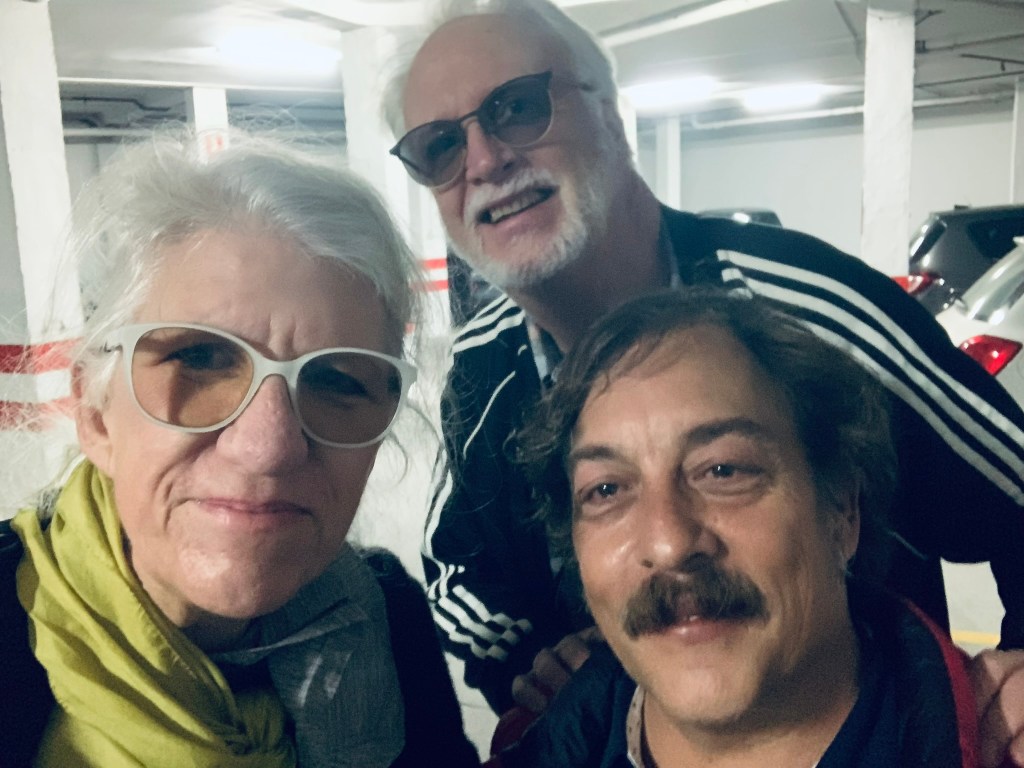
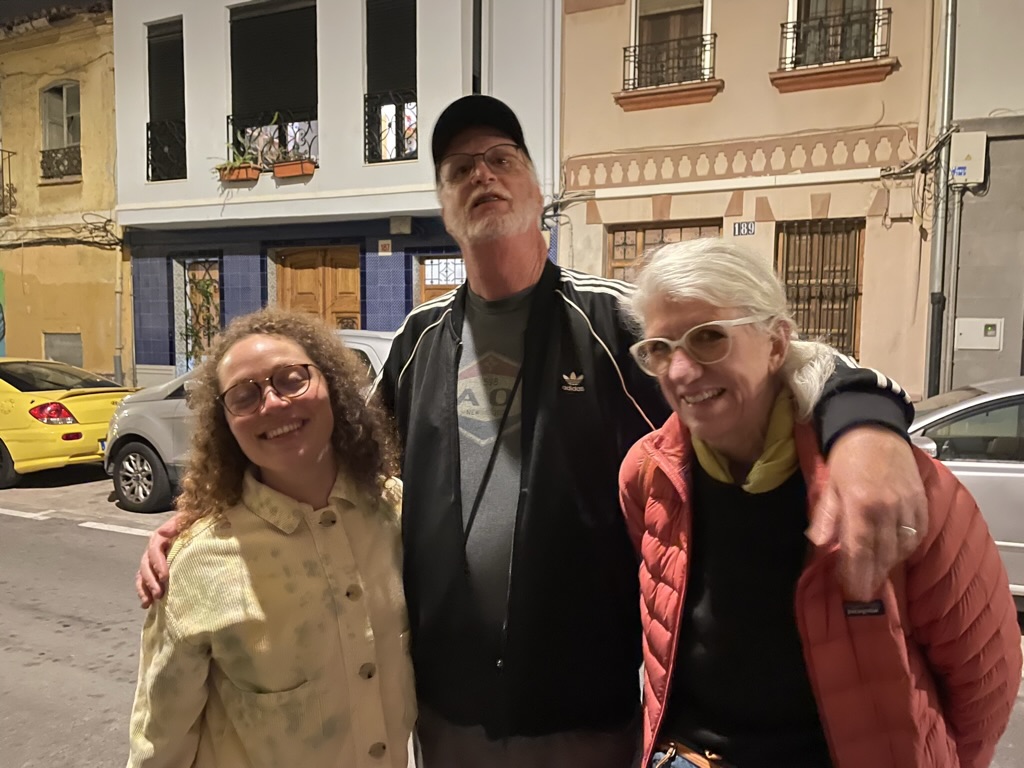
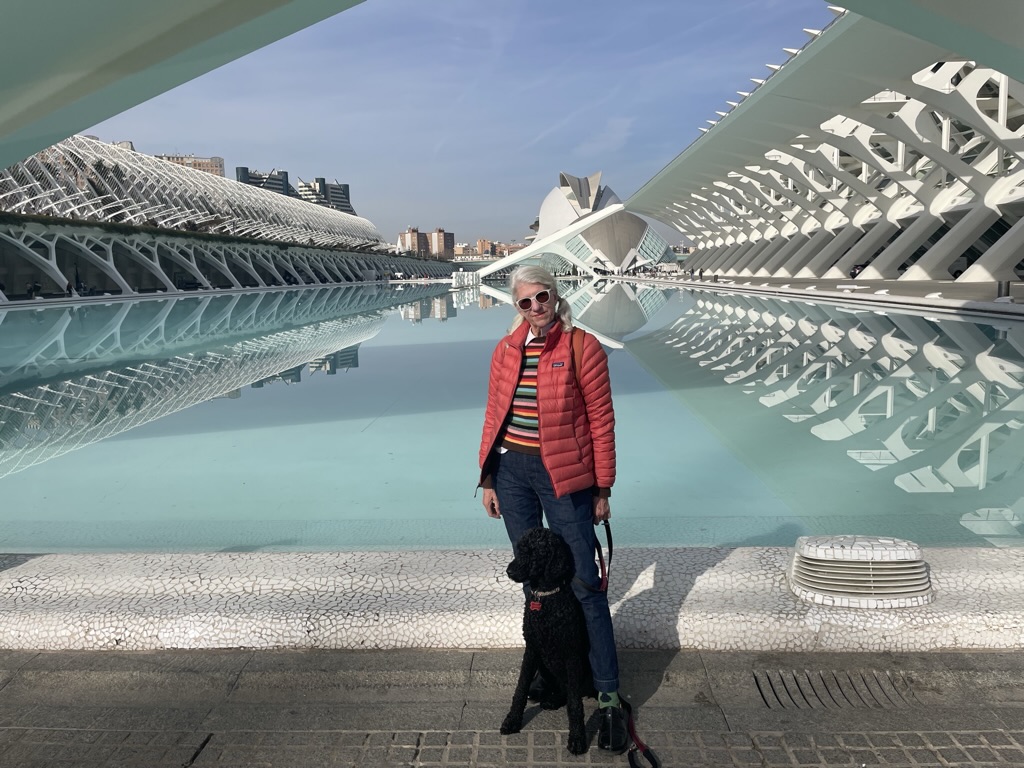
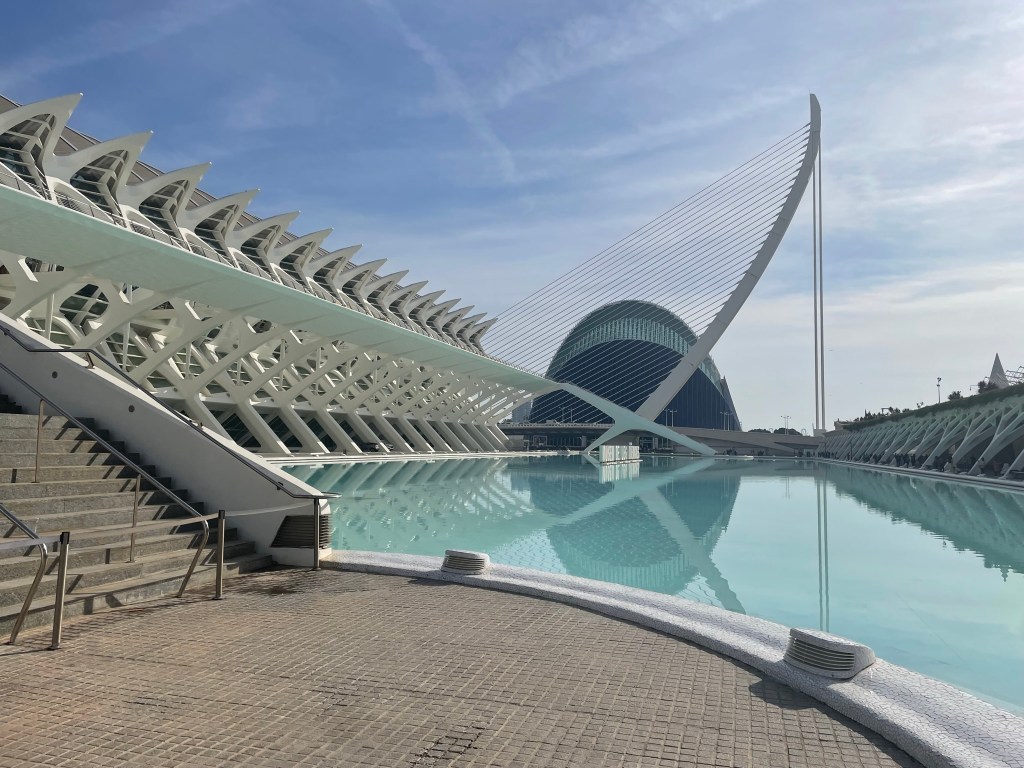
My amazing brother, Tim Slattery, flew from London to meet me in Valencia, Spain after Steve left.  It was a fantastic effort on his part and we had a couple of fun days together in Valencia before we took the drive north to France to our next Airbnb.  I was so grateful to have his assistance and company and what a delight it was. We toured around our cool, old Valencia fisherman’s neighborhood called Cabanyal, walked the long beach and wide paseo with Coco, ate tapas at perhaps our best sit-at-the-bar-bring-us-what-you-recommend dining experience ever, toured the beautiful modern complex called City of Arts and Sciences, and generally enjoyed ourselves, considering the circumstances back home!  I had already been in Valencia for some days, with Steve and then alone, so I kinda got my groove on there as it was not my first time in the city.  I also had a chance to see not one, but two of my darling cousins: Martha Schum has lived there for decades and her sister Sarah Schum happened to be visiting so it was a two-for-one Schum especial!  After all that, Tim and I hit the road, heading north to the Spanish border and drove for hours, hugging the Mediterranean, talking shit, and marveling at the landscape, but not without a proper European picnic lunch en route at the remains of a Roman arena right by the sea in ——. While we ate, Tim confessed that he, too, often thinks about the Romans. (If you, or anyone you know, also needs to talk about the Romans there is probably a 1-800# or meet-up groups in your area you can consult! Good luck!) 
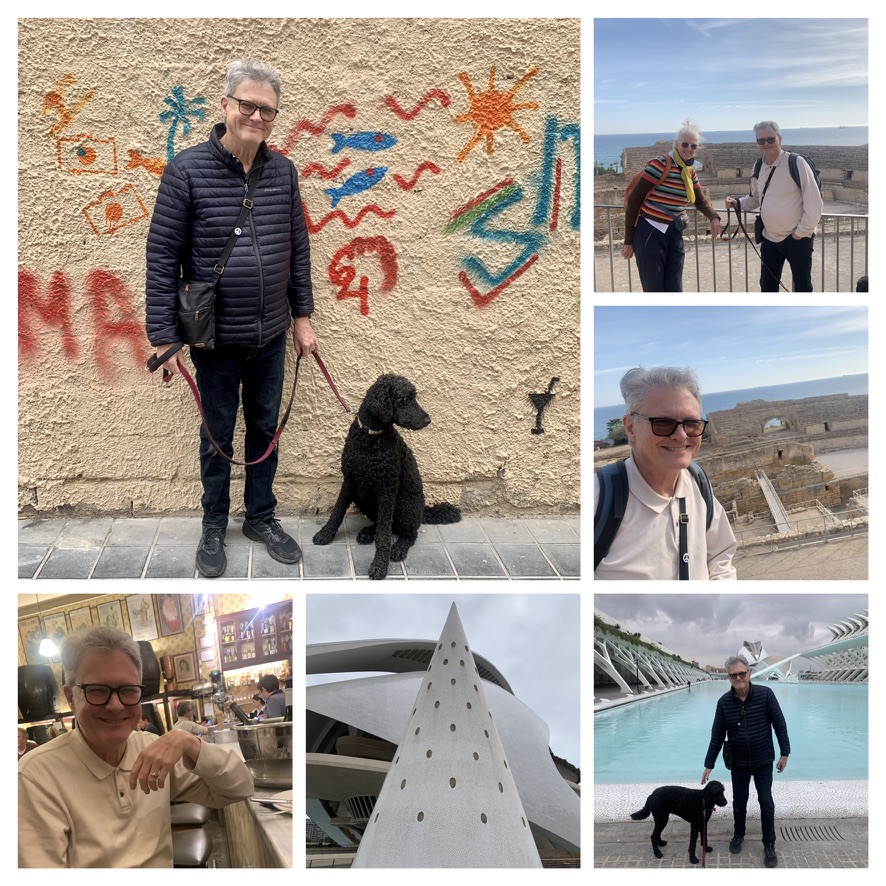
Here’s a little montage I put together showing Tim and I on the road from Valencia, Spain to Port-Vendres, France. It was fun!

We arrived at our destination, the small town of Port-Vendres in the evening, so we really did not have a grasp on where we were until the following day, but the accommodations were splendid. Steve and I had already booked and paid for this place for a month — and what a place!  A beautiful, stylishly-appointed, three-bedroom house on a quiet street, a mere one-minute walk from the center of the small port town, as well as bakery, cafes, the farmers market, and anything one might need. It was ideal to say the least — btw, please don’t mention this part to Steve. 
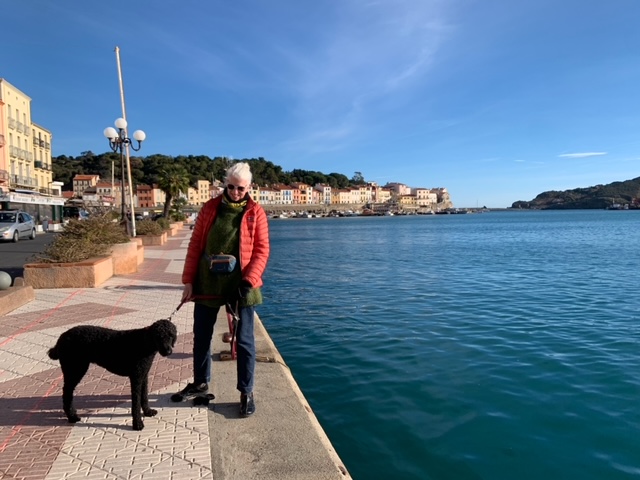
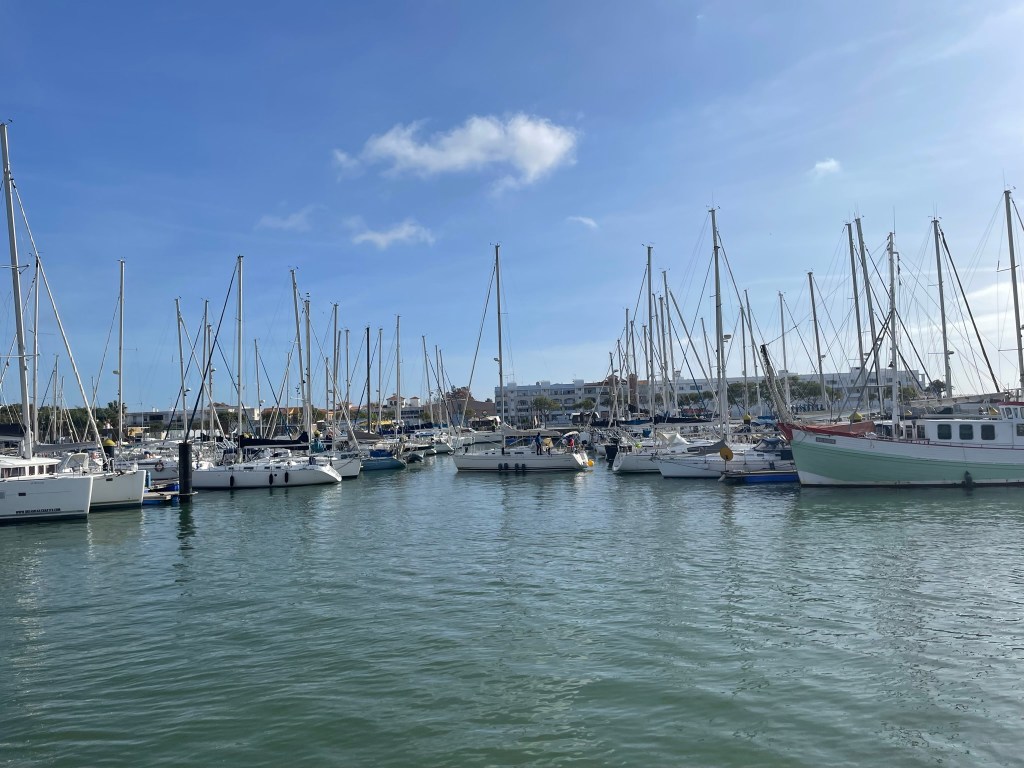
Coco and I enjoying a quiet walk on the Quay in Port-Vendres!

Port-Vendres is one of a string of beautiful seaside towns along this stretch of rugged coast north of the Spanish border and at the foot of the Pyrenees. Think Big Sur meets Santa Barbara.  It’s called the French Catalan and every sign posted is in French and Catalan!  It’s the best of the two cultures, mixed into a blend that is entirely unique in France. For the wine fans, it’s the Roussillon AOC — not to be confused with the town of Roussillon in Provence, which we also visited last April, and the winemaking is about a blend of the grapes that naturally grow here, and they are planted right down to the sea in terraced vineyards on old, head-trained vines. There’s a similar mash-up at the border on the western side, near Biarritz, but it’s different as that’s Basque country.  So, it’s all very specific and regional and delightful in that way. It’s not a famous district outside of France, but it’s more than drinkable, believe me. 
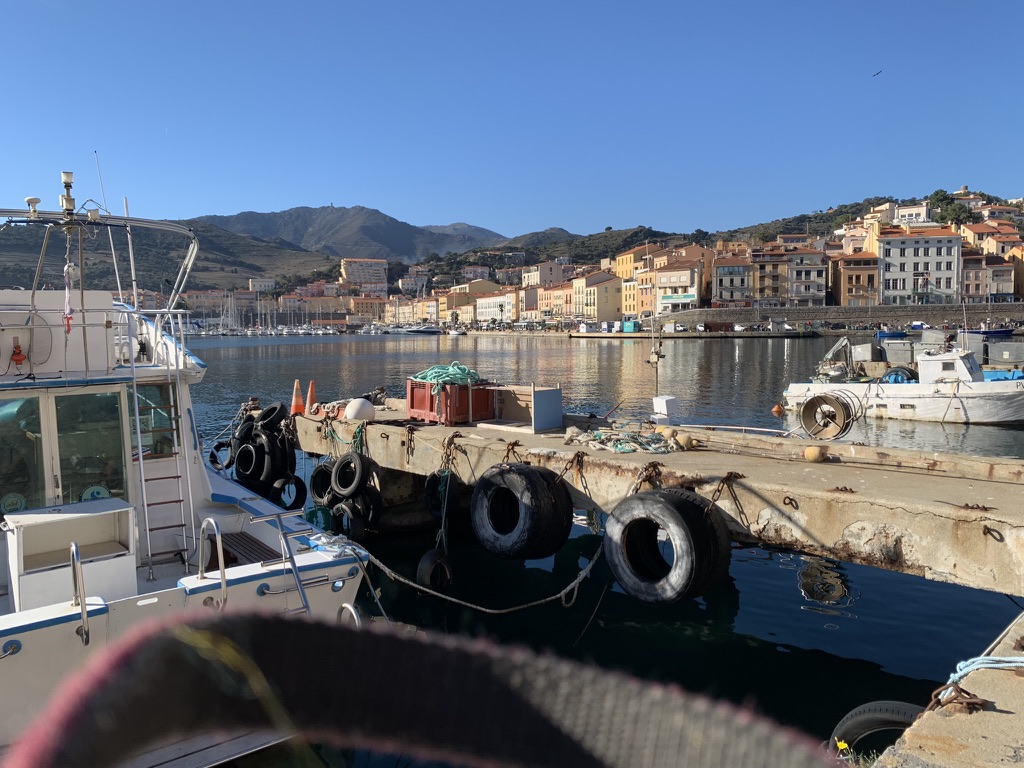
Another view of my beloved P-V

This is a working port and the main business of the day is the catch. Boats come in, big and small, and the larger fish are processed at the main plant on the south side of the port.  The rest are left to the smaller fishmongers (been waiting a year to get that word in this blog) that do an every day business and this all happens early in small metal huts lining the Quay where the catch of the day is set out on ice. I can’t even begin to describe the variety but it’s immense!  Early in the morning, older women with traditional woven baskets or market strollers come down to buy for their lunch or dinner and merchants arrive, most likely to buy for their restaurants or shops elsewhere. Once it’s gone it’s gone: the tin hut shuts and Viola! Fin! 

The Saturday market was a delightful experience and I did visit it several times. It all happens in a square overlooking the port that features a stunning obelisk built in honor of many things French, but most notably it marks the ground zero for the metric system: the guy who came up with the whole decimal thing had to peg it to a place and Port-Vendres was, apparently, the most strategic point in France. True story! I loved shopping for my potatoes, cheese, and fresh greens under the shadow of the imposing Obelisk.  Napoleon divided all the regions in France by number, and if you ask me Department 66 is the bomb! I may just have to start a men’s underwear line called that! lol! 

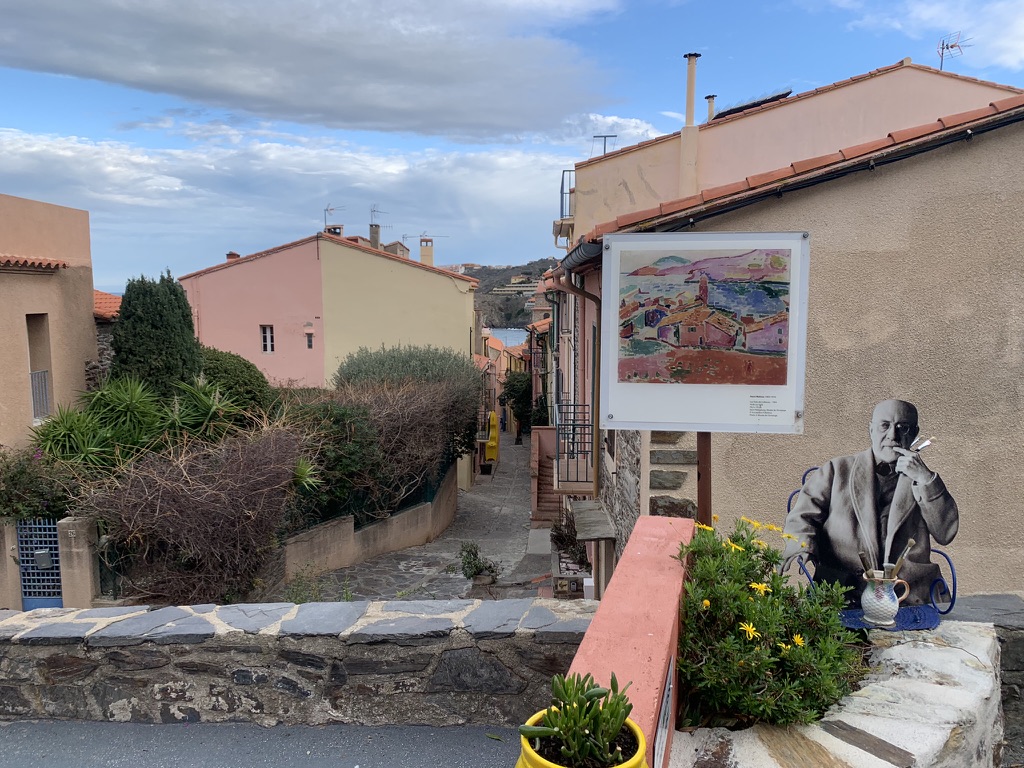
A lot of artists came through here and painted the land and seascape. Matisse and all his fauvists pals made this a great escape. Spend two shakes here and you’ll see why: the color palette is unreal. Collioure, the next town over, and reached via a windy, steep cliff road, is where Matisse was based and created many pieces.  The town is not ignorant about this and, of course, they have plastic laminated posters of those paintings on view in the exact spot the artists painted. But honestly, IMHO, it could be anywhere along this stretch of the Mediterranean.  I mean, these people were not exactly focused on the details.  They were capturing color, light, feelings, and mood.
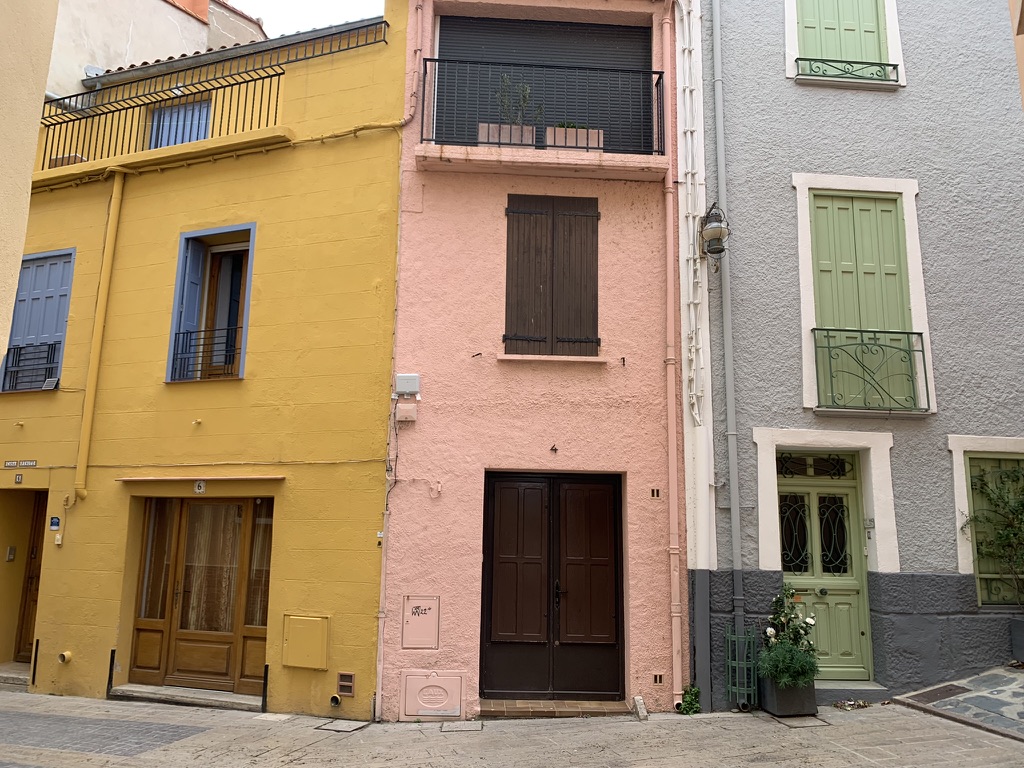
The colors of Collioure
Here’s the very spot that Monsieur Matisse sat one day and painted up this picture.

Now, here in Port-Vendres, at the very same time, the Scottish painter Charles Rennie Mackintosh and his wife Maud were also working. Mackintosh painted the port as he saw it, with the skill of a draftsman, an architect, but with just enough detail to leave plenty to the imagination. It turns out that Mackintosh wanted nothing to do with those other artists over in Collioure and he was thus viewed as a bit of an outcast. He also had a serious drinking problem that his wife was desperate to help him with. So, yeah, maybe time apart from the other artists of the day was a good idea. Anyway, there is a beautiful collection of his watercolor work from Port-Vendres as well as his wife’s work in the style of art nouveau, all preserved in the tiny little Macintosh Interpretation Center in Port-Vendres.  

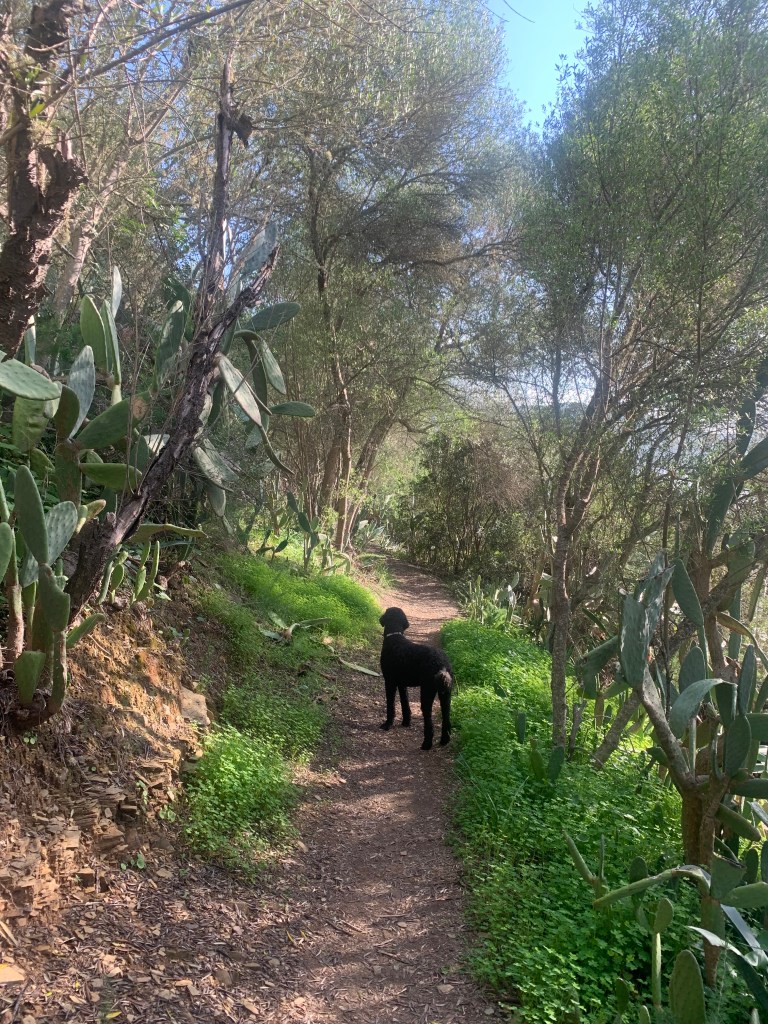
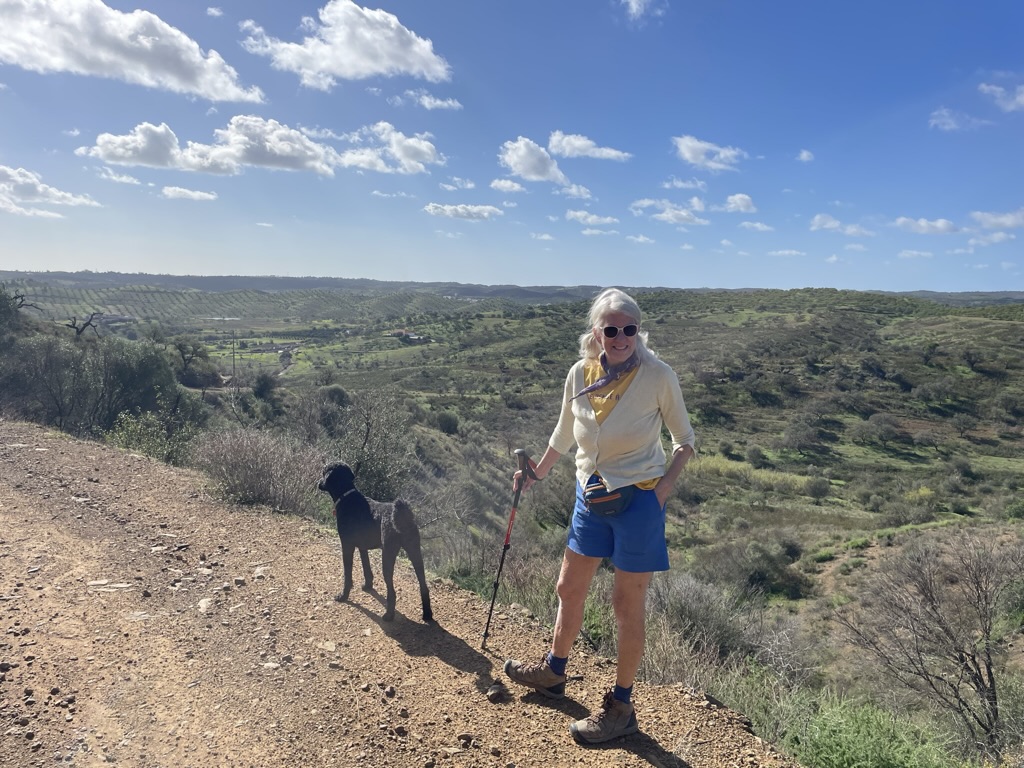
During my stay in Port-Vendres, Coco and I took a bunch of beautiful hikes along the coastal routes. Sometimes it got a bit edgy and I had to buckle her back into her leash, but the trails were super exciting.  Of course,  not good if you lost footing — or a poodle!  Overall, it was excellent exercise and the views were always splendid and dramatic. 
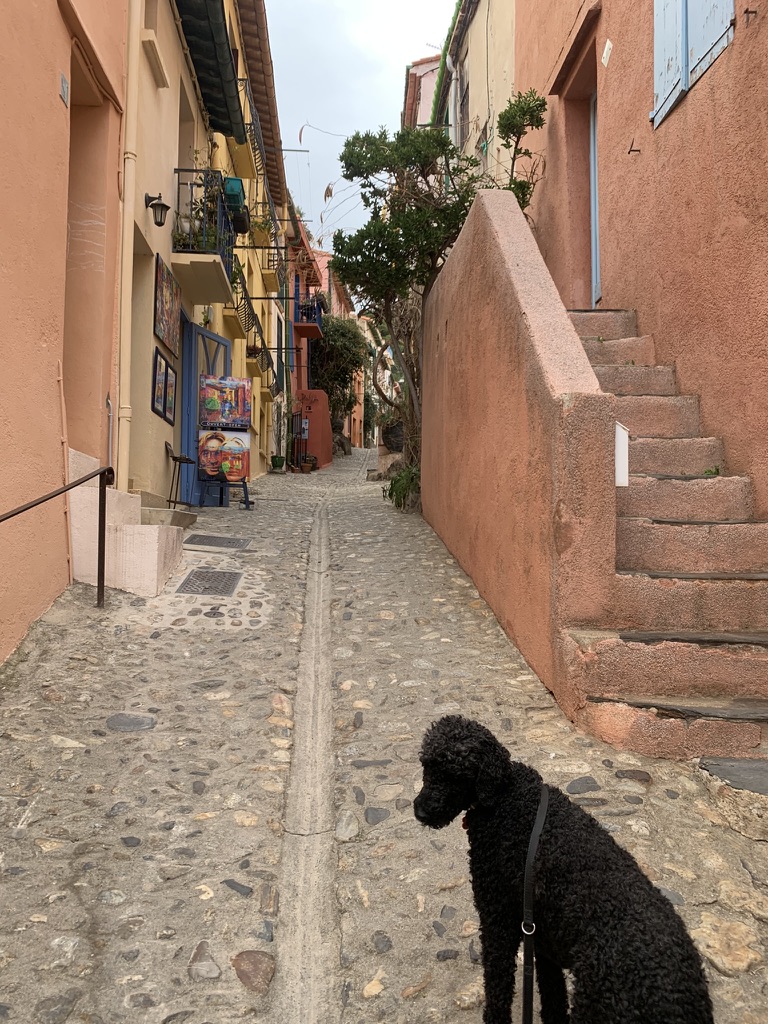
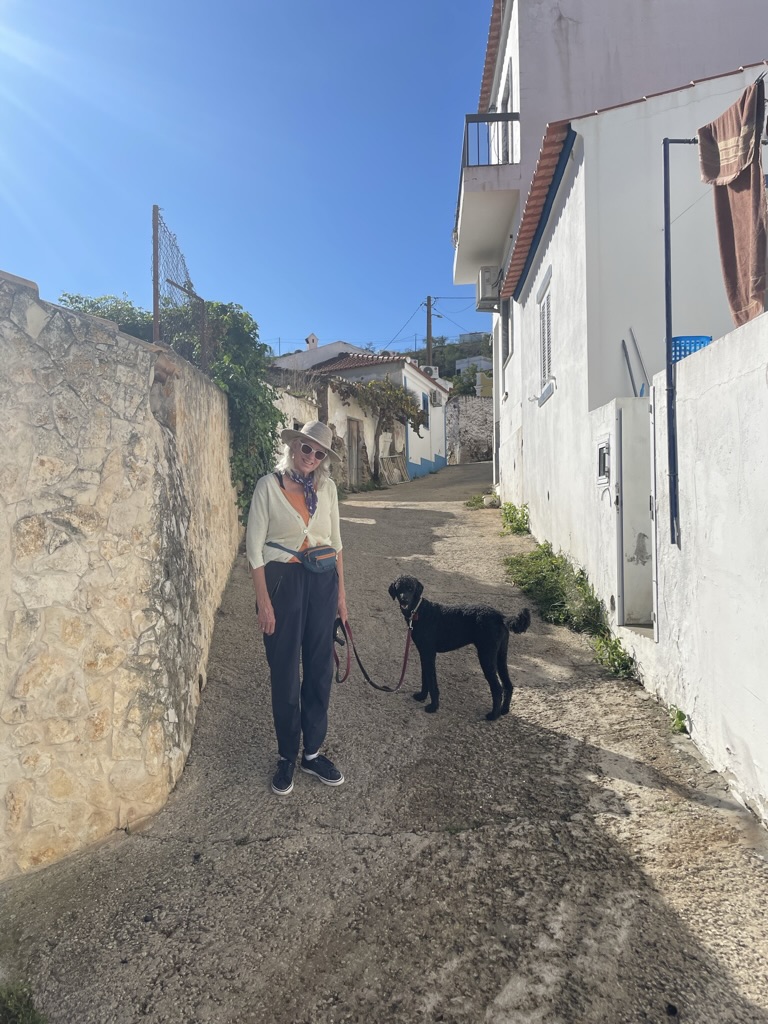
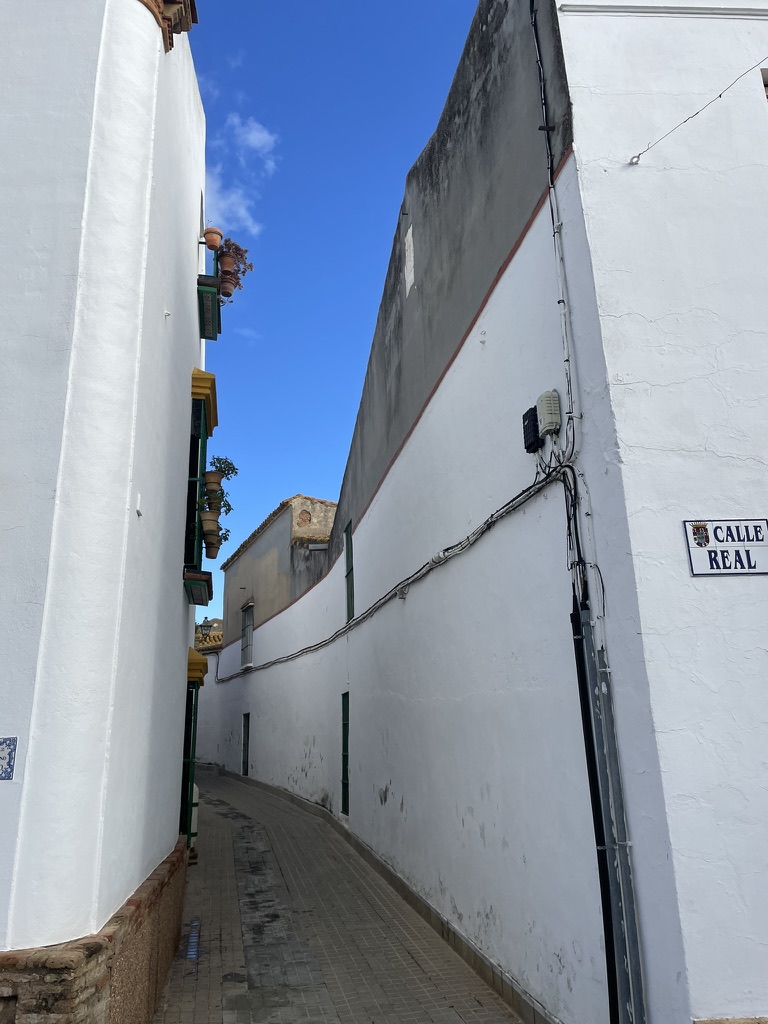
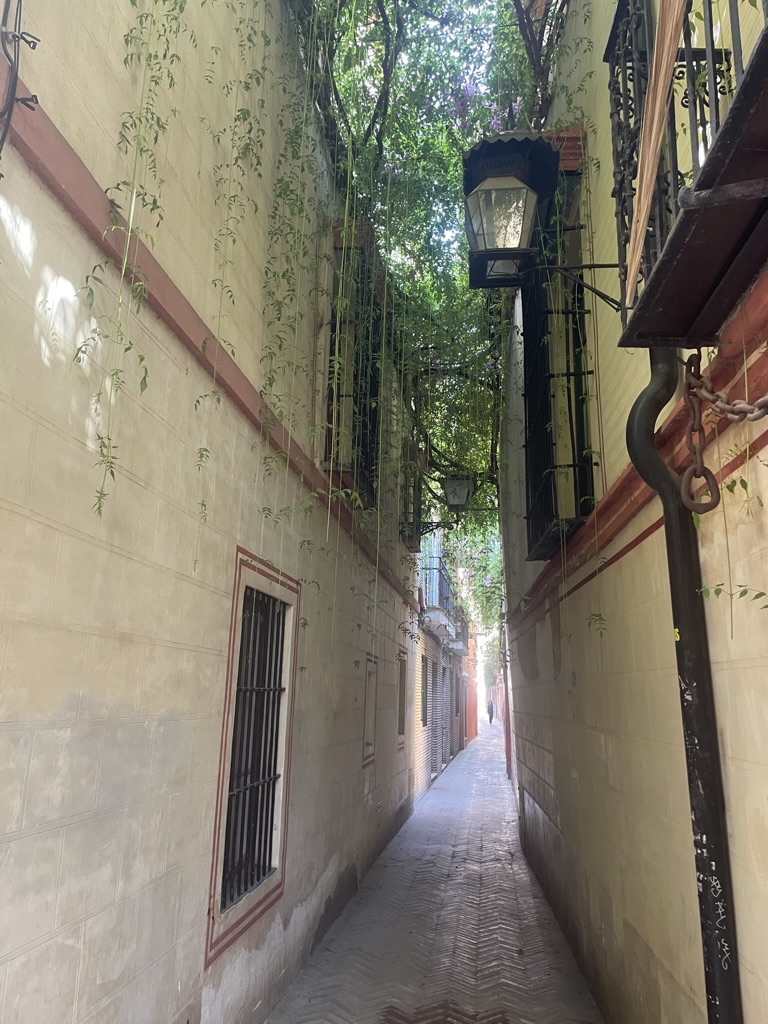
Coco likes the narrow back streets of any town, but french seaside towns in particular!

Everything about this place just checked so many boxes for me. It’s ironic, after having traveled for a year with Steve, that I could possibly, realistically, finally see us staying put in Port-Vendres. It’s not touristy at all, just a simple place but it can get busy in the summer even though the town does not cater to tourists for the most part — there’s no beach. I will say, however, that I noticed there are a LOT of old people here, retirees, and not expats, just old French peeps!  Also, I will say that trying to learn French after spending a couple of years trying to learn Spanish feels exhausting! No lie! 
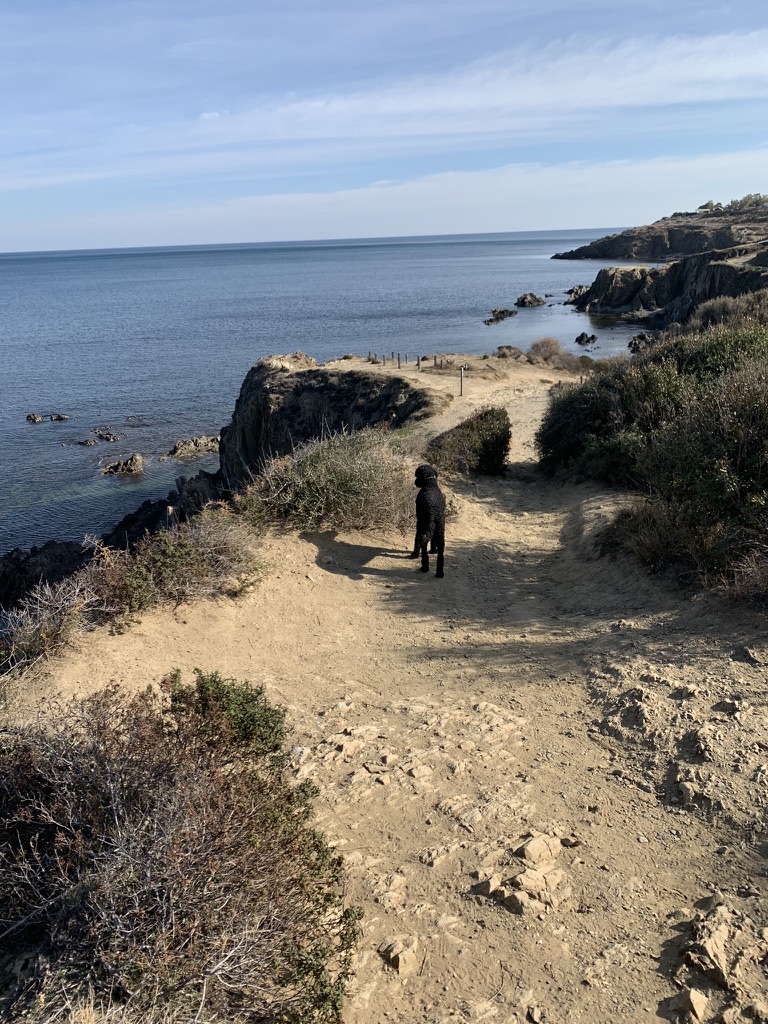
We went on so many hikes and rarely ever saw anyone.

I know we have talked about this before on this blog, but I can’t say enough about this type of travel:  staying in one place for a long  period of time, usually a month in our case.  In my time in P-V I came to know my local baker, the people at my local cafe, the vendors at the Saturday market, the guy who runs the local movie theater, the people at the tourist office (natch) and everyone who nods knowingly at me in between.  I even happened to discover the local maker space for kids and had a wonderful meeting there with the director!  It was so nice to feel like I could belong. But perhaps it was just Coco that they wanted to see every day! Hard to know! 
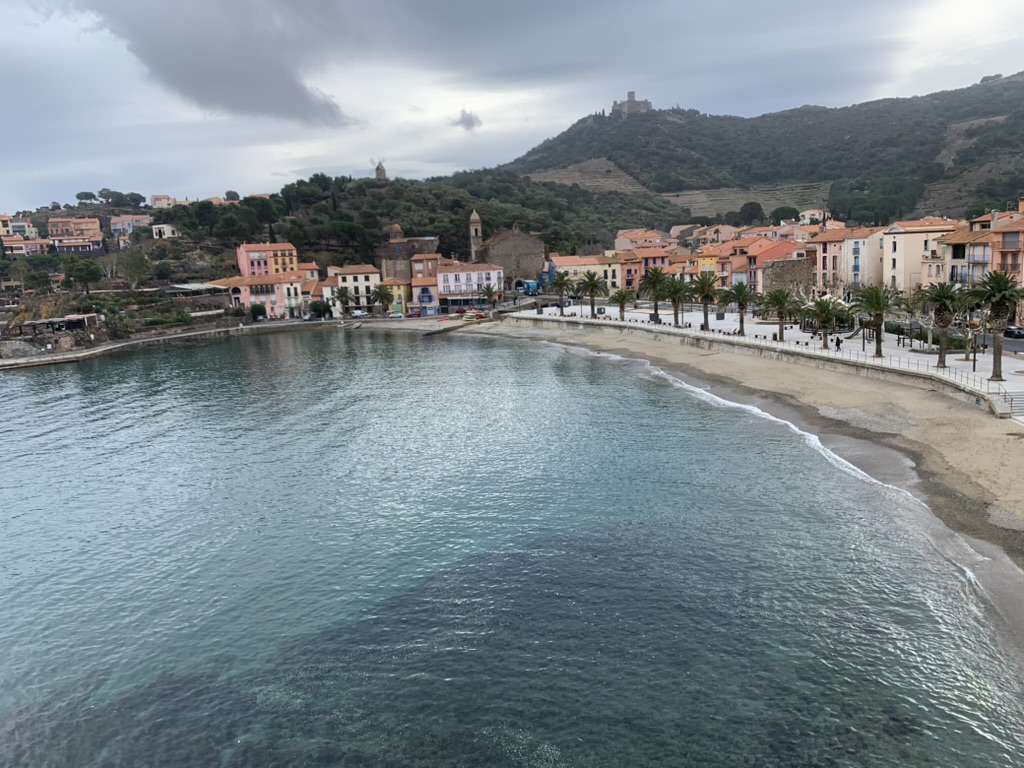
This is the beautiful town of Banyuls-sur-Mer, just 10 minutes south of Port-Vendres and just 11 miles north of the Spanish border.

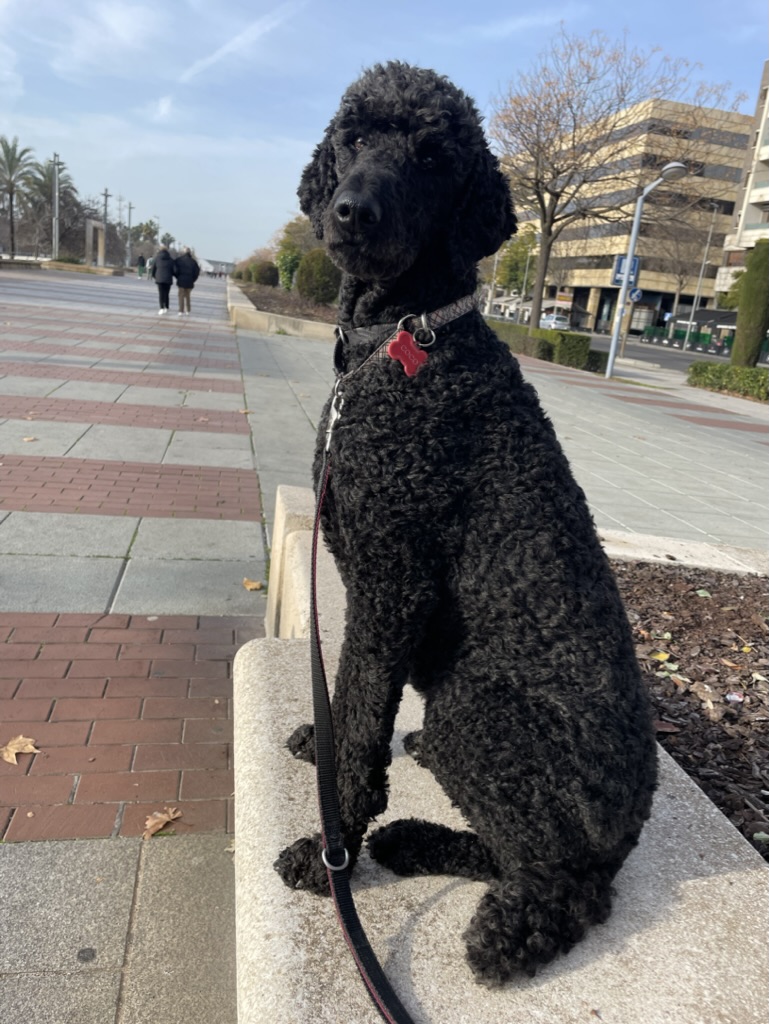
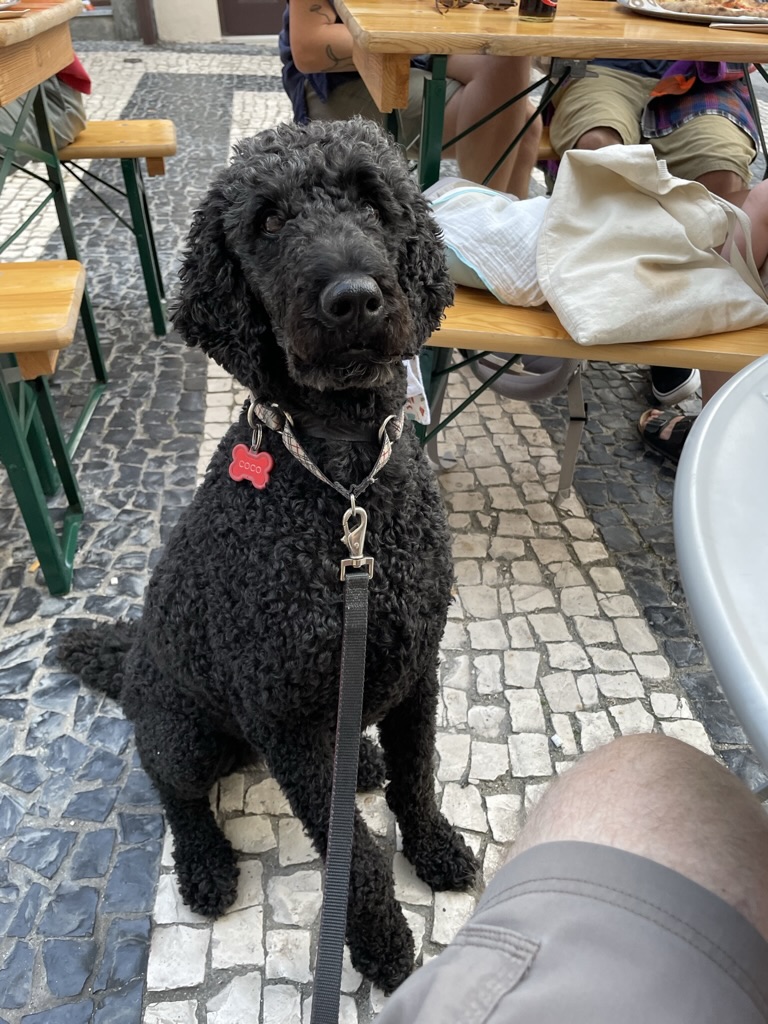
Speaking of whom, everywhere we go on this trip, Coco is always the star. She makes friends and attracts people to her like a magnet.  They swoon over this pretty dog…no matter what country and, as a result, I end up having wonderful interactions with lots of people. Even if I don’t speak the language, everyone at least speaks dog (chien)  as far as I can tell.  Coco is also a supremely curious creature and loves to go places and see new things.  She is the best strolling / walking/ trail / hiking partner you can have! Besides Steve of course! 
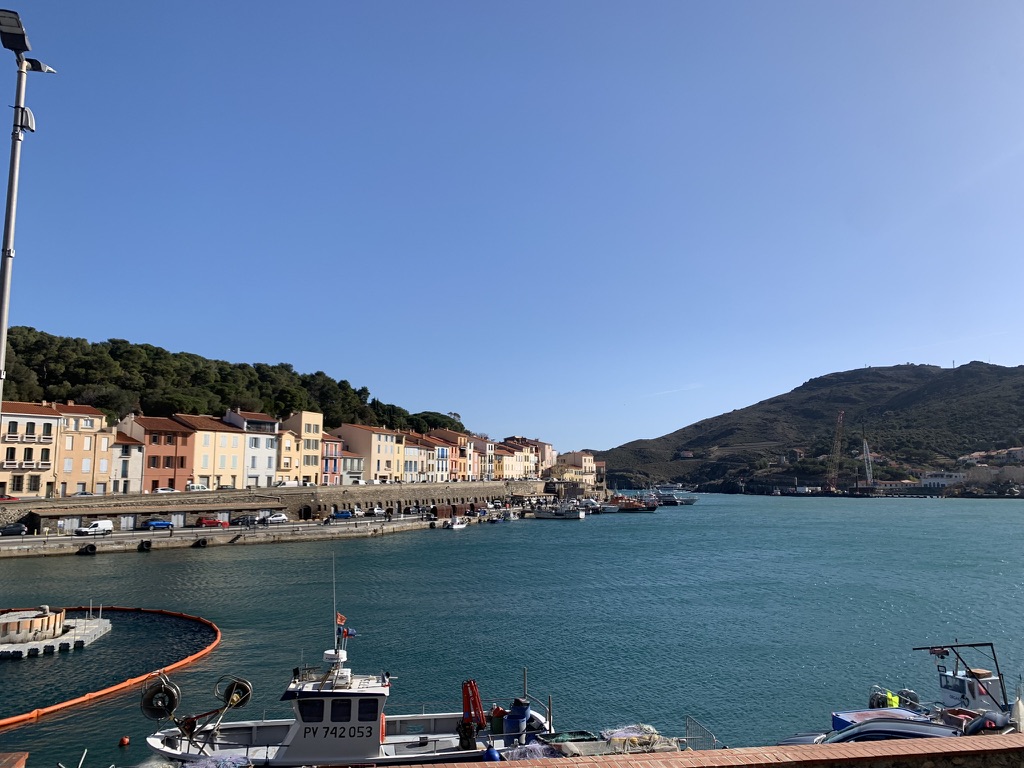
More P-V. Across the water there, built into the roadside, are little arched caves in which the fishermen store their tackle and gear. There’s also an old French guy who operates a little Quay-side cafe where you can get super cheap wine and espresso. He’s grumpy but he liked Coco!

If it’s possible to live in a bubble then P-V is the place you want to be.  And I don’t mean that in a bad way, because one can always tune into the world.  But I mean that P-V is such a simple place, where there are no pressing concerns and village life is very real. I felt that, despite the fact that Finn was in the hospital in Portland, and Steve was really stretched to manage things. It was such a conflict of emotions. And yet I felt like, as long as Coco and I could get out and about to take a hike or take a look at the sea, we would be OK.  And that proved to be so.
Just so you know, I’m going to be upgrading to a real camera soon, thanks to my brother Patrick, but until then …enjoy the mediocre, medium-resolution pics from my iPhone!
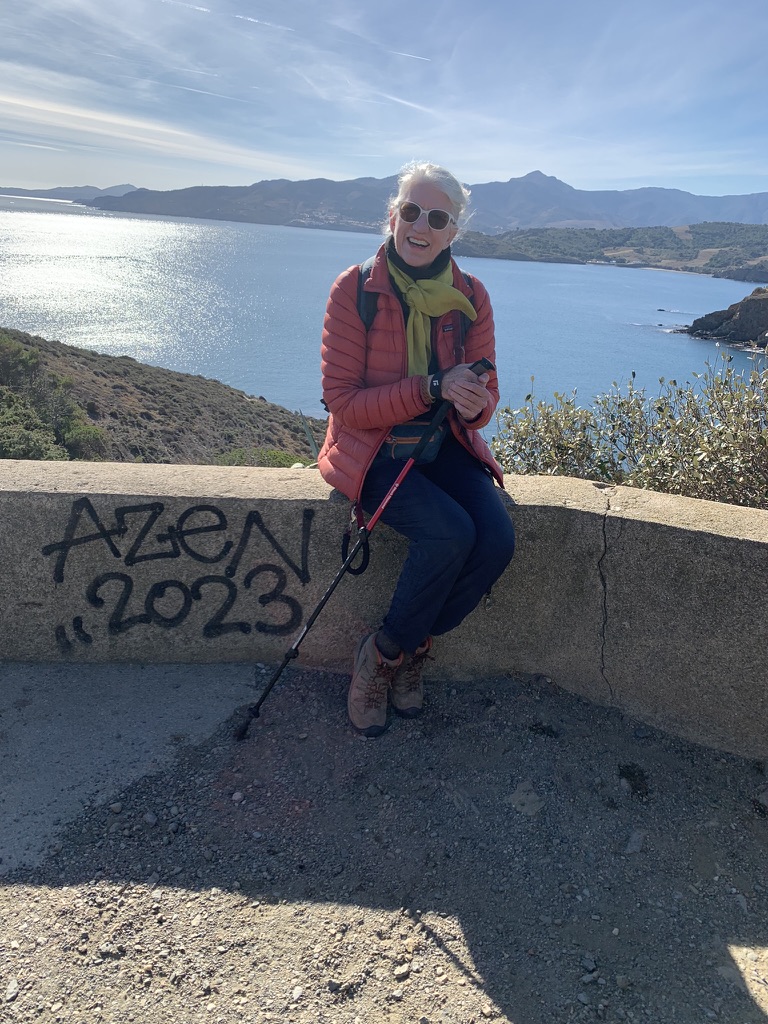
On the coast – with Spain to the south….
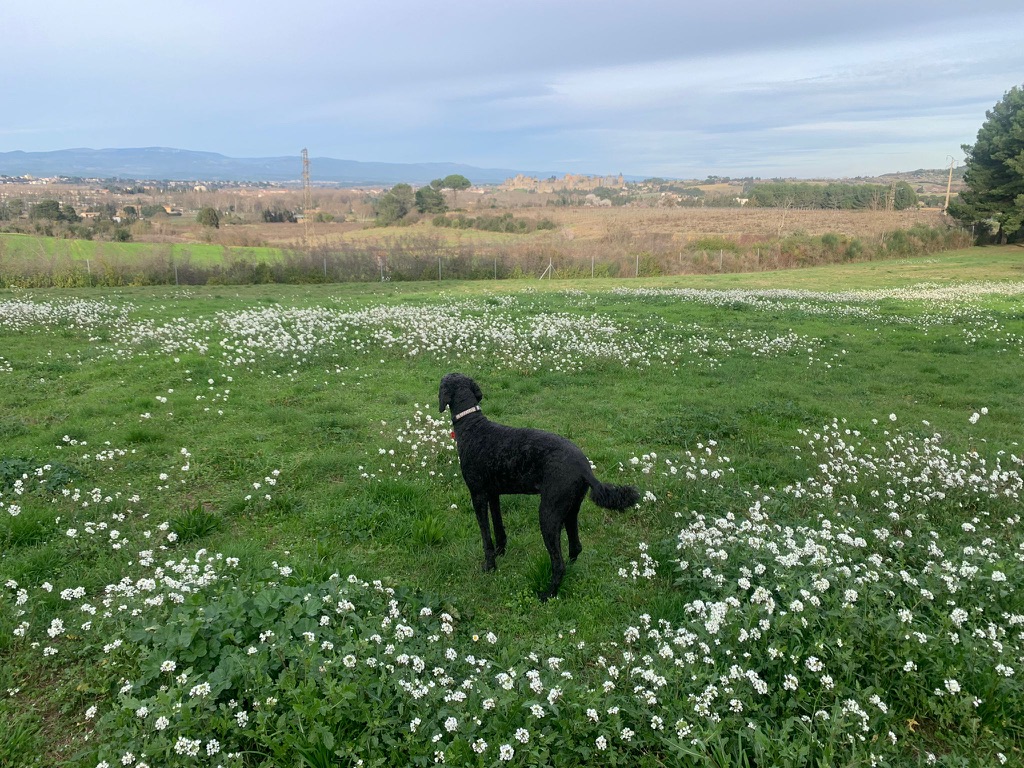
Coco and I drove from P-V to Toulouse to catch our flights back to the US. We stopped on the outskirts of the medieval city of Carcassonne —you can just make out the old walled city in the background above Coco. She went there earlier in the year and liked it very much!
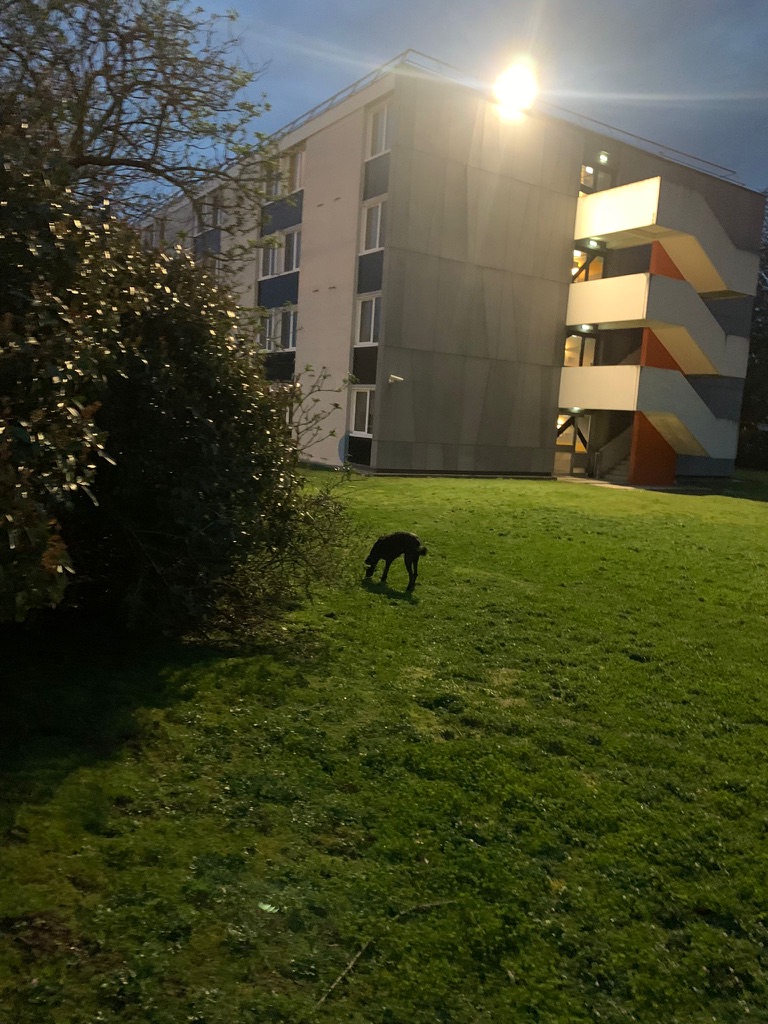
One last graze on the lawn behind the hotel before it was time to get Coco to the cargo drop off for Lufthansa.
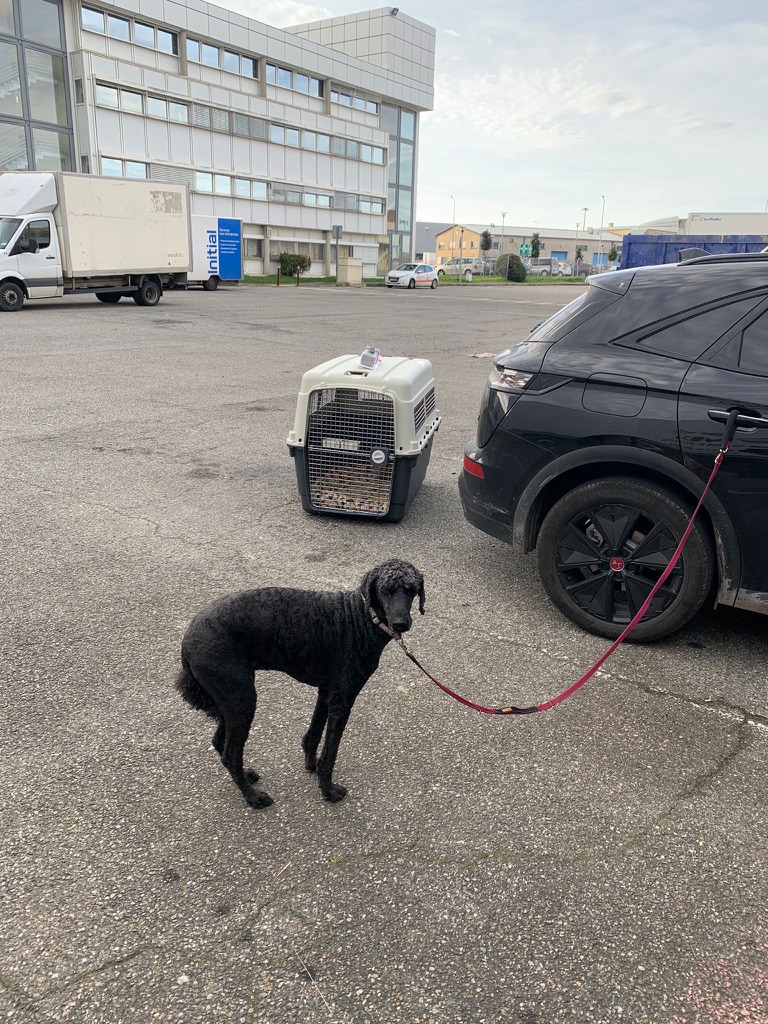
She knows something is up….poor pup. Well, the flight was really not so horrible for her – she made it home just fine!
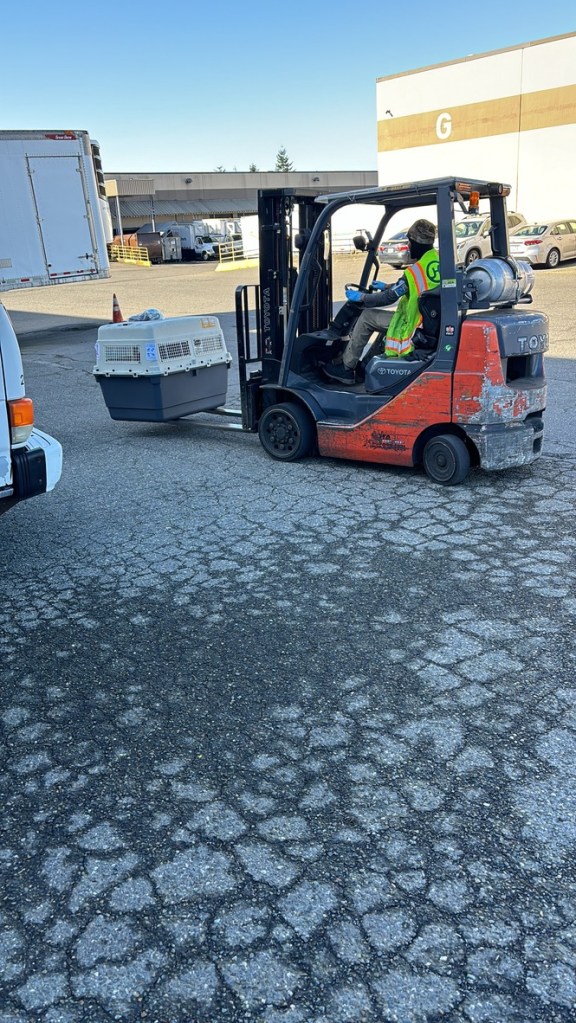
And some hours later, Coco being unloaded at SeaTac. Safe and sound!

Well, that concludes our thirteen-months of blogging about our explorations in Europe. We had an amazing time and highly recommend a similar trip for those with the time and means to make it work. Even if you don’t hold an EU passport, with a little bit of attention paid to the Schengen Zone , you too can spend an extended period traveling in Europe. As we’ve mentioned many times, the cost of living — at least outside the biggest tourist areas in southern Europe — is very low compared to much of the United States and the UK. We paid extra for the added convenience of Airbnbs and splurged on a car lease — still cheaper than a rental — but otherwise we stayed within our budget and lived like locals just about everywhere we went. Having Coco along added a level of complexity that necessitated the car but, if she were just a little smaller, we could have gotten away with public transportation with just a bit more effort.

We are settled back into our Portland routine now, and Finn is slowly improving, but we talk frequently about getting back to Europe as soon as things have stabilized here. Realistically, it probably won’t be until 2026, but, as you can guess by Denise’s post above, we’ve pretty much settled on southeast France — Department 66 — to restart our plan and, as they say, “happy wife, happy life.” One thing we researched as we traveled was the complicated tax laws of the various EU countries, and how they deal with retired expats. As it turns out, even though we would be happy in either France or Spain, France has a much more lenient tax treaty with the US than any other place we stayed. In fact, a non-working US citizen on a visa will really only pay whatever they owe to the I.R.S., while the French take a very small percentage to cover healthcare costs. Contrast that with Spain, where they tax Social Security and all your IRA withdrawals at a pretty high rate, and you can see why we might prefer that system!

We really did fall in love with France however, low taxes or no, and our fondest memories are of our springtime in Provence, walking the vineyards in the little town of Chateauneuf-de-Gadagne and visiting Avignon, Roussillon, Arles, and taking a side trip to Nice. We also enjoyed our month in Ajaccio on the island of Corsica, where the natural beauty helps you forget the slightly tattered cities and the omnipresent anti-French grafitti. After our month in Italy, delightful as it was, we found ourselves looking forward to getting back to the culture of baguettes, pain au chocolat, and the friendly French people. Like many Americans, we were initally intimidated by the reputation of the Gauls as rude and impatient with outsiders but, to be honest, they couldn’t have been nicer or more welcoming. We loved the polite formality of the “bon jour” greeting that you get in most stores and from every passerby. By the time we finished our month in Pierrefitte in the Pyrenees, we were both leaning France. On top of all of that, by 2024, we were ready to settle down for a while and spend a year or more in one place after the hectic pace of our travels.

Spain was enchanting and the language barrier there was much easier hurdle but we also had a lot of tumult there, with Finn’s illness and Denise’s trip back to the States to help him out, perhaps clouding our impression. Our month in Córdoba was magical, to be sure, and we urge anyone planning on visiting Europe not to overlook the grand cities of Andalucia: Málaga, Seville, Granada, and Córdoba have more beauty and history than you’ll find in most of the rest of Europe, and they’re all connected to Madrid and each other by the Renfe trains. We’re happy to give any guidance for fellow travelers so don’t hesitate to ask. Just follow the advice of the locals and stay away during the hottest part of the summer!

We thank you all for reading and commenting and hope that we will be able to resume our travels relatively soon!
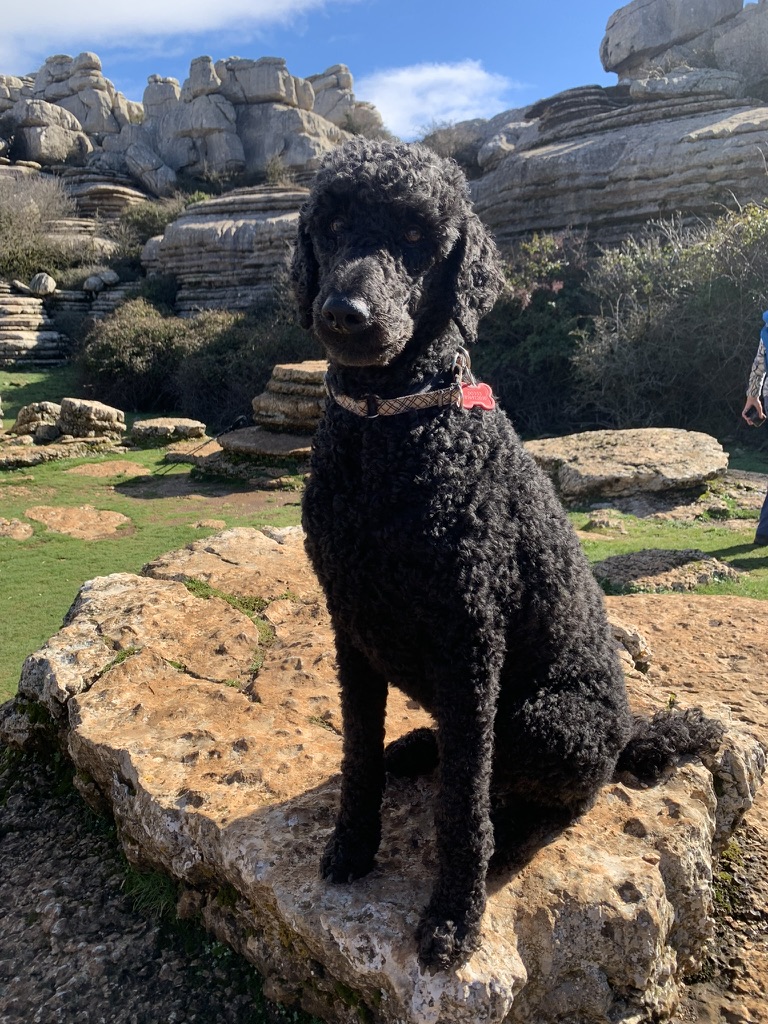
Andalusia, Part Two.

We made our way back to the Mezquita-Cathedral, this time on a guided tour. We learned a lot about the building but mostly we figured out that these tours are chaotic and feature really bad audio. The guides do their best but, honestly, it’s better to do some reading and self-explore.
The place was packed in the week between Christmas Day and New Year’s. All of Spain is on holiday and descends on the city.
Buff Jesus is baptized by a ripped St. John while his hairdresser fluffs his locks.

Hello again! As Denise, Coco, and I get settled back into life in these United States, we wanted, as completists, to fill you in on the last months of our trip. Córdoba, Valencia, and Port-Vendres were so special that we didn’t want to forget a single minute! We’ll pick up the action where we left off: just after Christmas in Córdoba.

We squeezed a lot of adventures into our last month in that great city, so it’s probably better that we focus on the pictures and let the captions do most of the work. However, we would like to mention a couple of cultural items that stood out for us. During the Christmas season back home, the stores and radio stations generally stop playing holiday-themed music after the big day, but not so in Spain. Here, the celebrations continue until the Epiphany on January 6th. This is actually the big gift-exchanging day for the Spanish and everything is closed down — of course. So if you love Christmas songs, come to Spain in December (and January)!

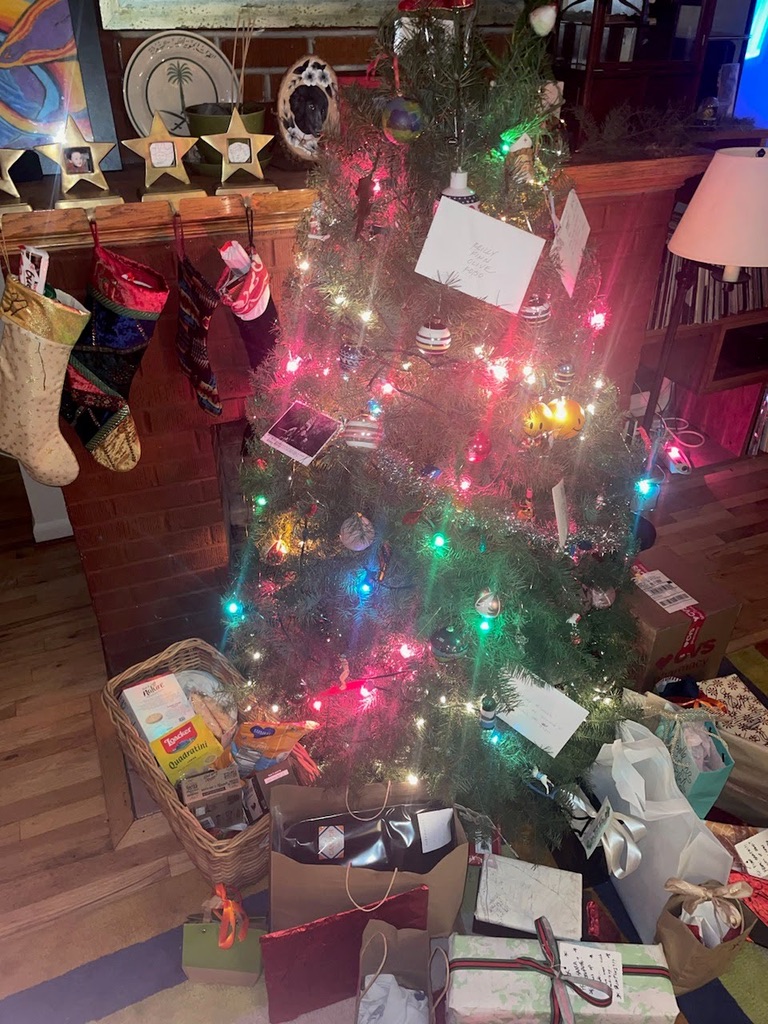
This was the Christmas tree scene back in Portland, where Reilly, Finn, Kobe, and Olive exchanged gifts.

We watched some Spanish-language TV but couldn’t resist the pull of the D-Max channel, which broadcasts “reality” shows from the US, UK, and Canada in English. Our late afternoons became about catching up with Gold Rush, a Discovery Channel show that features awful people doing awful things to the planet, all in search of the ‘lil yellow nugget. That was followed by Homestead Rescue, featuring the rough-edged Rainey family from Alaska, who swoop in and save families who have bit off more than they can chew in an attempt to live off the grid. It’s worth noting that almost all of the families revealed that the reason they are living this challenging life is because they lost everything in the housing crash of 2008-2009. The Raineys set them straight, however, with some good, old-fashioned ‘Merican ingenuity and miraculously save the homestead just before the seven-day deadlines comes around. We workshopped our own show, called Expat Rescue, in which we help struggling Americans who have decided to live overseas by showing them how to transfer money via Wise card and navigate the seemingly endless aisles of Carrefour. Coco, of course, would play a big role in helping their pets adapt to the unfamiliar continental dog parks. Talks with Discovery Channel are ongoing. The third show was Wheeler Dealers, in which two British guys team up to buy, refurbish, and then sell classic cars. They are both very charming in their own Brit way and somehow always manage to buy low and sell high!

Alright, let’s get into the heart of the post: the pictures, every one of which, as Sir Rod Stewart reminds us, tells a story, don’t it?

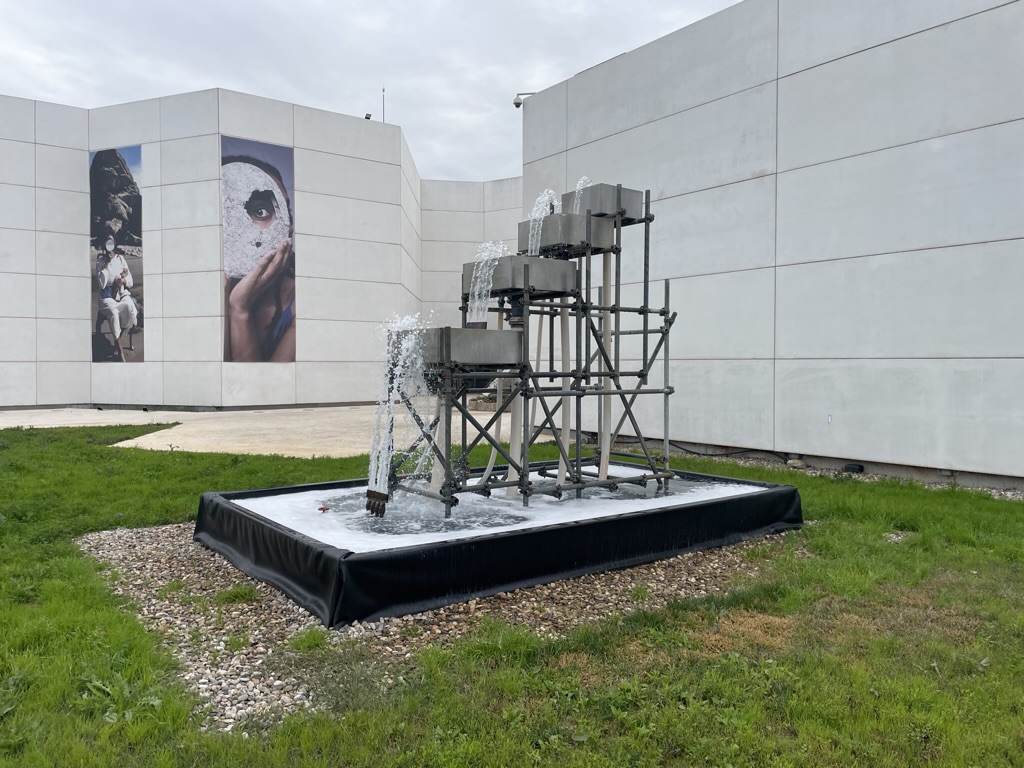
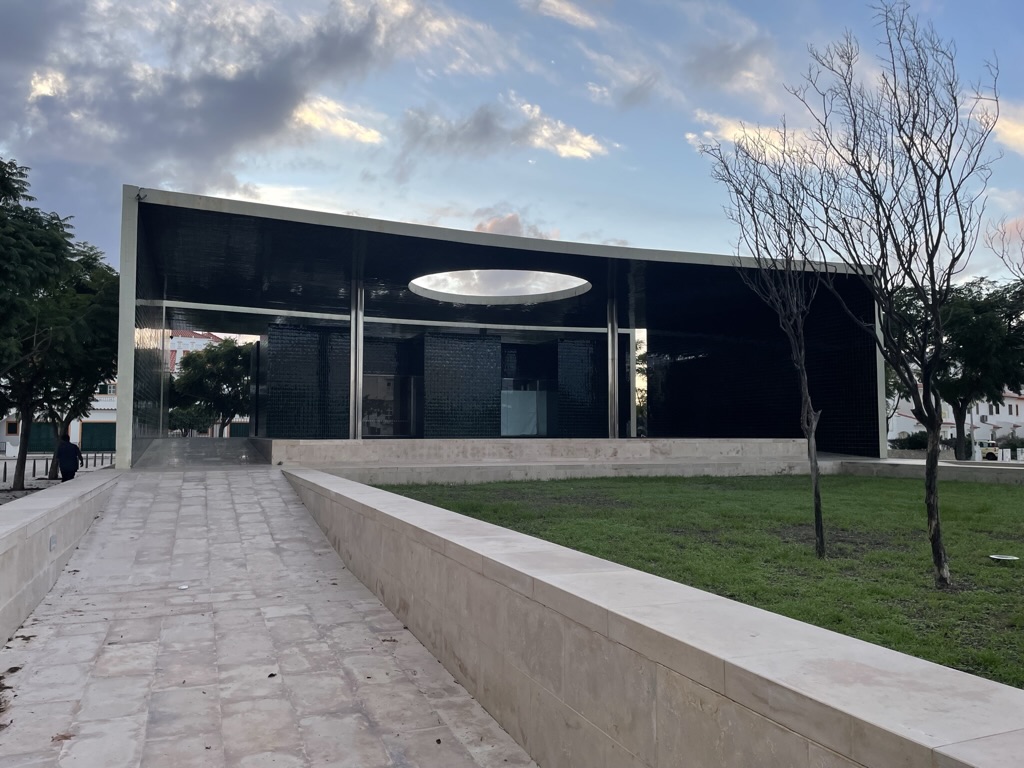
Centro De Creación Contemporánea De Andalucia. It’s an architecturally-significant building with some great exhibits. And it was free for all!
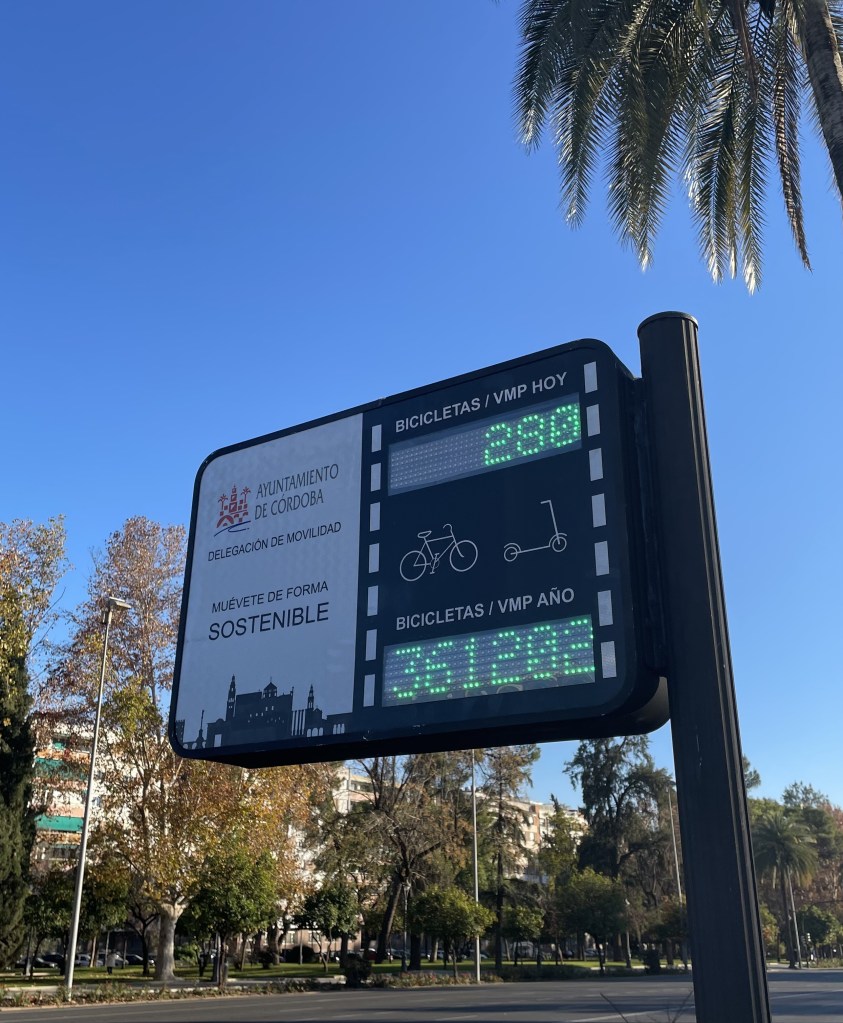
Sign that tracks bike and scooter traffic. Impressive numbers!
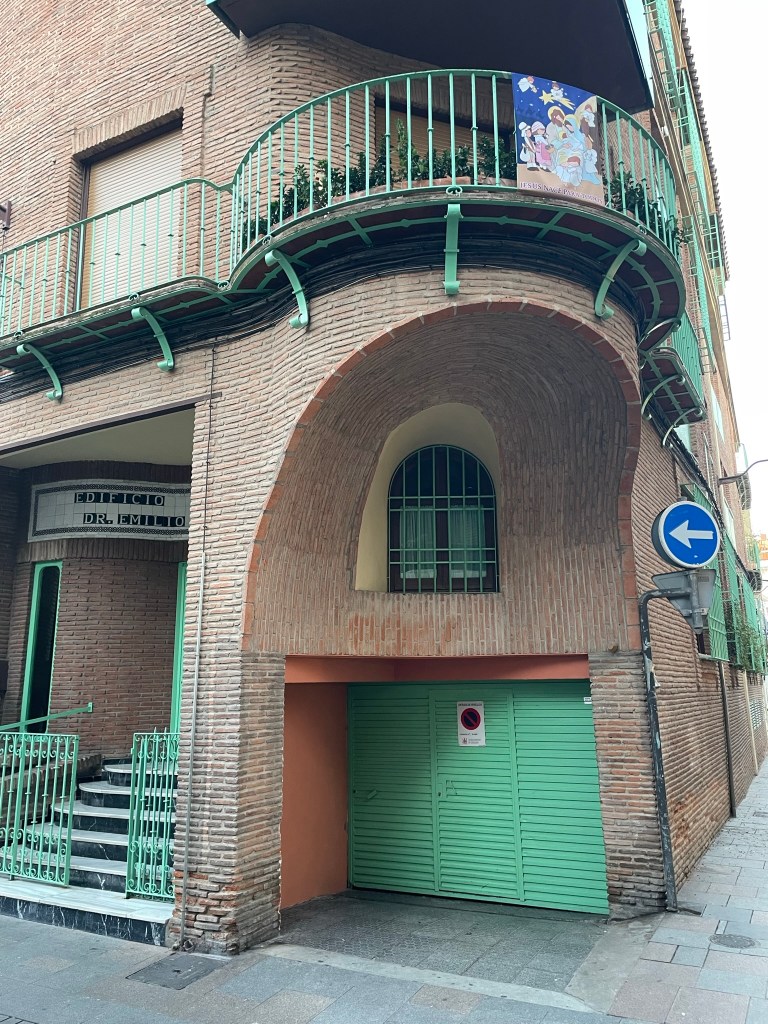
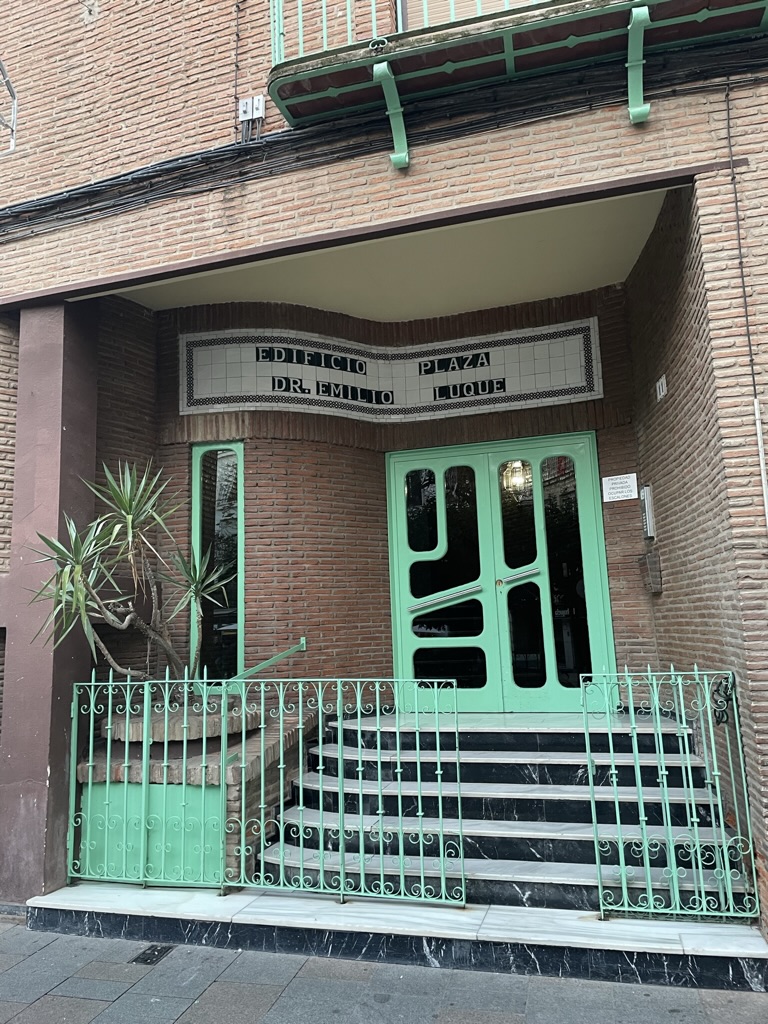
Very cool doctors office: side view
Dr. Luque wins “coolest office” hands down.
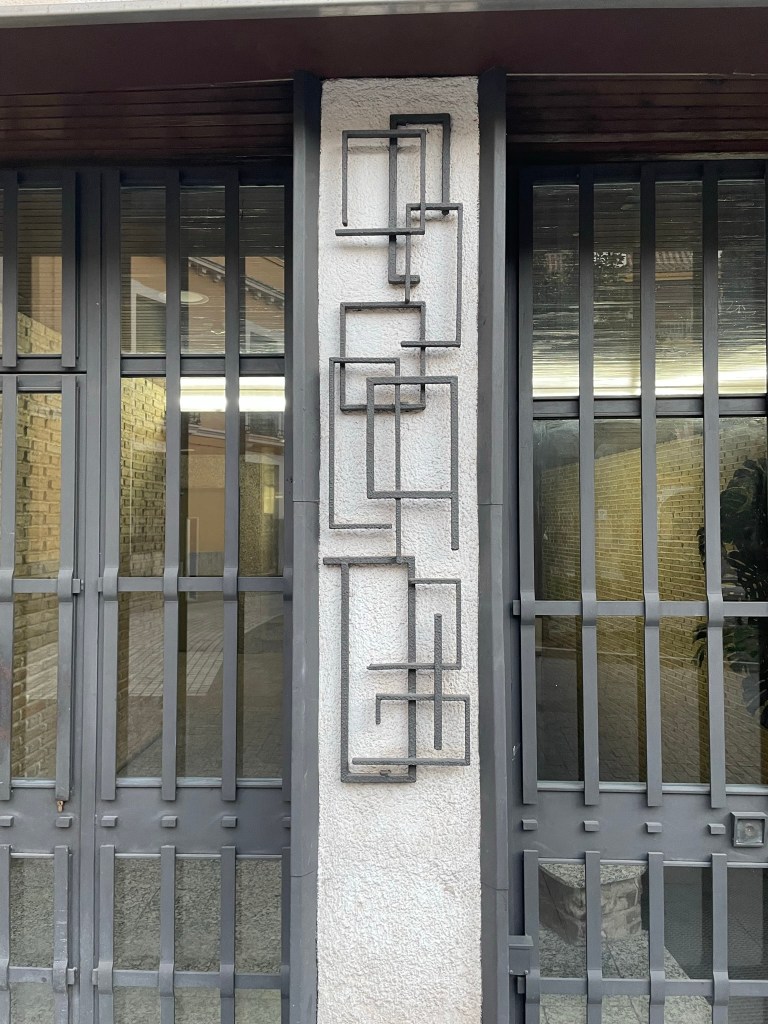
We never get tired of this kind of stuff…
The facade of giant downtown department store El Corte Ingles shimmers in the daylight.
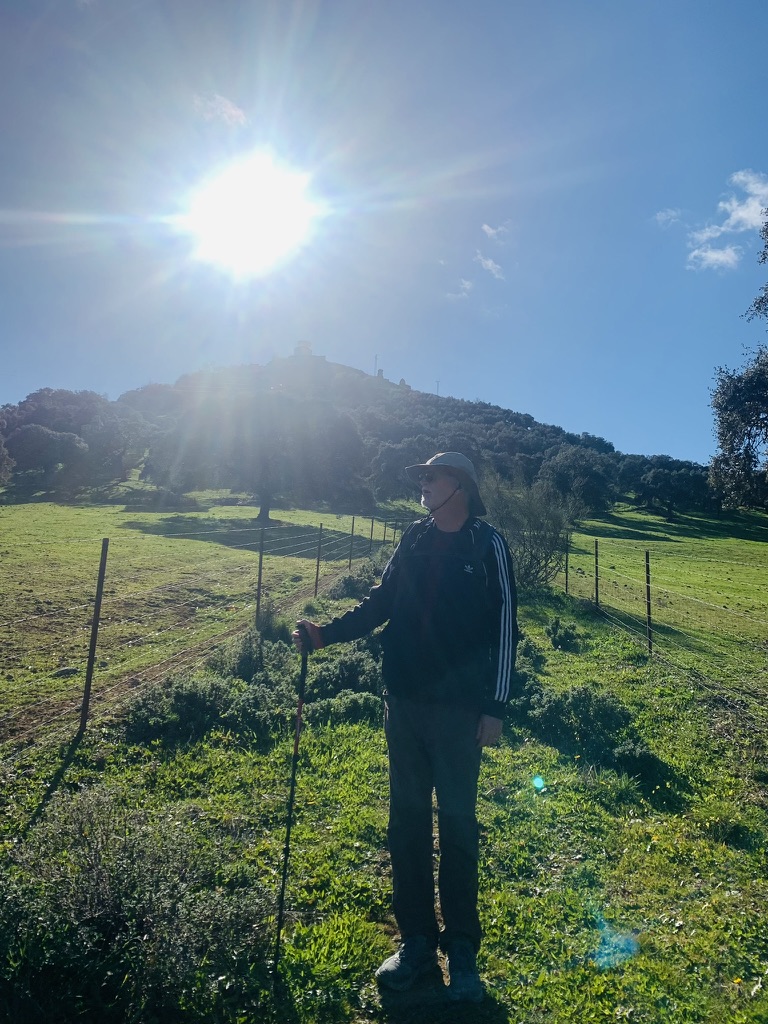
We took a New Year’s Eve Day hike starting from the small town of Obeja. We came to call it “The Hike of the Seven Animals,” for reasons that will become obvious. Although Steve could be added to the total for an even eight….
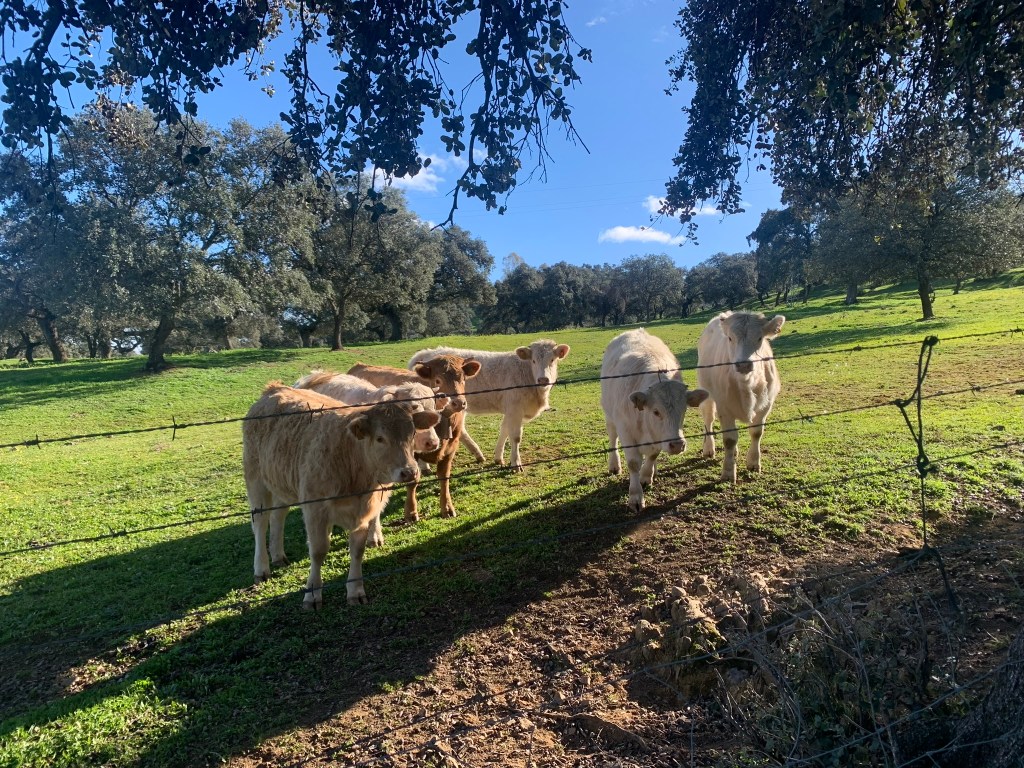
Animal number one. Of course, there are cows everywhere in Spain. These girls agreed to have their picture taken.
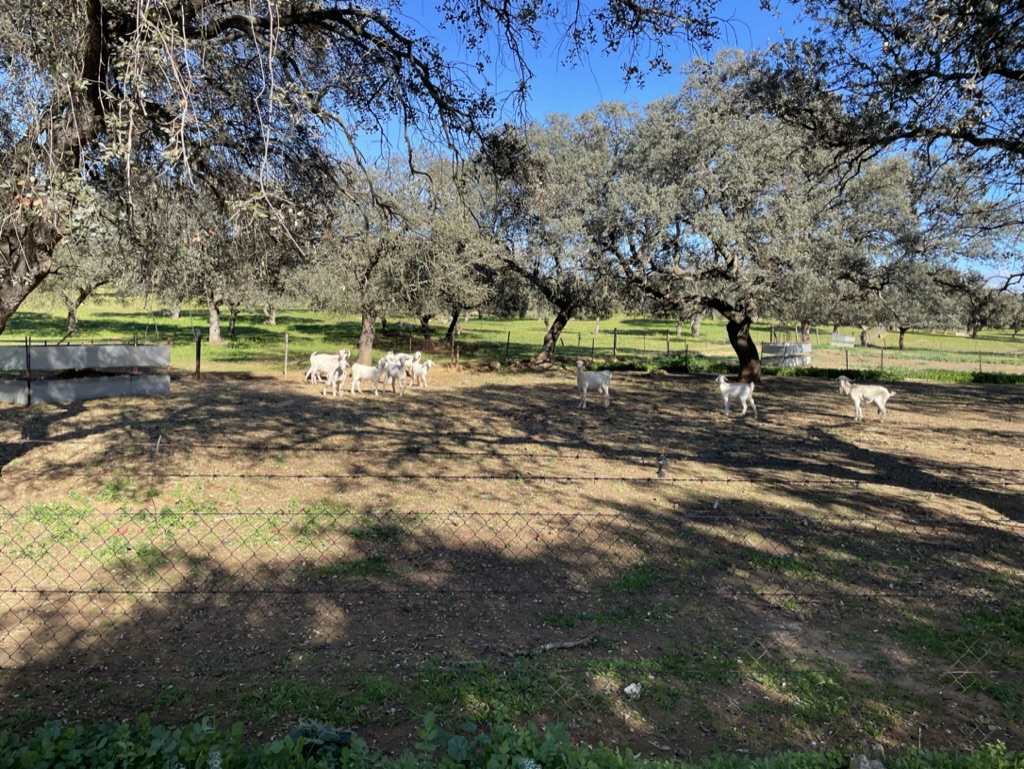
Animal number two: these goats (and, number three: the sheep next door) were guarded by some ferocious dogs (number four) , who followed us for a while, barking.
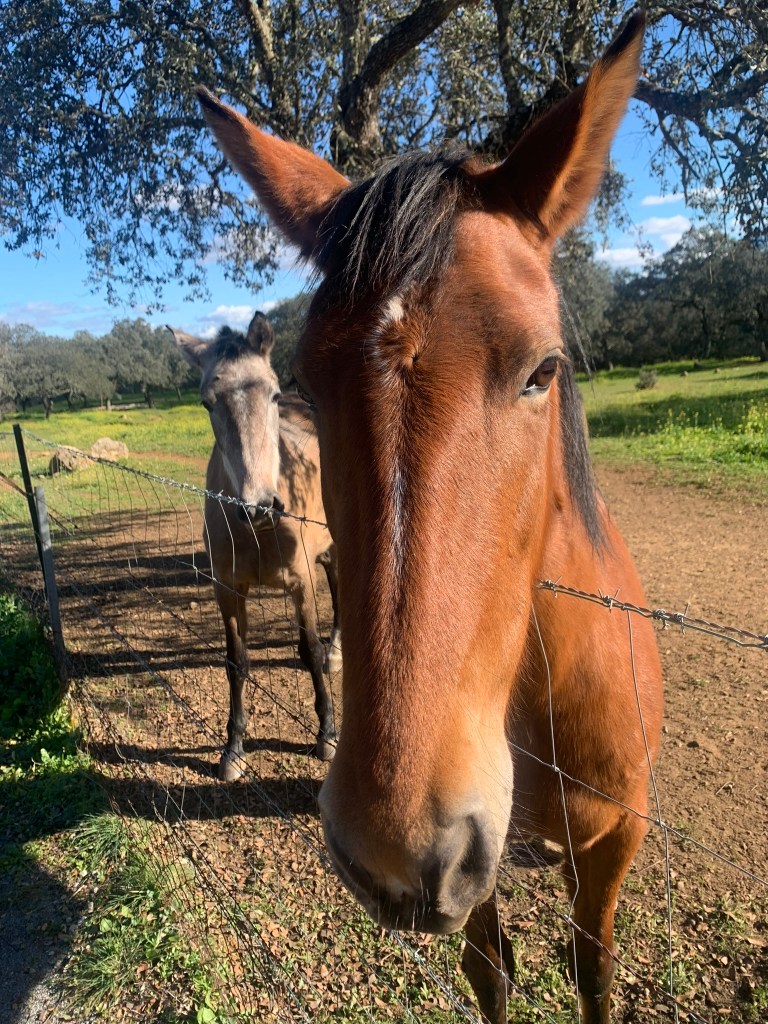
These friendly horses (number five) lived across the road from the goats and sheep. There was a donkey in a nearby field who represented animal number six, but he was too far away to effectively photograph. I’m afraid that, like the sheep, you’re gonna have to take our word about the donkey.
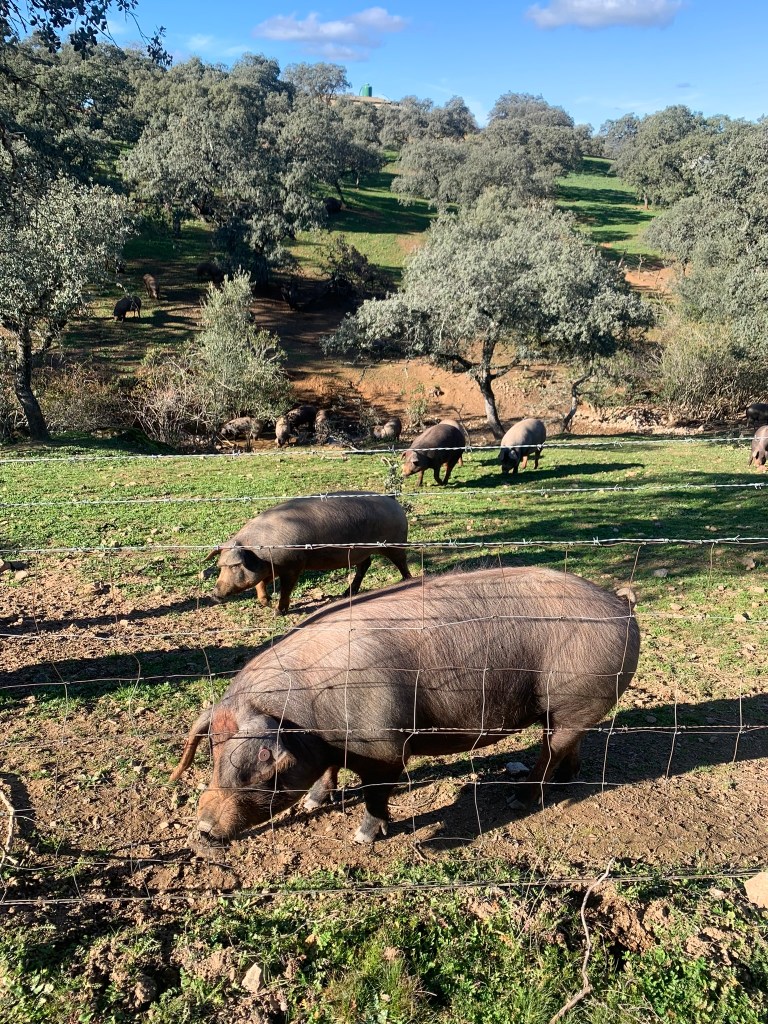
Animal number seven, and our favorite: the black pigs of Andalucia, feasting on the acorns that will fatten them up and turn them into a top-of-menu delicacy. Coco was not amused by these pigs however, and took a very wide berth around them. The whole hike was about five miles and took us back to the church at the top of the town. Most of the walk took place on the Ramos finca. Gracias Señor!
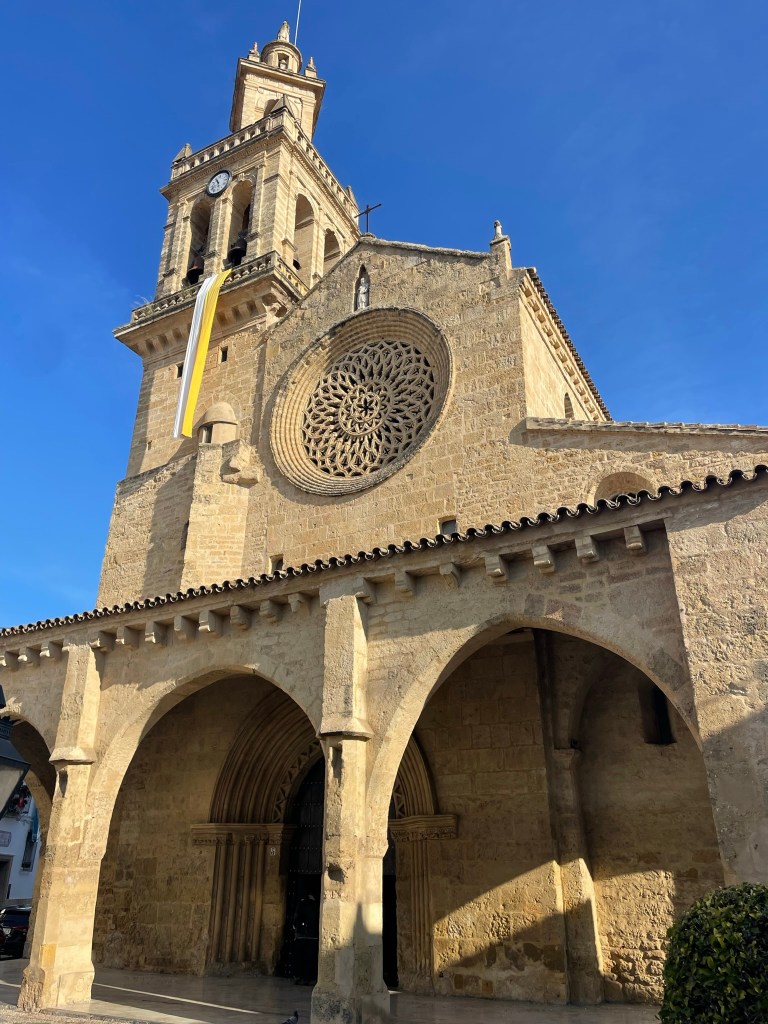
AFC. This is one of Córdoba’s earliest churches, built under Ferdinand III. Iglesia de San Lorenzo.
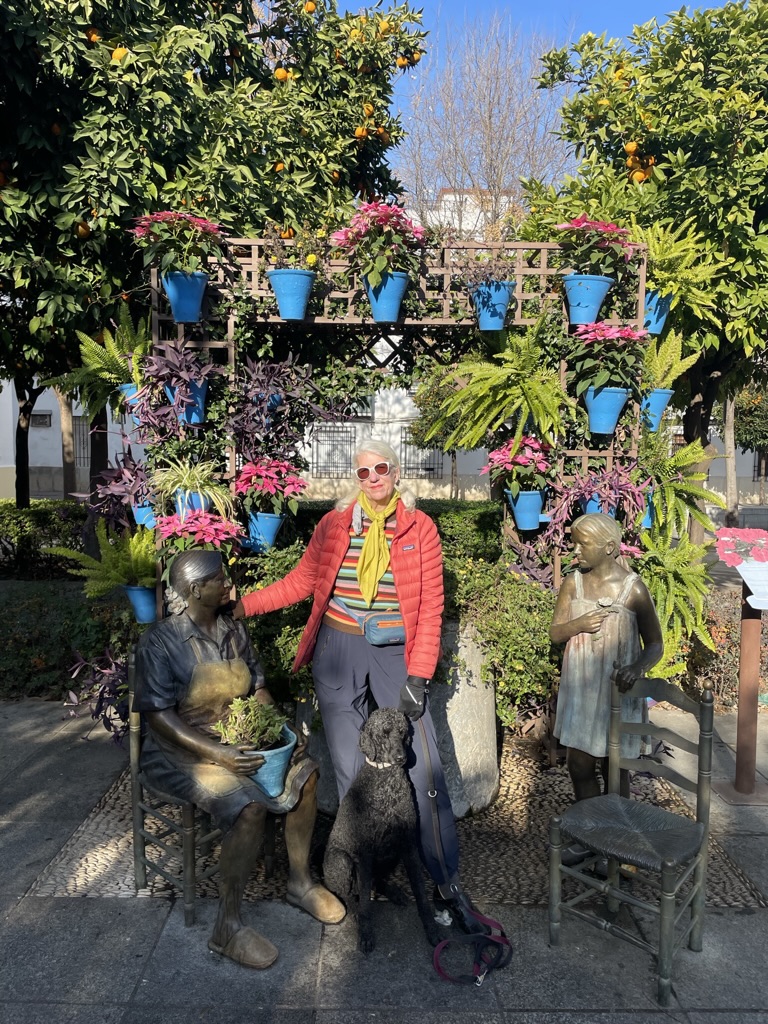
Denise joins the ladies in a public art tableau, celebrating patio culture.
Steve had missed out on our visit to the Alhambra many years ago due to gastric distress, so he boarded a train to Granada on a brisk but sunny day and spent the day wandering the city and the historic Alhambra.
One of the grand buildings of Granada
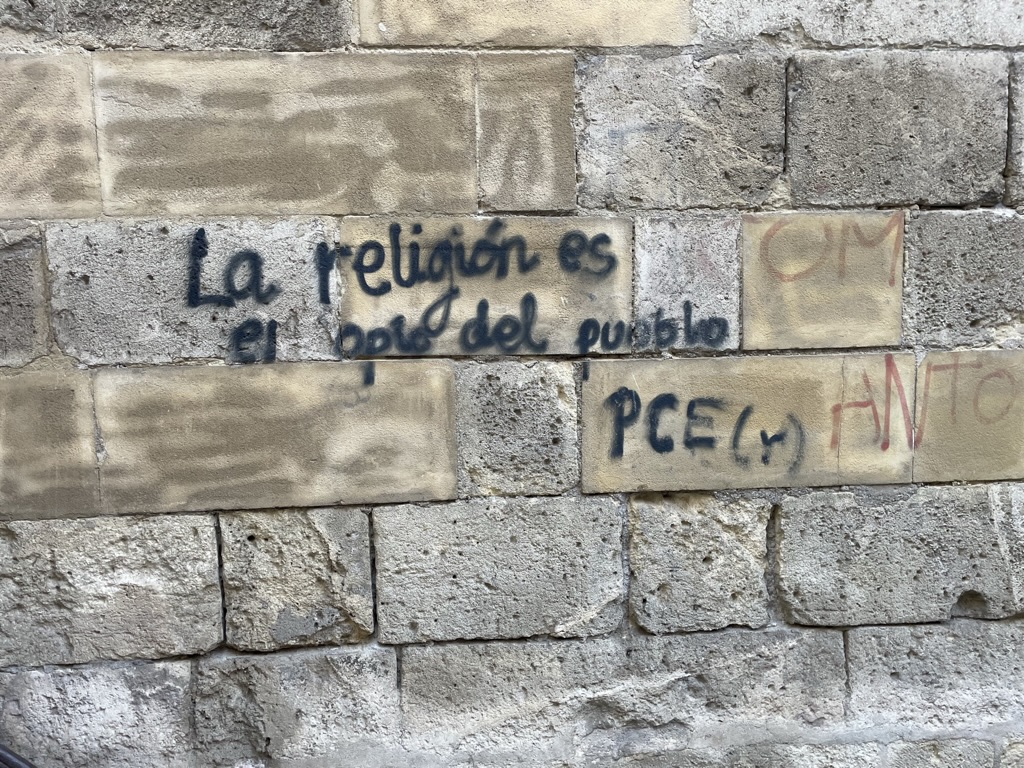
It doesn’t matter what language you write it in, it’s always true.
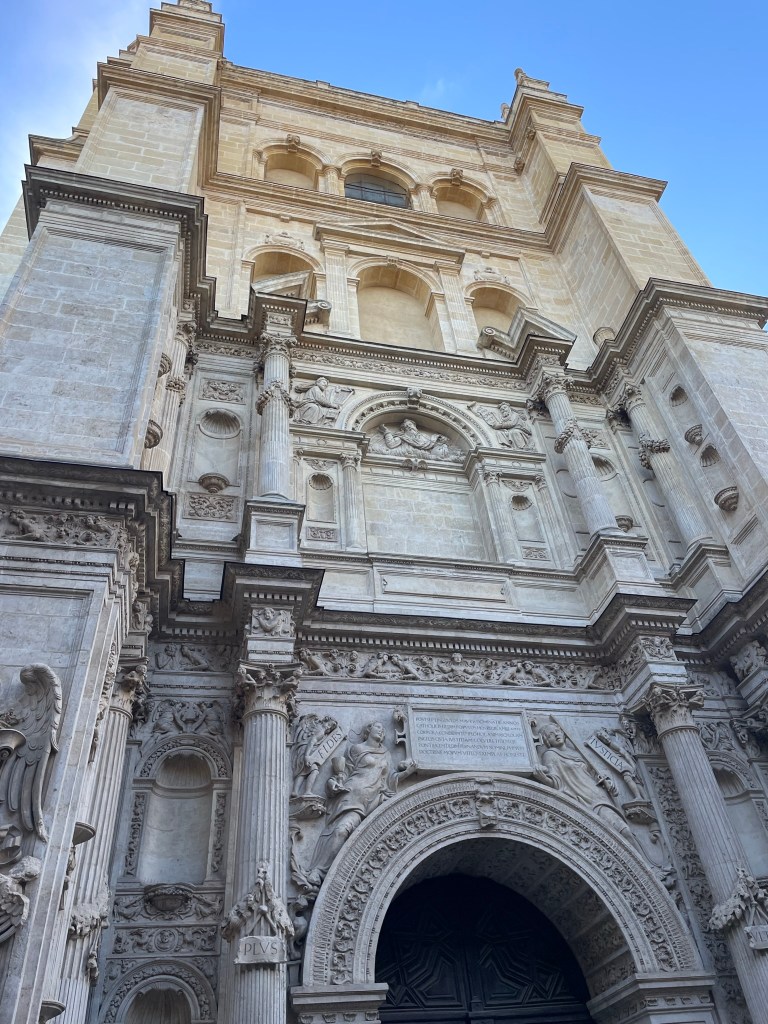
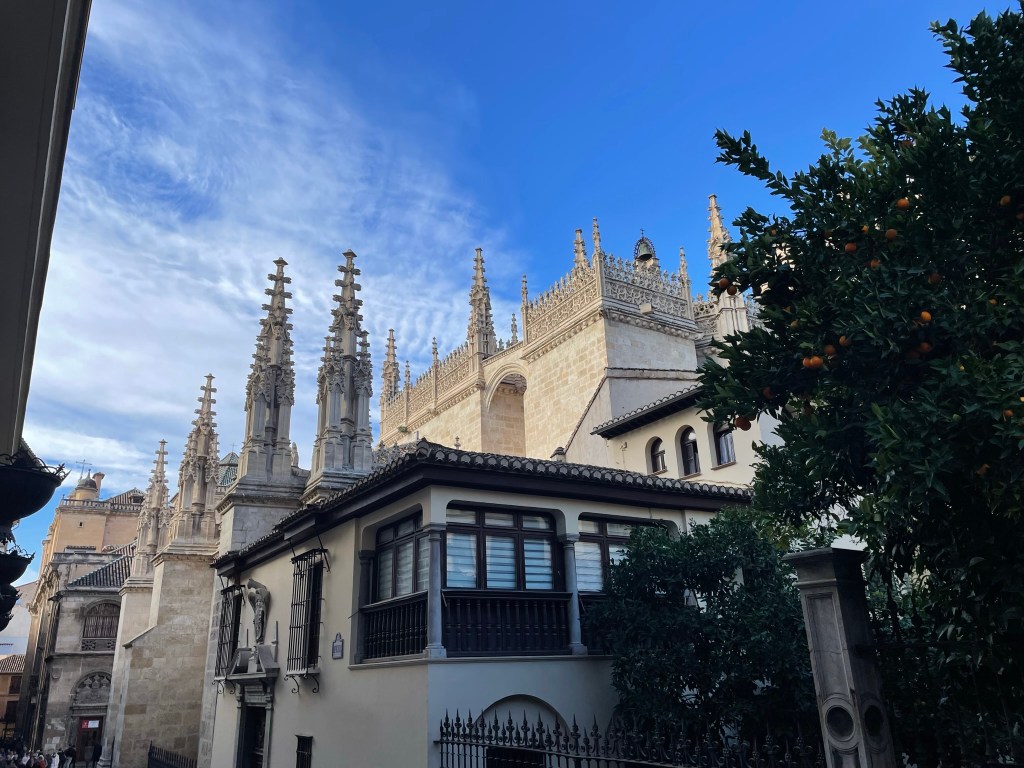
The spires of the Cathedral of Granada.
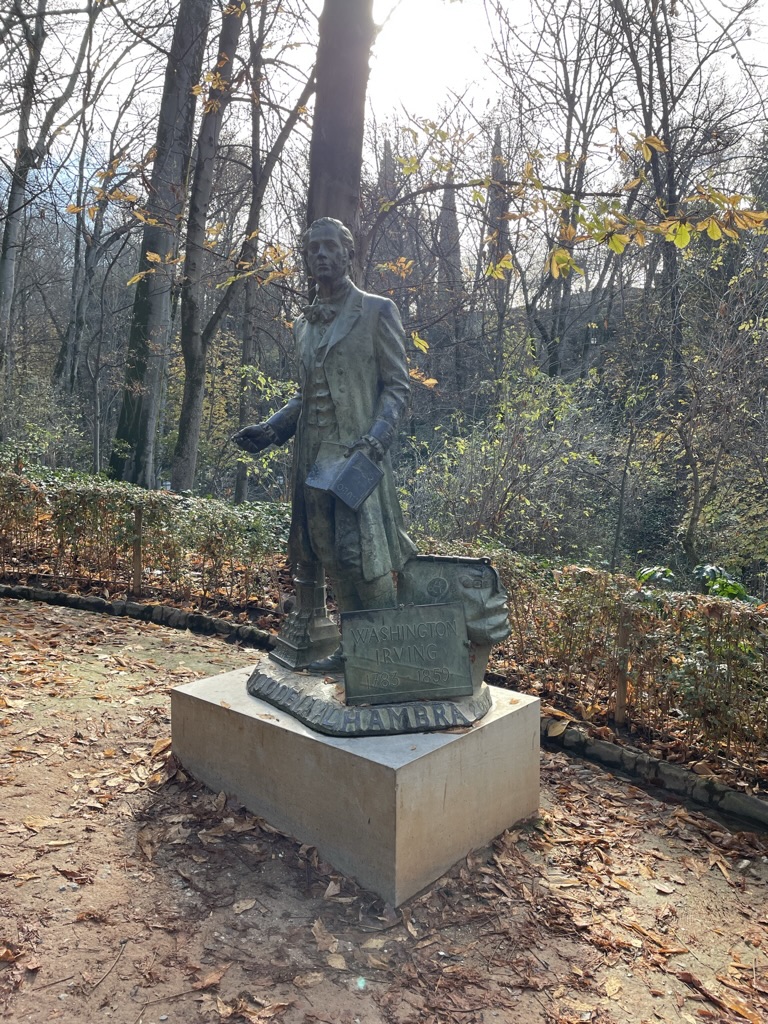
On the road up to the hilltop Alhambra, you encounter this statue of American writer Washington Irving who led the campaign to restore the palace to its’ former grandeur, putting him in the same category of reverence that Woody Allen occupies in Oviedo.
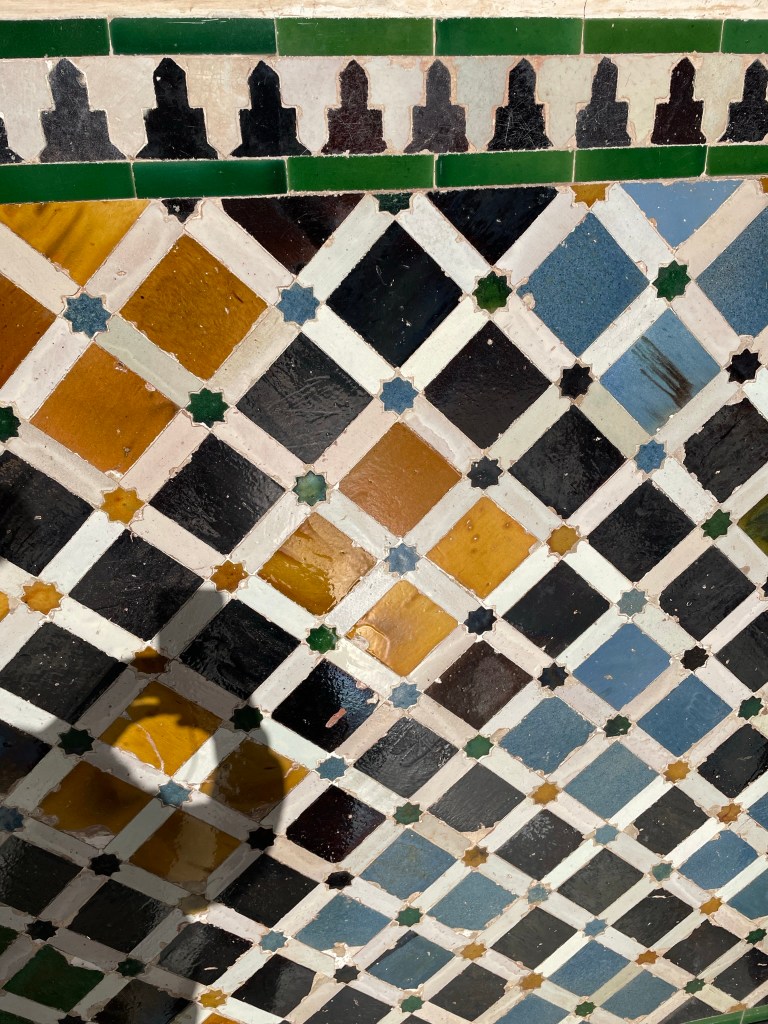
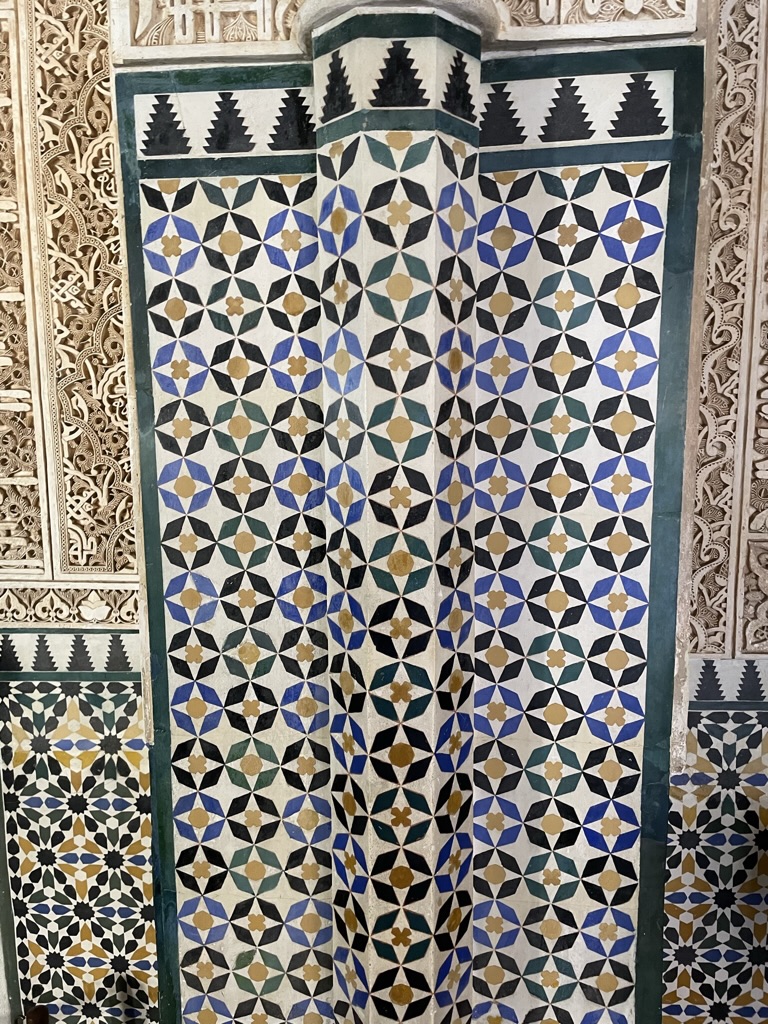
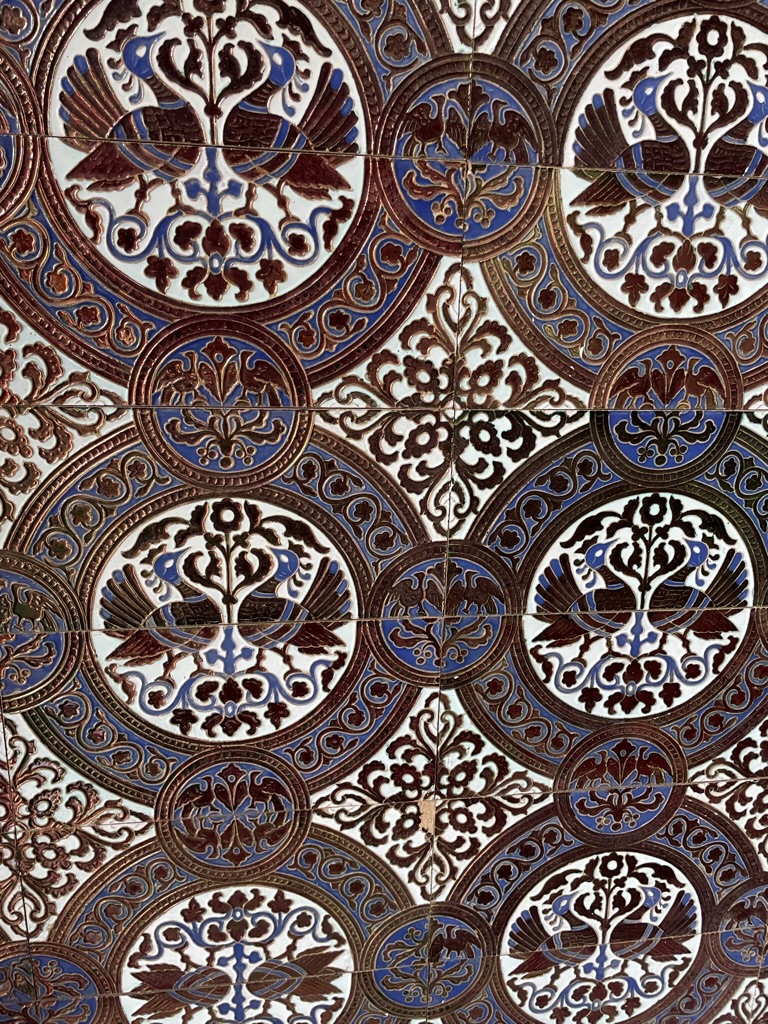
I can’t tell if this is a floor, ceiling, or wall. but I love it.
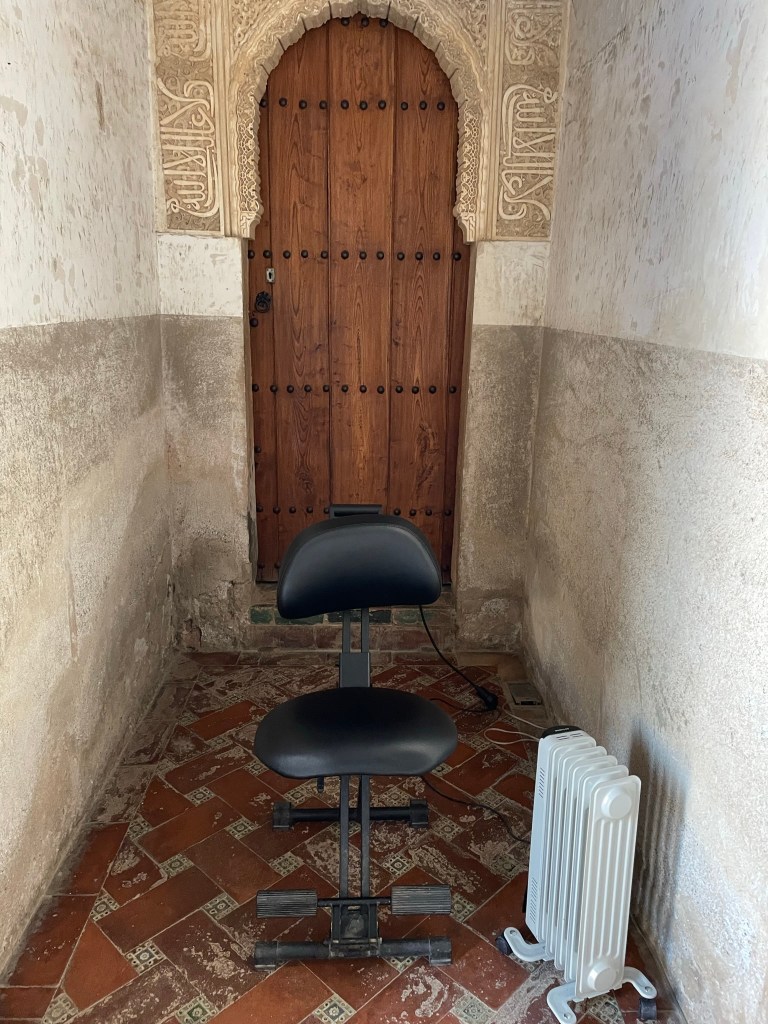
The most important job in the Alhambra was that of the security guard, who was handomely rewarded by the Sultan with an ergonomic chair and a space heater from the local Hiper China.
Definitely a wall. I would totally let the Moors decorate my house.
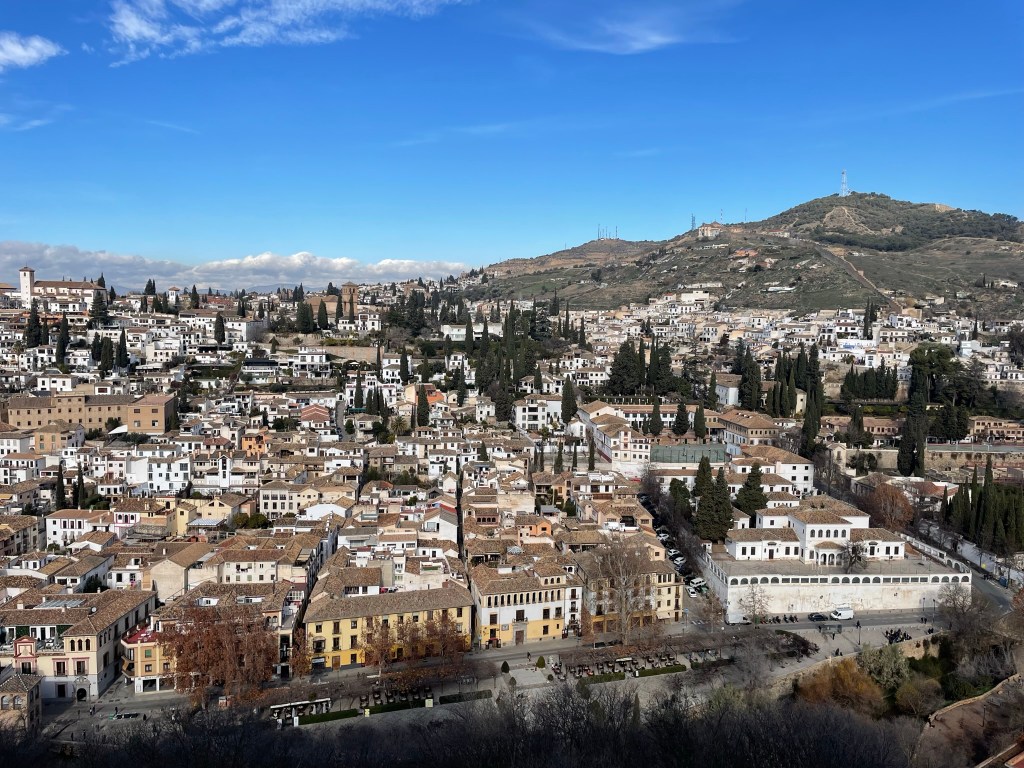
The city of Granada from the terrace of the palace.
Alhambra interior courtyard.
Symmetry was key
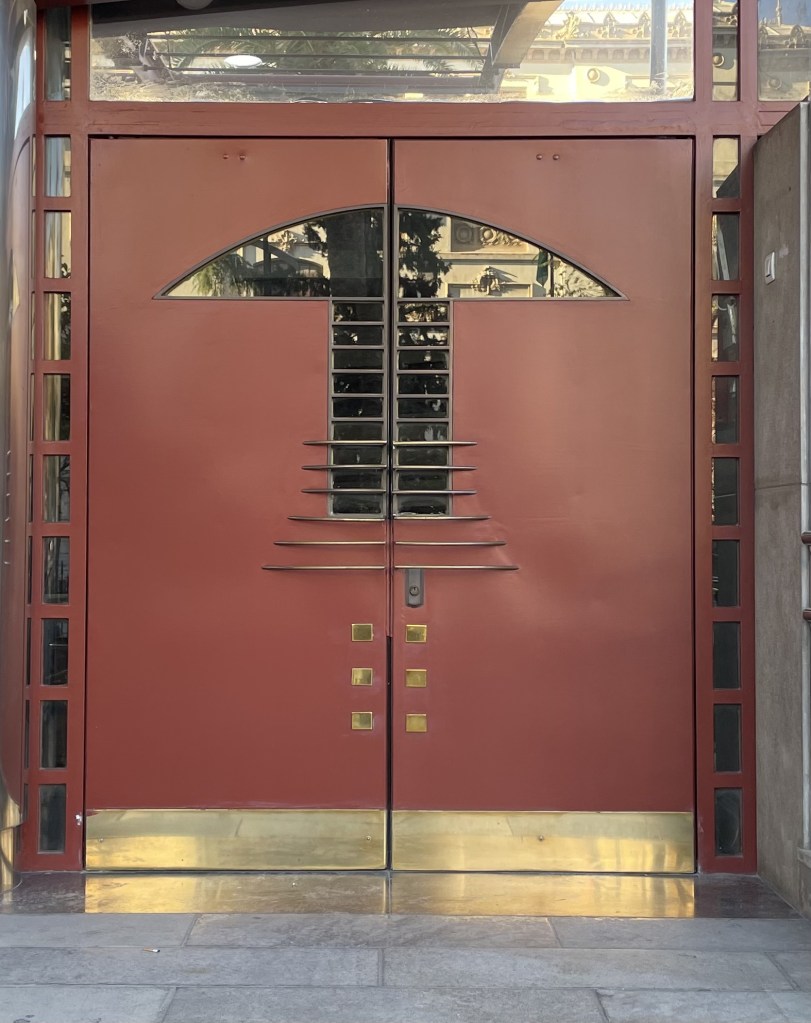
On the walk back to the train station, I noticed these doors on the Ministry of Finance building.

WE INTERRRUPT THIS BLOG POST ABOUT CORDOBA, SPAIN FOR BRIEF LOOK AT THE SIDE TRIP DENISE TOOK TO MADRID TO SEE FRIENDS ANDREA, ERIC, AND COLOMA….

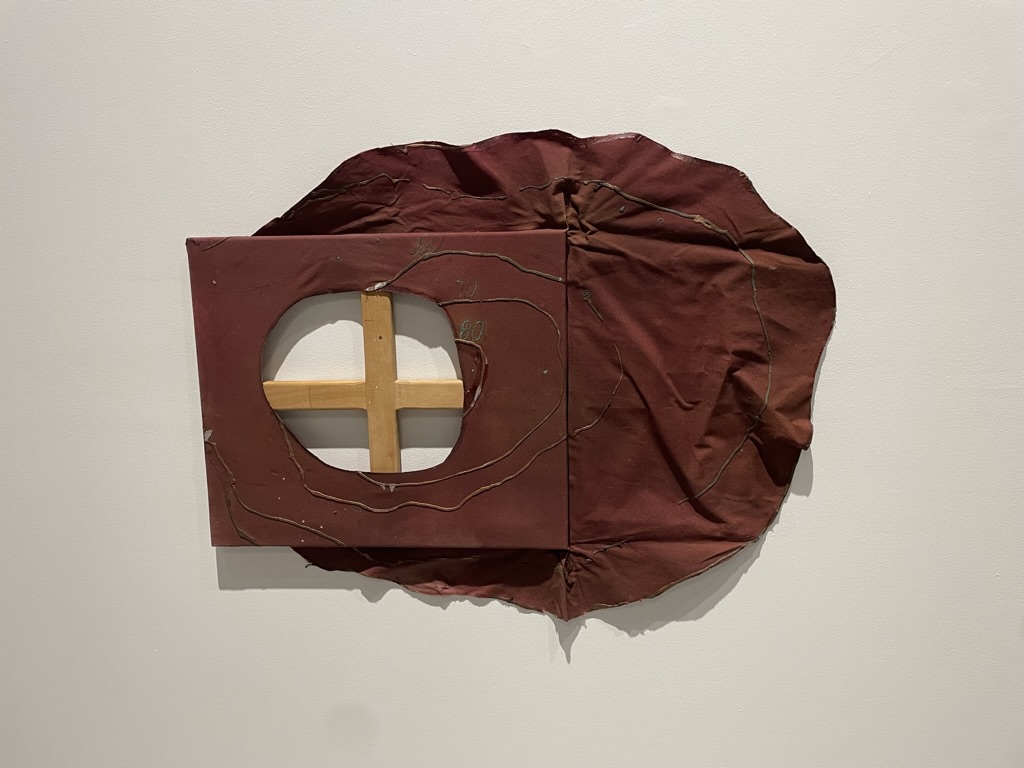
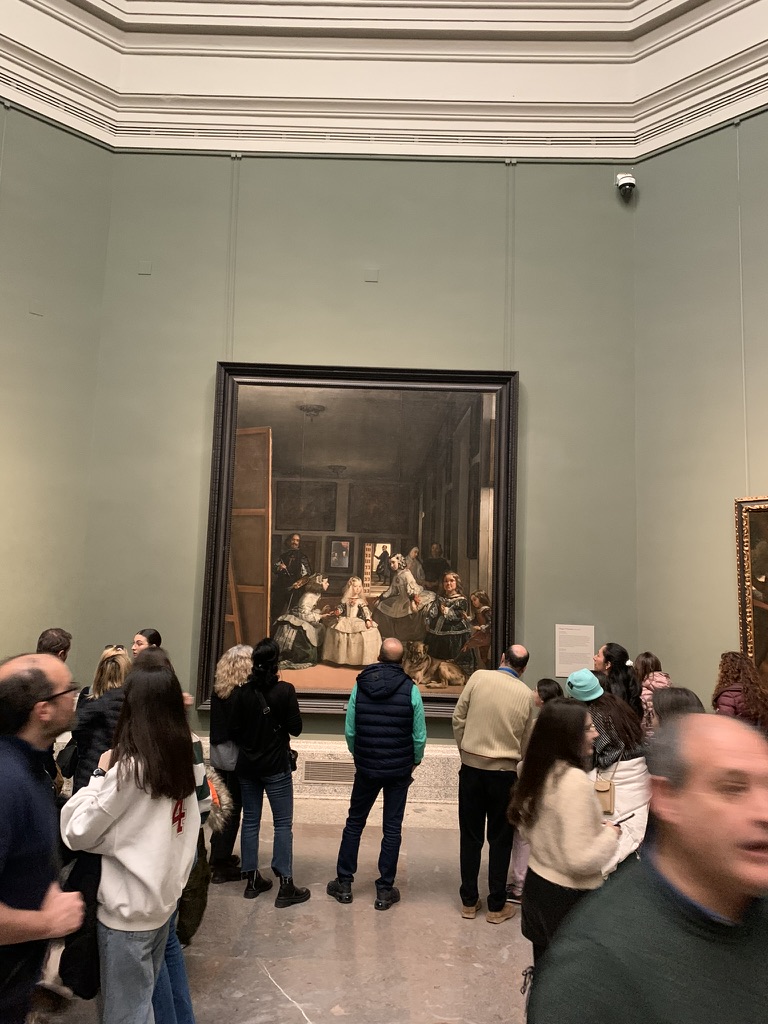
When you get a chance to visit the Museo del Prado in Madrid perhaps you will make a bee line to the Valezquez room, as I did. Interestingly, the museum also happened to have a special exhibit in another wing titled “On the Reverse” that was a fascinating look at the hidden side of the canvass paintings in the Prado collection. Needless to say, this very recognizable work by the Spanish master happened to fit neatly into the theme.
Indulge me for a minute while I talk about fashion – particularly the exsquiste genious of Loewe. It’s a Spanish luxury brand but was actually founded by a German in the 1870’s who took the demand for Spanish leather craftsmanship to international heights. I took my freinds over to the Loewe flagship store on Calle de Serrano and it was a feast for the eyes.
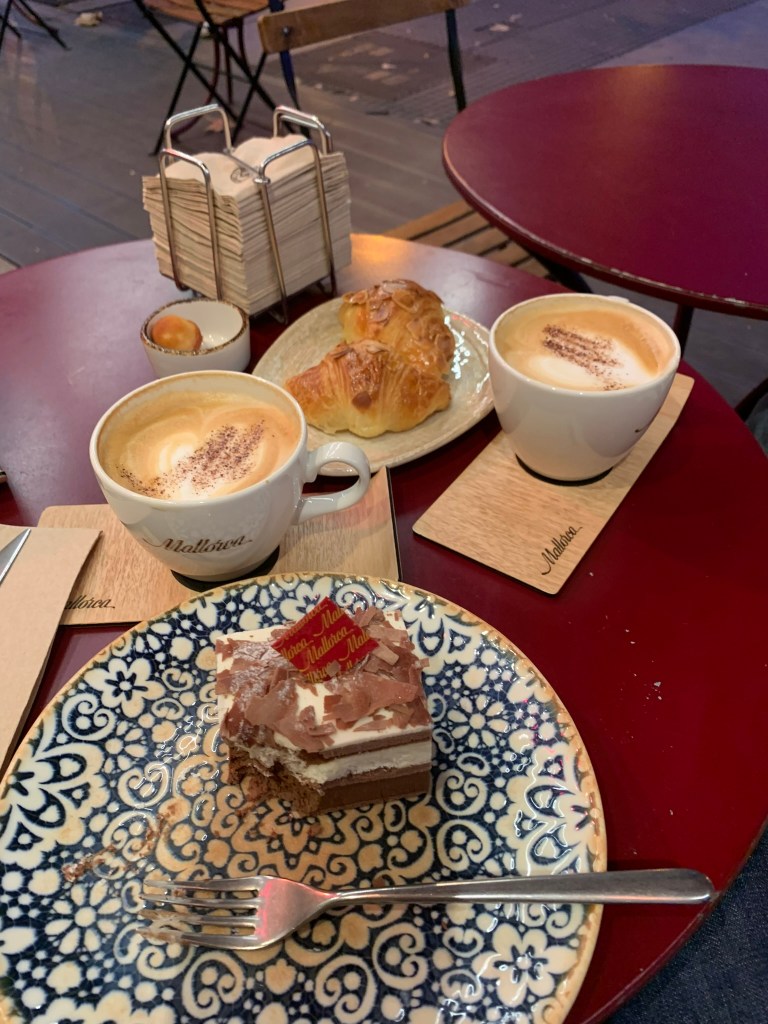
The Madrileño’s take their afternoon coffee very seriously. It’s all very sweet!
If you visit Eric and Coloma in Madrid you will be taken to the very best hole-in-the-wall tapas bars…and there are many, many to enjoy in Madrid! The tapas crawl is a very real deal and its quite natural to go here for this, there for that. This spot was the place that serves THE BEST tortilla in the entire world.
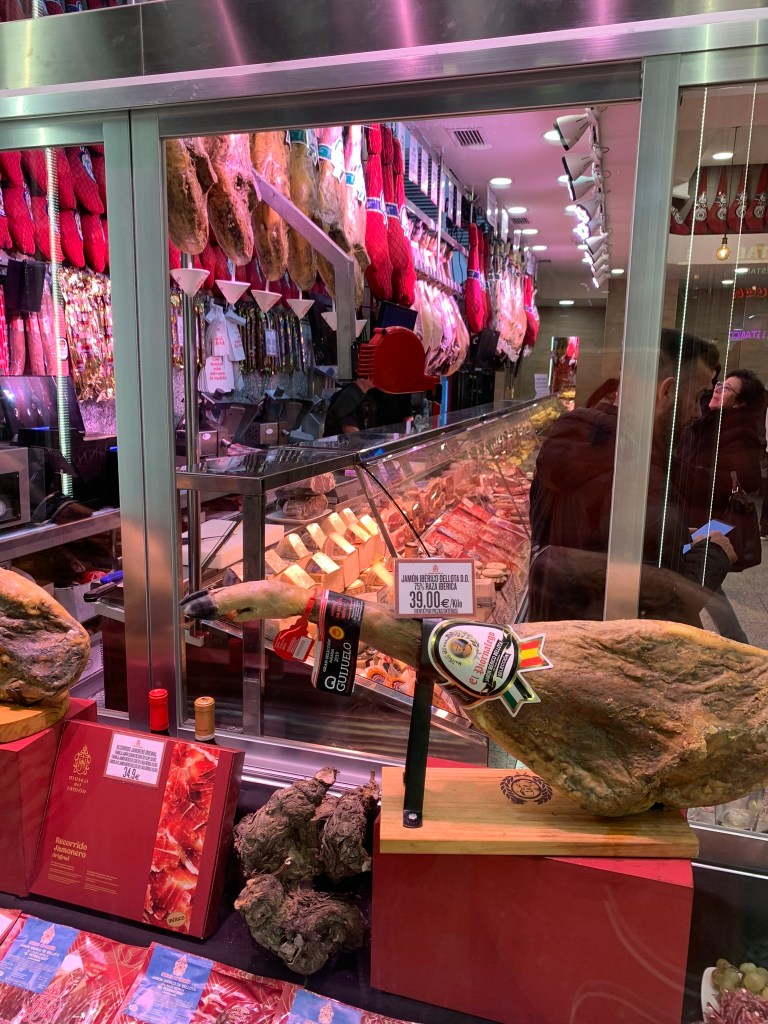
This may look like a glamour purchase, but honestly it’s the kind of thing people just have in their larder. A big hunk of jamon ready to slice and carve as needed…which is pretty much all the time.
A window display in Madrid. Very pretty, I say.
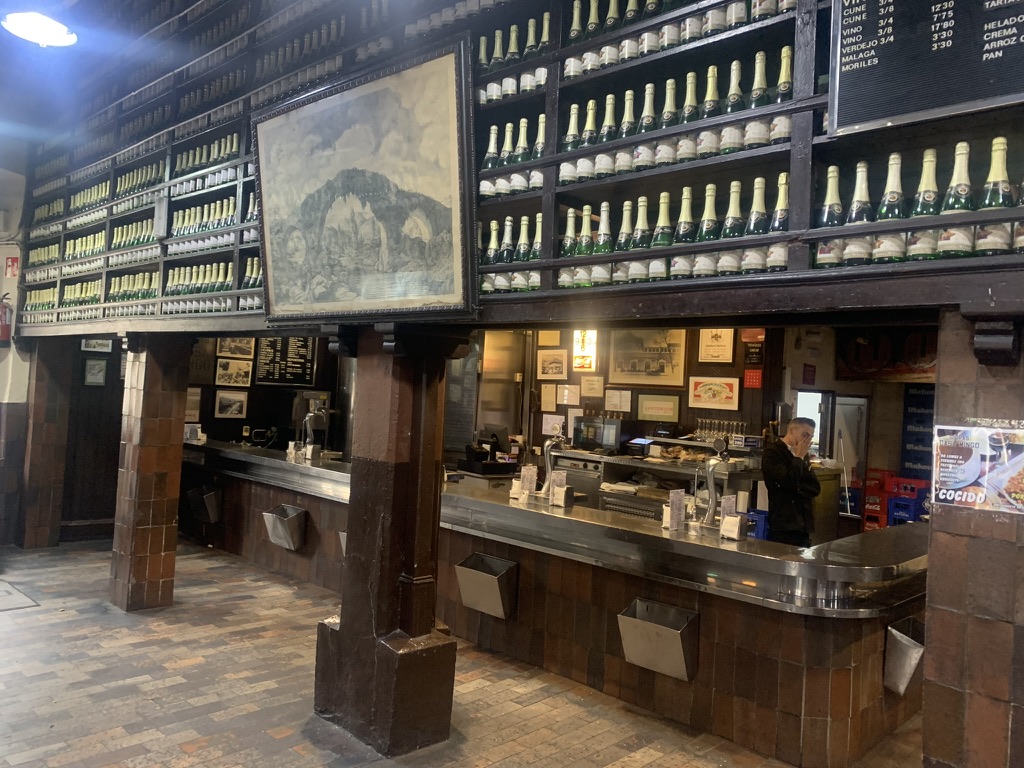
This was an enchanting bar that was not open yet but I ducked in to take a pic.
Three queens at the royal Palace in Madrid
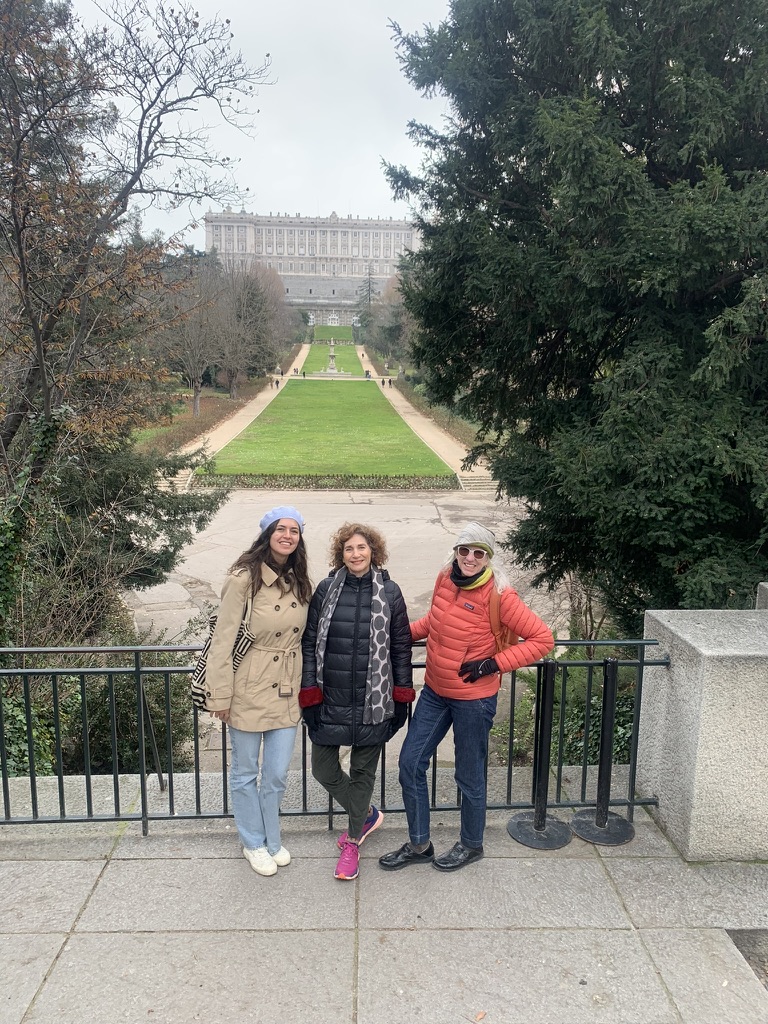
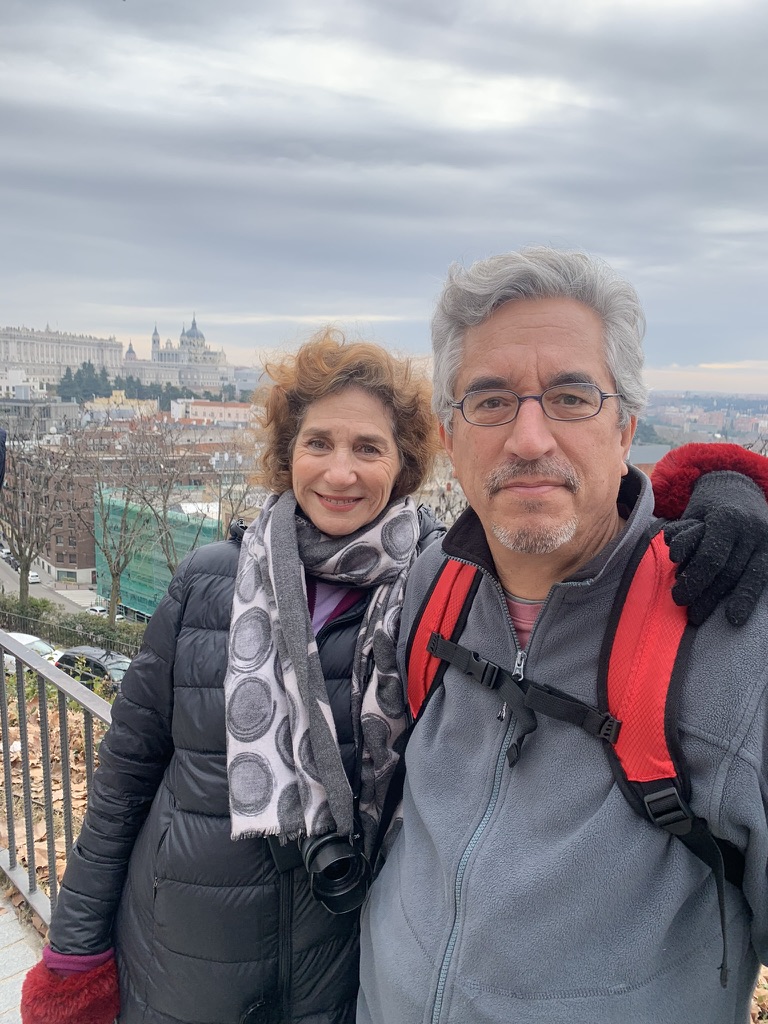
My dear Spanish pals, Eric y Coloma, against the backdrop of the city on a cloudy day. I’ve know Eric since I was a young teen.
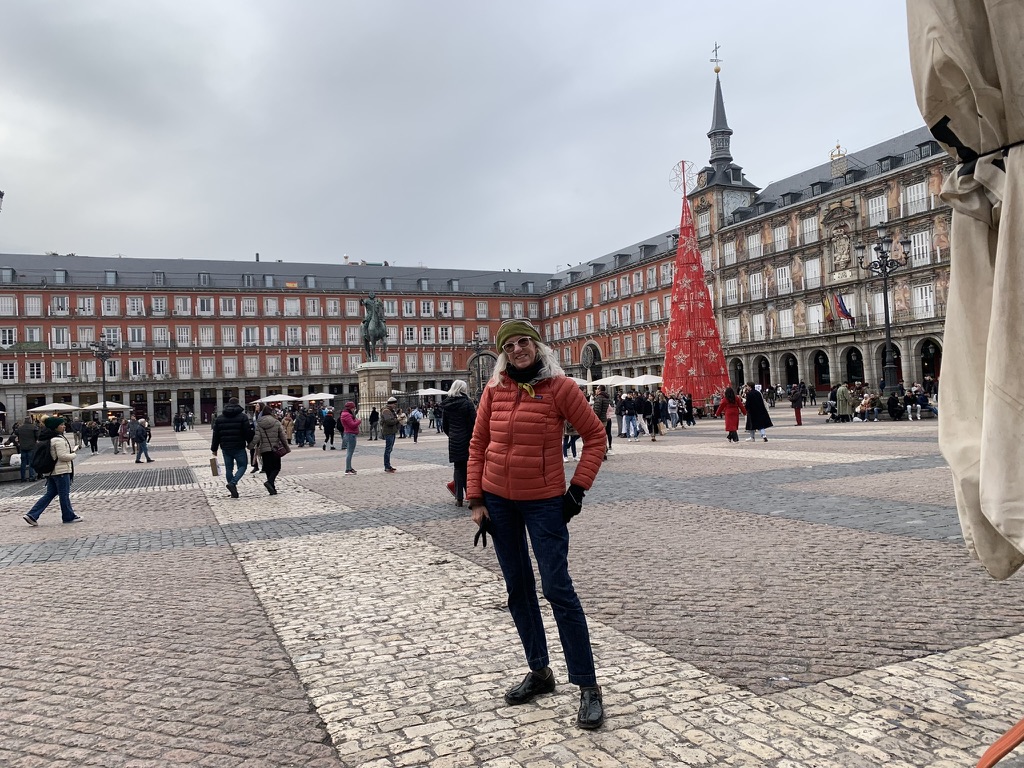
I’m giving some serious Plaza Mayor vibes here…right?

THAT CONCLUDES OUR TOUR OF MADRID. WE NOW RETURN TO YOUR REGULARLY PLANNED BLOG EXPERIENCE HIGHLIGHTING CORDOBA, SPAIN.

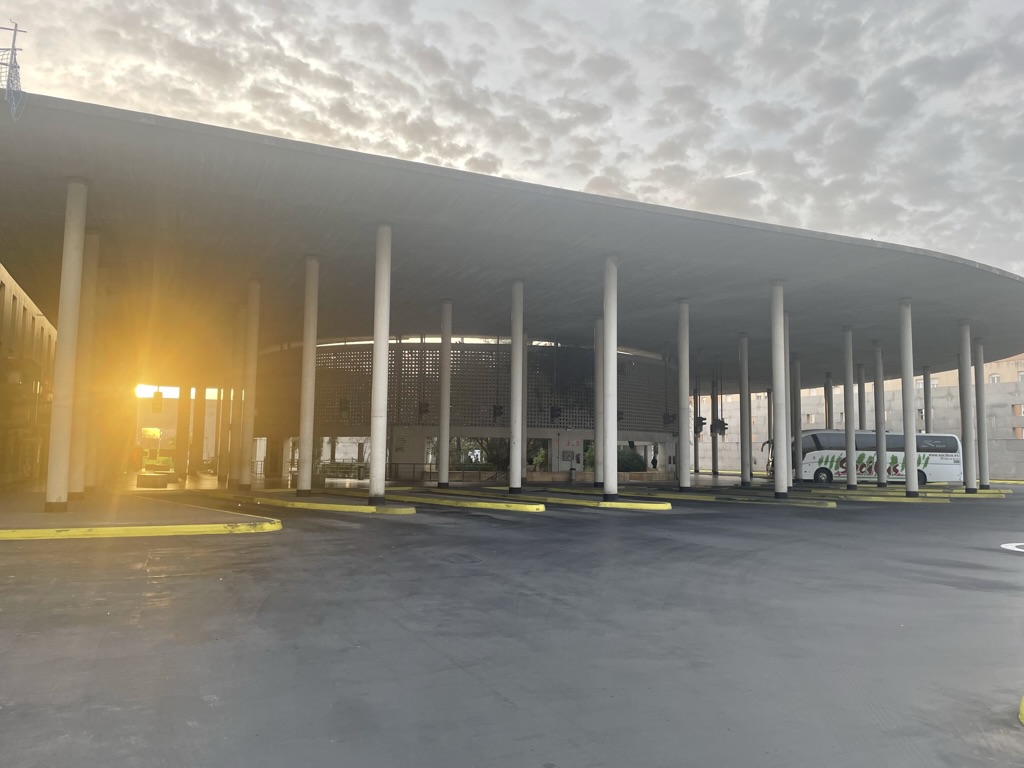
Meanwhile, while Denise enjoyed herself in Madrid, Coco and I explored Córdoba. Here’s the bus station.
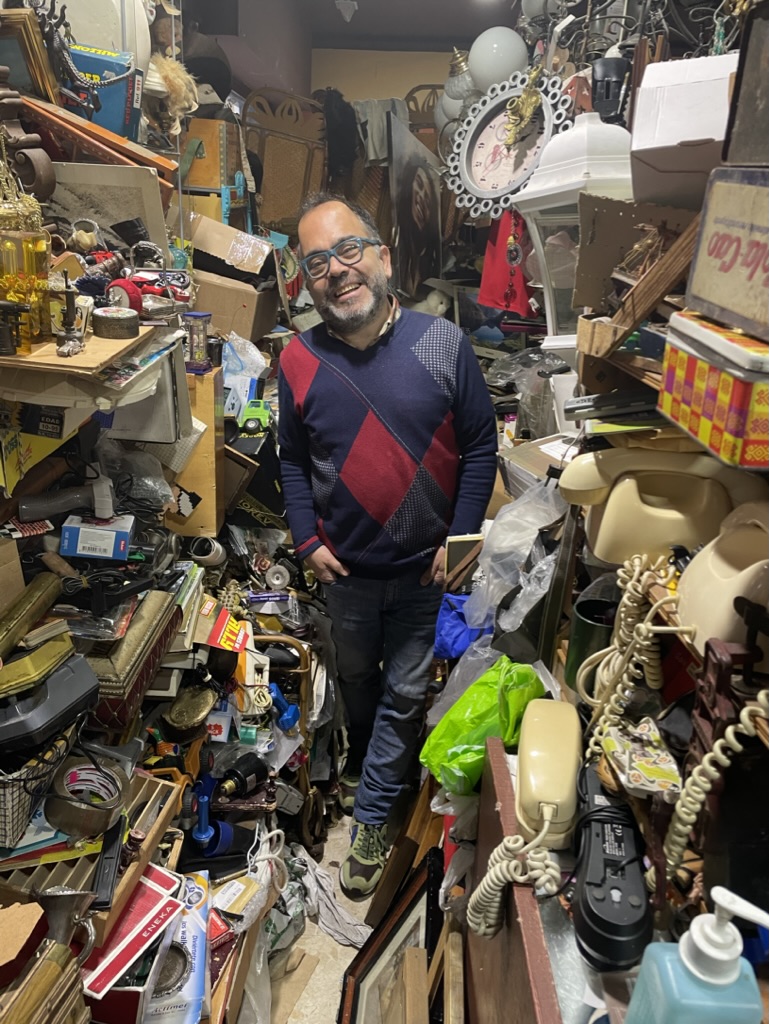
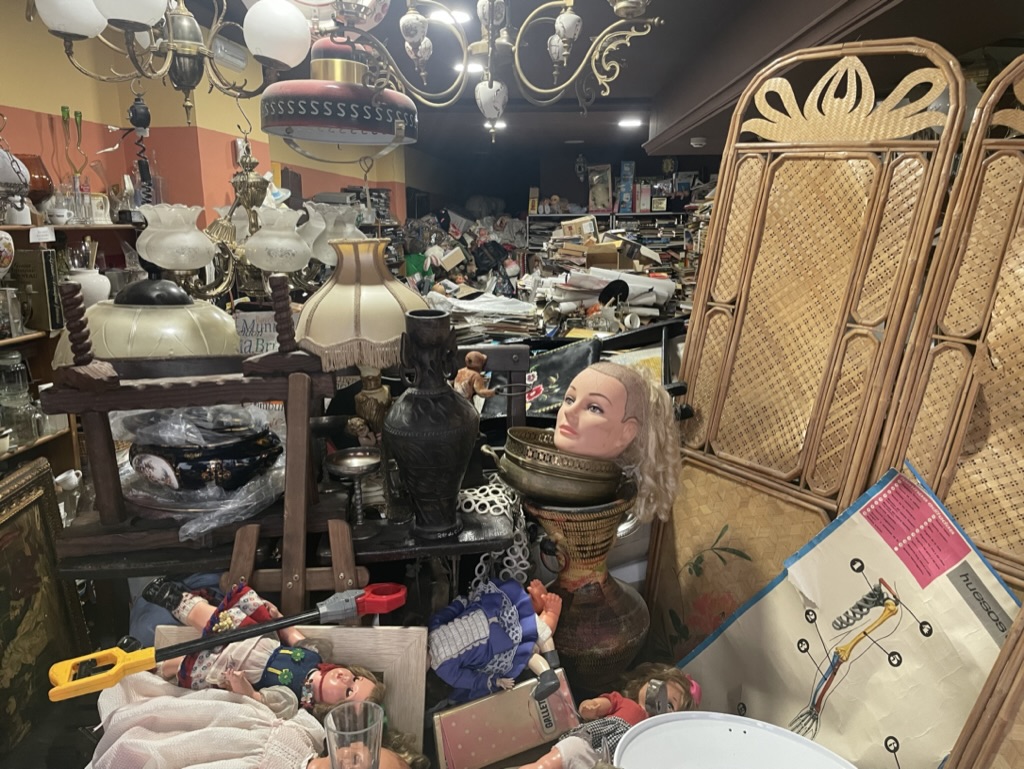
Denise: “One thing I love to do is explore odd ball shops. This one in Córdoba was a gem. It was simply a pile high of every weird junk drawer item and kitschy knick-knack that you could imagine. The guy who ran the shop was so charming and affable. I just could not help but wonder “WHY is this place here?” Anyway, I found some weird treasures and made a new friend!
The stuff went on forever…
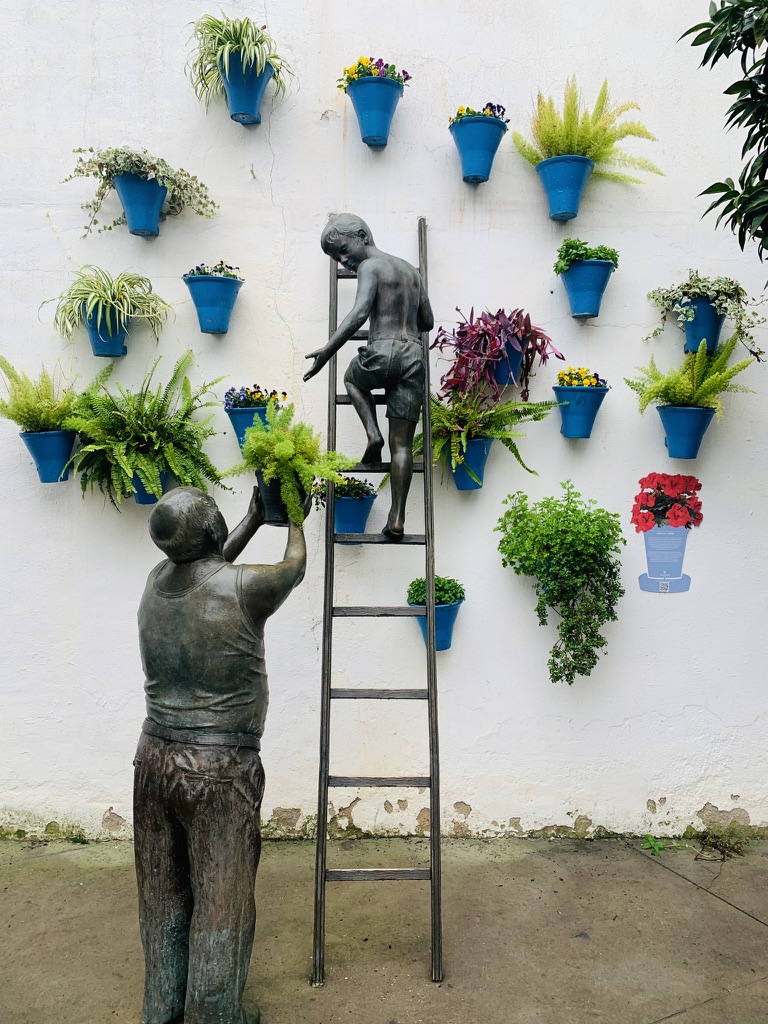
The Córdobés are proud of their patios. Potted plants hang from every veranda and this lovely public sculpture is an homage to the care that is taken to keep the narrow streets of the city covered in blooming plants and vines year-round. Such a delight!
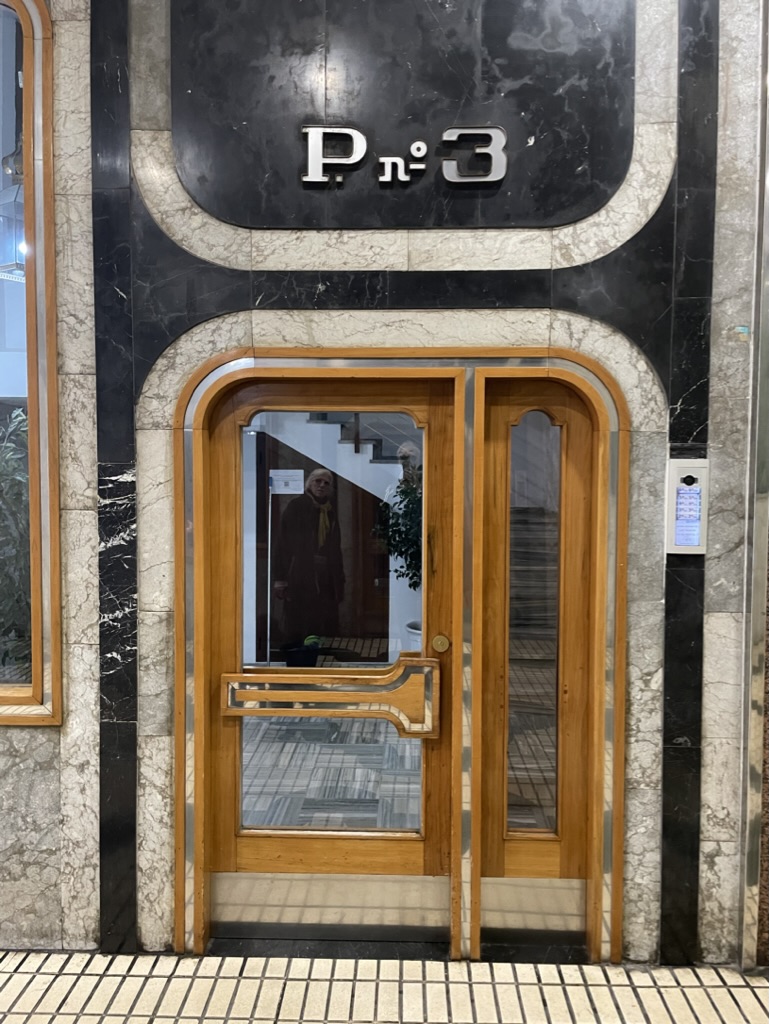
Despite being under Franco’s rule, the designers of Spain kept up with the lastest mid-century trends.
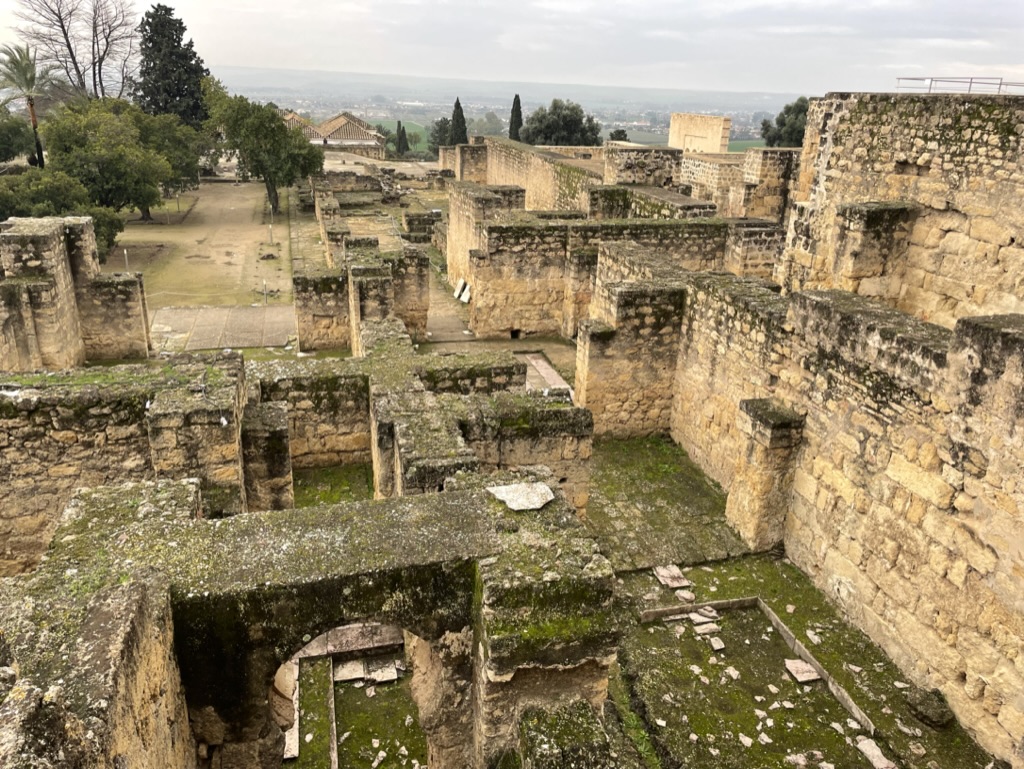
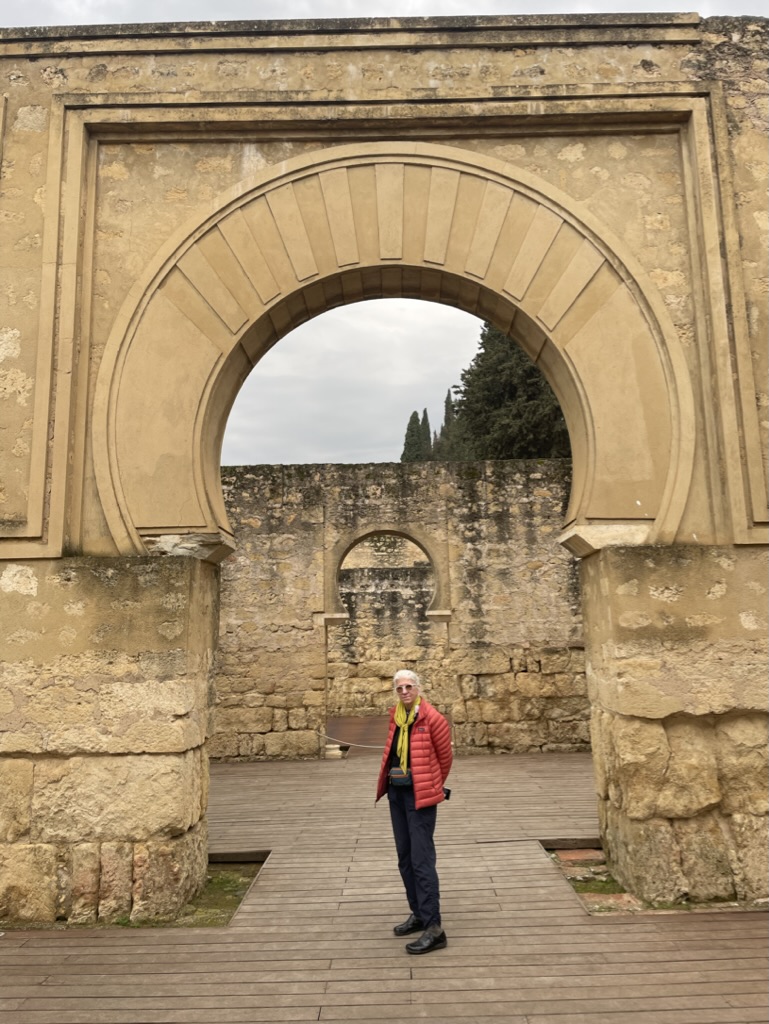
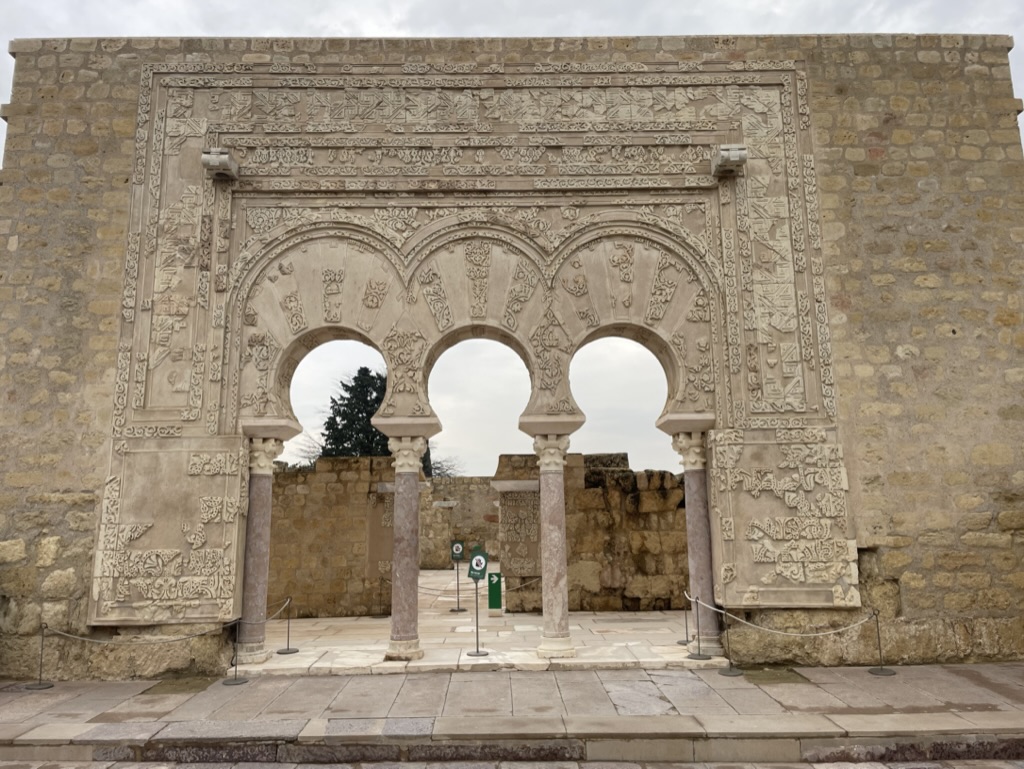
The next few shots are of the Medina Azahara, the ruins of a fortified palace-city on the western edge of Córdoba, tucked into the foothills of the Sierras.
This was an entire city, built in the 10th century to house the Caliph and the citizens of Azahara. However, after he died, it fell into disrepair and is still undergoing excavation and restoration. Amazingly, they still let you walk through the ruins that overlook Córdoba. You can tell that Spain doesn’t have the robust tort law system that we enjoy in the USA.
Denise among the ruins
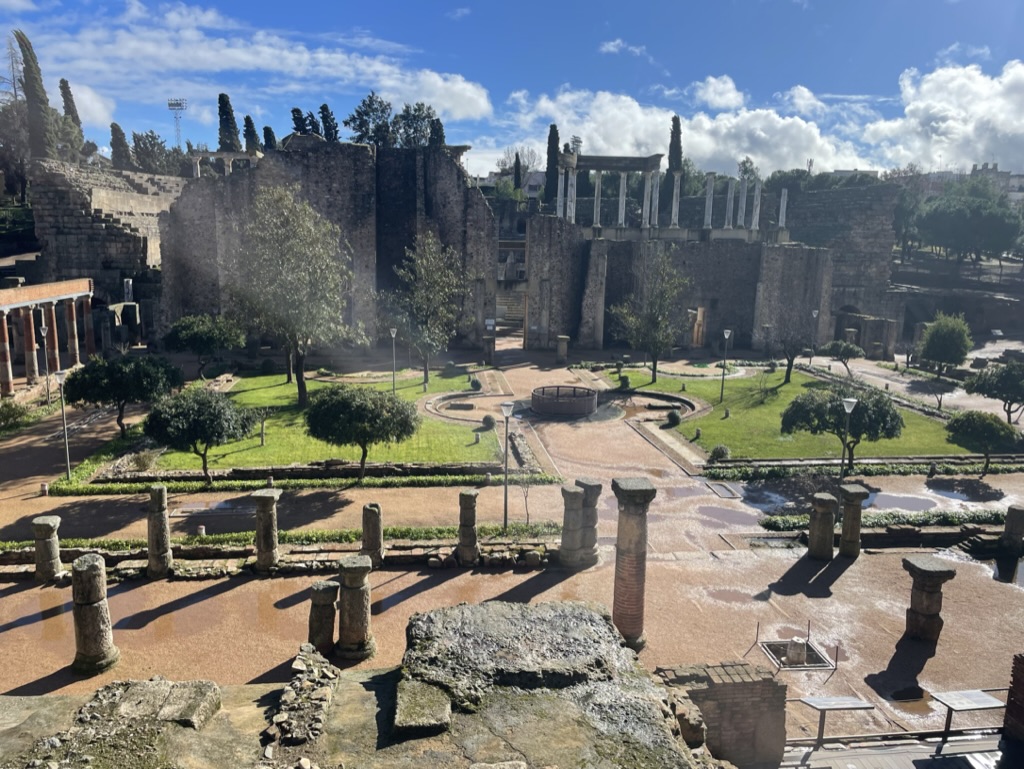
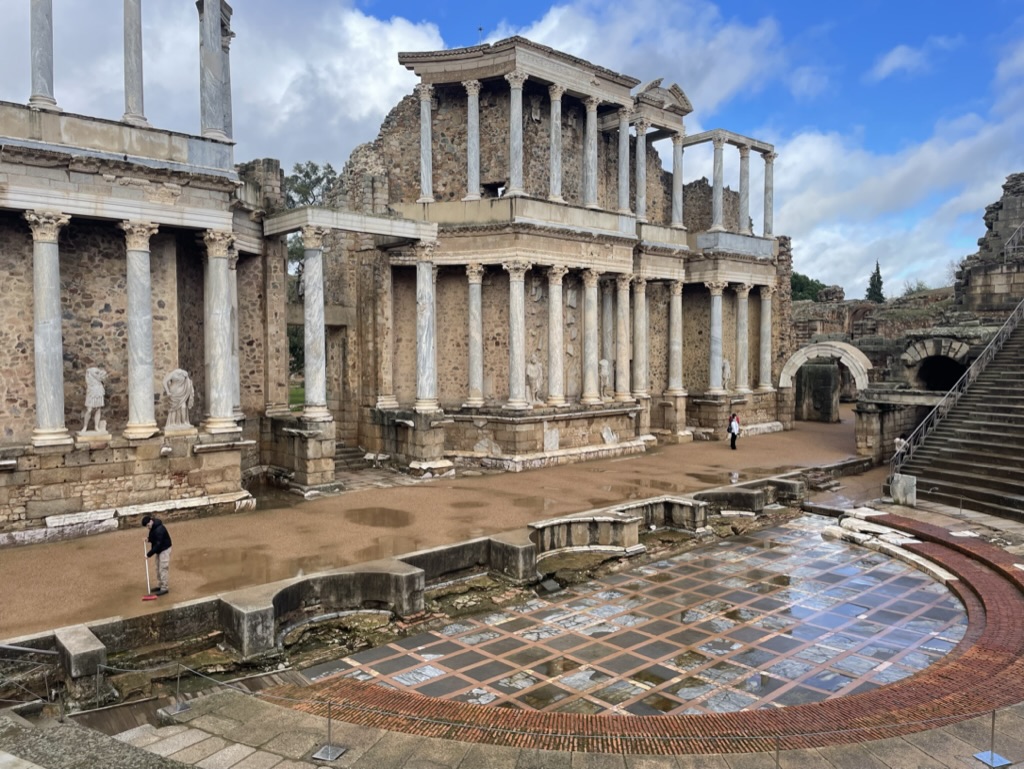
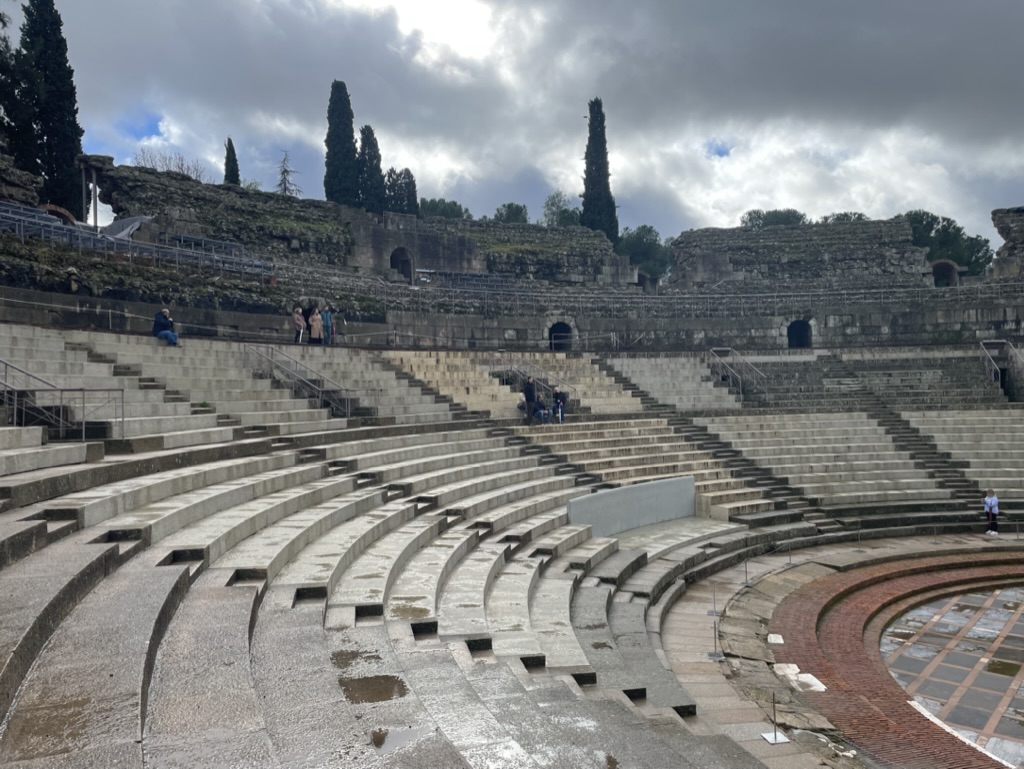
This, and the next few pictures are from our trip to Mérida, a small city in the Extremadura region of Spain., about a three-hour drive from Córdoba. They have remarkably well-preserved Roman ruins at several sites, none more spectacular than the Teatro Romano, which you invited to freely stroll through.
They still do performances here in the summer, as they did back when Jesus was in short pants.
The excavation started in 1933 and it was declared a UNESCO World Heritage Site in 1993.
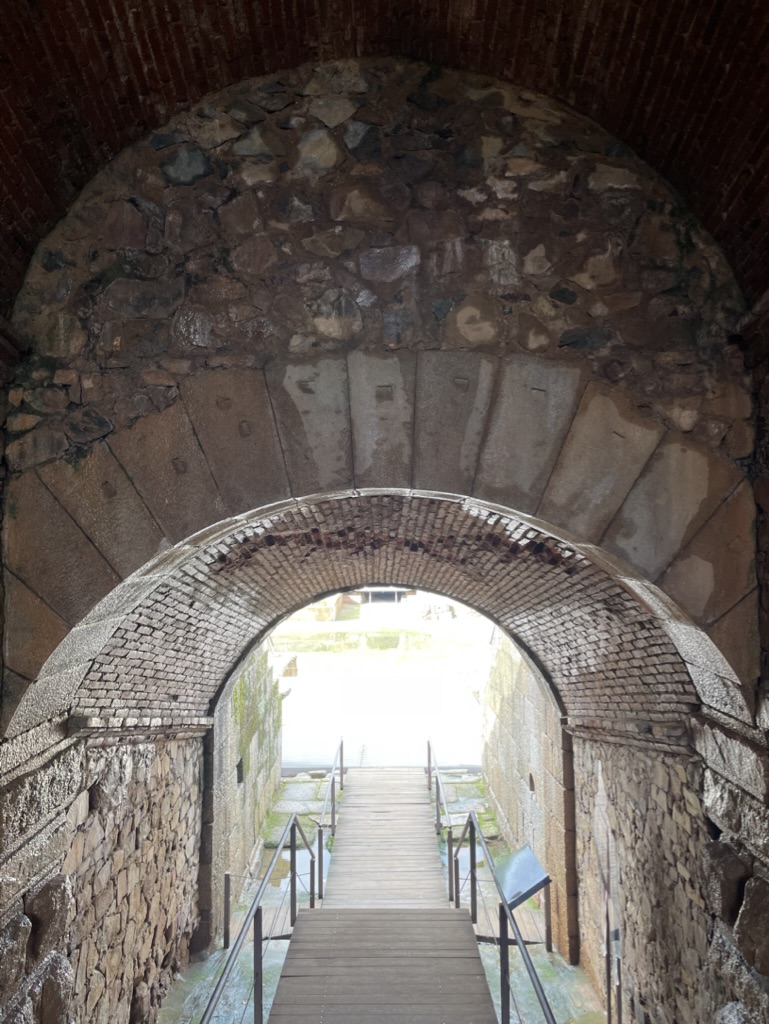
Narrow passageways lead to underground holding areas for the gladiators.
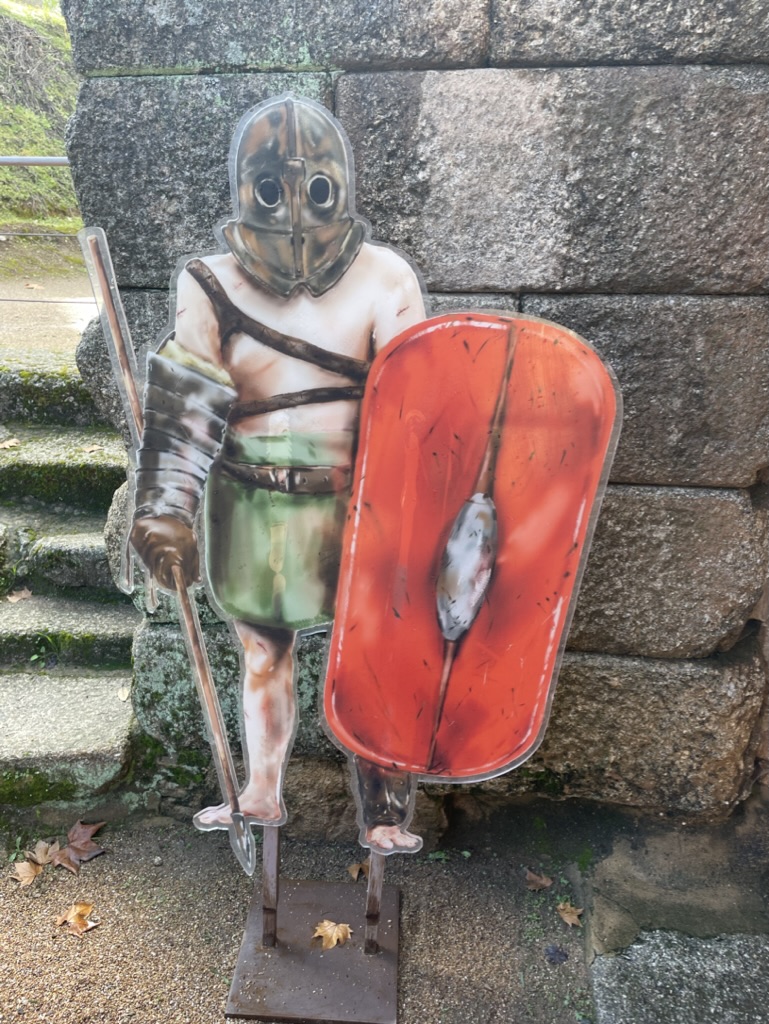
This is the costume of a Secutor gladiator, waiting to start the fight. Most of the gladiators were prisoners of war, slaves, or criminals. If they survived their time in the gladiace, they were set free. Just kidding, they all died a violent death in the amphitheater.
This is the gangway that from which the gladiators entered the ring. The stairs, I think, were added centuries later.
A couple of roman statues in the setting sun….The one on the left is tribute to Denicia, goddess of poodles.
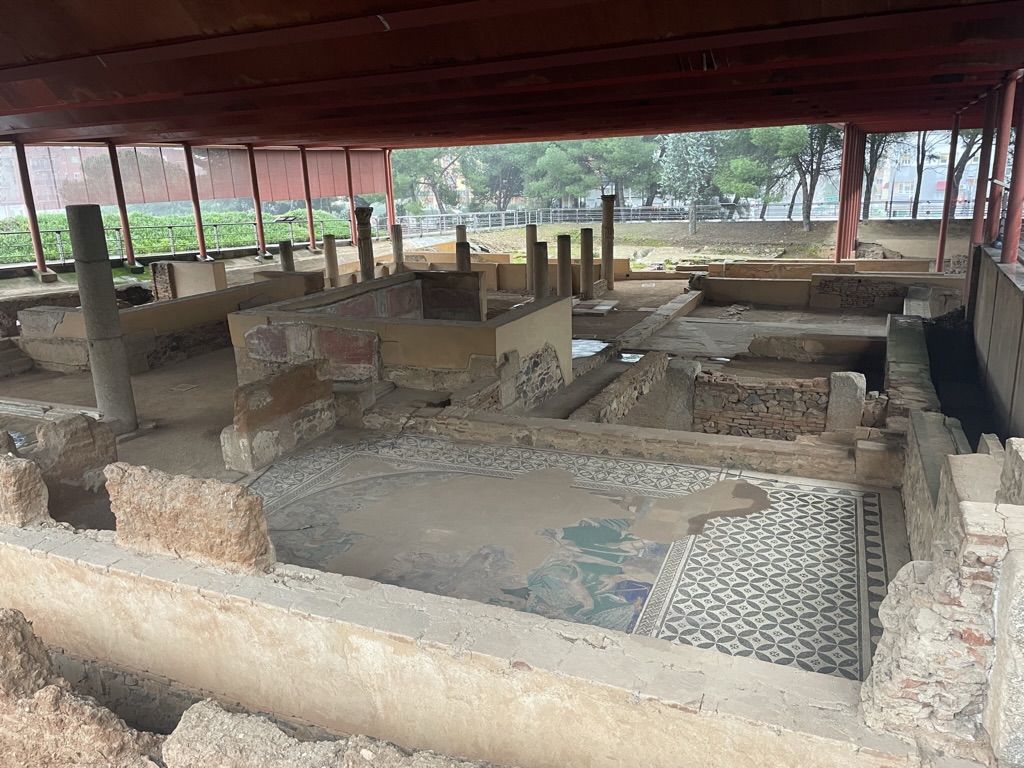
Another Roman ruin in Mérida: this is a home that was unearthed in the 1960s during construction of a government building. This was a single-family home during Roman times, later subdivided by the Visigoths, who were always looking for ways to save on rent.
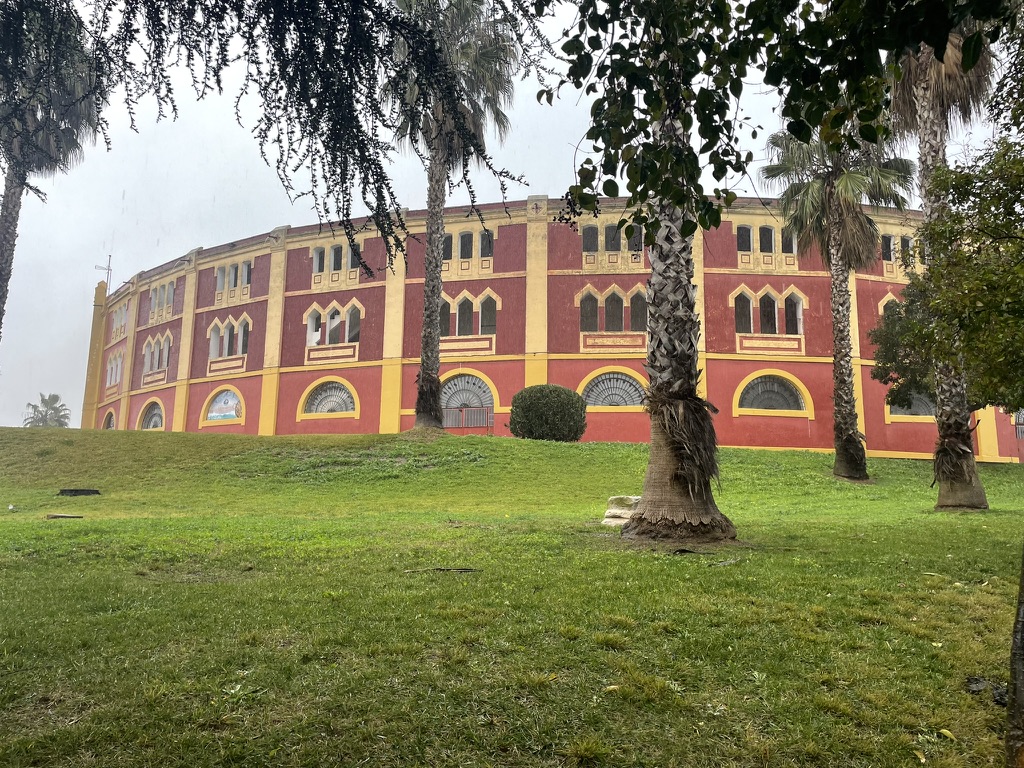
Oh man, I wish we had had more time to explore this, the bullring in Mérida. As it was, I had to brave a Spanish monsoon just to get the picture.
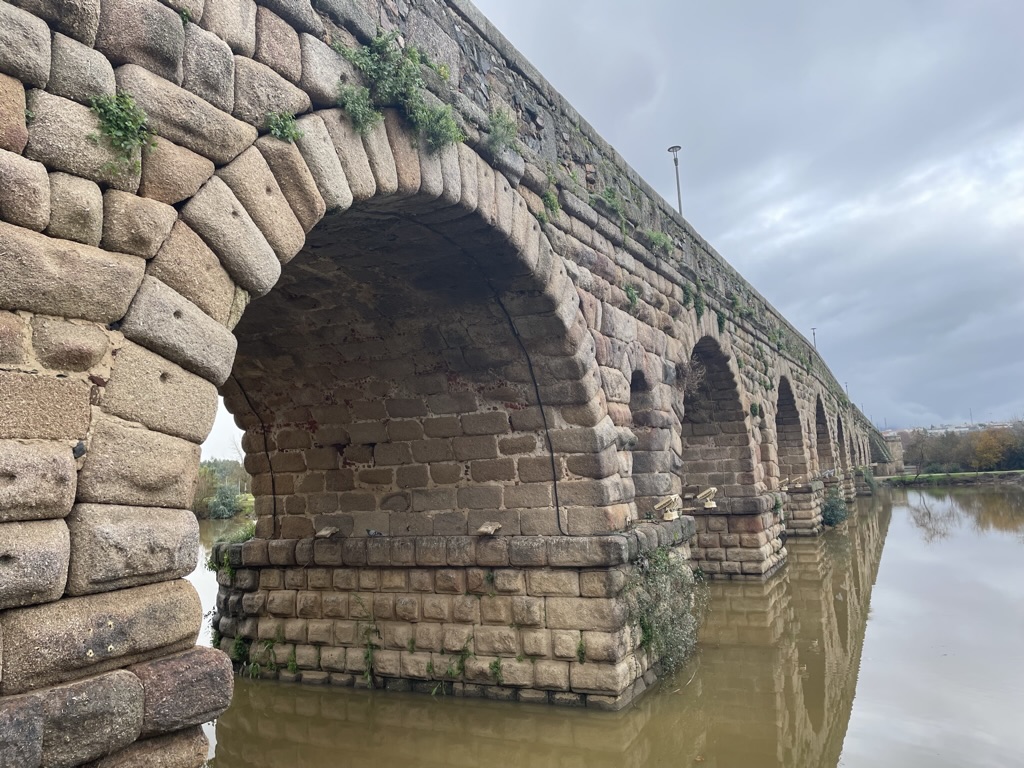
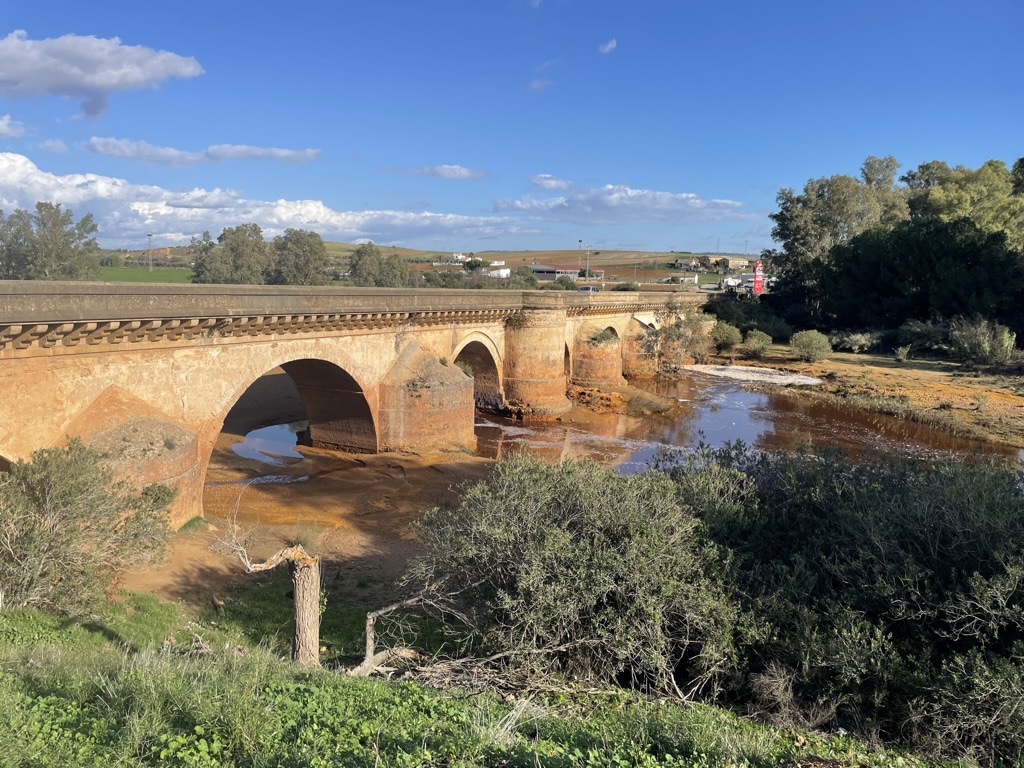
The old Roman bridge in Mérida. Later civilizations used stones from the Teatro to repair the bridge as it aged.
More Roman ruins, but the city of Mérida built their city hall on top of these old homes.
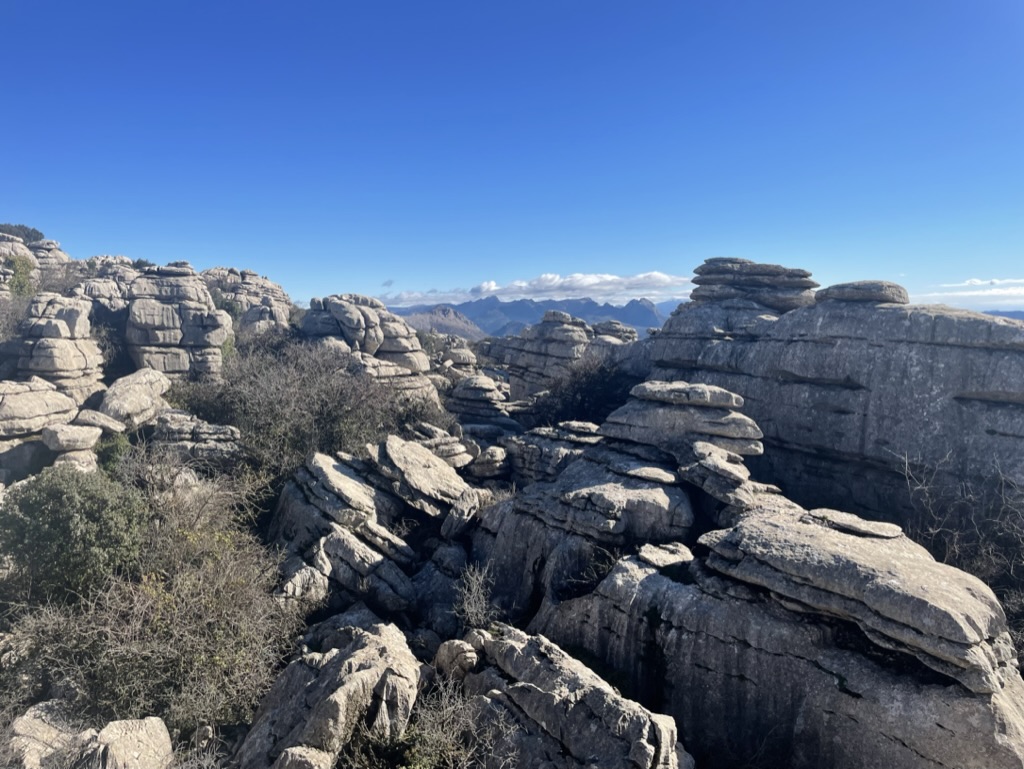
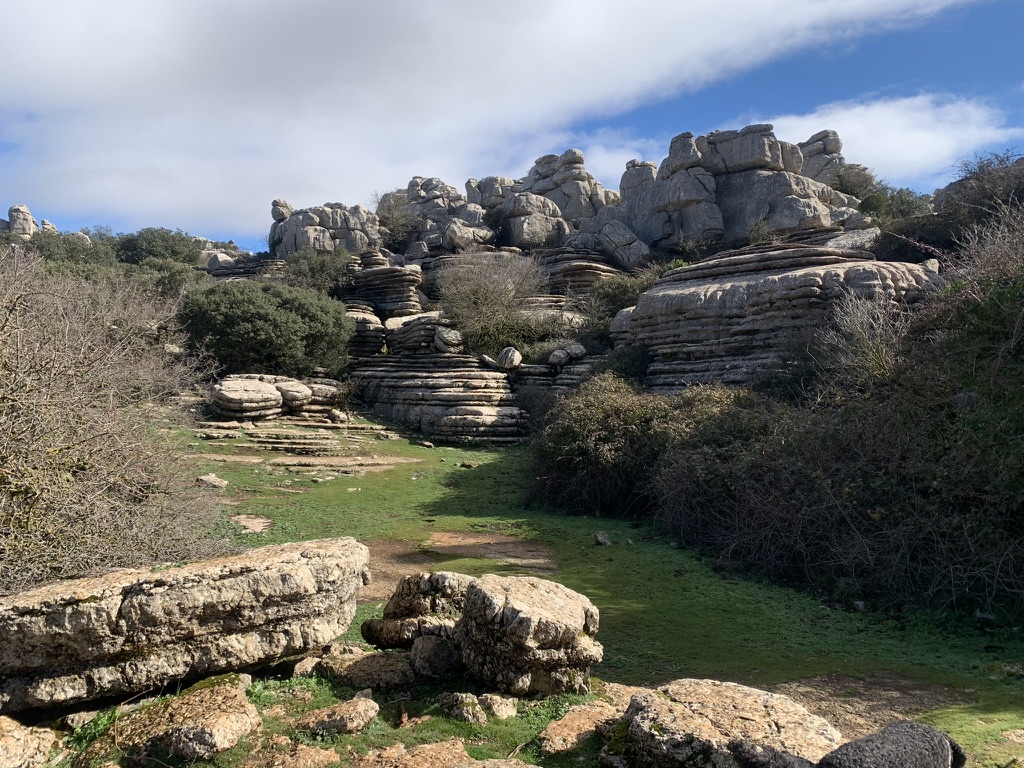
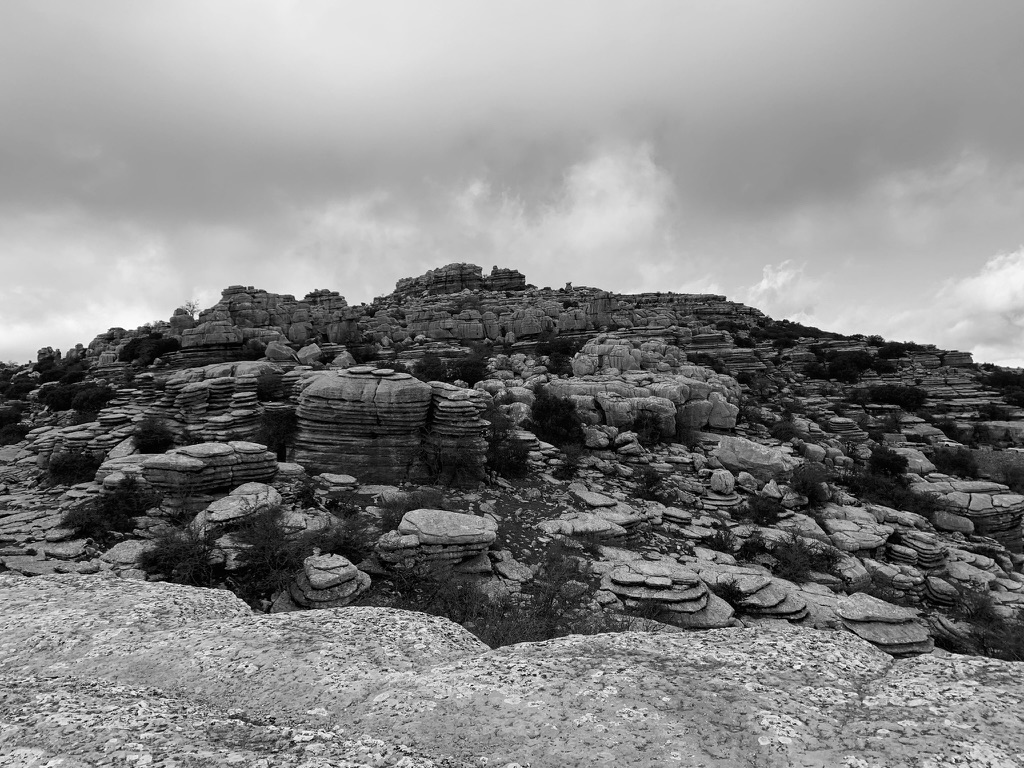
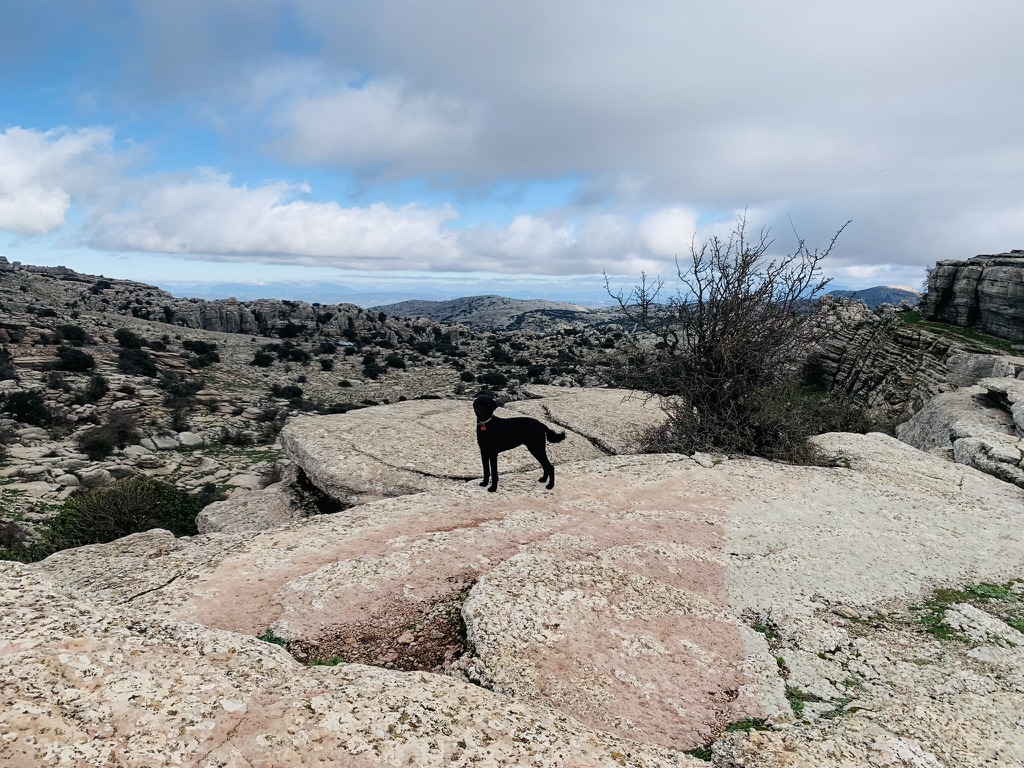
The next few shots are from the El Torcal del Antequera nature reserve, north of Malaga. It’s an amazing place and considered one of the impressive karst landscapes in Europe.
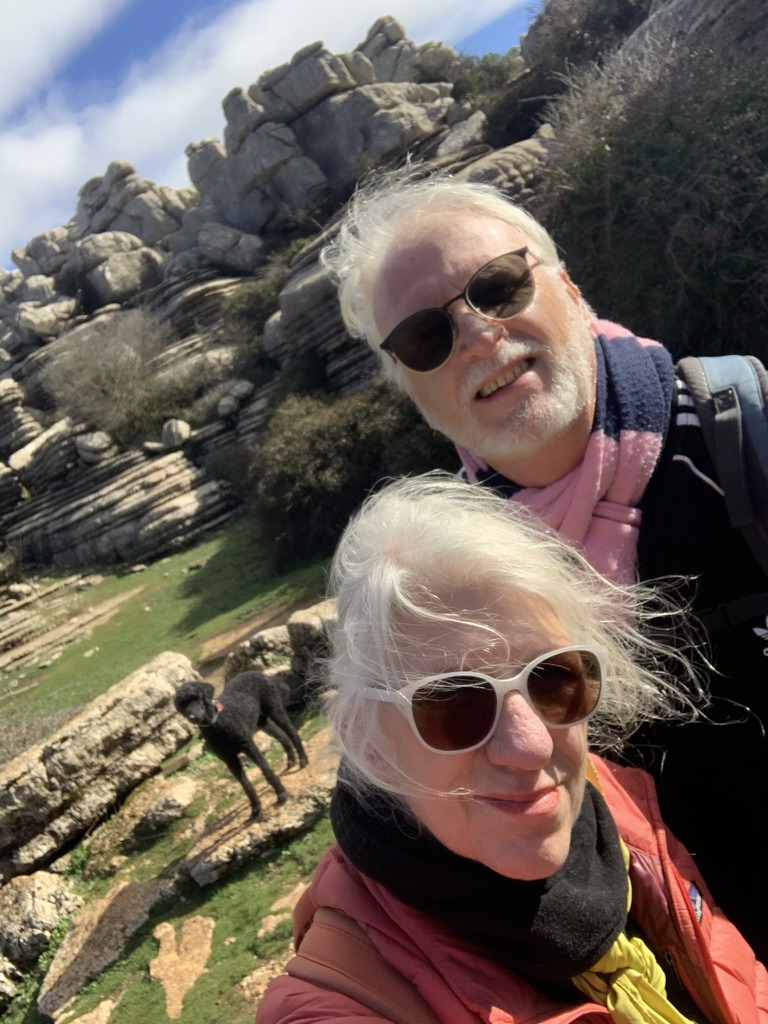
There’s a trail system that takes you up into the rock formations but the slippery conditions caused us to think twice about risking it. For the record, Denise was game but Steve, ever the pragmatist, vetoed the hike, citing the potential cost of a helicopter rescue.
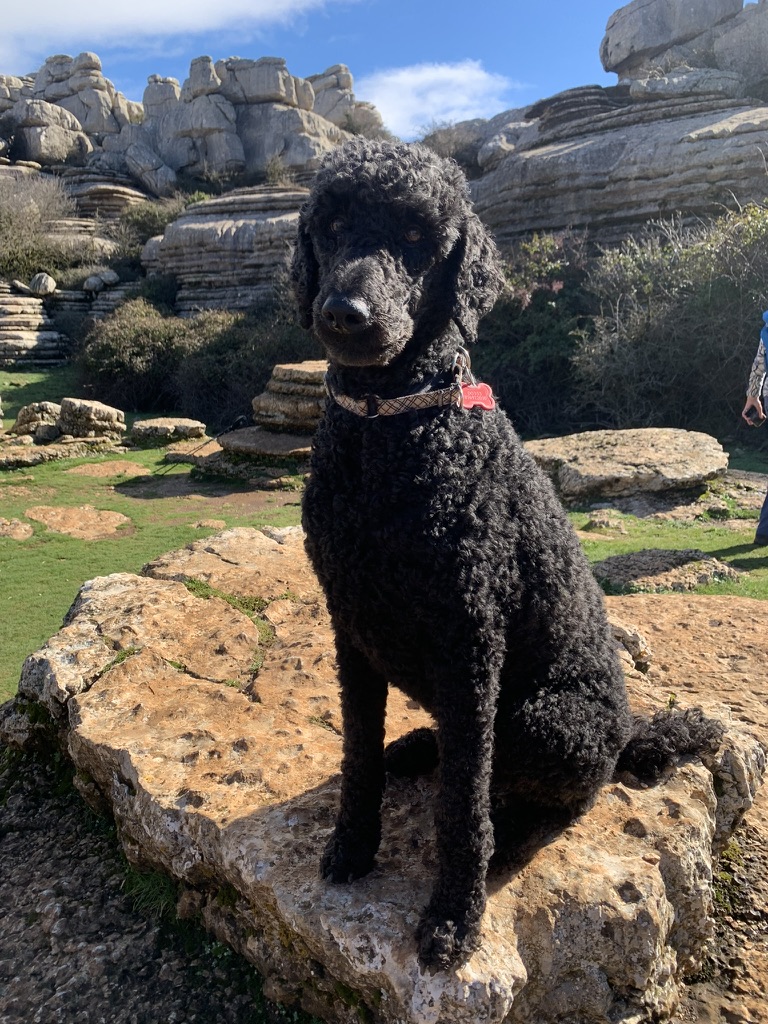
Coco, like the poodles of the Jurassic age, enjoyed the scenery.
I’m pretty sure The Flintstones was filmed here.
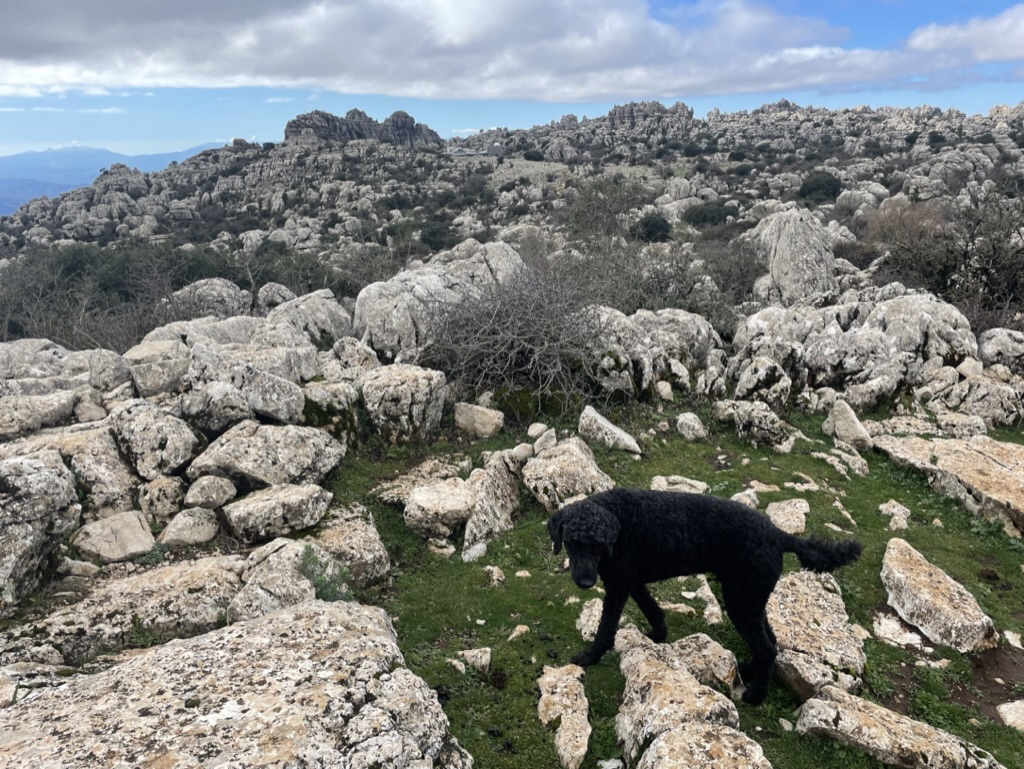
Karst, karst, poodle, and more karst.
This is what it would have looked like before color film was invented.
Coco loves the open spaces of Spain.
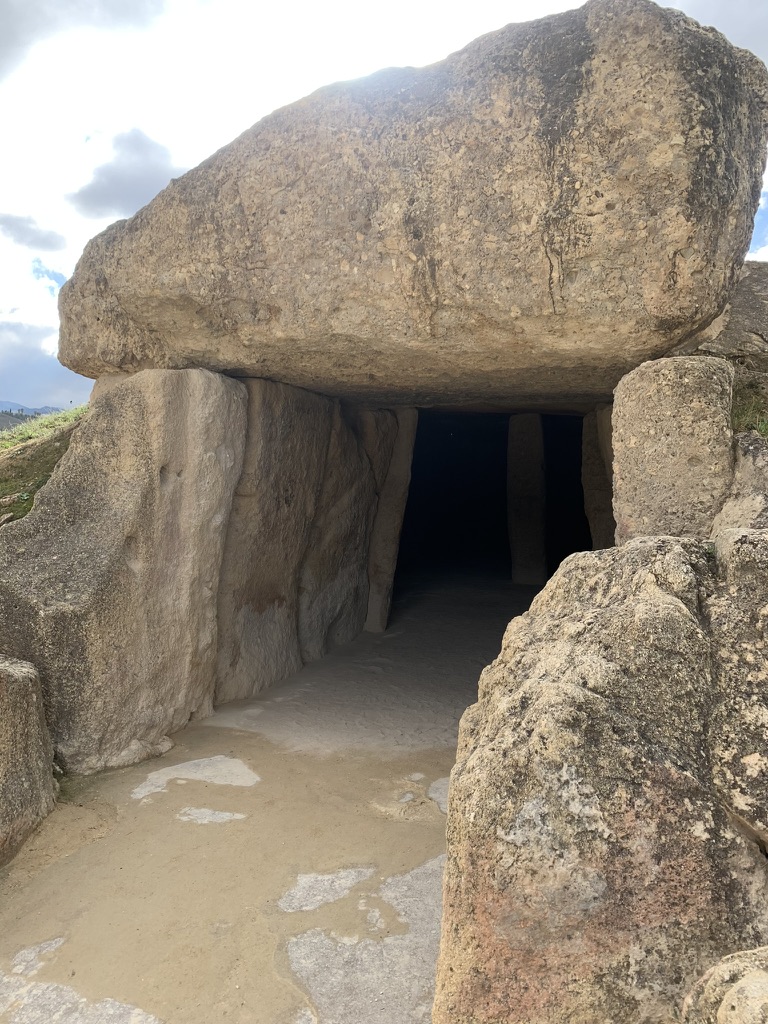
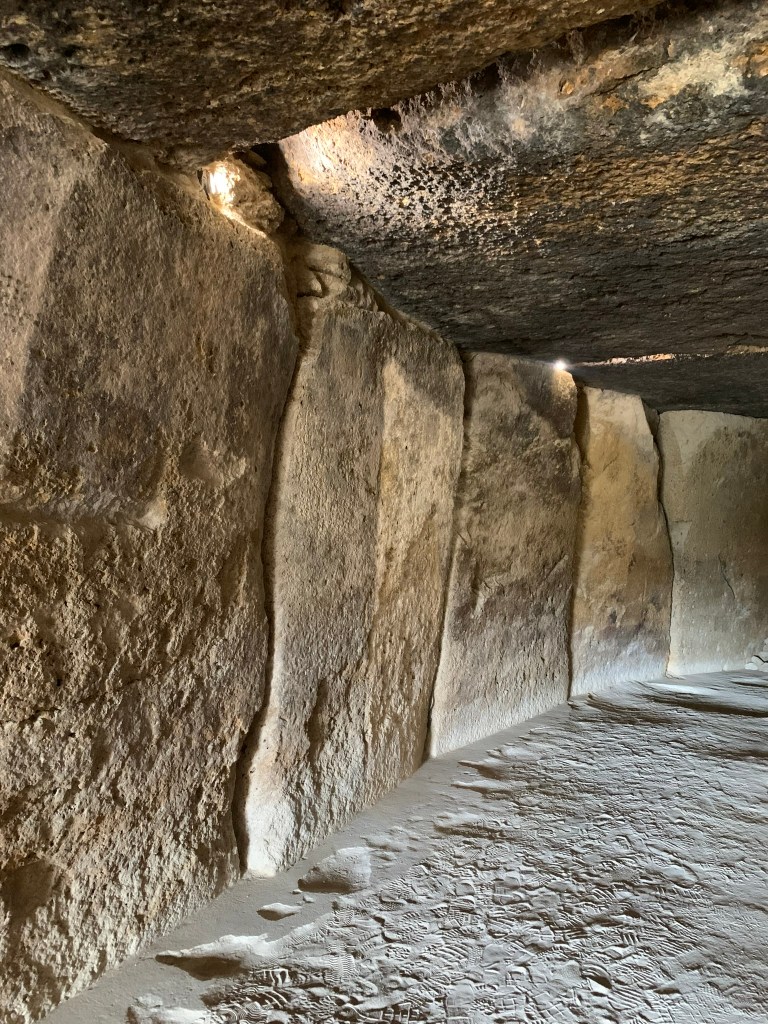
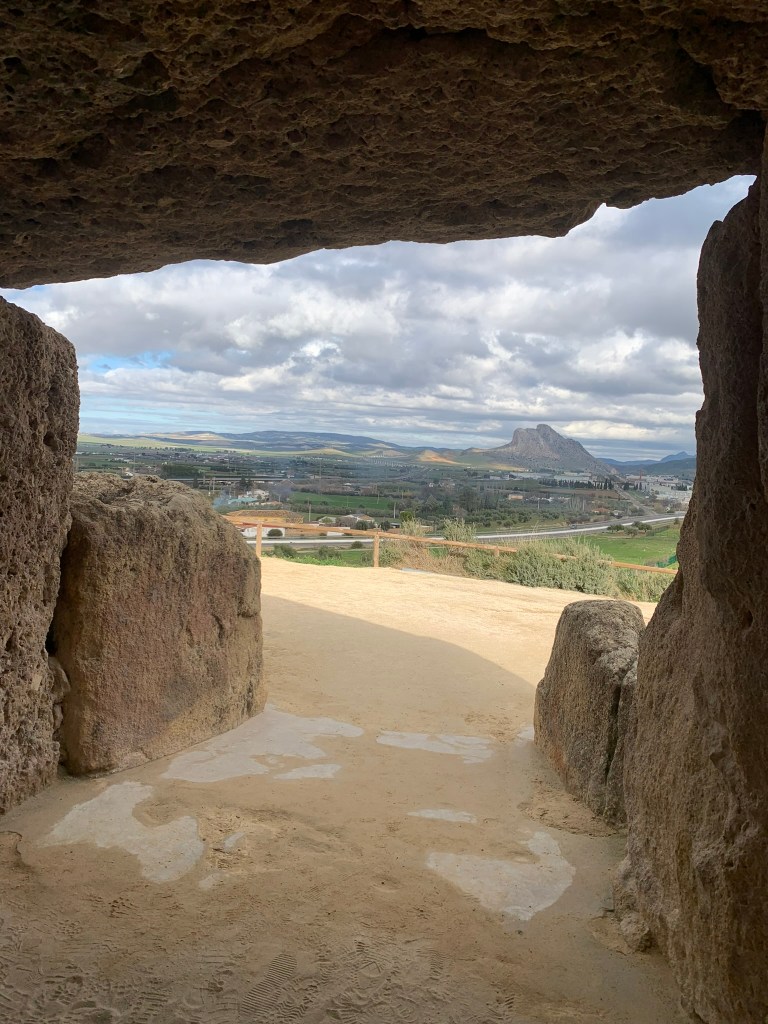
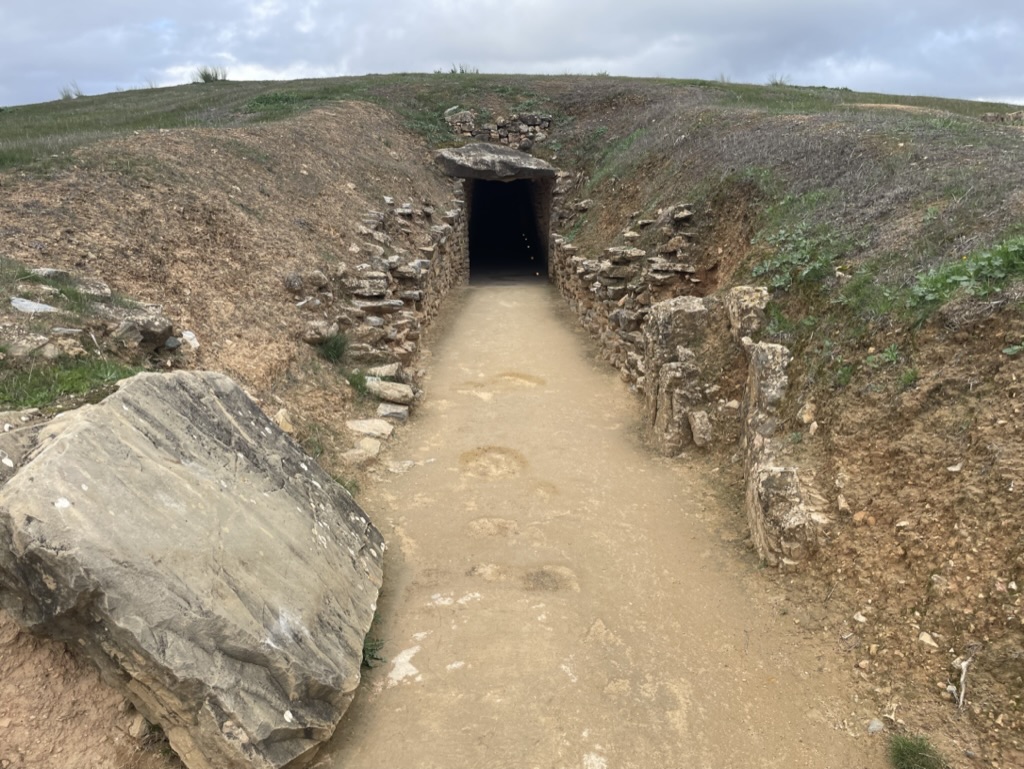
And for those who are fans of the Neolithic era, may we present the Dolmen de Menga, located just outside the town of Antequera, province of Malaga, Spain.. This is one of several megalithic burial mounds in the region dating from 3750 BC. It’s one of the largest ancient megalithic structures in Europe. The structures are built with 32 megaliths, the largest one weighing about 180 tons. It begs the question….”how in the hell????” (Steve: obviously aliens!)
You definitely have to duck in order to enter the dolmen. Well, at least Steve does.
Dolmen view.
Just for context, these are all within Antequera city limits, and this mound is right across the stret from a gas station.
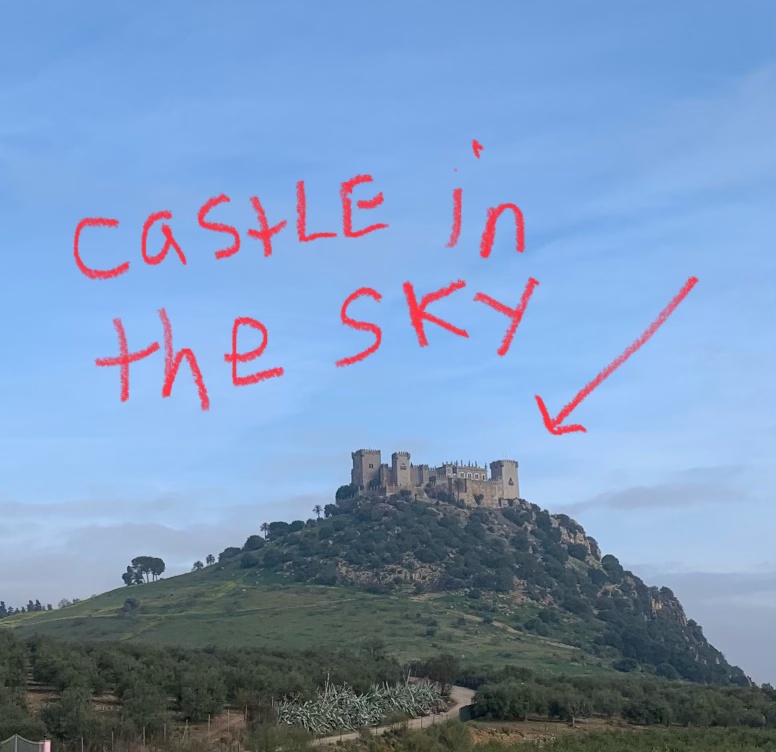
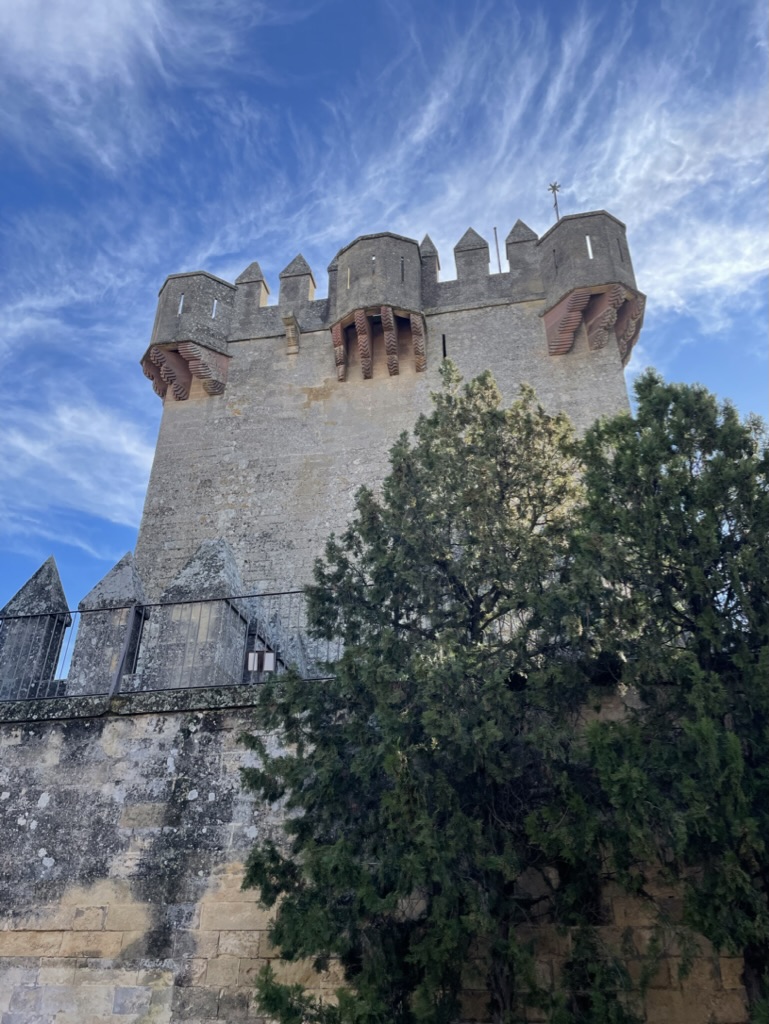
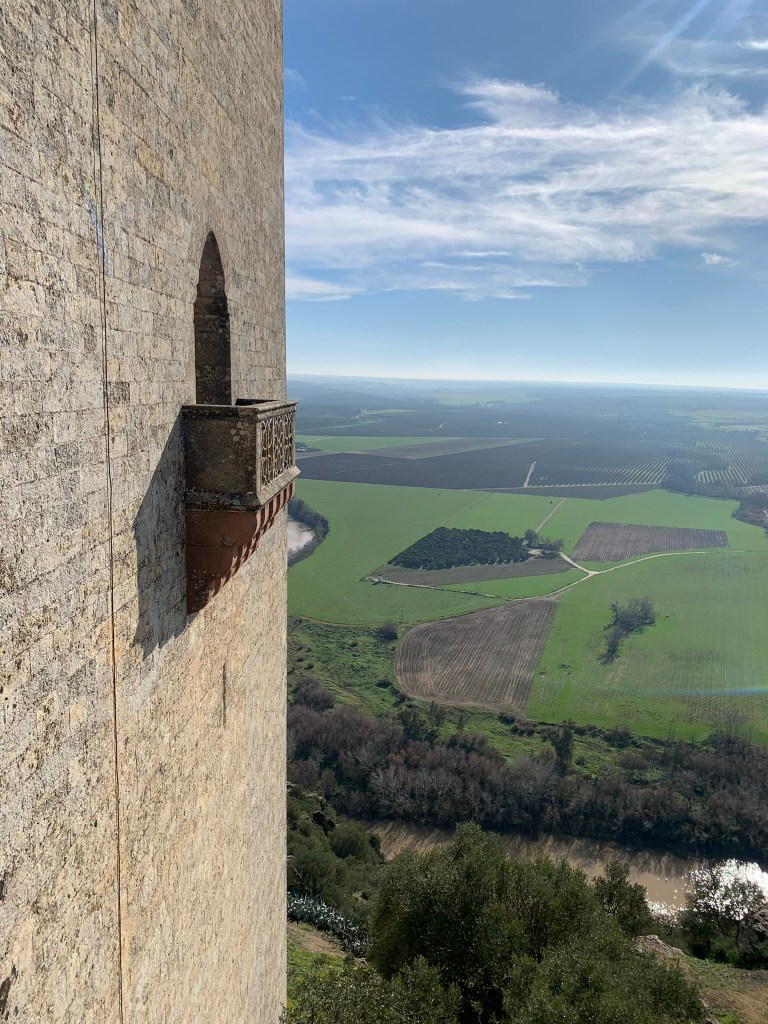
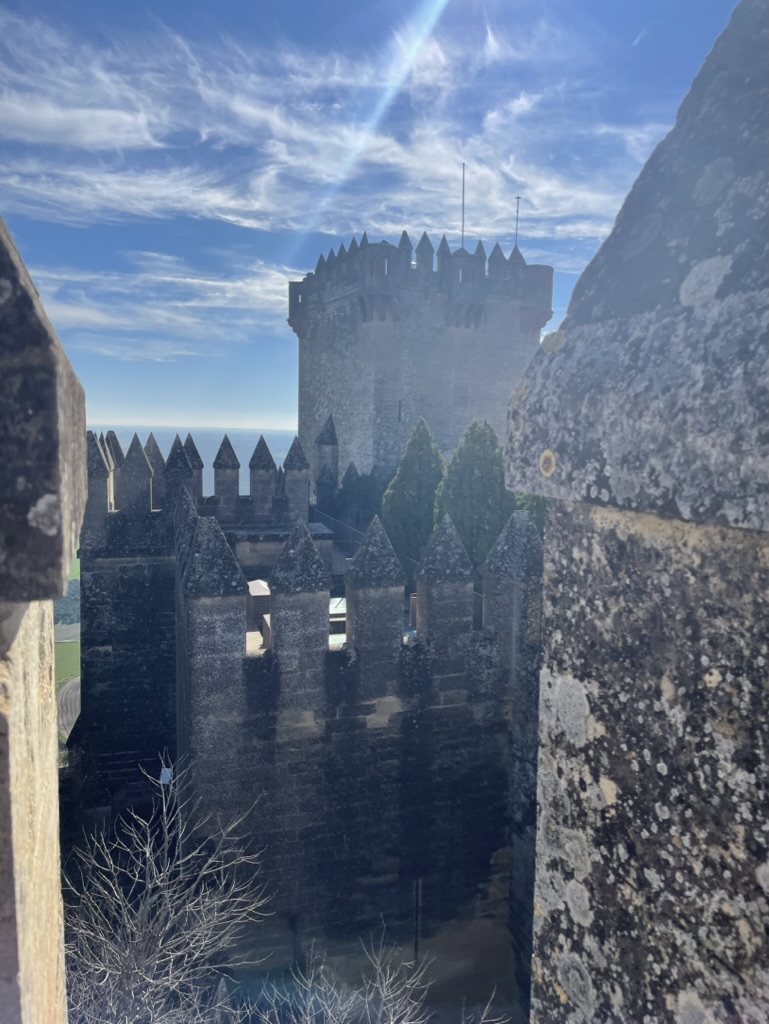
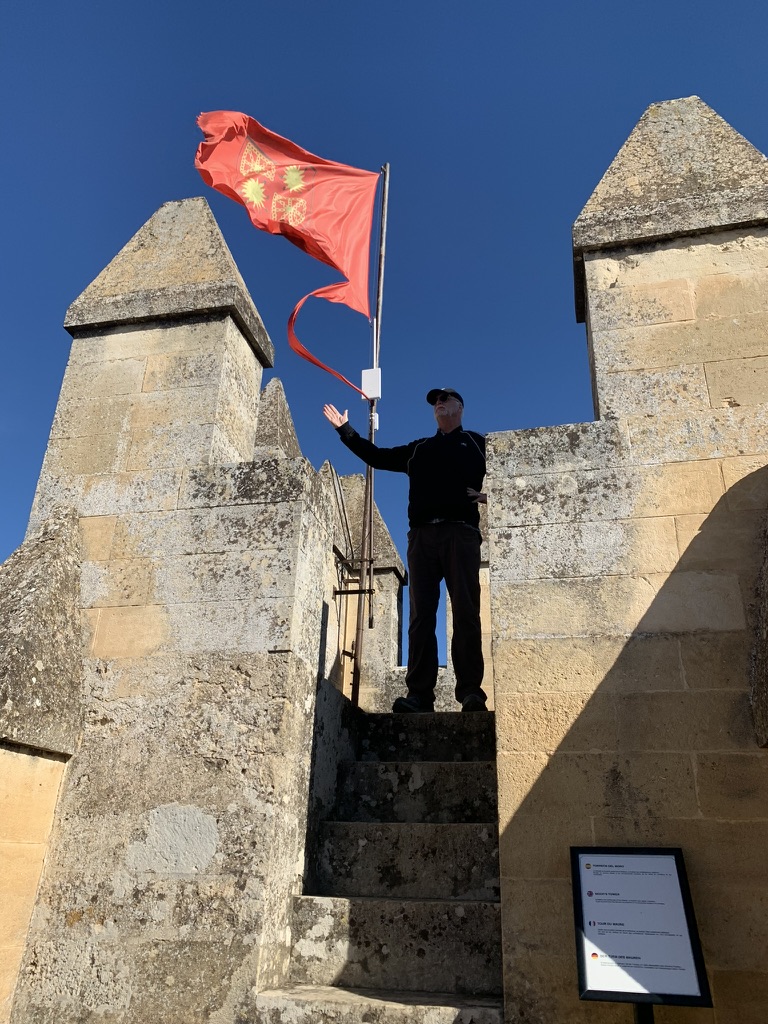
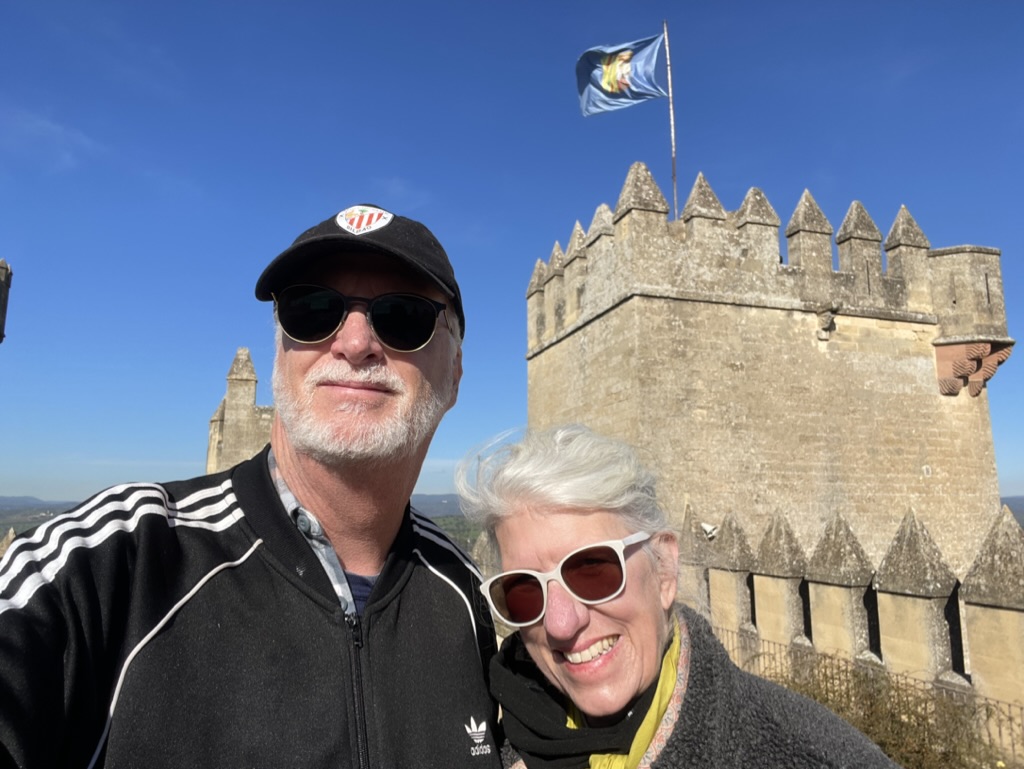
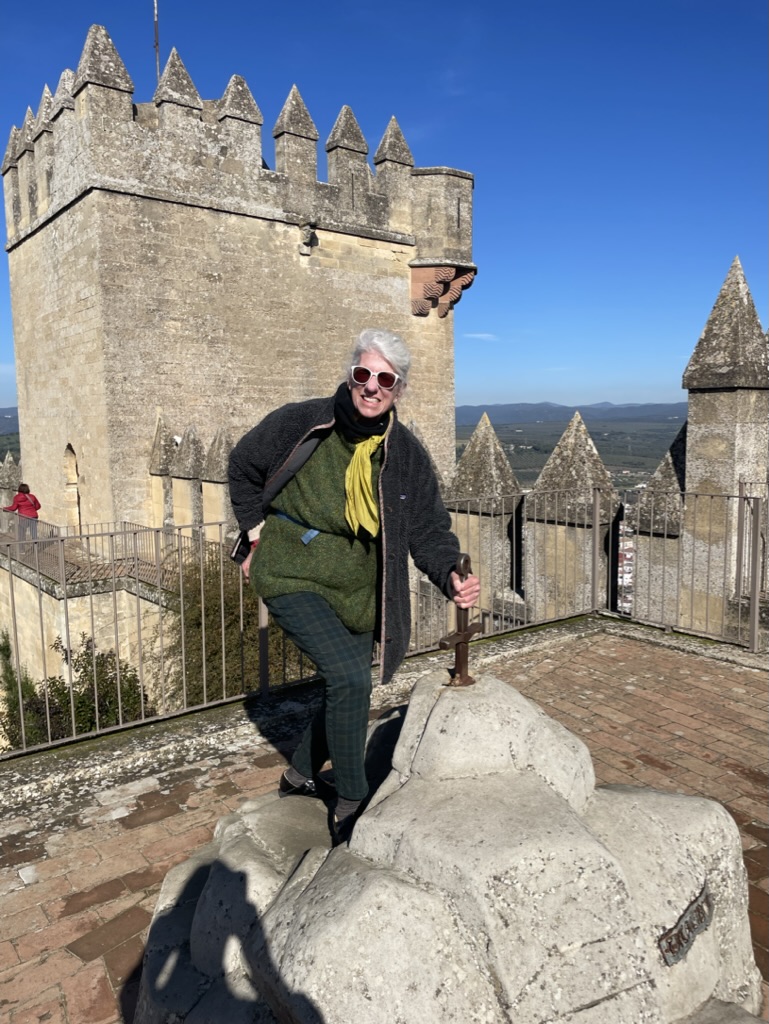
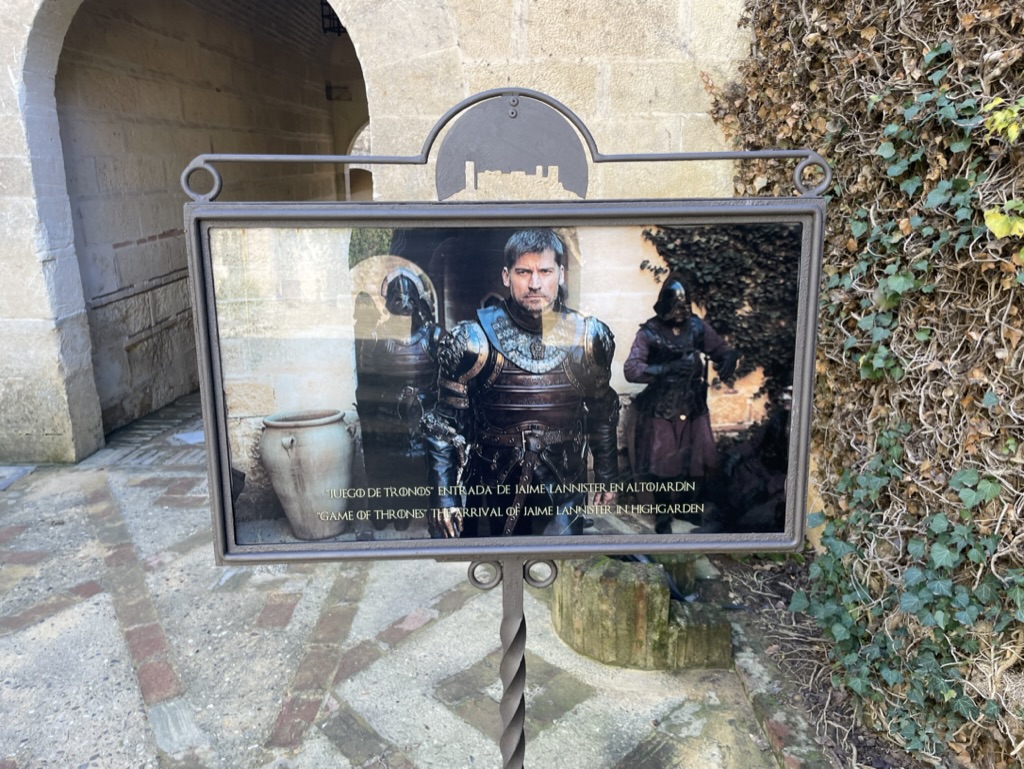
Not far from Córdoba is the Almodovar Castle, which we first took to be a very well-preserved fortress but, as it turns out, it had undergone a very extensive remodel in the early 1900s. One of the descendants of the original family had lots of money and undertook the massive task of returning the castle, which lay in ruins, to its former glory. It’s a very cool place nonetheless, and it gets quite a few visitors thanks in part to having being used for some scenes in the HBO series Game of Thrones.
A scene from Game of Thrones: attacking this castle was no easy task, even in modern days. Parking is limited in the upper lot and the lower lot is a good hike to the entry gate.
Parapets, or some such shit.
This balcony was featured in a famous scene from GoT
Master of his domain
The King and Queen.
Remove the sword from the stone and the castle and kingdom are yours! But check out the bill to heat the place before committing.
There are reminders of the Game of Thrones sets everywhere.
Back in the city and saying “adios” to our most excellent host. Juan Manuel.

Off to Valencia, Spain, where we spent a week seeing Denise’s family, some old friends, and this lovely Mediterranean city.

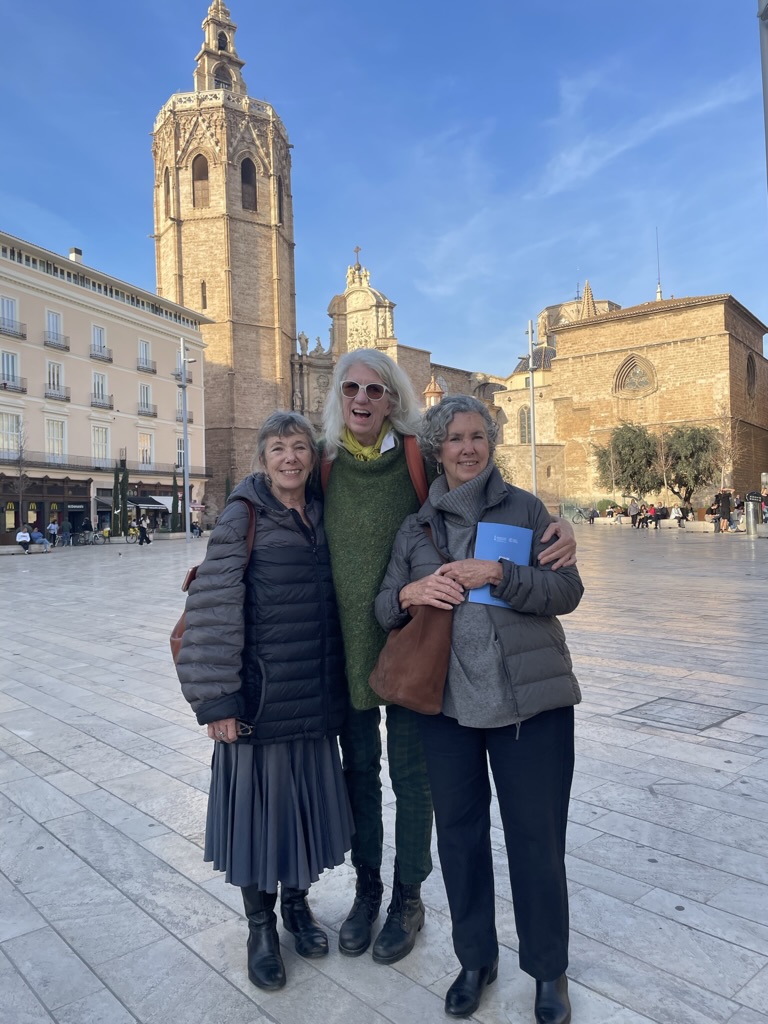
Denise and her cousins Martha Schum and Sara Schum Dirks in front of the Cathedral of Valencia. Martha has lived in the city since the 1970s.
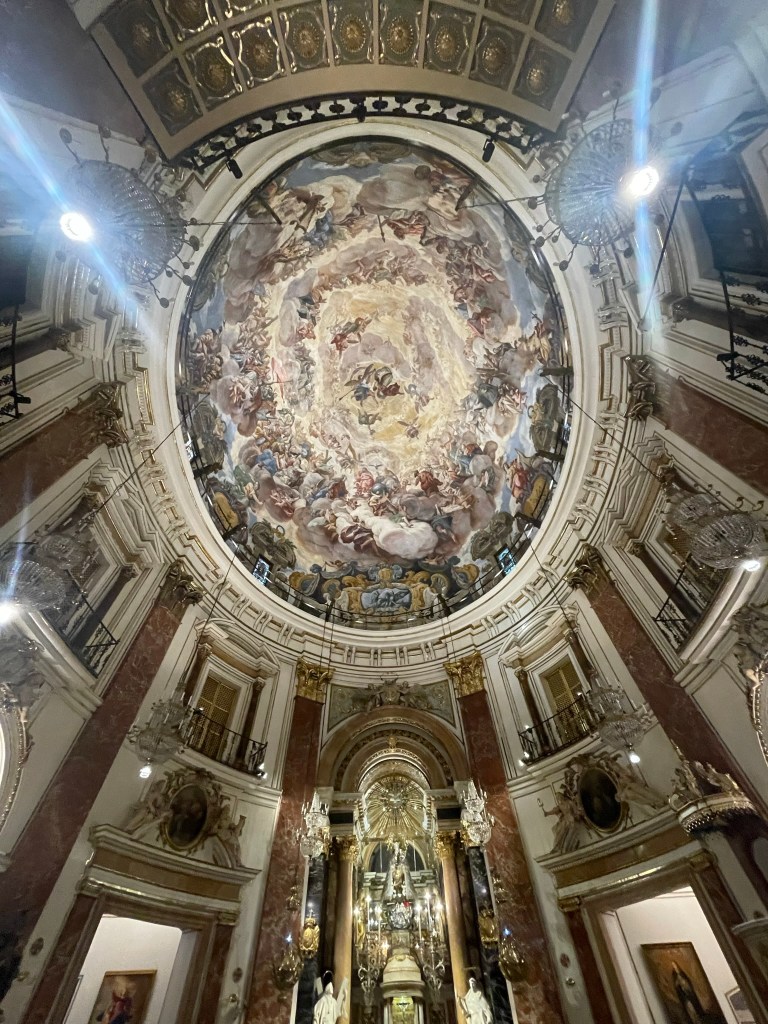
The ceiling of the Basilica of Valencia
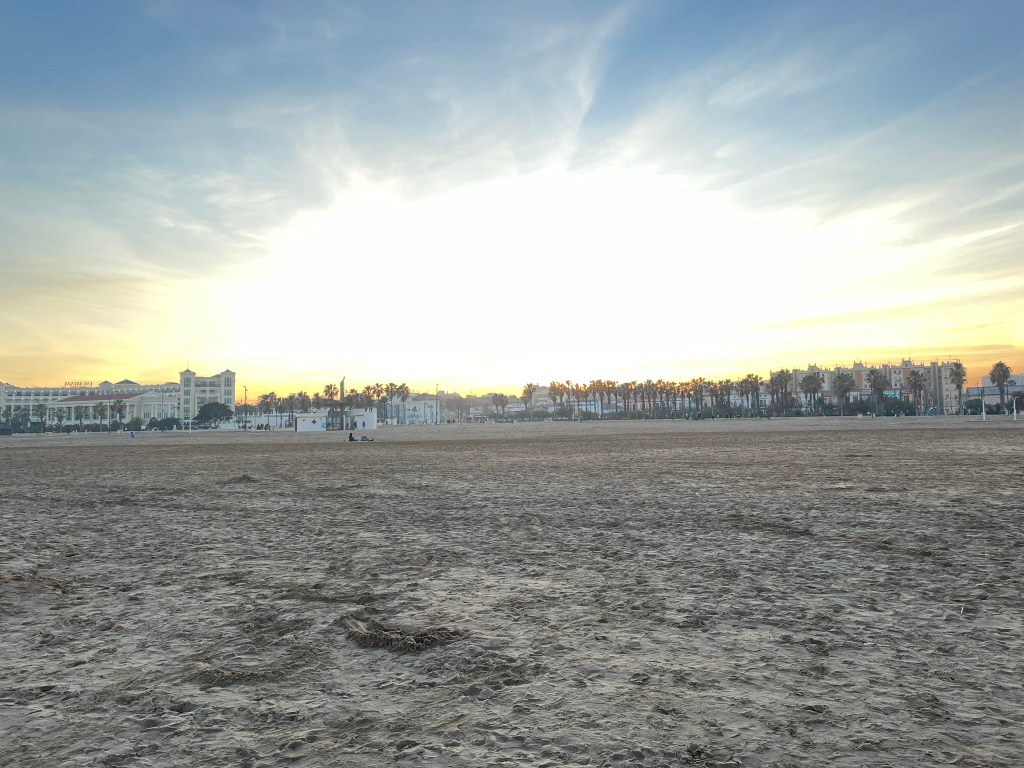
The beach at Cabanyal, looking back at the neighborhood.
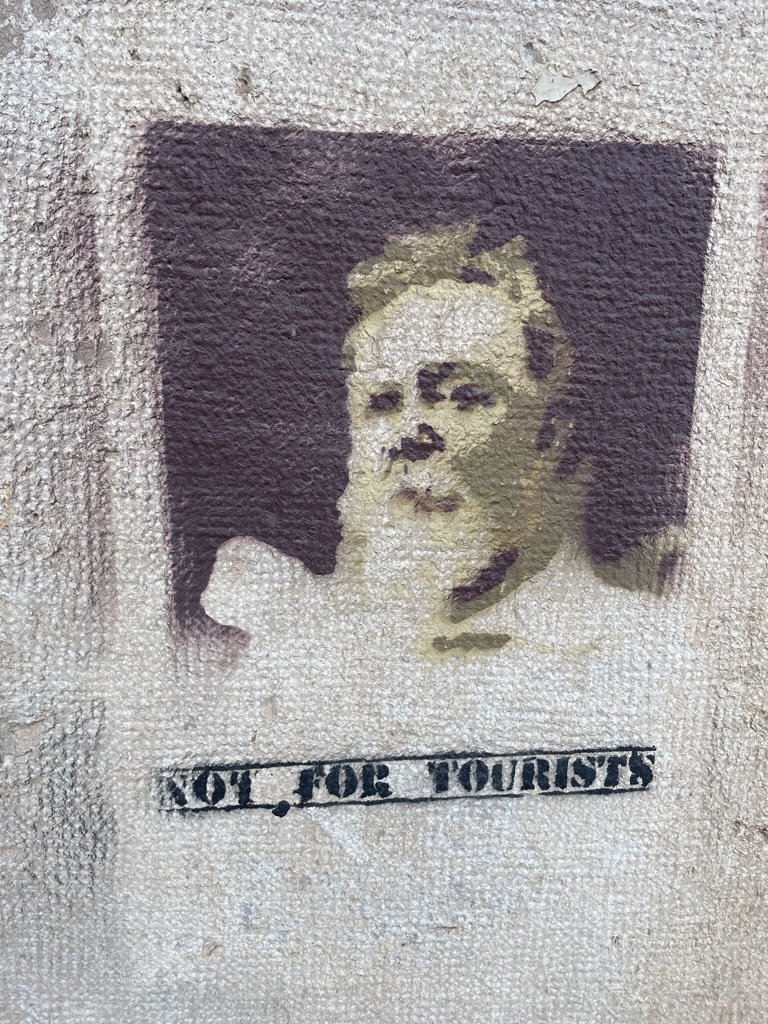
Flexpats allowed
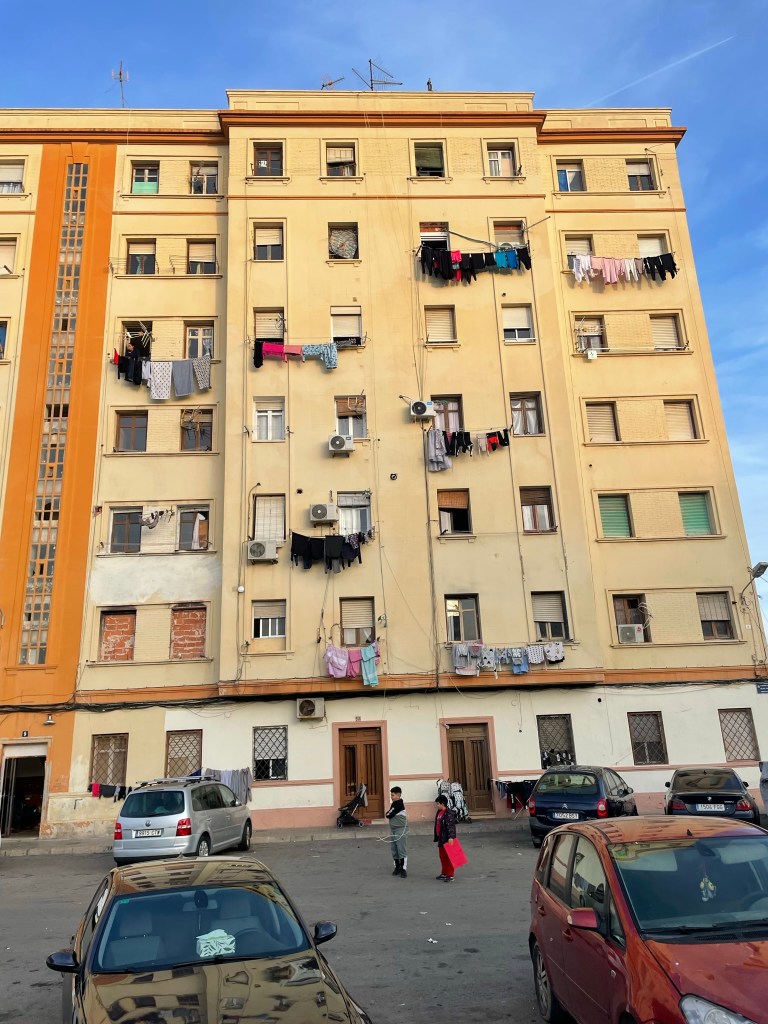
This is a building in Cabanyal, Valencia near the beach that is occupied mostly by Roma families. The city plans to demolish the structure but life goes on in the busy apartment.
With our friend Gabi, taken by her husband — and my old friend — John. They have lived in the apartment behind her for a few years. We rented an Airbnb and ended up staying right across the street. Gabi is a well-known distance swimmer and holder of many records in her field.

These next few pictures are from Ciutat de las Arts i les Ciénces, a park area in Valencia, built in the 1990s.

Inside the Caixa Center, an exhibition space on the grounds.
Many of the buildings house museums and performance spaces.
Very lunar
At this point, Steve had to leave Valencia to return home to Portland. Since Aeroflot was inexplicably closed, he ended up having to flying home via Delta, the next cheapest option.

Denise will pick up the story from here and will soon post about her last few days in Valencia, where she was joined by her brother Tim, and her last few weeks in France, staying in Port-Vendres, near the Spanish border.

Shuttin’ it Down…

Hey all! We’re sorry for the long delay between blog posts, but you’ll understand why when I tell you the news. Our youngest son is having some health issues that require more intense management than we can provide from 8000 kilometers away and so we’re going to place our European adventure on hold for awhile and tend to our boy.  As you might know, parenting doesn’t end with high school graduation — despite what the pamplets led me to believe — and it’s more important that we be close by him for however long it takes to get him back to his baseline health.

I plan on writing a final — for now, anyway — blog post about our time in Córdoba and Valencia, two of the best places we visited, but I need to deal with some more pressing issues here before I can wrap my head around that project.

I flew home a couple of weeks ago to be with Finn while Denise stayed behind with Coco in Valencia, and eventually moved on to Port-Vendres, France, where we had a place booked for the month of February. She is currently making plans to return to Portland as well, but getting the dog back here means she just can’t hop on a plane and go. Ironically, Denise reported to me that Port-Vendres would be an ideal place for us to settle down, so at least we have a place in mind for when we are able to return. It’s a small port town on the Mediterranean near Perpignan, and it’s also located in the foothills of the Pyrenees, which run all the way to the sea. I’ll ask her to write a post about that town so you don’t miss out on any details.

Thank you all for your support of our adventure and the kind comments. Hopefully, we can get Finn back to good health and resume our trip in the not-too distant future. Or, maybe he will agree to come back to France with us! 

Coco, after I told her she was going to go back to the US in the crate…

Love, Steve, Denise, and Coco

Reflections on a year abroad

As of this writing, it will be nearly one year since Steve, Coco and I pulled up stakes and headed overseas. It’s hard to believe this much time has passed. We certainly have a lot of photos to show for it and, of course, this blog (mostly by Steve) which has faithfully tracked our whereabouts over the past 11+ months. So, with that, I thought I’d take a beat and tell you what living in Europe is really like… just kidding!  Steve has been telling it like it is just wonderfully but it occurred to me that sometimes, some things are less than ideal. Can I fill in the blanks now? I’ll try.

Keeping a schedule of sorts is important and thanks to Coco we have that covered. Days pretty much revolve around getting her walks in and of course that means getting us out the door, too. And we have gone on some stellar walks; hikes that I try hard to make sure are not too strenuous for any of us but do provide a certain amount of a challenge. Sometimes, the walks can be utterly mundane — just boring around-the-block stuff — but even then it’s an opportunity to see the neighbors every day and the best result of that are hand signals and knowing glances that come from people who recognize us from the neighborhood.I really like that a lot. 

The best days for me are when we get out into natural surroundings and some stays have delivered better than others. The grind of traffic noise or the clamor of noisy neighbors in apartments can be a real drag.  The motorcycles in Corsica were terribly annoying; the lady in the apartment above us here in Cordoba wears clickety-clackety heels at all hours.  Walking Coco around Novi Ligure meant braving the seriously scary barking guard dogs behind almost every fence.  But then you can balance that with gazing at the moonlit Pyrenees from our bedroom window in France, strolling merely five minutes to blissfully beautiful vineyards in Provence, or bundling up against a brisk wind on our local Morriscastle beach in Ireland.  Of course I thrive in the latter of those experiences and have learned to make do with the former, 

Friends have gingerly asked me if I miss home and of course I do!  But then again, I don’t. I mean, I miss my boys immensely. Crazily. I miss the regular rhythm of my neighborhood and the few dear friends I managed to make in Portland.  I miss the family that newly arrived in Portland just as we were leaving and I miss all my friends.  On the other hand, I probably talk to everyone — family and close friends alike — nearly the same amount as I did when we were living in Portland, thanks to WhatsApp. It’s not a huge change – but yet it IS. It’s awkward and weird to have an eight or nine hour time difference on every call. People are on different cycles of their day and it shows up in conversations when I’d rather it didn’t.  Plus, it usually requires making arrangements to connect with people which I really dislike.  Spontaneous chats are not the easiest things to pull off from Europe. 

I skimmed over Finn and Reilly and that won’t do: it occurred to me that they occupy a tremendous amount of my brain time right now, probably unnaturally so. I mean yes, they should be in my thoughts but this is a lot.  And I’m just sharing this because I think it’s entirely natural to have this yearning for them given the distance and their ages and their places in life.  Of course we all speak frequently and shoot texts. but there is still a distance that drives me a bit crazy. Will this change? Probably. Time goes by and you get used to things. But therein lies the rub…time going by. I can’t ever get that back. 

During this stay in Cordoba I have become acquainted with Seneca and his stoic philosophy. (He was born here and is beloved by the Spaniards but really he was a Roman philosopher who tutored a young Nero.)  I guess I feel like I’m leaning into his teachings a bit. Some of his writings make sense:  essentially they boil down to being happy with what you have, and not pining for what’s not possible. Take what you have been given and live a life with that. I mean it sounds a bit bleak on the surface (stoic?) but it’s also sort of zen and about respecting the moment, so I’m thinking about that nowadays.  I’m trying to balance those thoughts with what I actually physically have — between us we have four suitcases — and what I think I want (a big house with lots of comfort and family close by?). 

If you can spot a thread in this wandering post it’s probably the but-then-againisms. That’s how it goes: I don’t have the responsibility of looking after a household — I have not touched a vacuum cleaner in a year! — and I’m not doing onerous loads of laundry.  But then again, I don’t get the satisfaction of putting up a new piece of art or fixing an annoying hinge. It’s a million but-then-againisms. I don’t make a Sunday dinner for my boys but then again I can talk to them for a bit once a week. It’s good. No, really-I’m not talking myself into it. I’m just sharing the reality. 

Finally, I thought I would make an exercise to find one pic from each month that speaks to some point of inspiration for me… not travel-wise but just something that hit a nerve for me personally.  The pics won’t do it justice — we definitely need to get a real camera— but hopefully you can find a bit of what I try to discover during this journey: random beauty; humor; a little chaos. 

Love. D

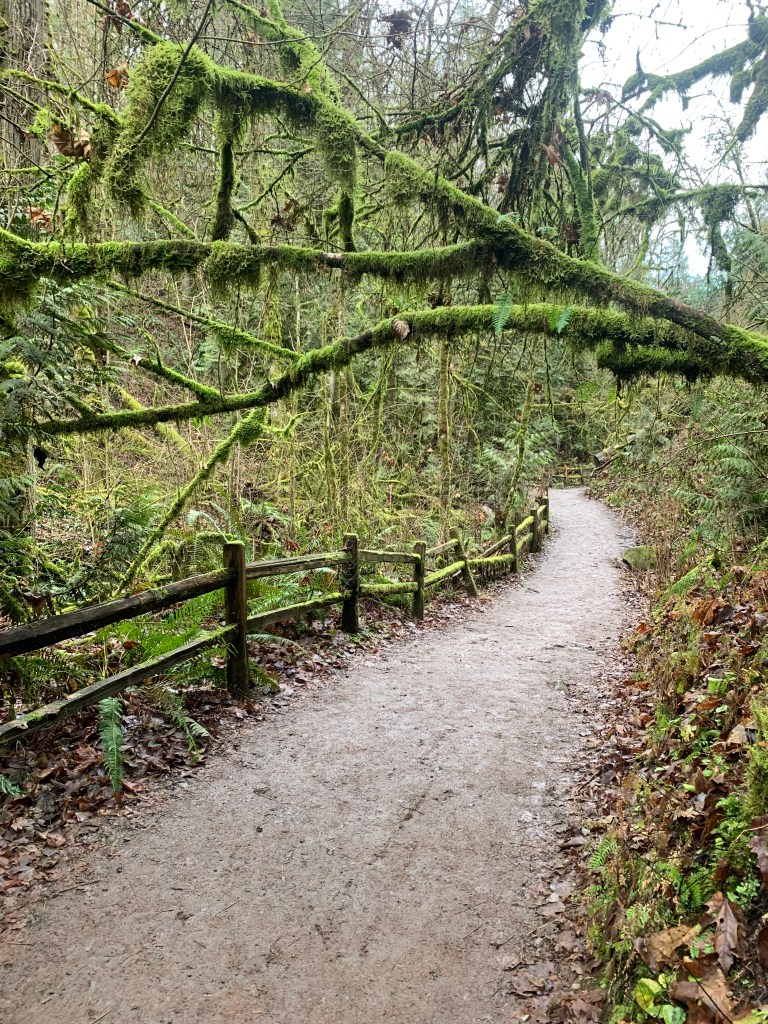
January. Portland, Oregon. A final walk in Forest Park
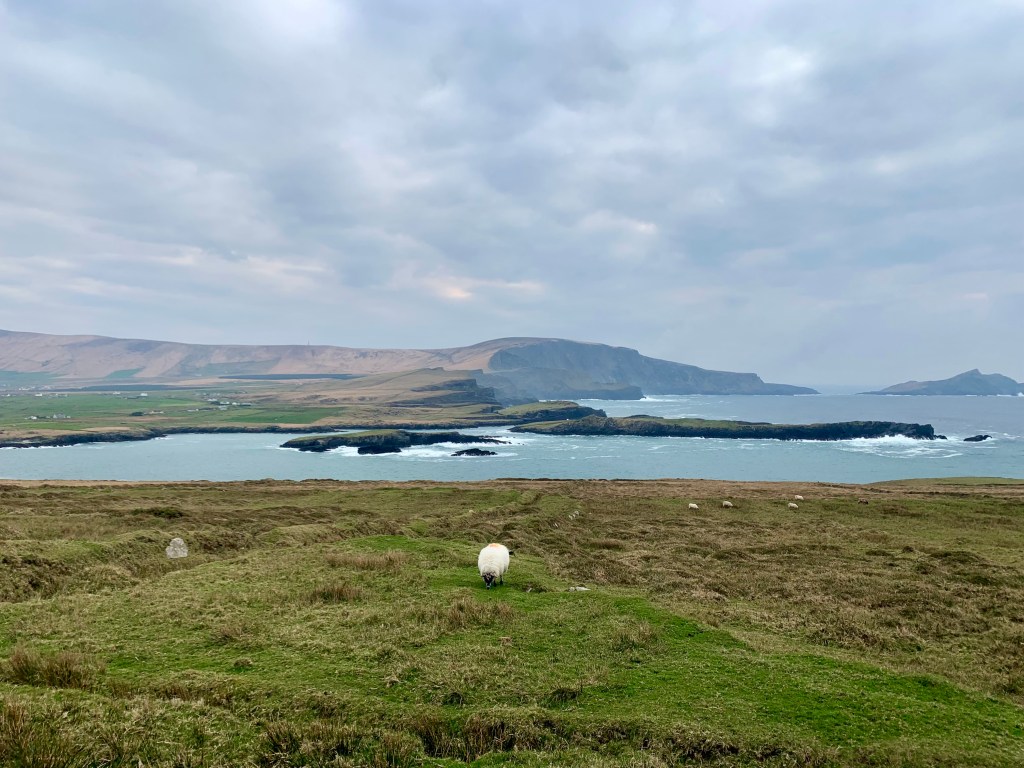
February. The wild Atlantic Way of west Ireland.
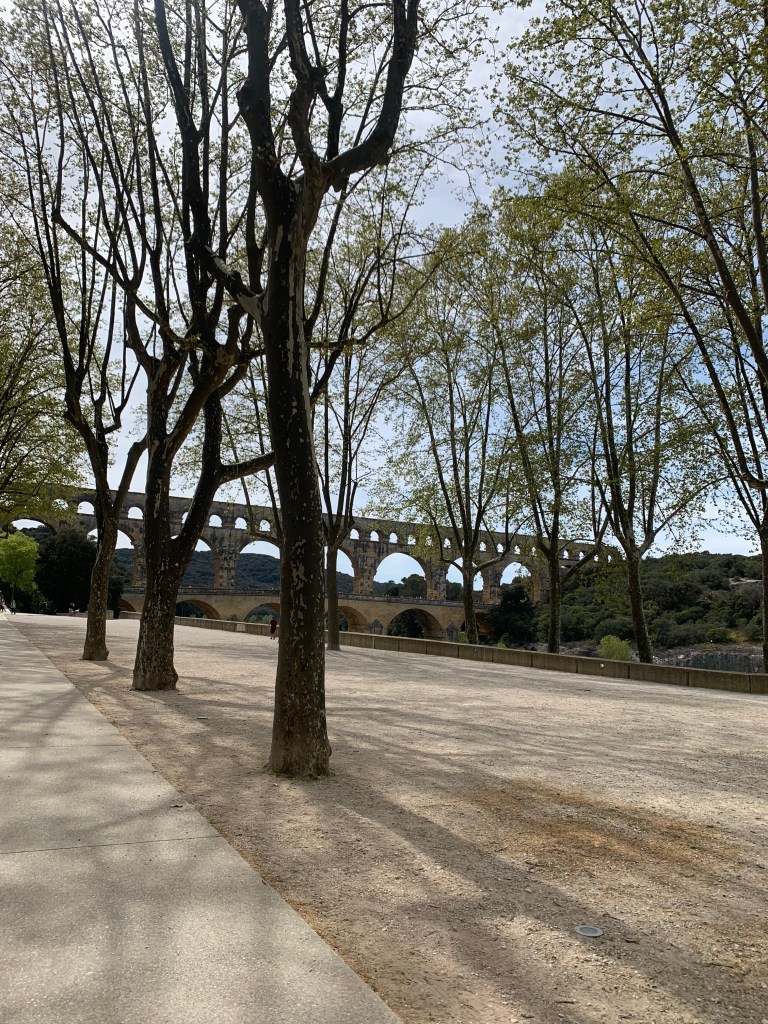
March. Trees and a Roman aqueduct in Provence.
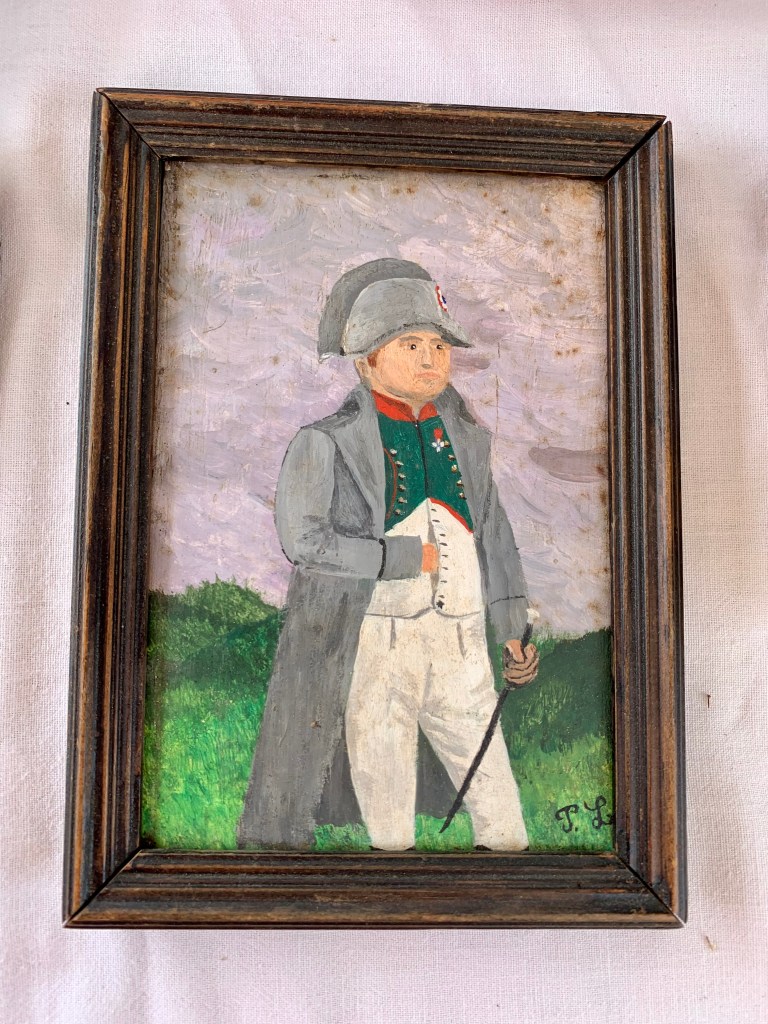
April. Napoleon was the theme in Corsica. This was on view at the flea market.
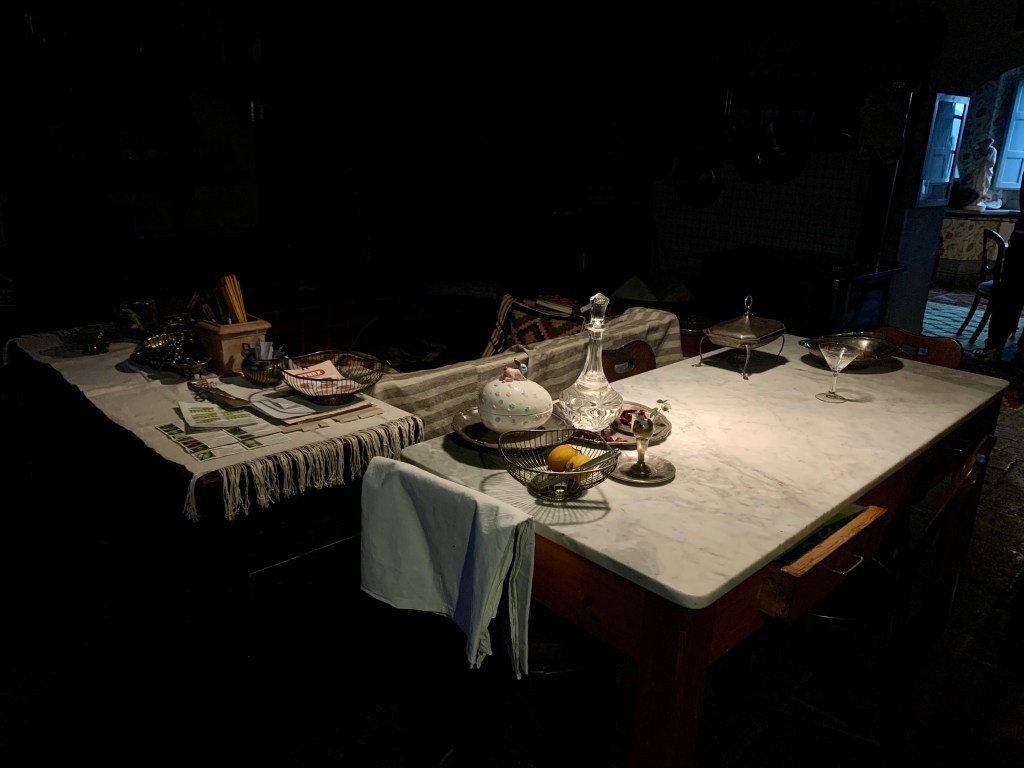
June. On a visit to a friend’s home in a village near Lucca in Italy… I found this place setting.
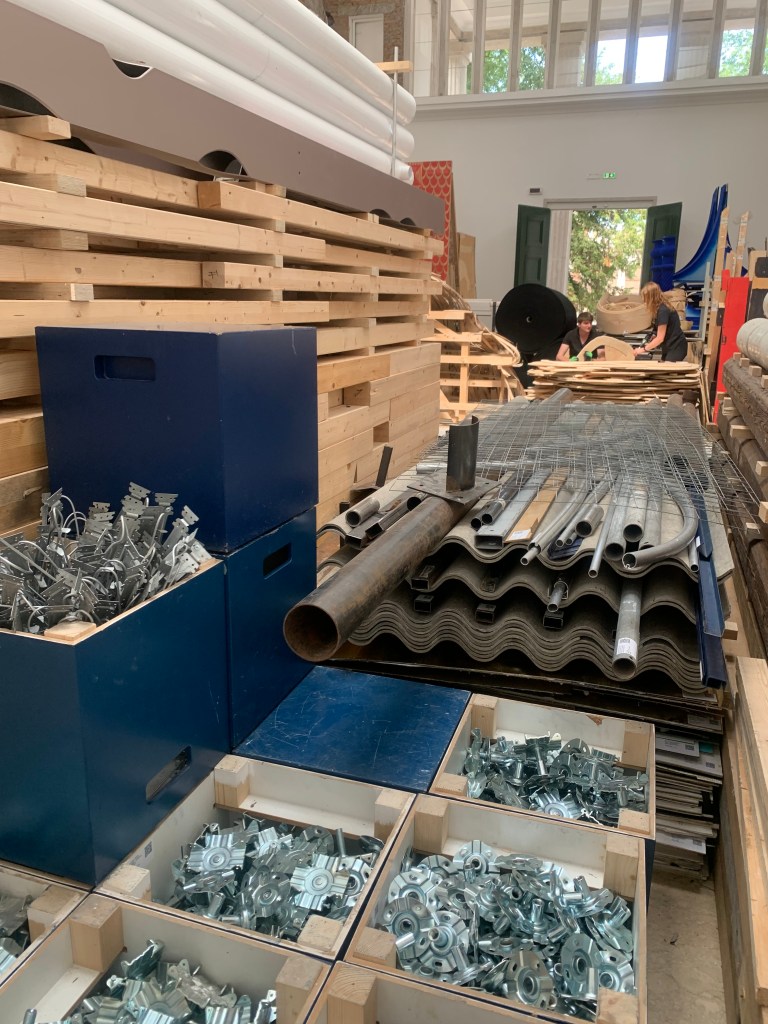
July. At the Venice Biennale – German Pavilion. All of the exhibit material from the previous Biennale meticulously inventoried and catalogued and made available to any country for reuse in current exhibits. 
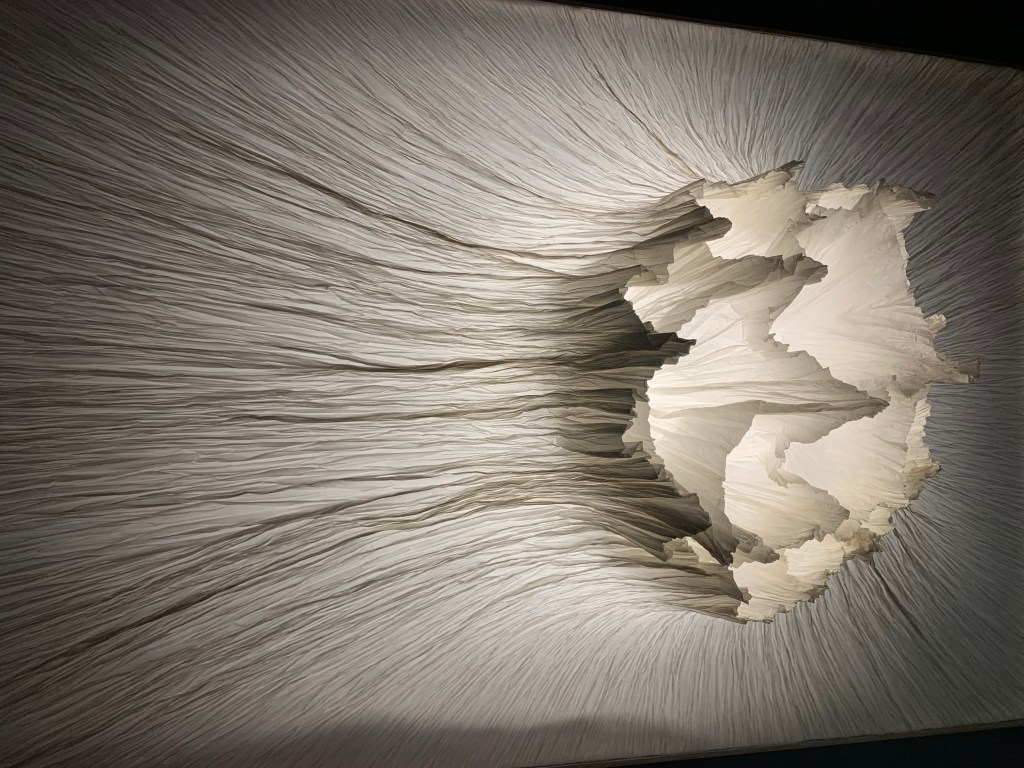
August. At the Origami Museum in Zaragoza, Spain this piece, made from one sheet of paper!  
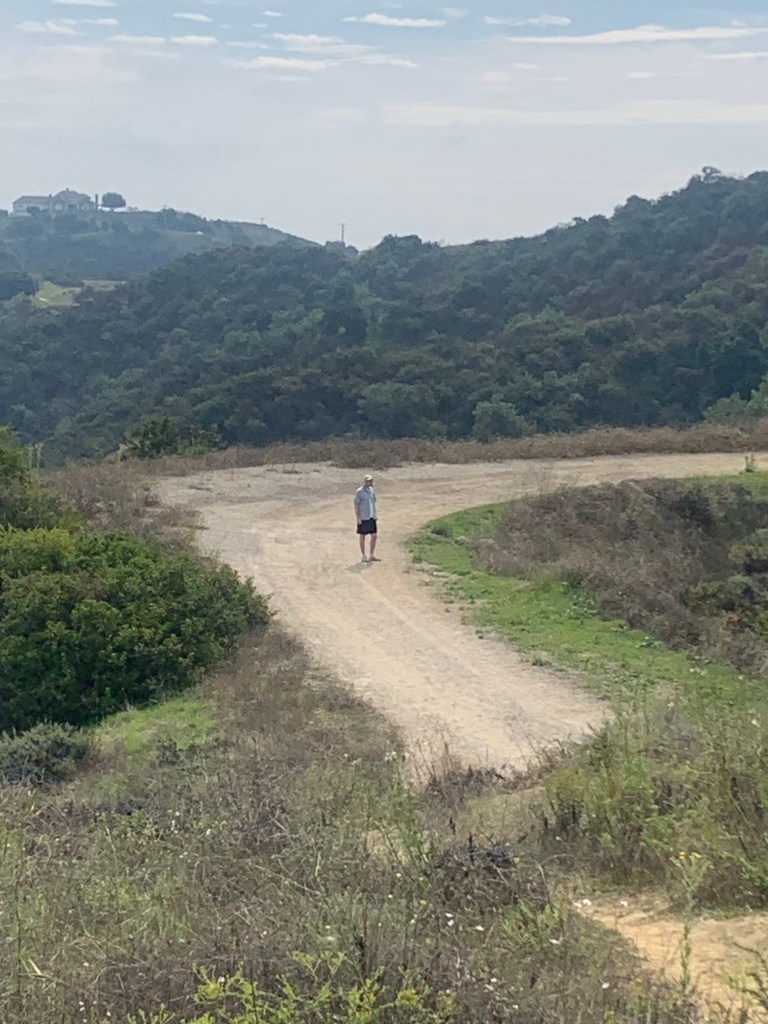
September. Los Angeles in The Santa Monica Mountains. On the trail with Finn.
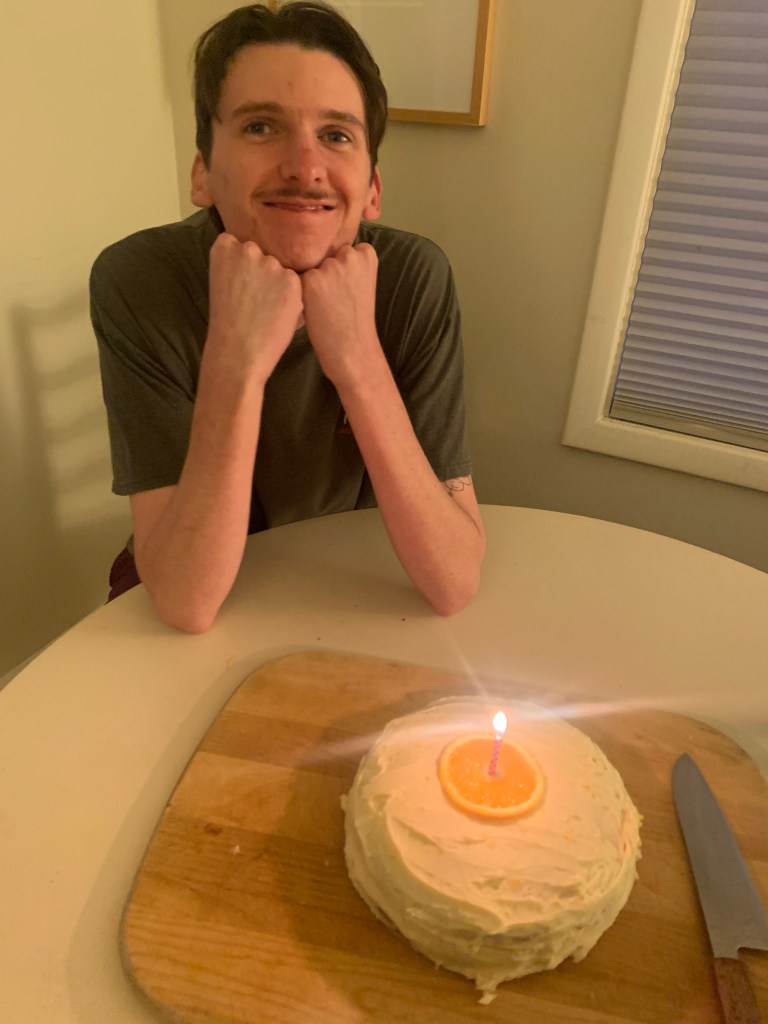
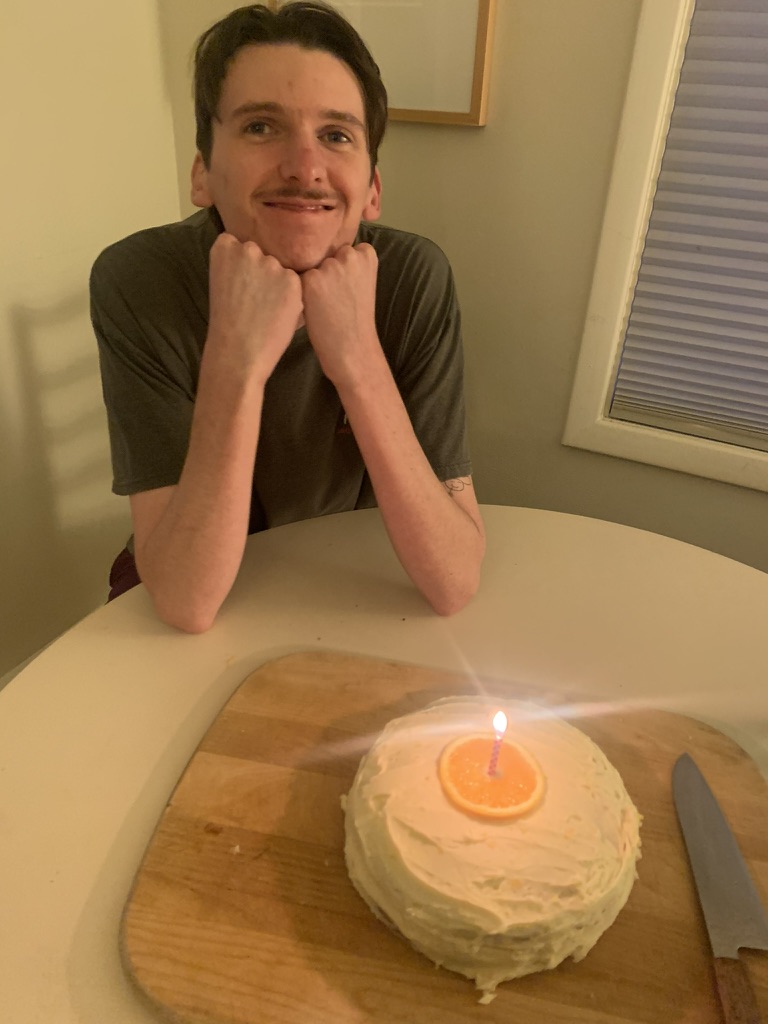
October. Portland, Oregon and a birthday cake with Reilly.
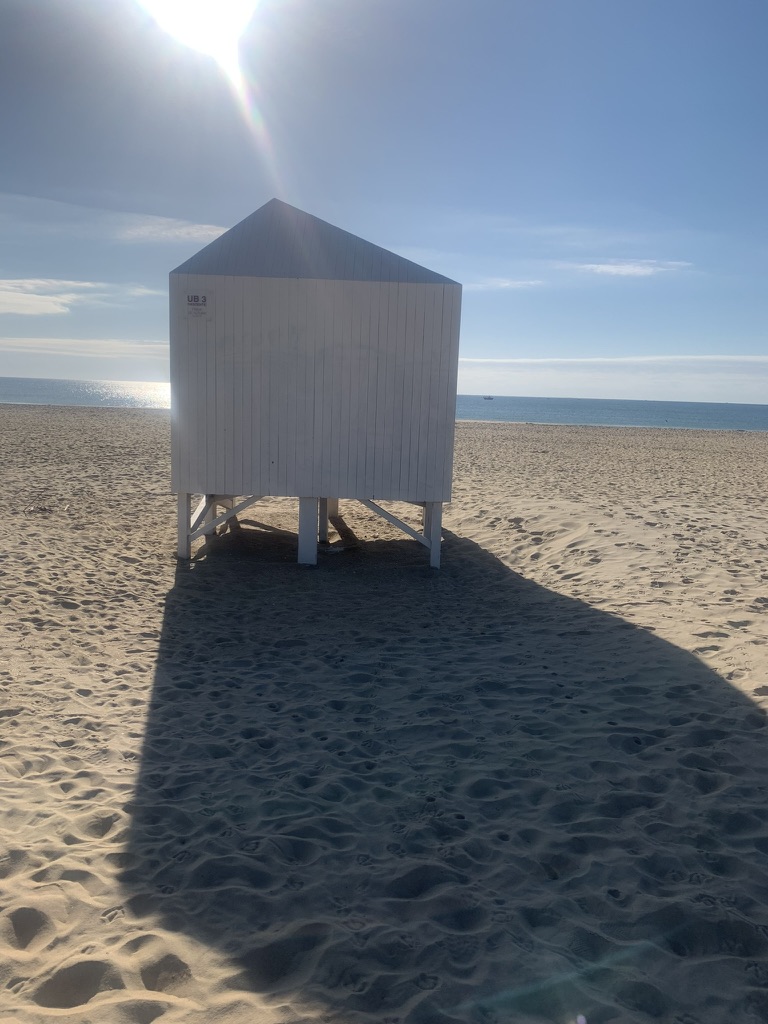
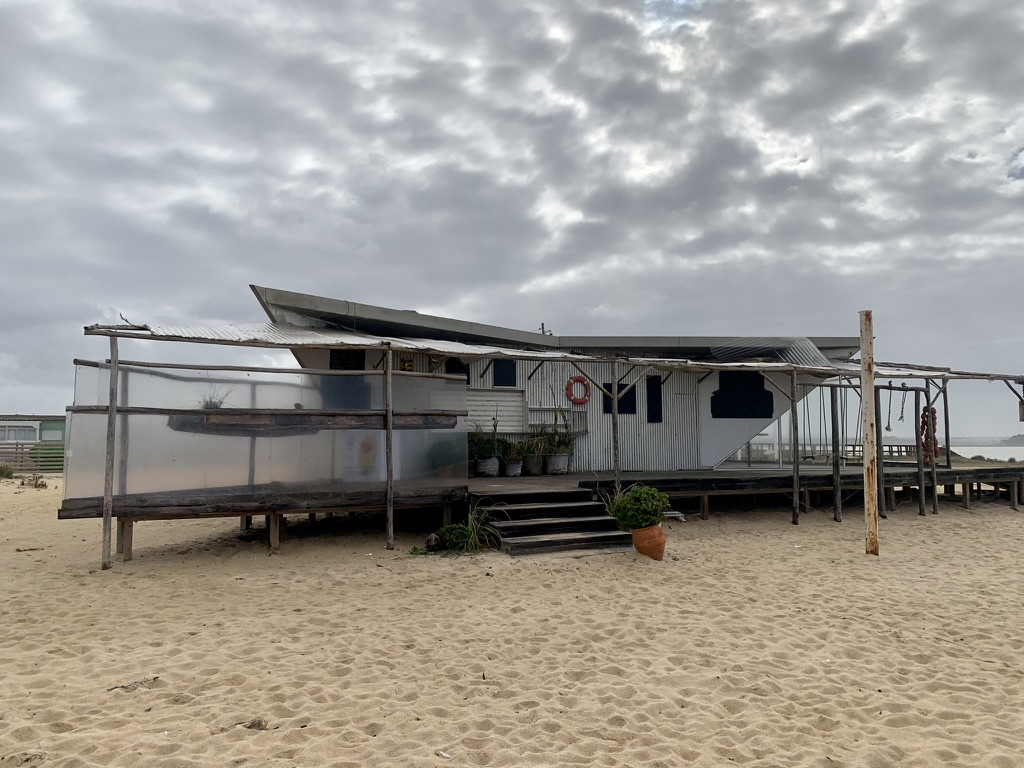
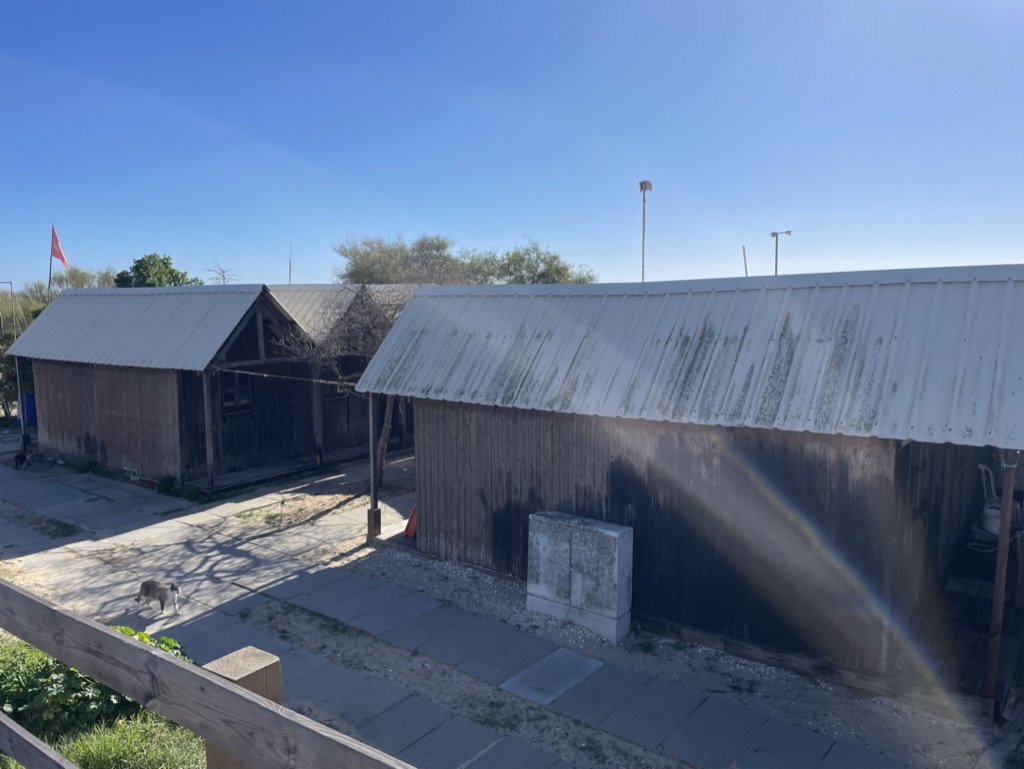
November. Altura, Portugal. I took about a hundred photos of these beach huts. 
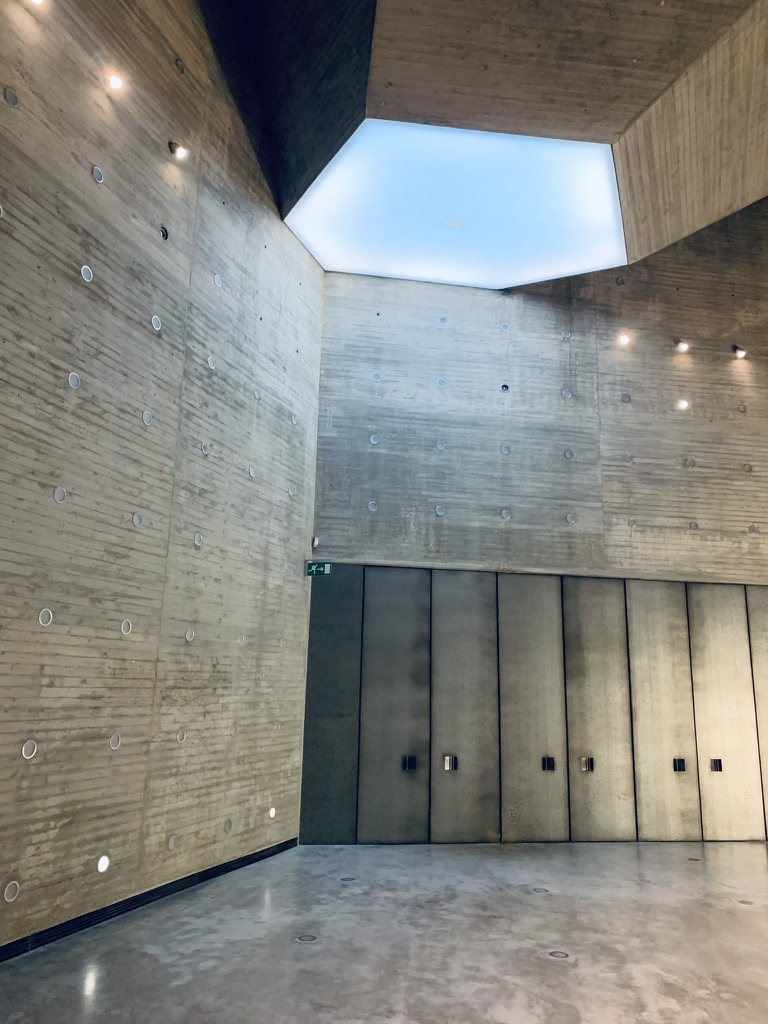
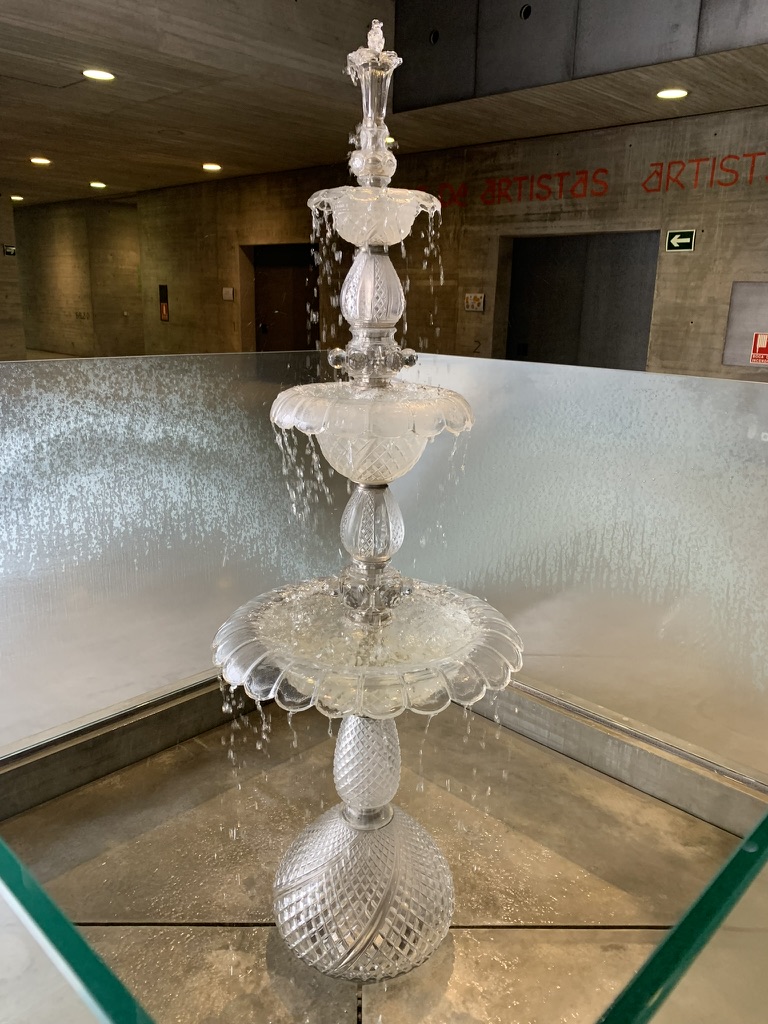
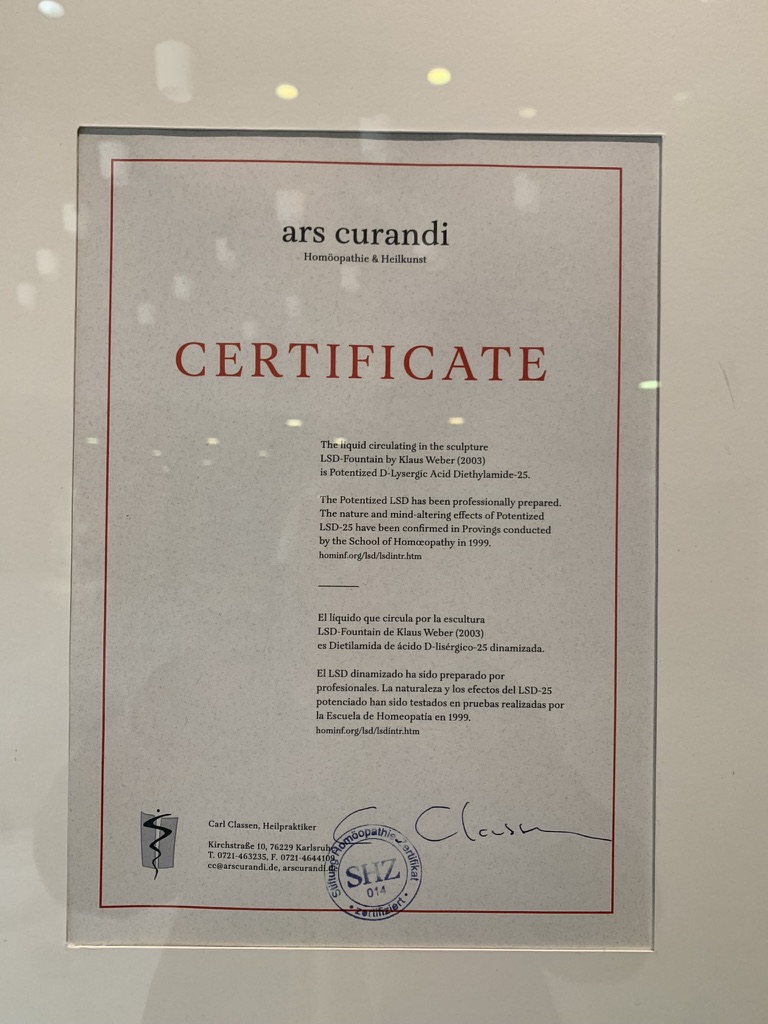
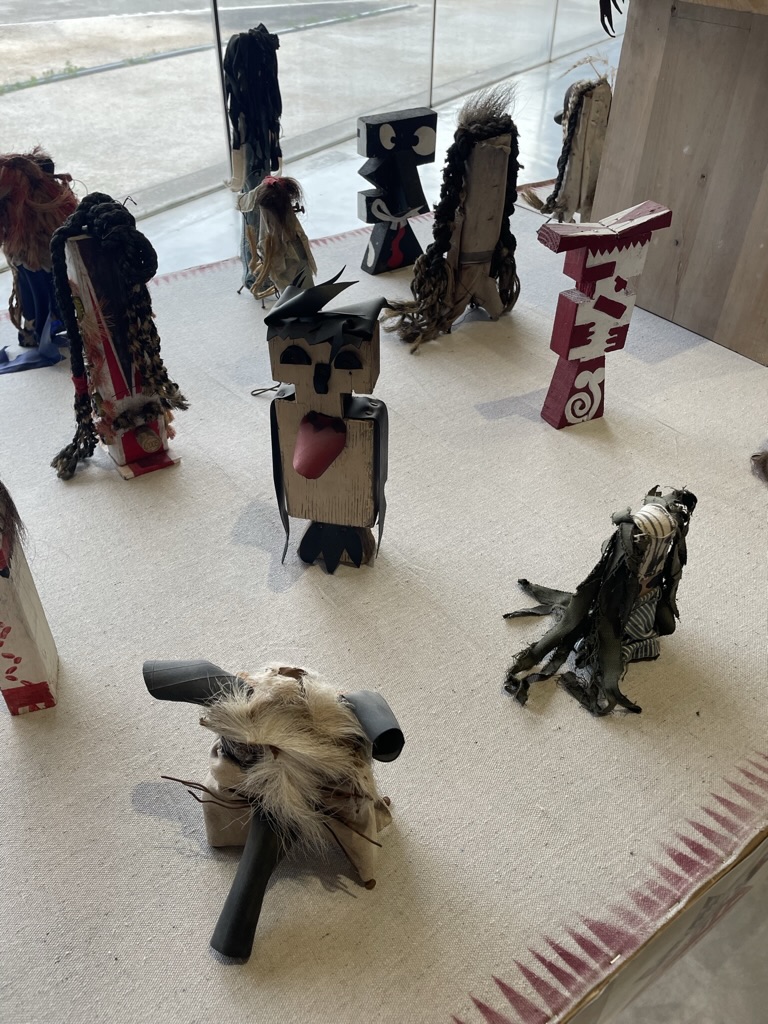
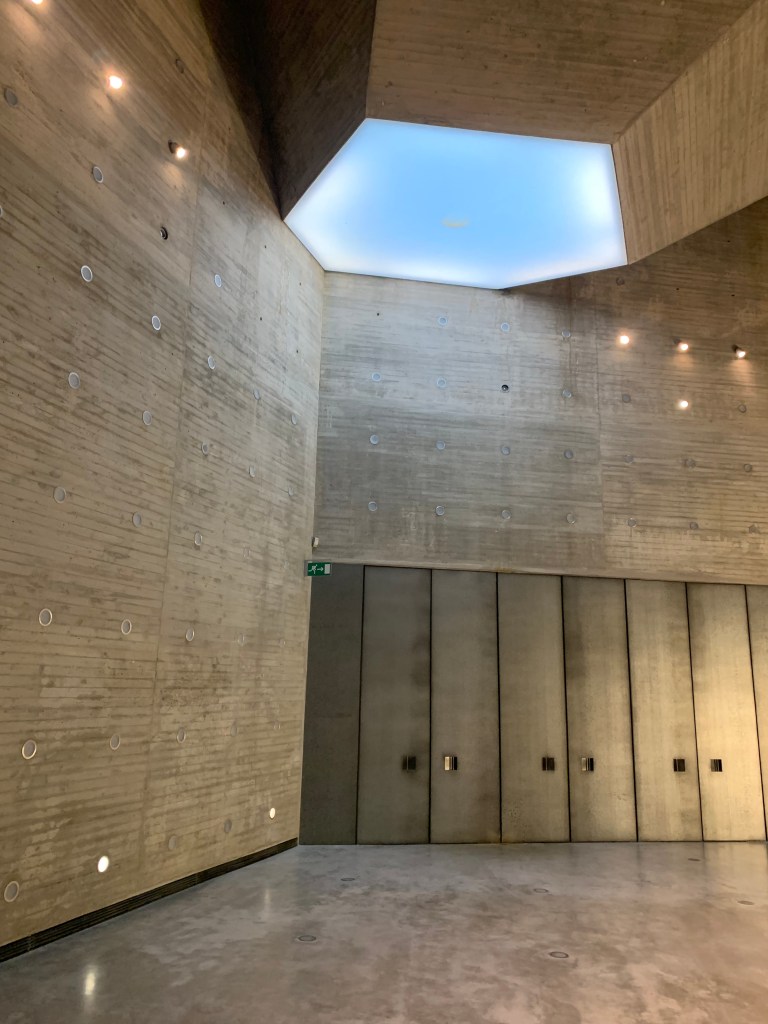
December. Cordoba, Spain. A room in the contemporary art museum. One of the best museums I’ve visited.

Christmas in Córdoba*

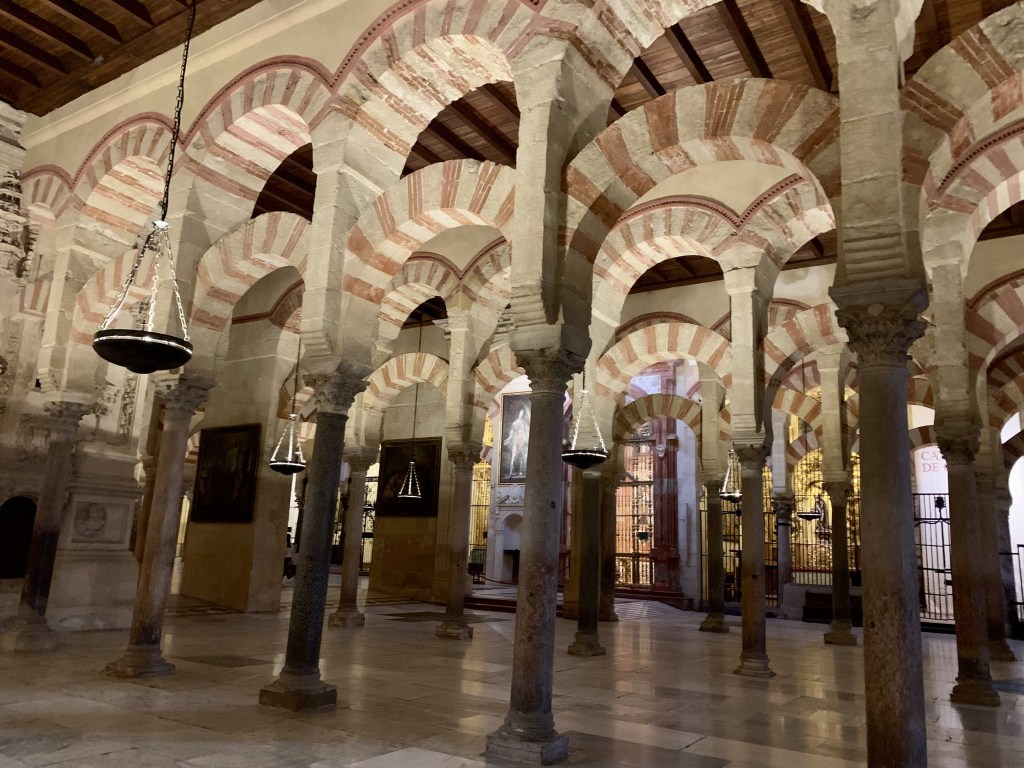
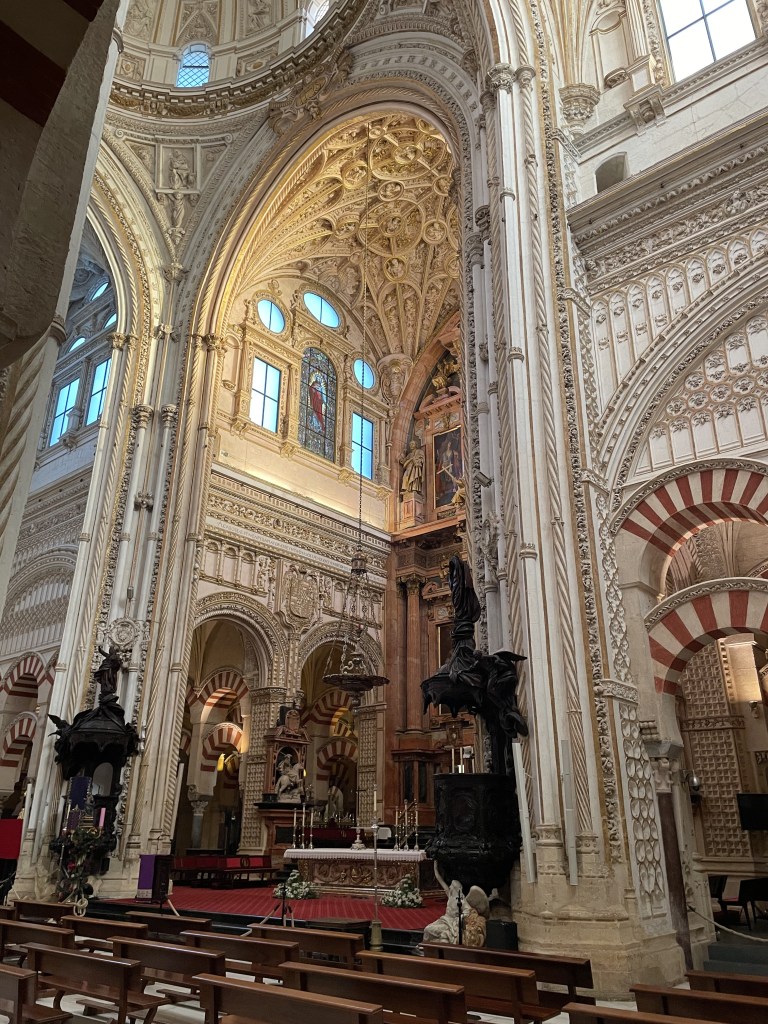
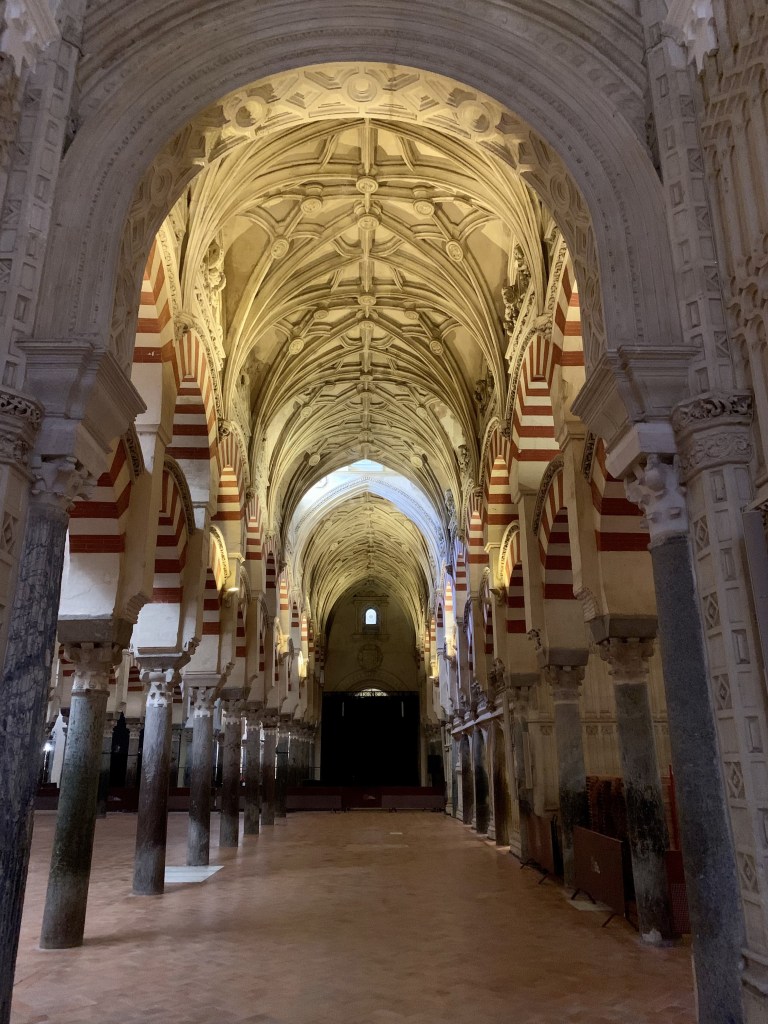
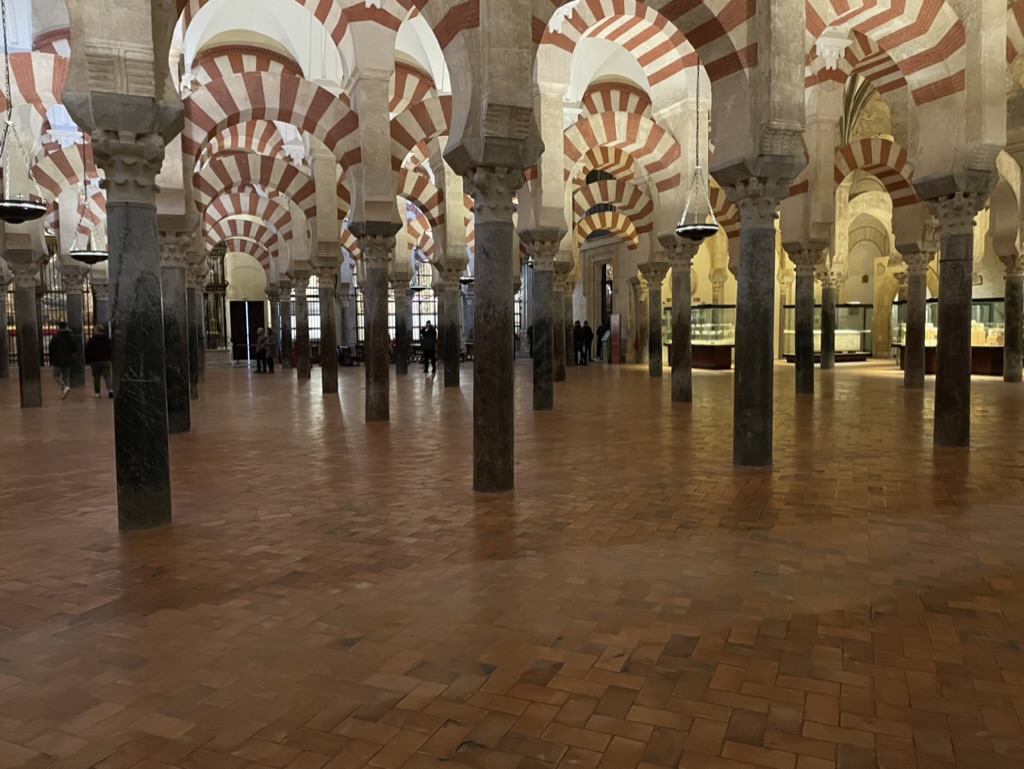
The arches inside the Mosque-Cathedral

The drive from Portugal was similar to drives we’d taken across California’s Central Valley: large cities surrounded by miles and miles of agricultural land — in this case, mostly olive and citrus trees, with the occasional feedlot mixed in for olfactory variety. After arriving in Córdoba and meeting Juan Manuel, our host, we drove with him up the street to the garage where we had an assigned spot. As I attempted to park the car nose-in to the tight spot, Juan Manuel waved at me, pointing frantically to his phone, and I leaned over to read the Spanish-to-English translation, which said: “Perhaps it is better to put it in the ass.” I could not argue with that logic and just backed the car into the space, thanking him for the help. It made me wonder how many faux pas we’ve committed while using that app: we’ve certainly seen some confused looks when we shared our Google translations with people. 

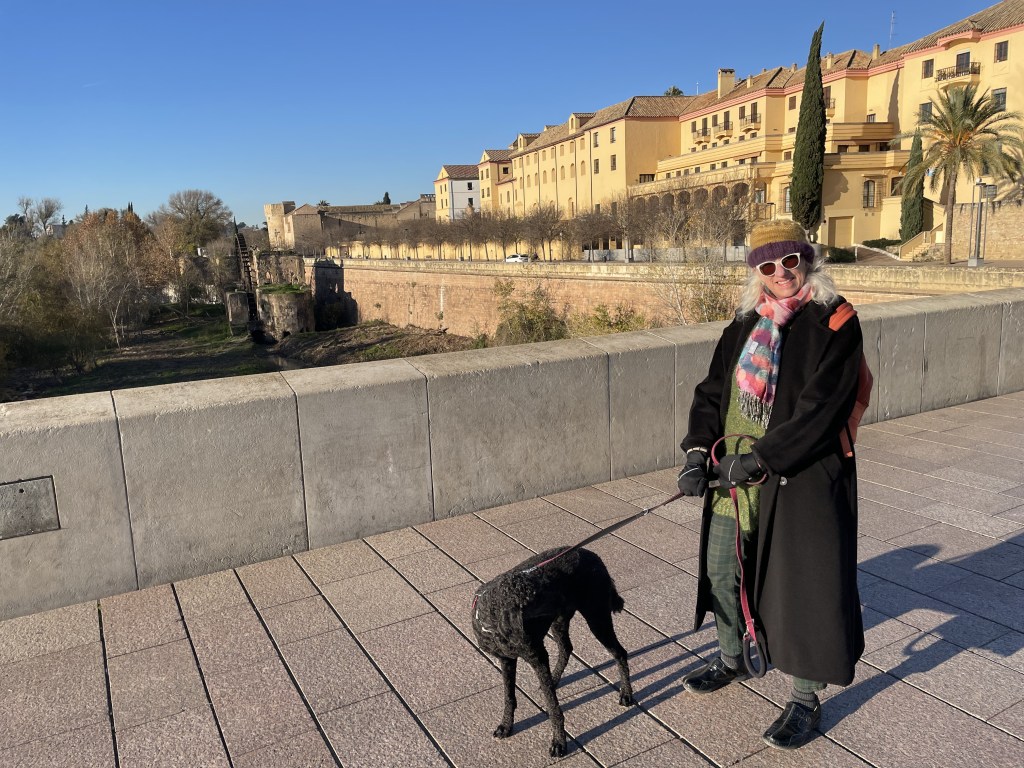
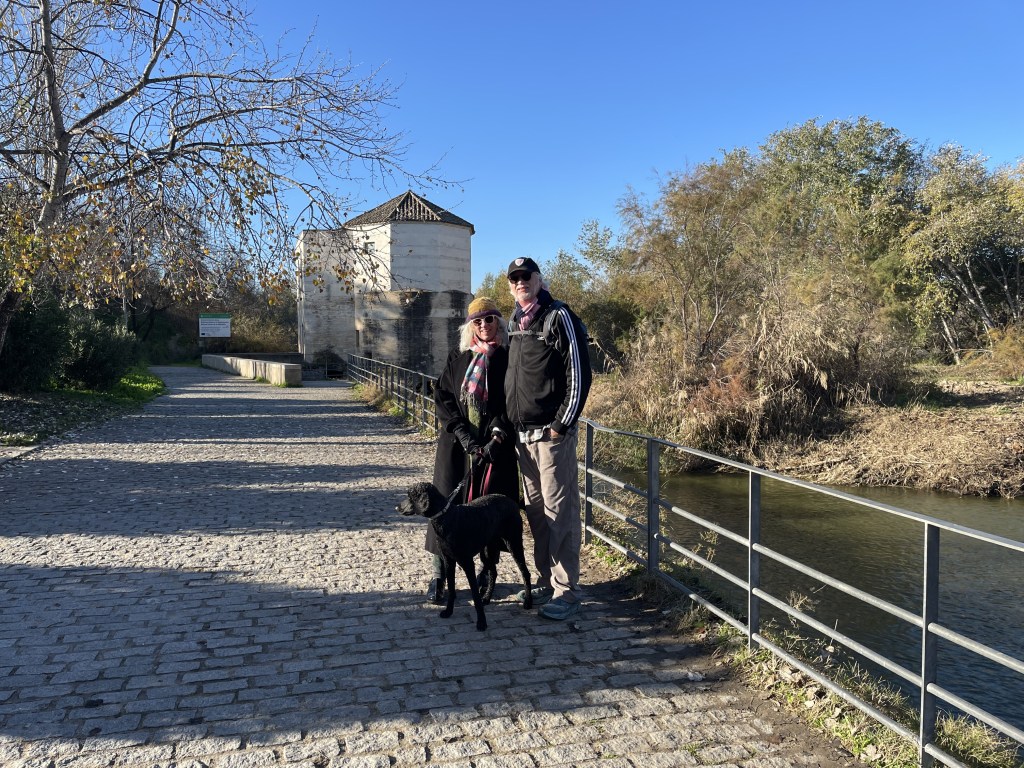
Getting oriented to Córdoba: Denise and Coco on the Roman bridge
First things first, as we have to drop in to get our traveler’s checks from 1985 cashed.
Family portrait near the Roman bridge.

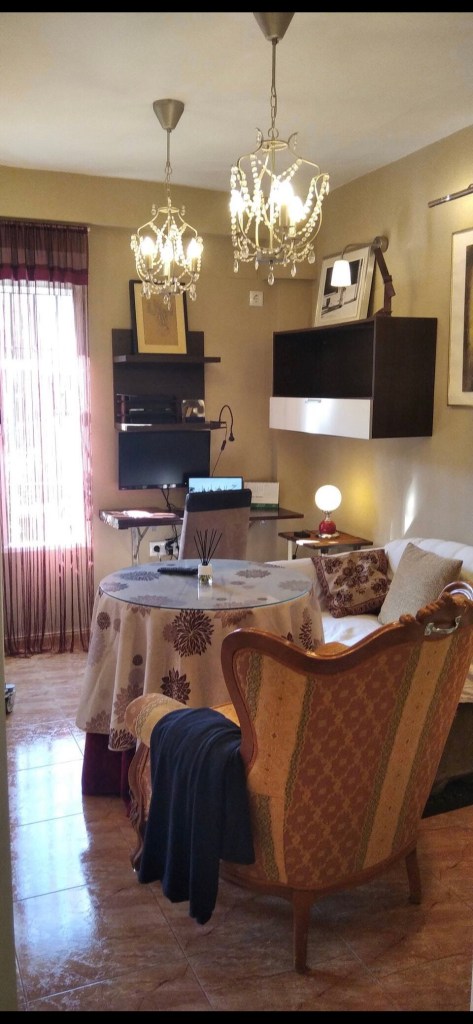
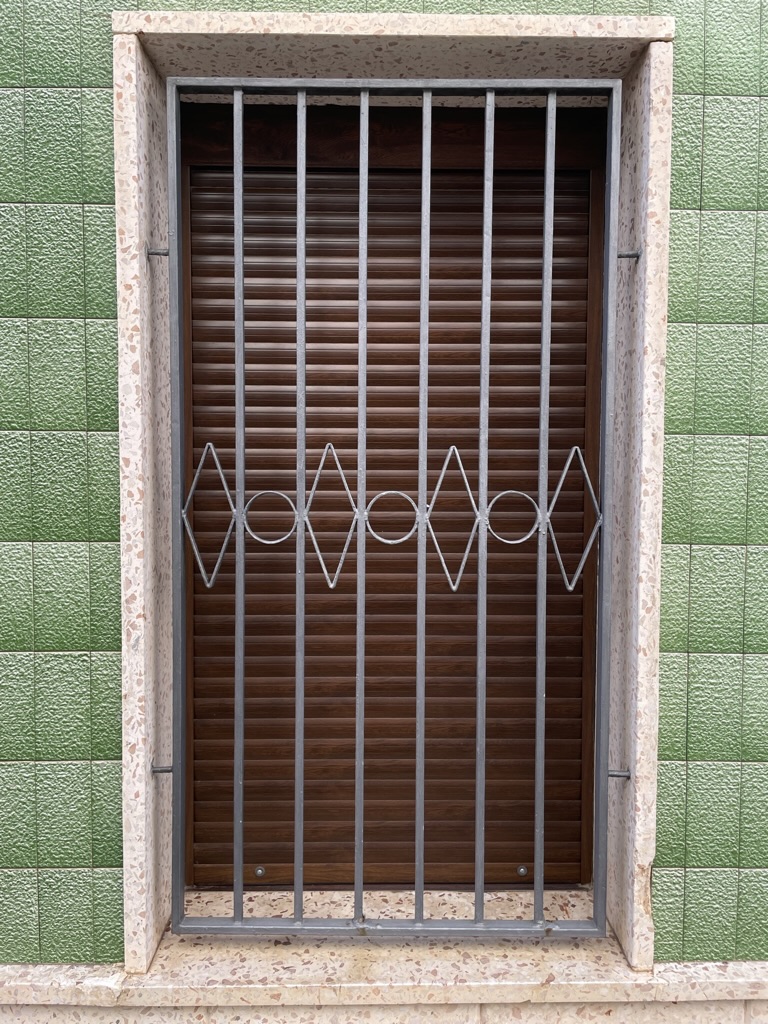
We’re happy to be back in Spain, where the words actually sound like they look and everything is named after a place in California. (Interesting to note that many people here use the Portuguese greeting of bom dia instead of the Spanish buenos dia.) It’s the first time in Córdoba for both of us and we’re excited to explore the area and celebrate Christmas and New Year’s in Andalusia, the southernmost region of Spain. Our apartment is a very traditional Spanish place in the Santa Rosa district — see what I mean? — with six small rooms, all with their own door, marble floors, and ornamental bars on all the windows. It’s smartly decorated, alternating the modern pieces with antiques that look like they belonged to Juan’s abuela. The master bedroom has an improbable small double bed that didn’t suit either of us. The other bedroom has two single beds of reasonable quality so we’ll be doing the Rob and Laura Petrie sleeping arrangement for the next month.

The apartment is decorated with the art of the owner. Here’s Denise removing the art.
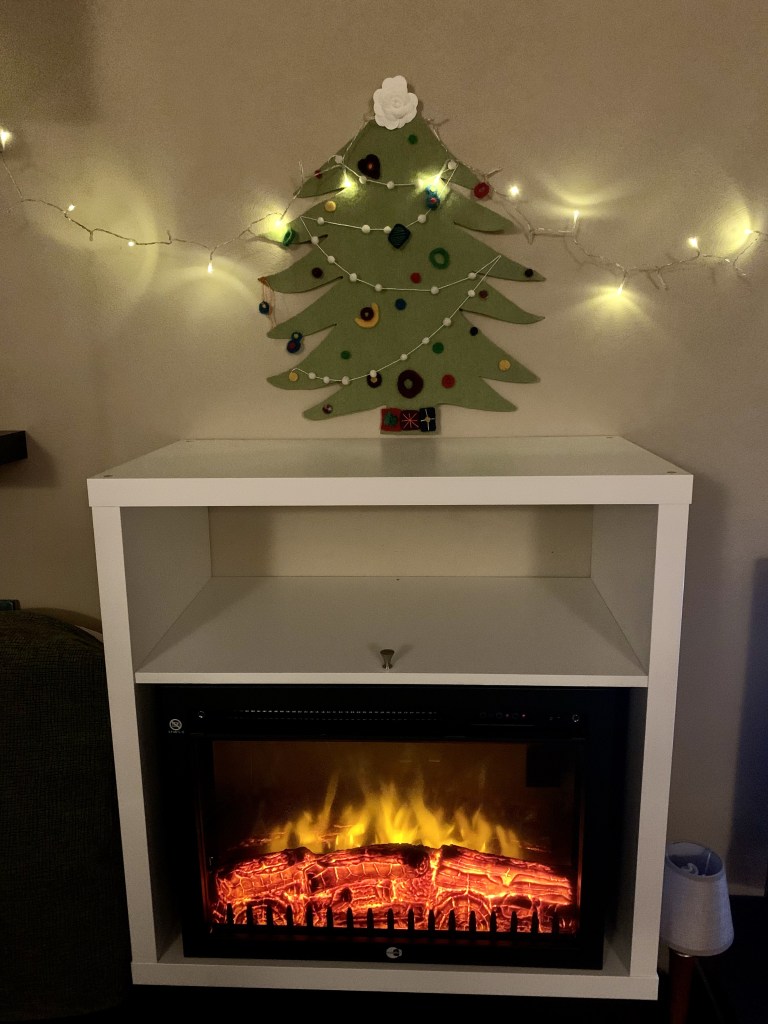
Denise’s felted Christmas tree above the fake fire.

After Juan shows us around the apartment, we ask about the wi-fi password: “Oh, there’s no internet here,” he informs us and I can feel Denise’s eyes boring a hole in my skull. In my defense, the pictures on Airbnb prominently show a “dedicated workspace” with a large computer screen so I could argue that I was misled by the listing. (Although now I see the words “No dispone de Wi-Fi” clearly on the site). We decide not to let it ruin our stay and figure that we can make it work using pre-downloaded TV shows and movies and the generous data allowance on our cell phones. It’s not ideal but we’re trying to be malleable travelers. After all, didn’t Mary and Joseph have to settle for a place in Bethlehem with no wi-fi? If they can do it, so can we. 

Exhibit A: from the Airbnb ad, clearly showing a computer workstation. I rest my case.

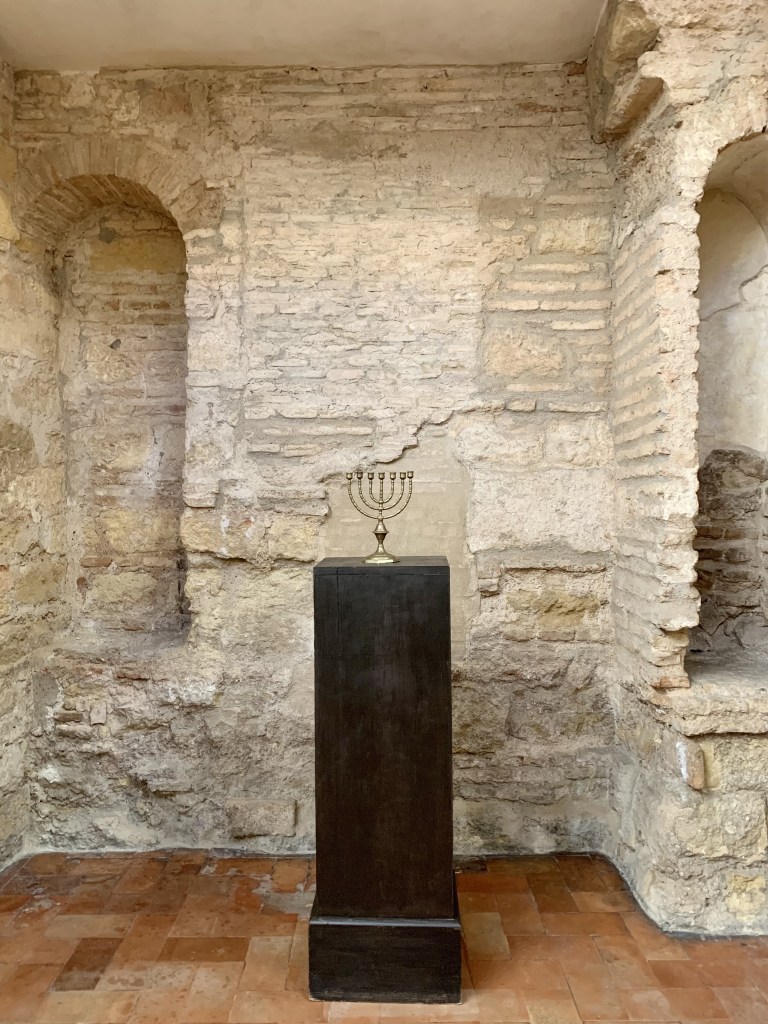
It’s stunning how much of Spain is farms or open land: Córdoba is a densely packed city of 350,000 inhabitants but, once you venture outside of the highways that ring the city, it’s mostly farmland and mountains. People have lived in this area for a long time: they’ve even found traces of a Neanderthal man, dating back to c. 42,000 BCE, as well as several neolithic sites in the area from the eighth-century BCE. Like much of Spain, Andalusia has been inhabited by the Romans, the Visigoths, the Muslims — it was considered one of the most advanced cities in the world under the Umayyad Caliphate in the 10th and 11th centuries — before being captured by Ferdinand III of Castille, who converted the former Muslim stronghold to Christianity, paving the way to modern-day Spain. Although the caliphate was reasonably tolerant of the Jewish population, the Catholics were famously not and most Sephardic Jews spread out over Europe and Africa. There’s still a large Jewish Quarter here, including a small museum that was once the temple, but not a lot of actual Jews. 

Inside the Synagogue

The first day in a new place is always difficult as we adapt to the culture of a new place. We have to figure out the quirks of the apartment, then of the neighborhood: where can we find a decent grocery store, a veterinarian for Coco, and a good park that tolerates dogs? Luckily for us, our building is in a working class neighborhood, refreshingly free of tourists, with lots of retail and lots of dog owners. We are walking distance to the Mercadona grocery, right across the street from a friendly vet’s office, and a five-minute walk to the sprawling Parque de la Asomadilla. This hillside park is a godsend, giving us a safe place to walk Coco and throw the ball, while allowing us a birds-eye view of the city and countryside in front of and behind us. Santa Rosa also has a small city hall at the end of our street with free wi-fi, so that partly solves that issue. Like Seville, Córdoba is filled with bike paths, and almost every sidewalk has a bicycle lane. However, most of the traffic therein is electric scooters, all piloted by teens and twenty-somethings who, judging by their general carelessness, are immortal. I know I sound like an old man here — of course, it’s preferable to have low-emission vehicles moving people instead of cars — but until we get used to looking both ways for them, I assume the next blog will be written from a hospital bed as I recover from a broken pelvis. 

View from the top of the park of Cordoba.

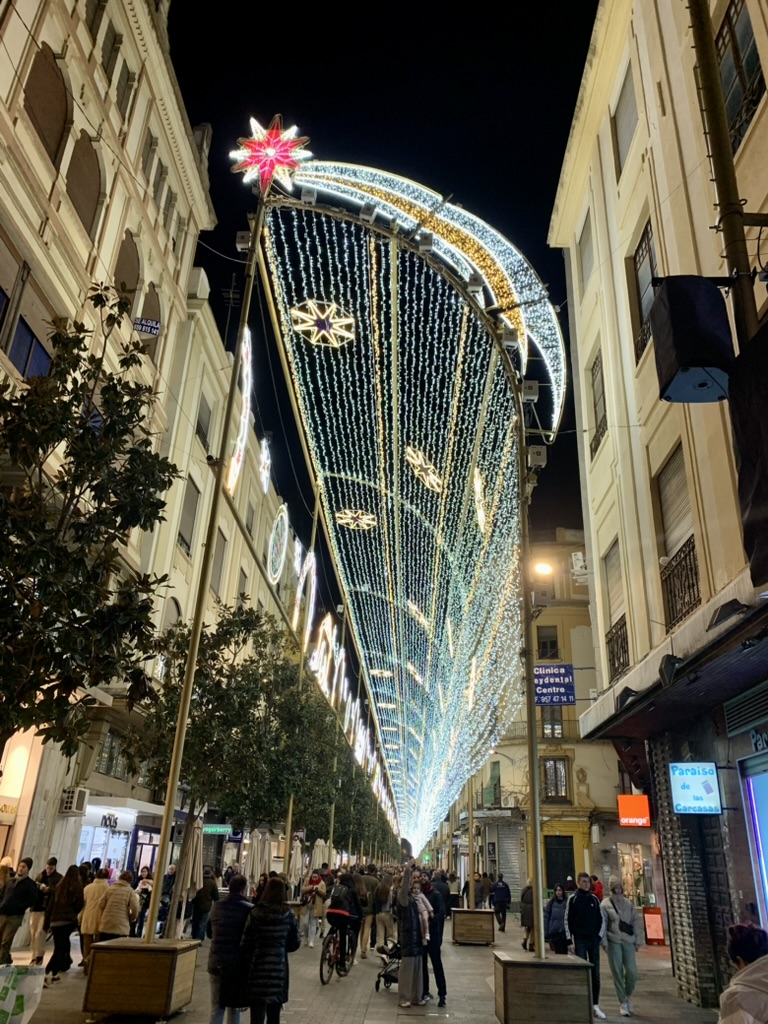
The morning after we moved in, we both woke up very early and decided to head down to the Mosque-Cathedral, known alternately as the Great Mosque of Córdoba, the Mezquita, and the Cathedral of Our Lady of the Assumption. We’d been tipped off that the place was free to all between 8:30 and 9:20 a.m., before the first mass of the day; after that, the building opens to the paying tourists. It’s about a 30-minute walk for us, first through Santa Rosa, the area slowly waking up after another late night, across the wide Avenida Al-Nasir, and through the Centro Comercial, the main shopping district of the city, all lit up with Christmas decorations. The Mosque-Cathedral is mostly empty at this hour, save for the thrifty tourists like us, young and old. We already have plans to come back for a guided tour so this is bonus time for us, and we wander around the building, the likes of which we have never seen. On the site originally was a Christian church, built by the Visigoths in the 6th century. The Muslims used the footprint to build the mosque and when the Catholics took over the government they decided to just cut a hole in the middle of the building and plop in their cathedral. Notably, every other mosque in Spain was destroyed by the Christians but, like us, they were probably overwhelmed by the beauty of this place and decided to preserve it instead. Denise gives them five stars for their early adoption of the reuse, recycle, and reduce system. 

The Mosque went on forever. The Muslims build out….
While the Catholics build up!
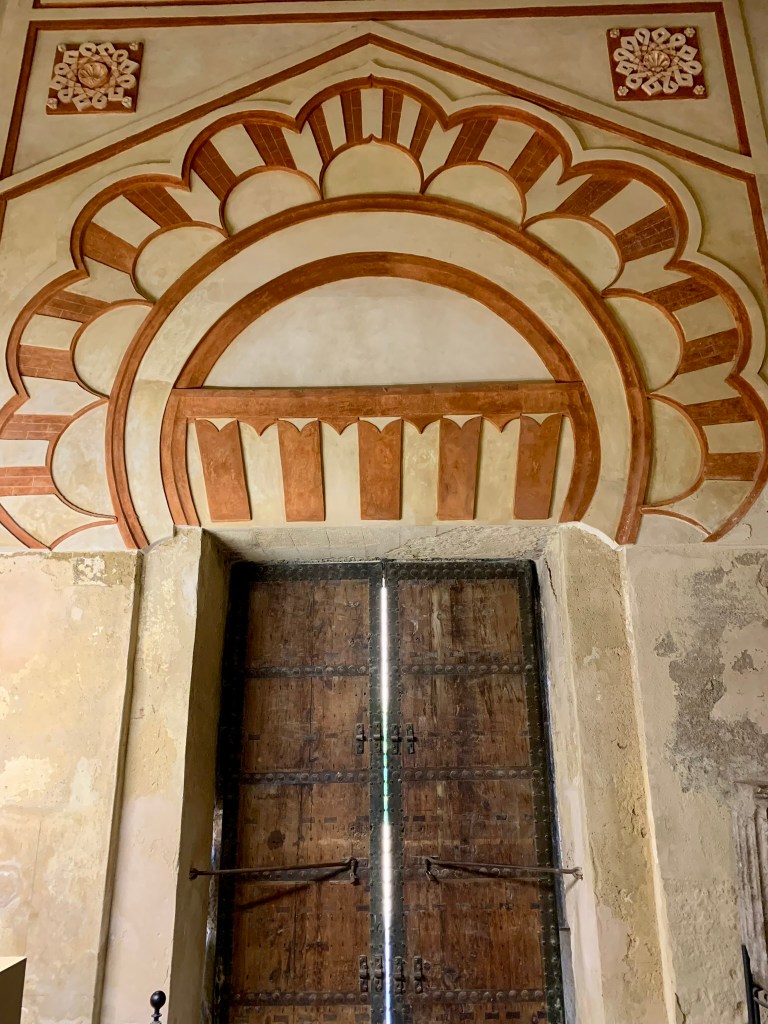
Mosque-Cathedral doorway.
Mosque-Cathdral interior.
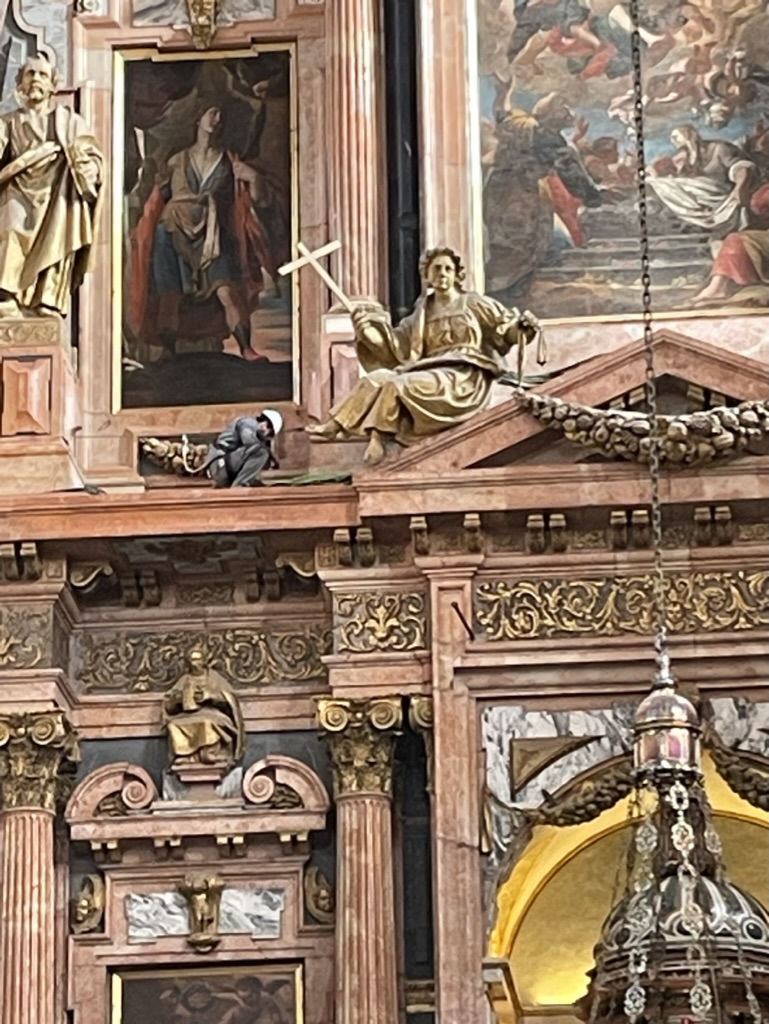
Here’s a fun game! Can you spot the worker amongst the saints?

Córdoba (pronounced with the accent on the first syllable, we learned) is not quite as grand as Seville, but shares many lovely traits in common: charming narrow, winding streets — helping keep things cooler in summer, as it’s the hottest city in Spain, temperature-wise — lots of flowers on the walls of the buildings, large public parks, and a tremendous amount of history, much of it well-preserved. It’s a real pleasure to walk around town, getting lost, and letting the streets suggest routes. The only downside is that, unlike Seville, they allow cars down the old narrow streets of the center, causing pedestrians to have to hug the buildings as they pass. The architecture here is really interesting, ranging from mudéjar to mid-century modern, some going back thousands of years. We were, however, slightly disappointed to discover that Ricardo Montalban doesn’t live here and that there is no such thing as “rich Corinthian leather,” but we’re coping. (That joke is for our American friends of a certain age.) 

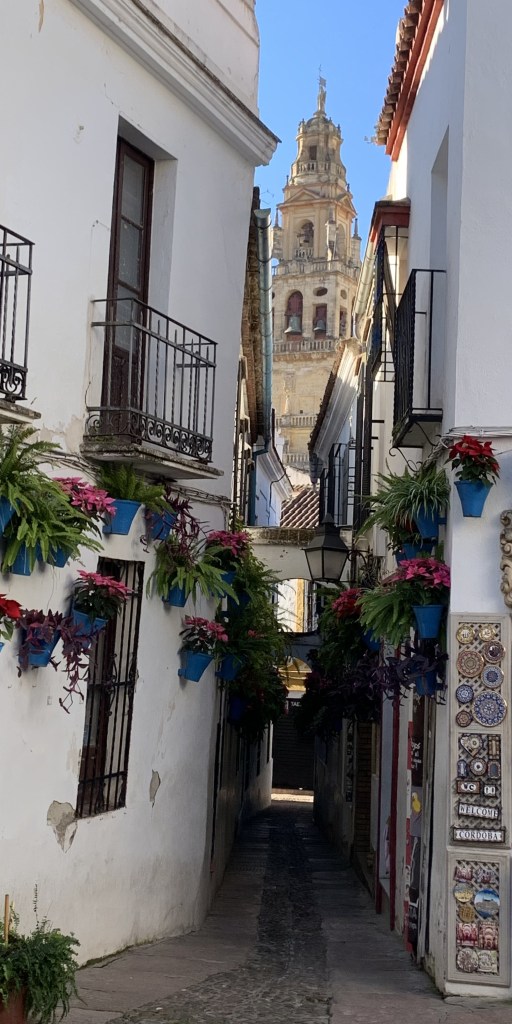
Street of Flowers with Cathedral belltower in background
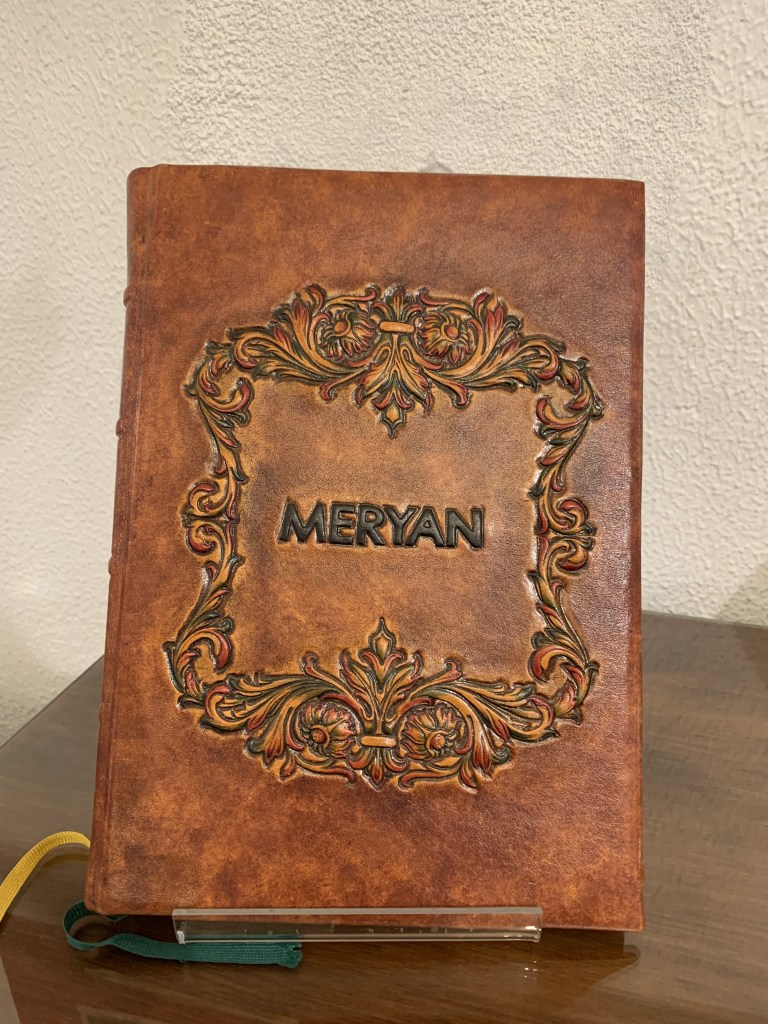
Leather worker.
Scenes from the leather shop. Rich, Cordobian leather. 
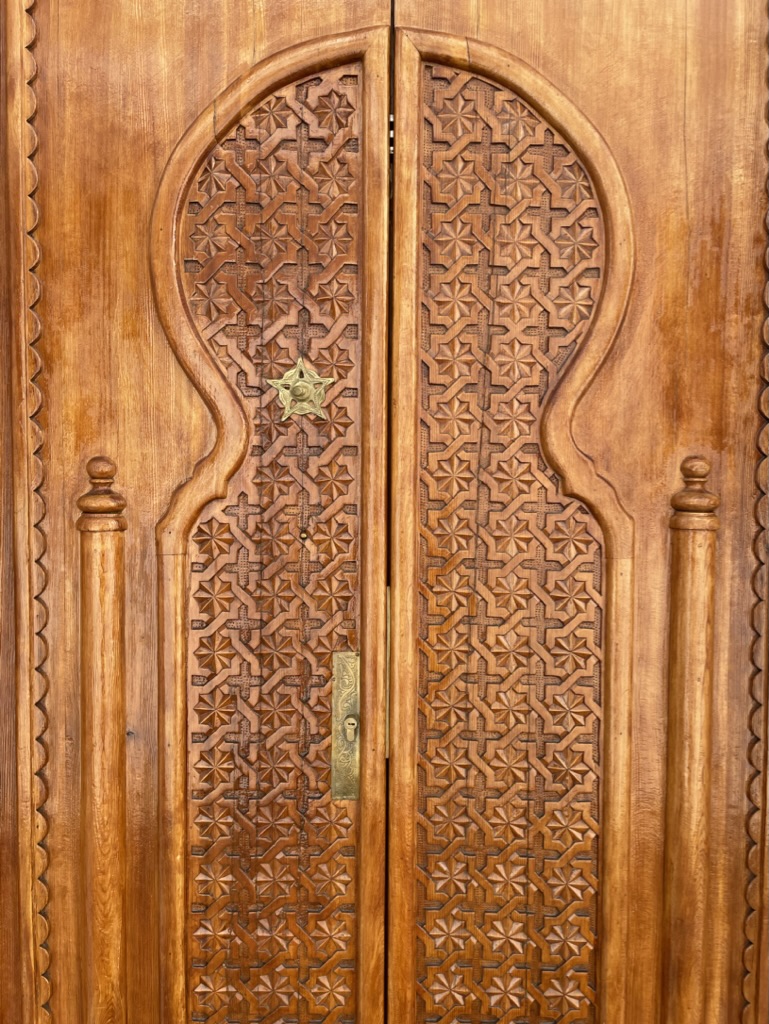
Intricately carved door.

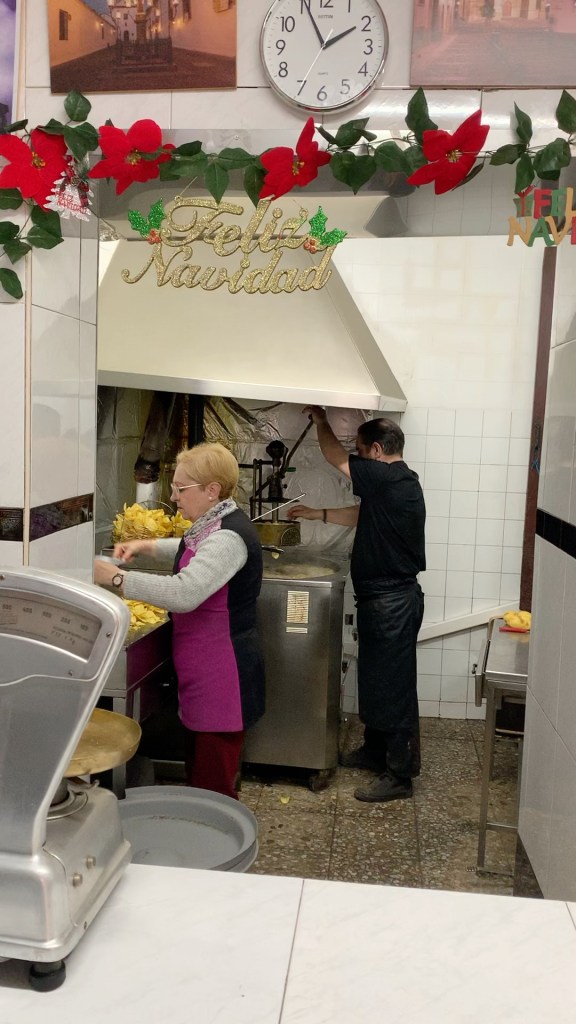
On the way back from the cathedral, we found ourselves in a residential neighborhood and noticed a line of people outside a shop with no sign identifying the business.  We’ve learned that this is generally a good thing and we took our place in the slow-moving queue. Eventually, we discovered that the shop sold only freshly cooked potato chips — you could see them being prepared in the oil in the back room — and that the reason for the slow pace was the chatty woman running the register: she was more interested in visiting with her regular customers than actually selling the chips. We eventually made it to the front of the line right before she closed down for siesta and bought two large bags of the still-warm crisps for two euros each, although oddly there was only one bag left when we got home.  

Team Potato Chip

On the Saturday before Christmas, we took a drive down to Málaga, on the Mediterranean coast, to see our friends Andrea and John. Denise worked with Andrea in Portland and Andrea and John recently moved to Spain, where his family lives. It was interesting to hear their take on being young (in their 20’s), working people in Spain: not as rosy as you might imagine. John feels lucky that he was able to keep his job from the U.S. and telecommute, otherwise, he says that they’d struggle in the current Spanish economy.  He feels like the taxes are too high on businesse and that serves to stifle innovation. As it is, they can enjoy a life that includes travel and possibly buying a house, things that are out of reach to many of their generation here.  It was great to see old friends and to actually have a conversation in English with someone besides ourselves. On the way down there, we stopped in Antequera, one of Spain’s famed White Villages or Pueblos Blancos, referring, we hope, to the white-washed buildings prevalent in the town.

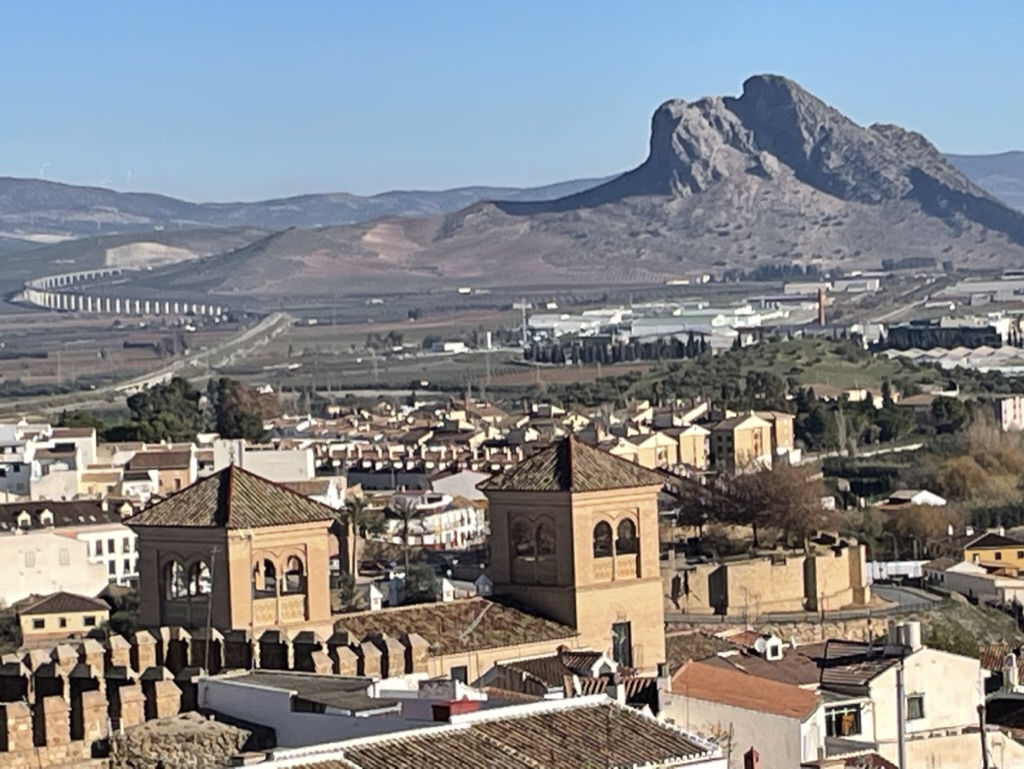
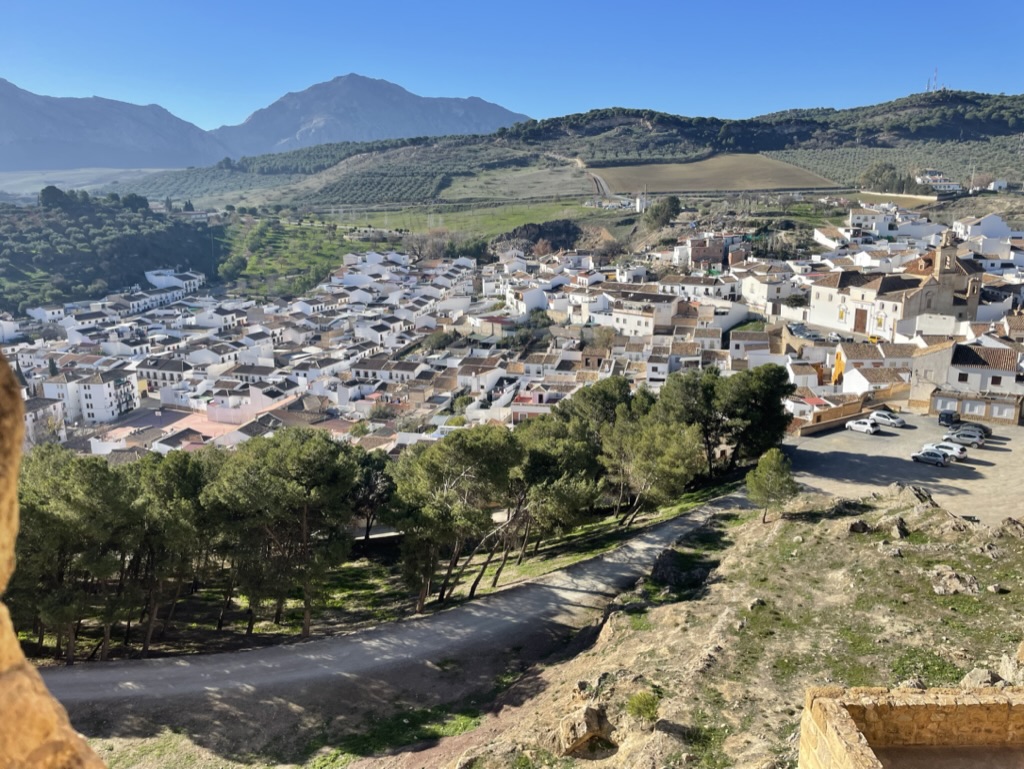
Antequera from the castle.
Antequera with zoom effect.
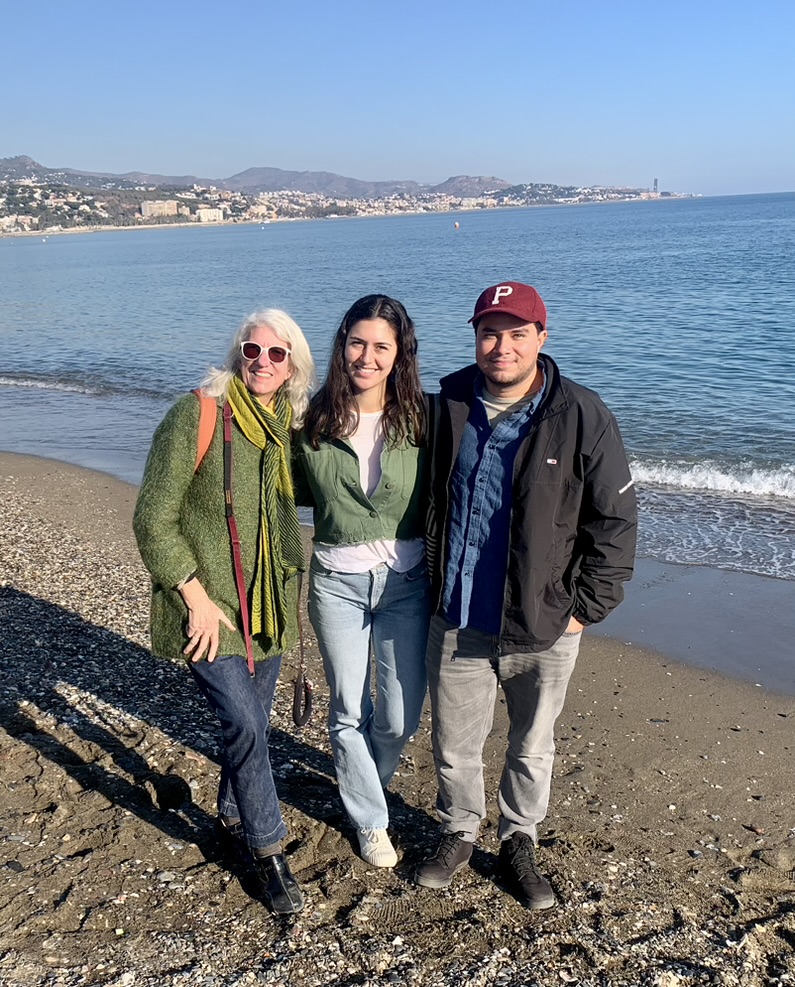
Denise, Andrea, and John and the Mediterranean in Målaga.
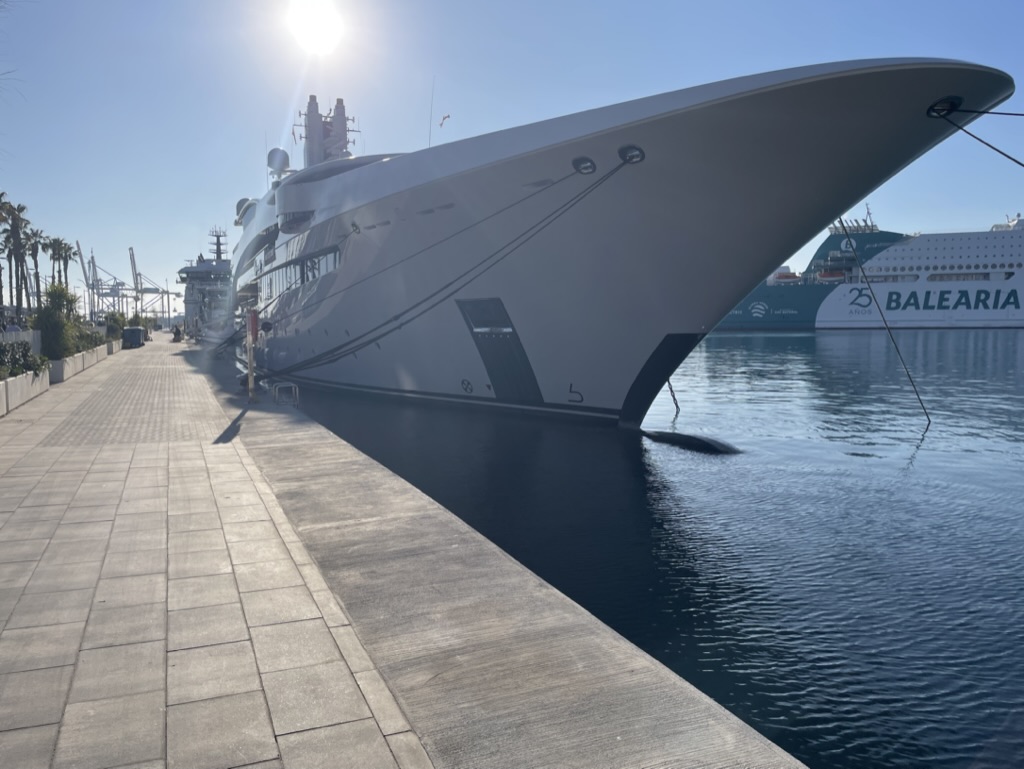
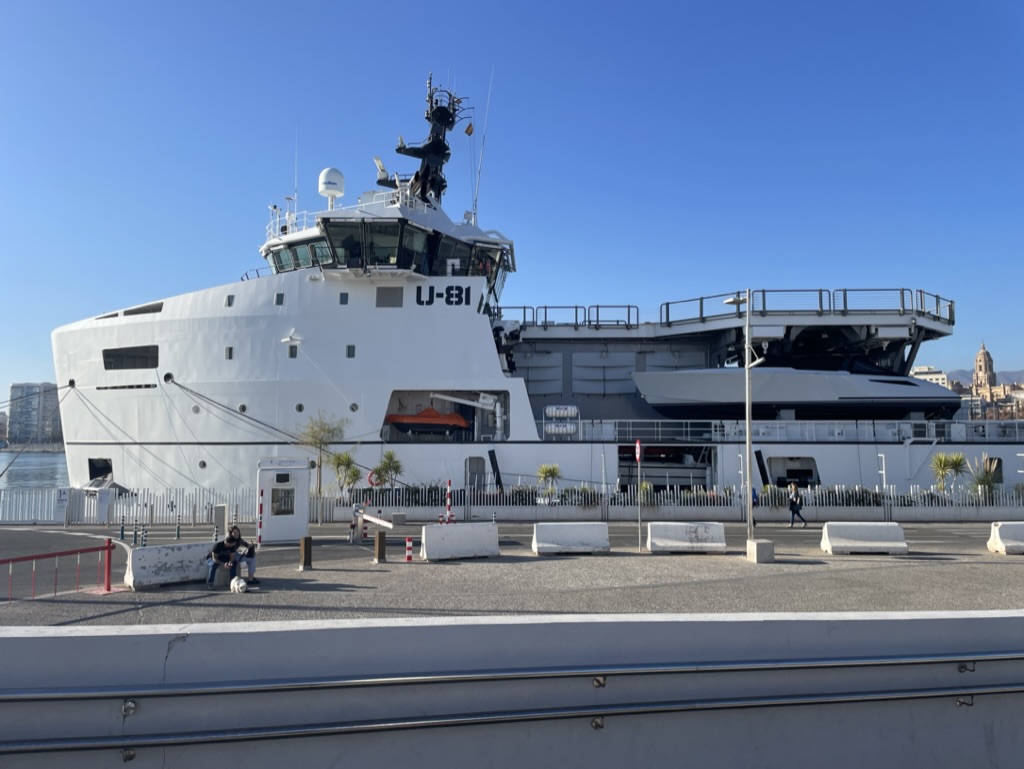
This yacht belongs to a New Zealand billionaire. It’s overwintering in Málaga. I’m sure there’s tax fraud happening somehow.
This is just the support ship for that yacht! It follows the yacht everywhere. You know how it is when you have a yacht: it’s always something.
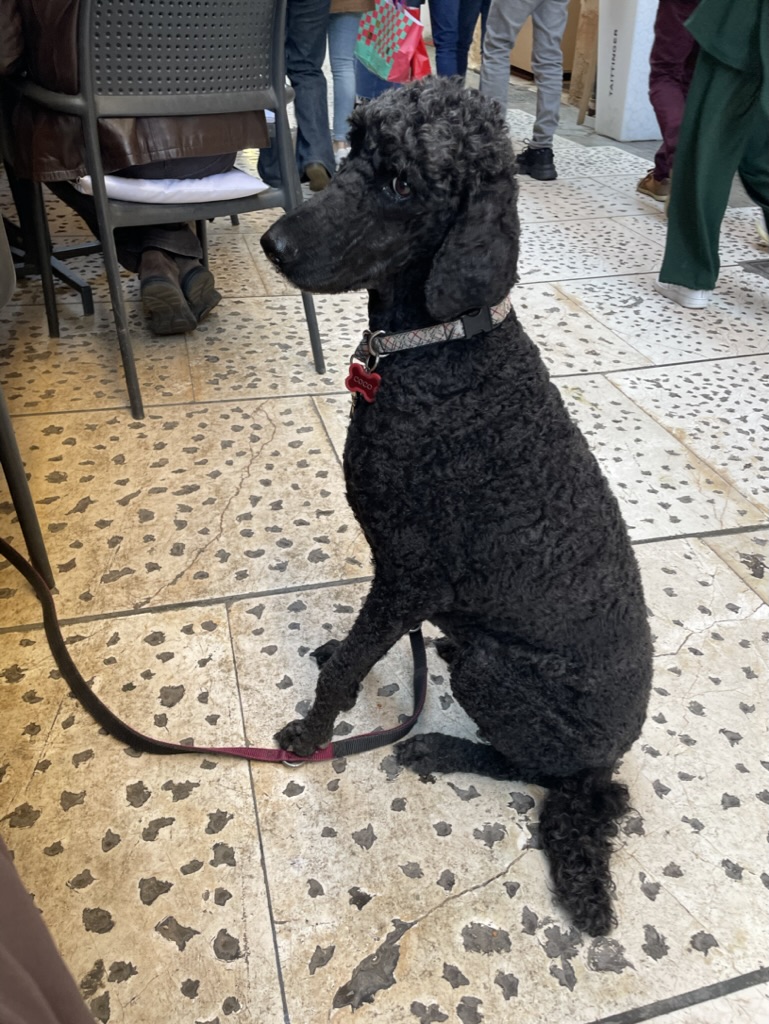
Coco knows to keep a keen eye out for dropped food.
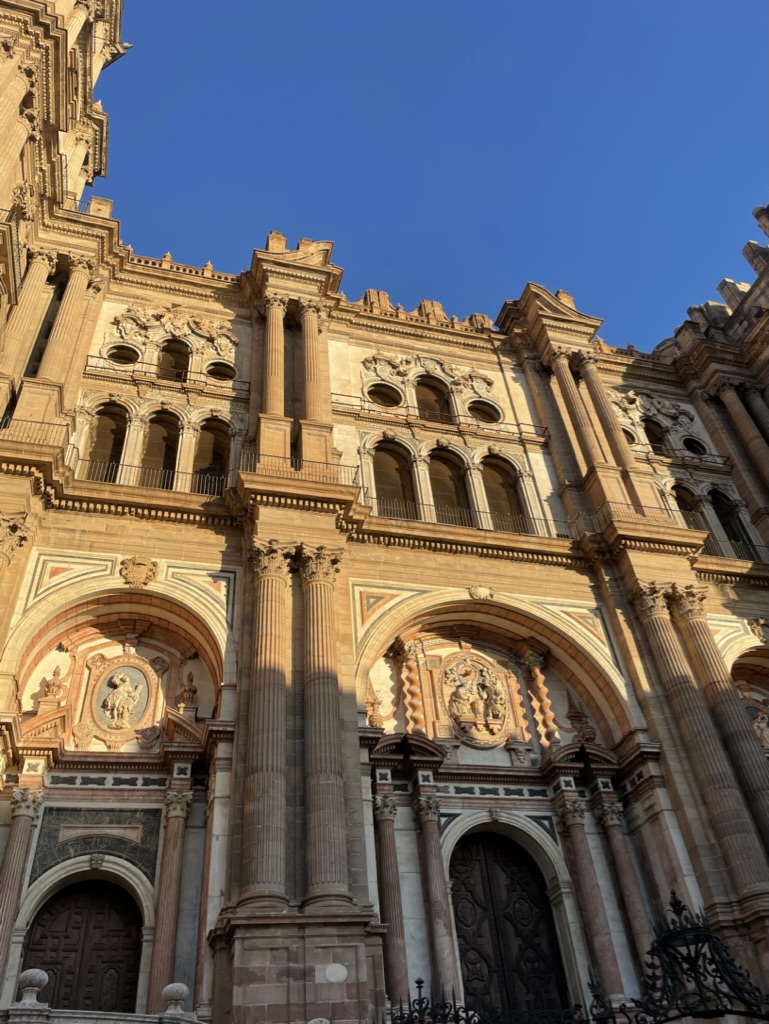
It took me three pictures to get all of the Málaga Cathedral but you get the idea.

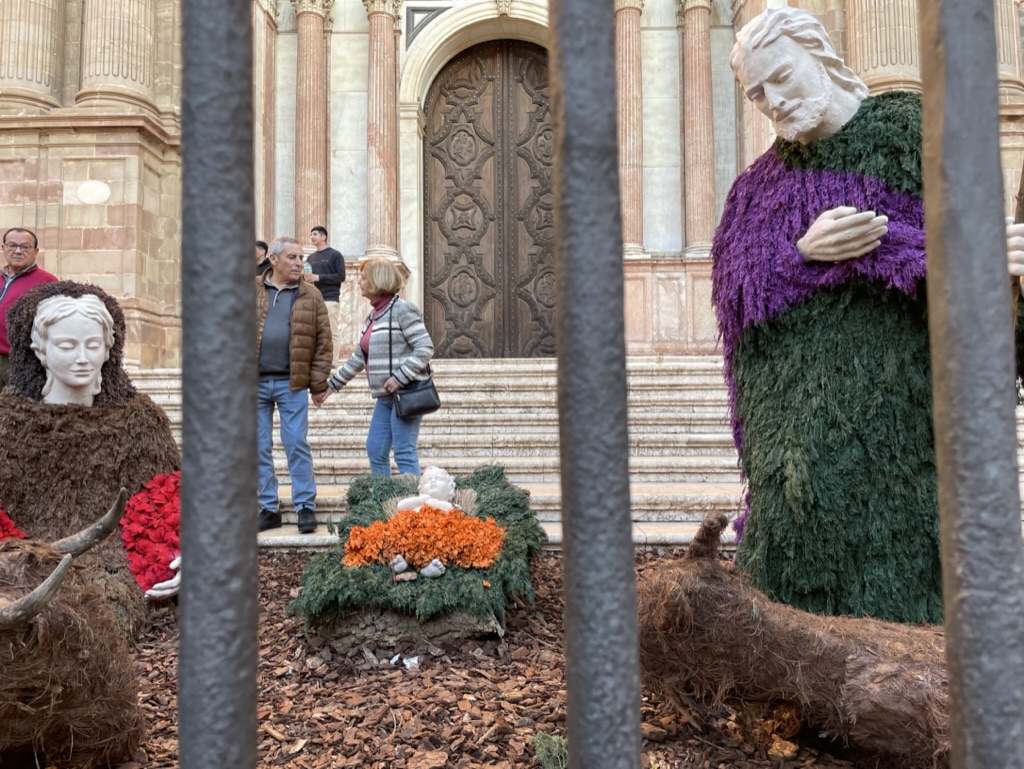
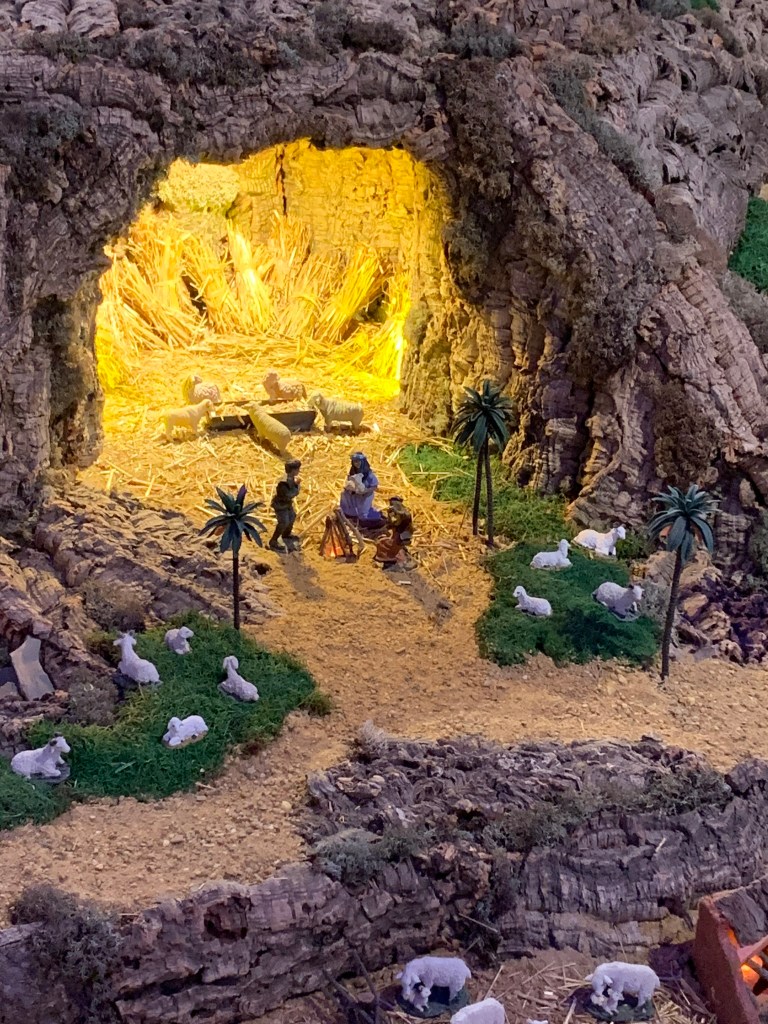
The Spanish people go wild for Christmas: our host told us that the neighborhood can get noisy with the celebrations, and that they celebrate into mid-January. Traditionally, their gift-giving day is January 6th but, unlike most European countries, they have no version of Santa Claus: instead they exchange gifts on the day that the Three Wise Men are thought to have arrived in Bethlehem. Like their Portuguese neighbors, Spaniards go wild for the nativity scenes — here called Portal de Beléns — and you see them everywhere, from shop windows to church altars, and I think they take the place of the Christmas tree, as we haven’t seen any of those. 

Another F-ing Créche in Målaga. 
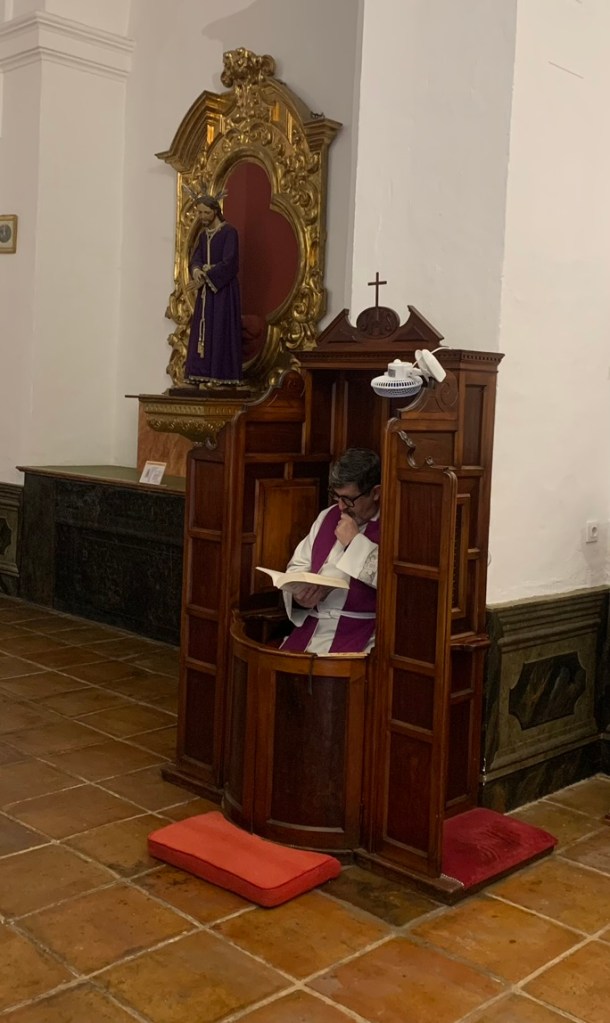
This priest in this open-air confessional box is boning up in case anyone asks him any trick questions about xmas.

On Christmas Eve, the streets were empty for family time from about 4 p.m. until noon on Christmas Day. Then many families gather for a long lunch at one of the city’s many restaurants, where reservations were booked up months ago. On the 25th, we chose to wander around the city and happened upon a 16th-century church where the priest was just getting ready to say mass for a few dozen neighborhood parishioners. We sat down and tried to follow along with the Spanish-language Mass — my first time in a church since Denise dragged me and the boys to Assumption Church in Walla Walla on Easter of 2005 — and it was a mercifully brief 30-minute service, sans hymns, which saved me from having to pretend to sing. I should be good with G*d for another twenty years. 

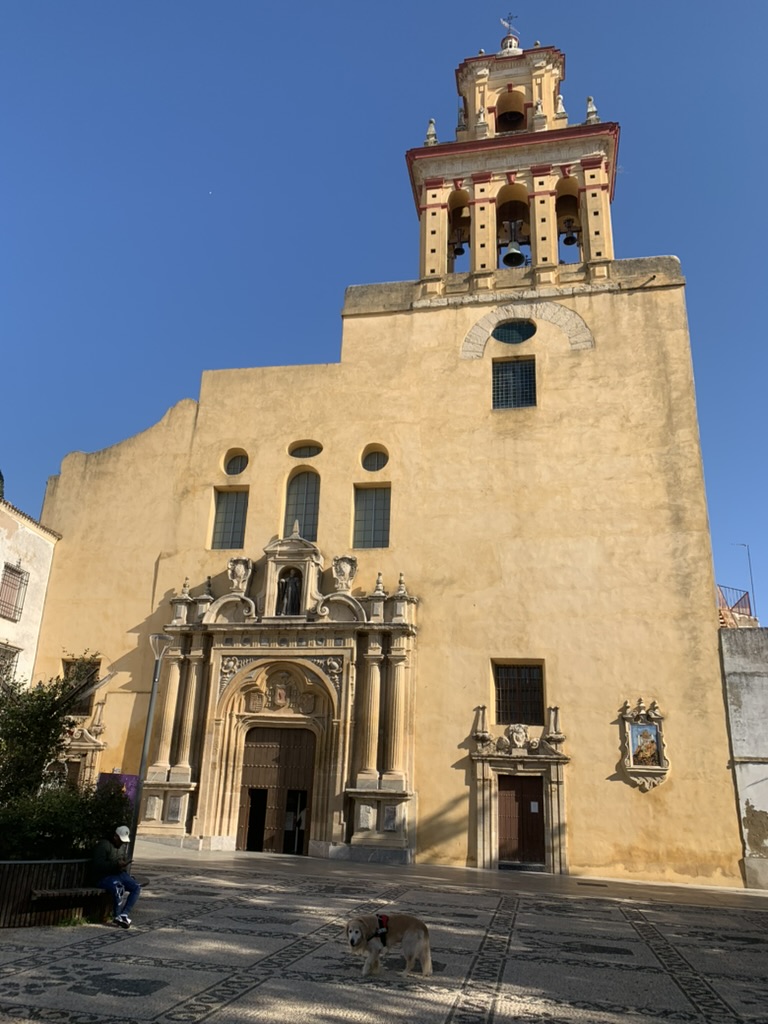
Iglesia de San Agustîn, where we “celebrated” Christmas Mass.
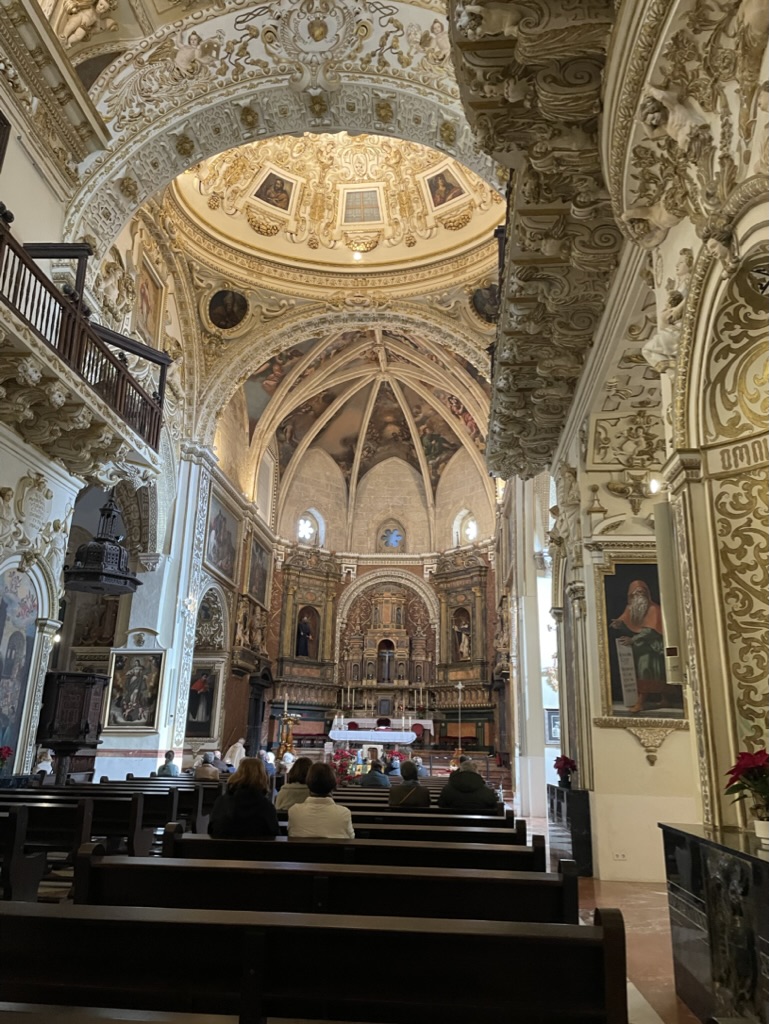
The modest interior.No altar boys, choir or other helpers: just the priest and the ladies who passed the baskets for cash. DYI.
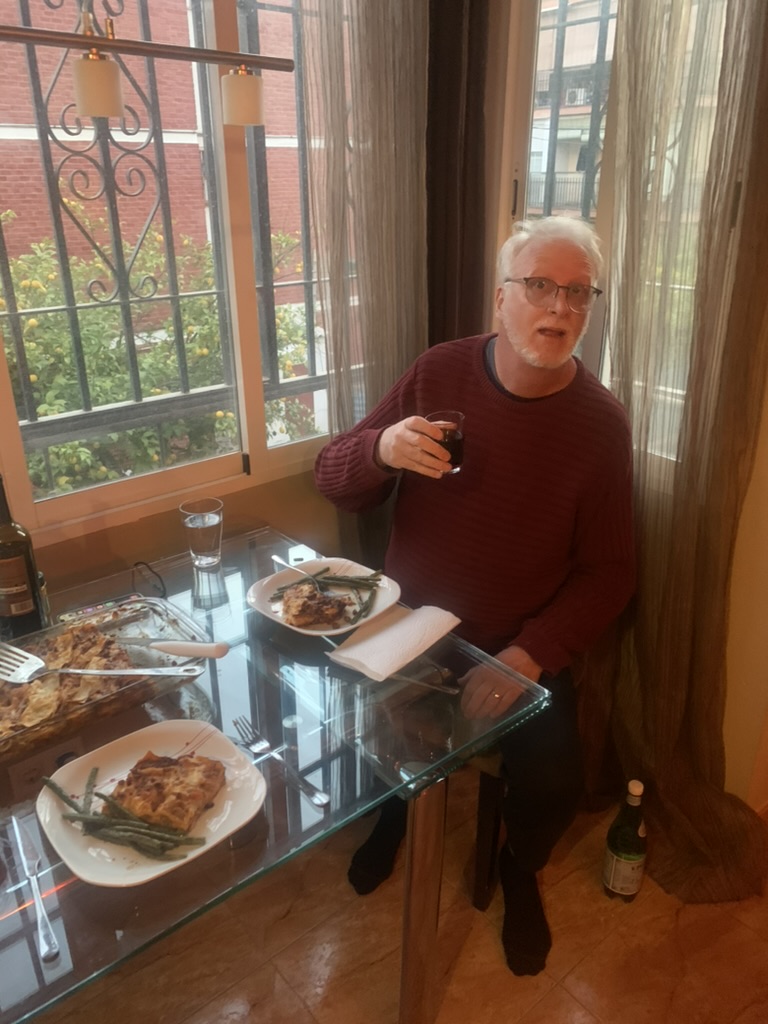
As a reward for actually setting foot inside a church, Denise made us Christmas lasagna.

One of our goals on this journey was to avoid the worst heat of summer and the worst cold of winter. Of course, since Denise grew up in balmy Los Angeles, while I was raised in the frigid Northeast, one of us is gonna be unhappy at some point. We missed our guess last August in Jaca, Spain: we thought the high Pyrenees elevation would shelter us from the worst of the summer heat but it didn’t. It wasn’t terrible because we were right next to the community swimming pool but it has us planning to go much further north next summer. We thought that being in southern Spain would mitigate the winter temperatures but we miscalculated here too. Actually, our first choice was Málaga, a slightly warmer city, but we couldn’t find suitable accommodations there. Córdoba is not terribly cold – it doesn’t snow here – but it’s chilly in the morning until the sun comes out and warms things up to around 60° F (16° C), and then it’s very pleasant until sunset. As we say in New England, it builds character. Meanwhile, we’ve got lots to do and see here, with train trips to Granada and Madrid planned, as well as a car trip to the Extremadura region north of here. We will keep you posted, of course. Thanks for reading and Felíz Año Nuevo!  Now here’s a bunch of random pictures from Córdoba.

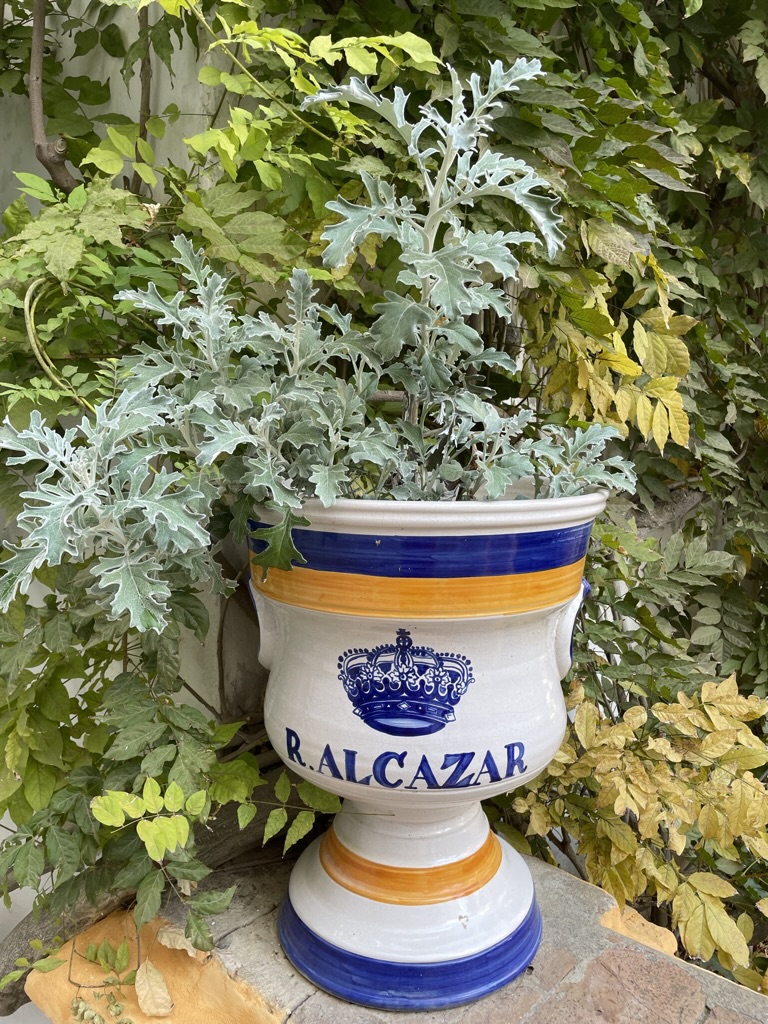
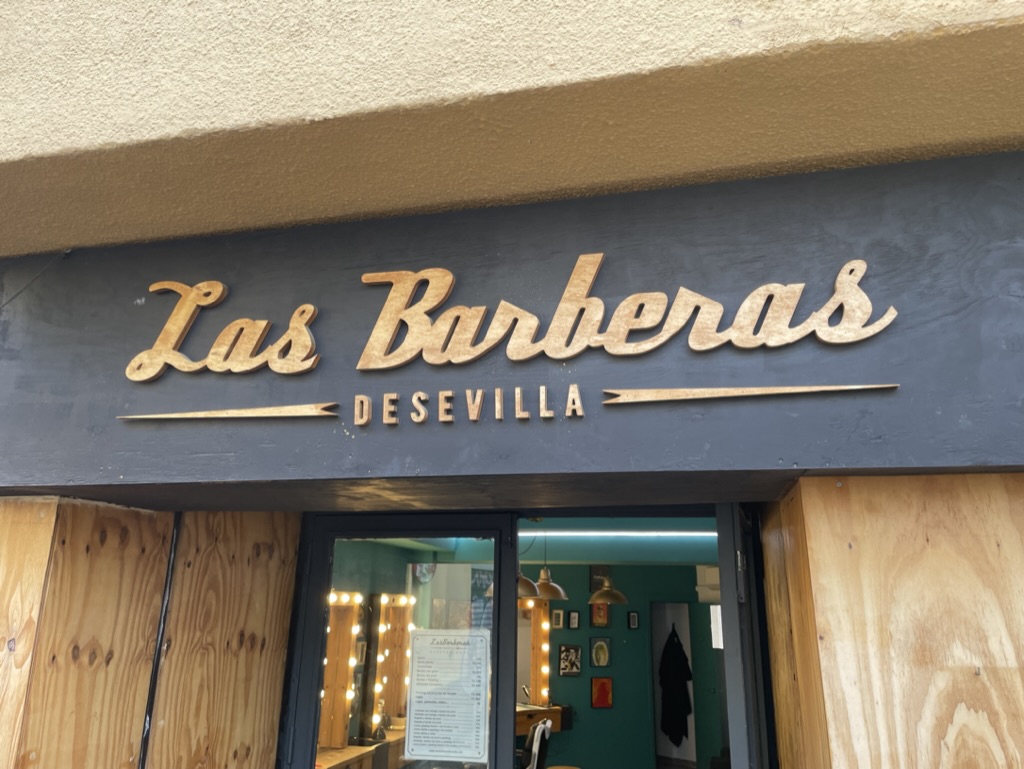
Cool typeface on this shop sign.
Me and Coco in front of the Alcázar de los Reyes Cristianos.
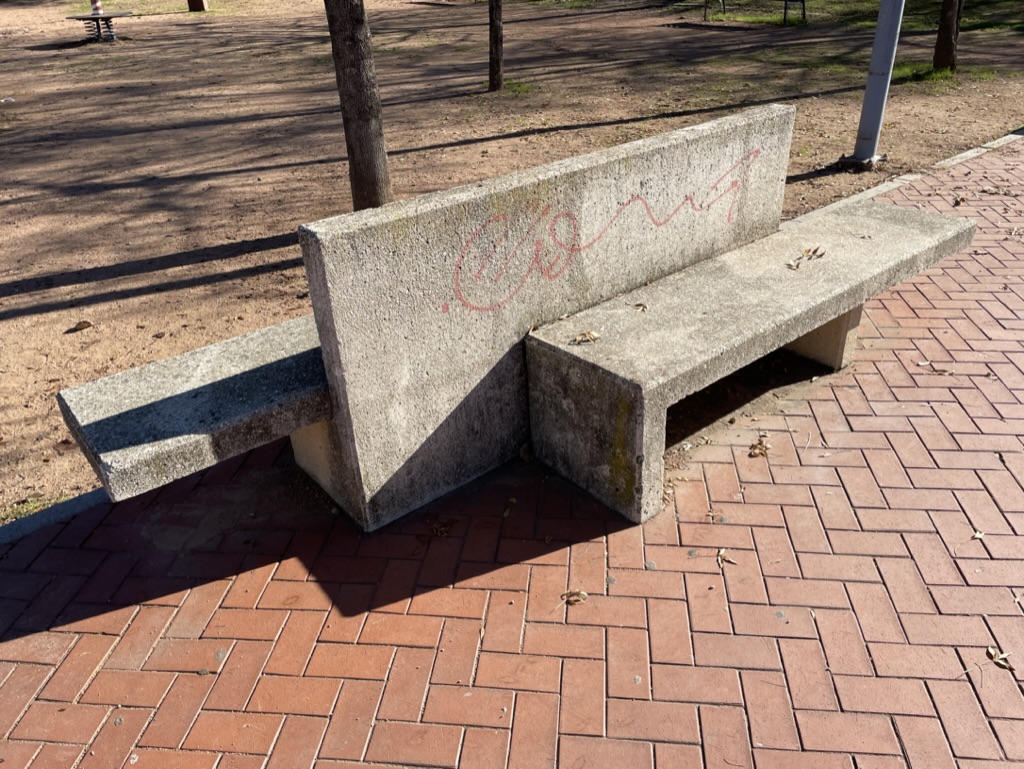
Brutalist bench. Cozy!
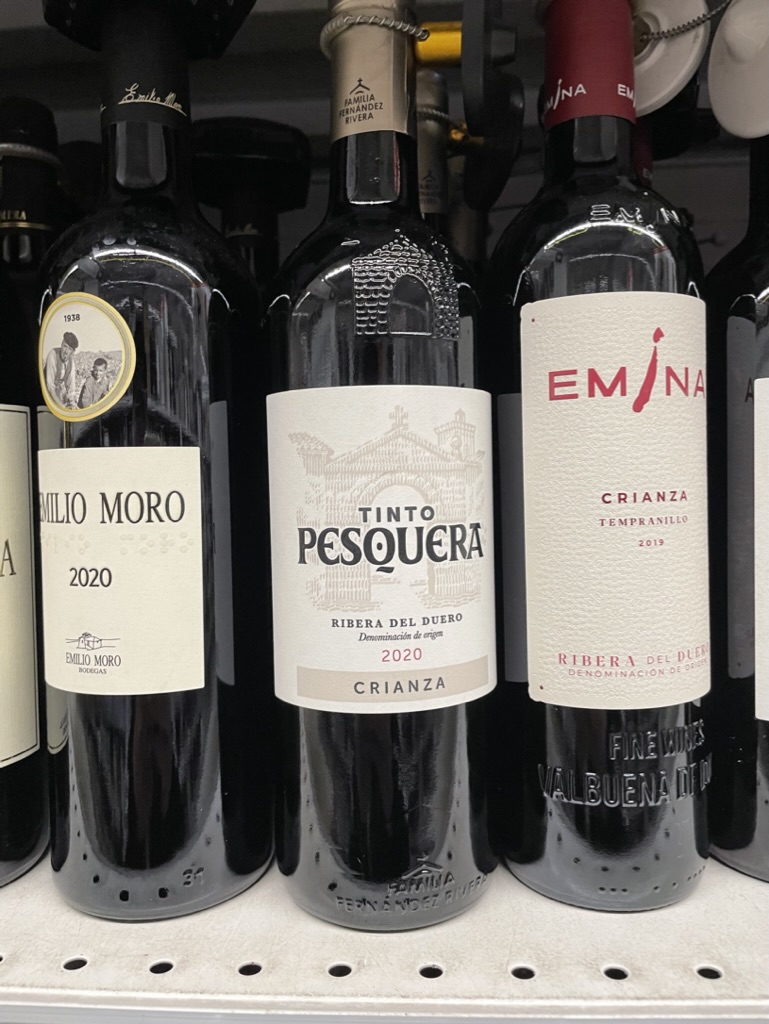
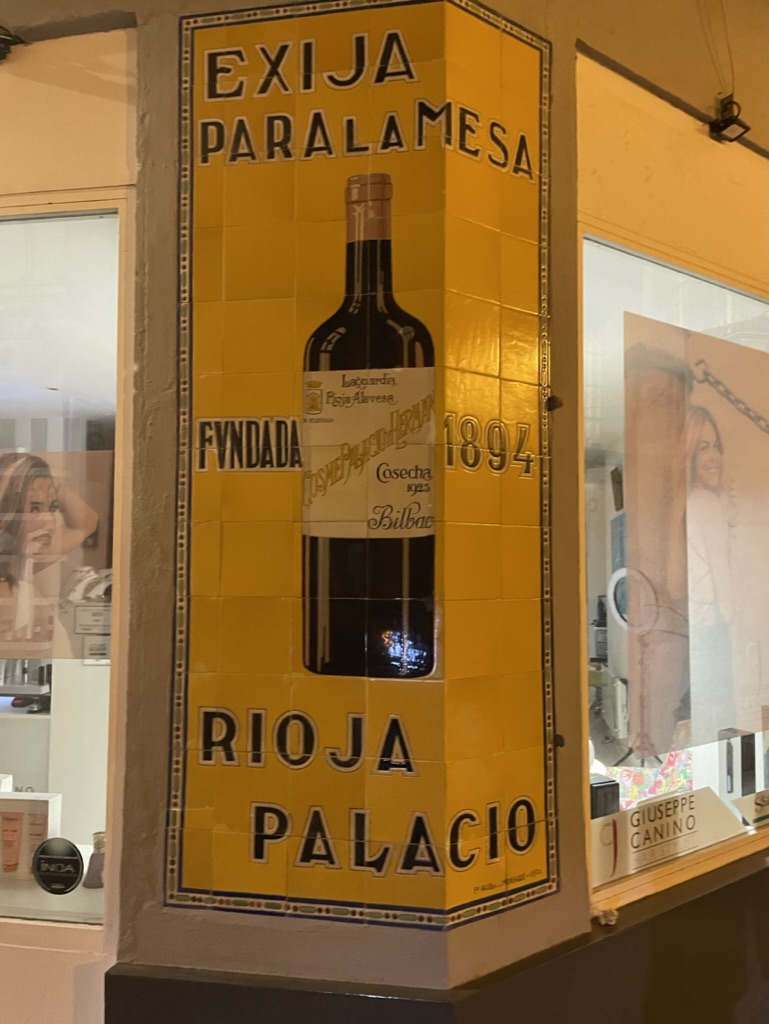
Very nice to have affordable Rioja wine readily available here.
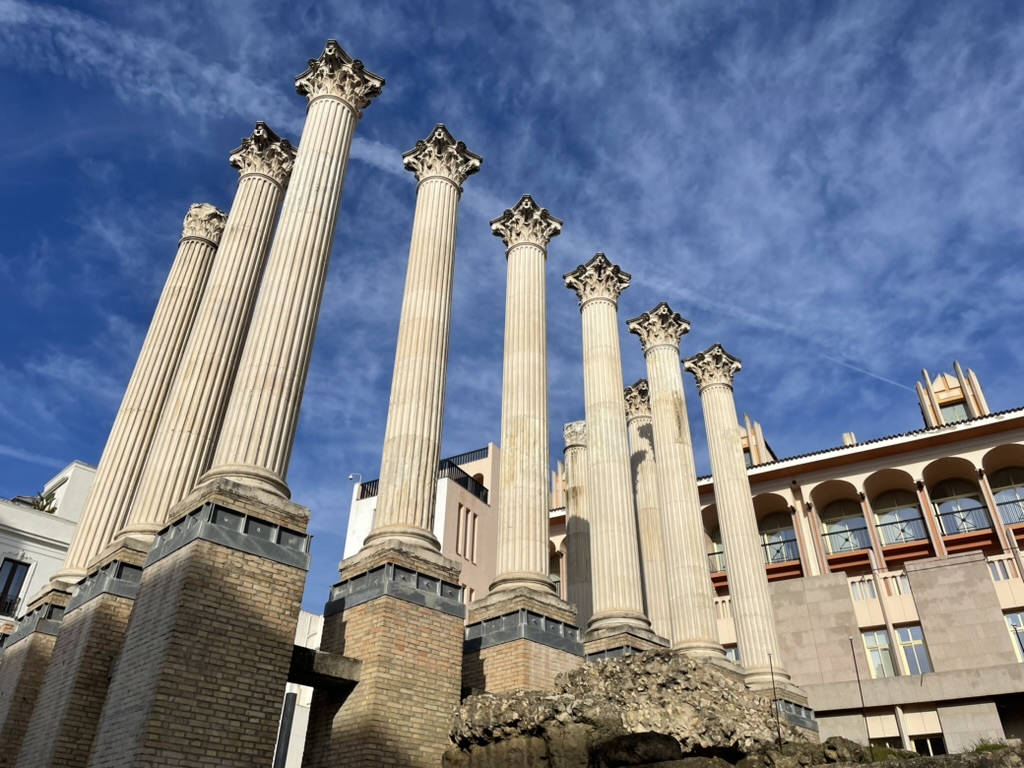
Roman temple ruins in downtown. Wild!
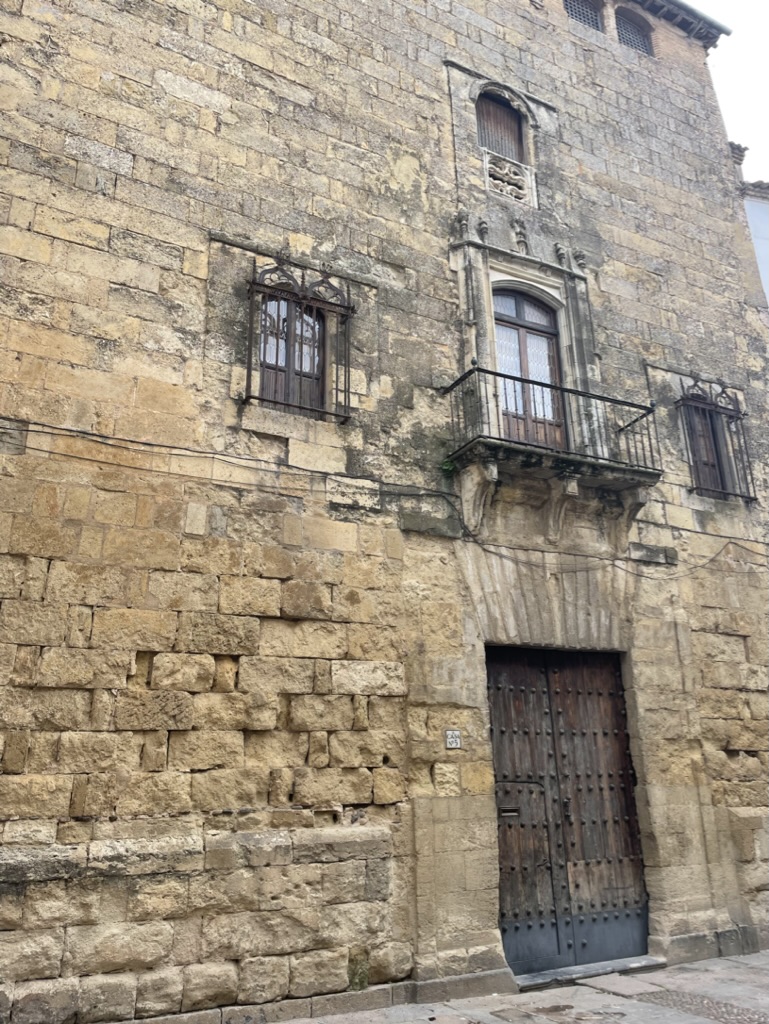
Imposing facade of private home.
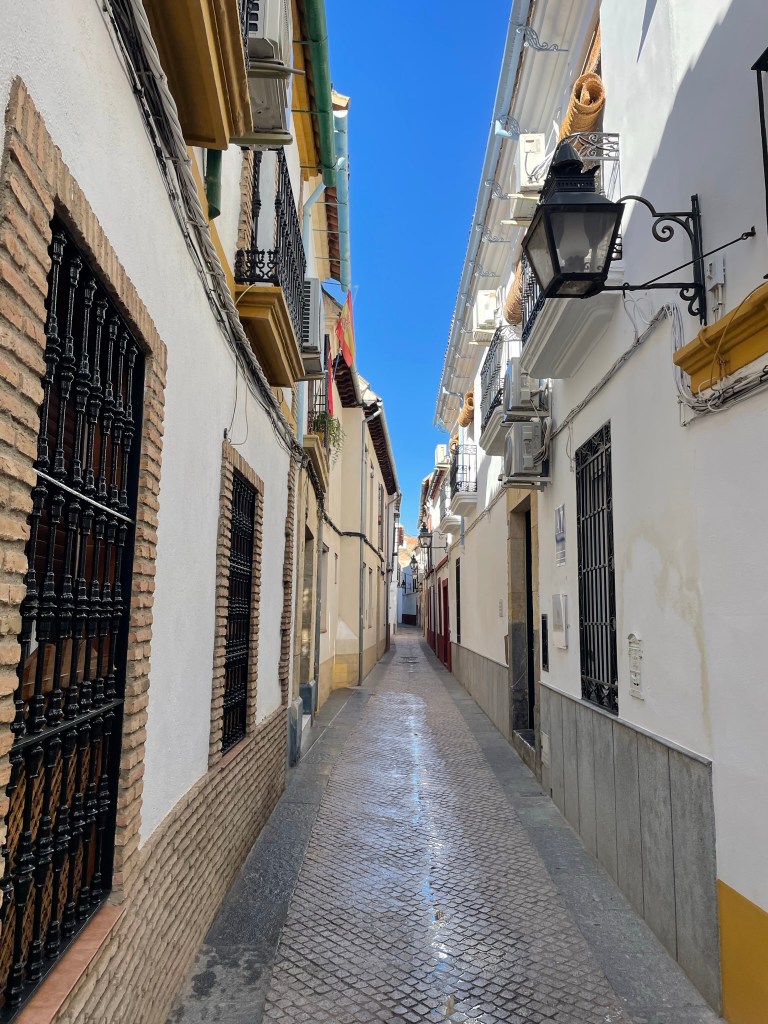
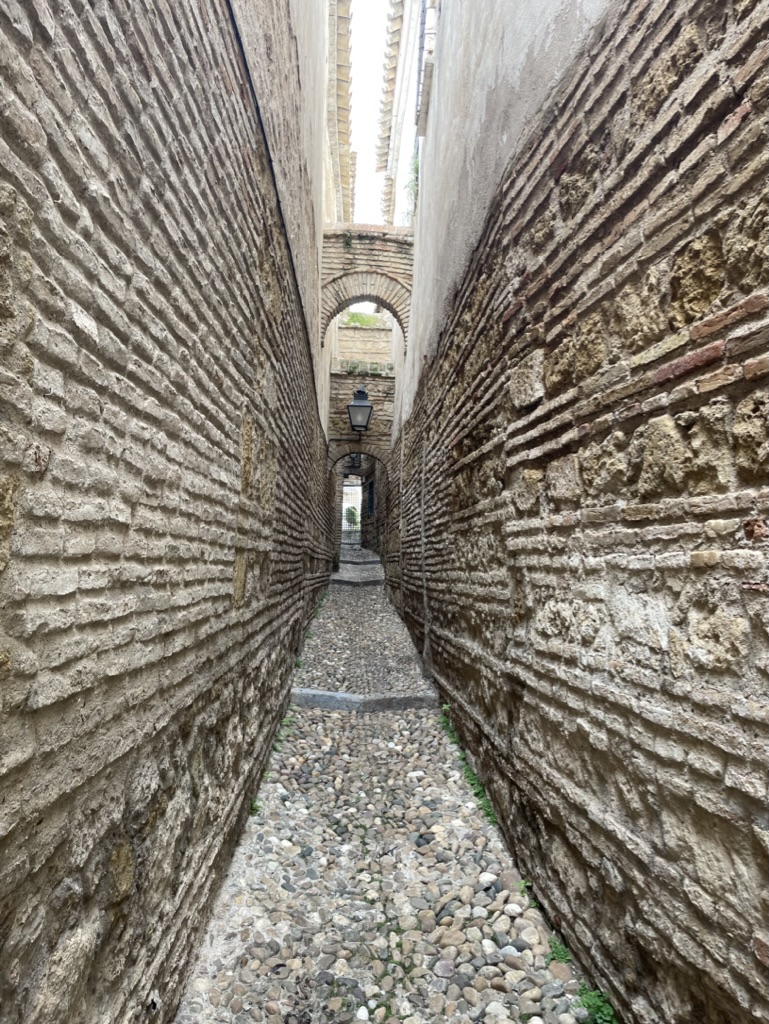
Alleyway. One of the few downtown streets that they don’t allow cars.
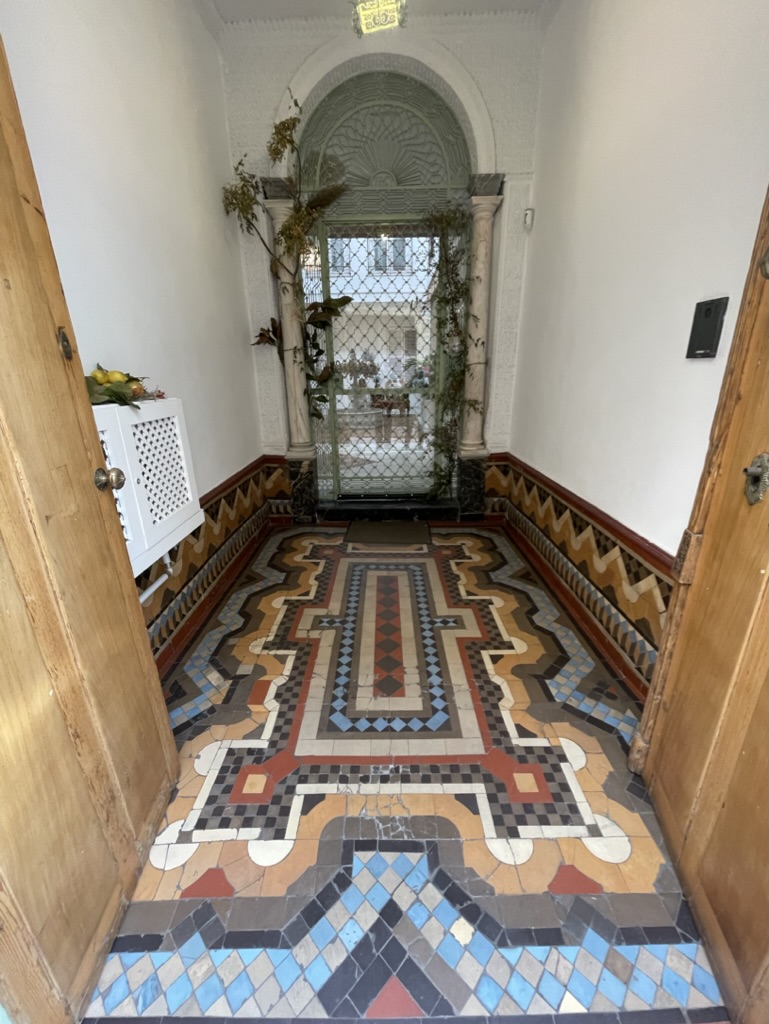
Lots of incredible tile work leading to the patio of this private residence.
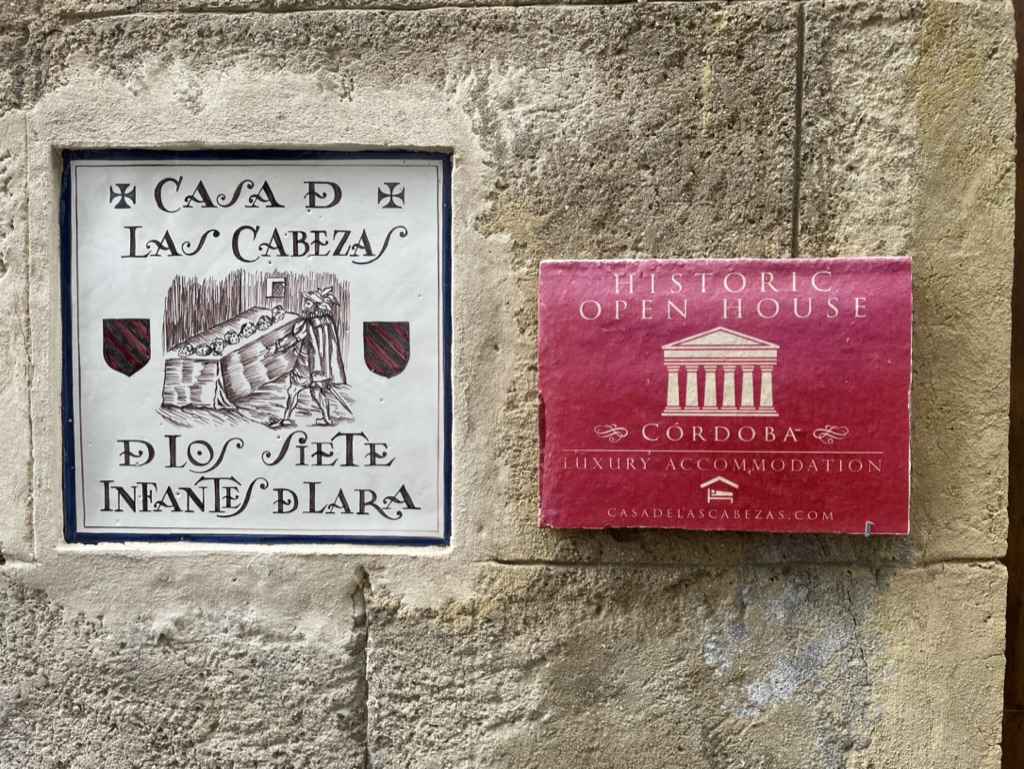
Nice to know that “The House of the Heads of the Six Children” is now luxury accommodations.
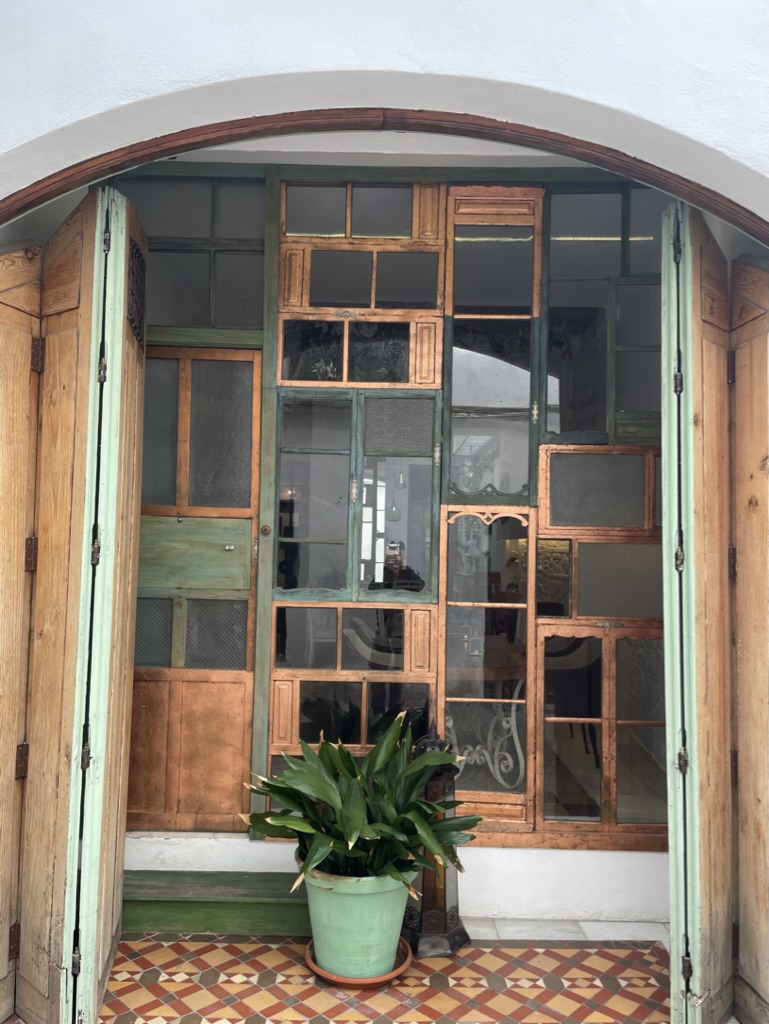
How fun is this?
Street painting.
A.F.C.
High-end tile work.
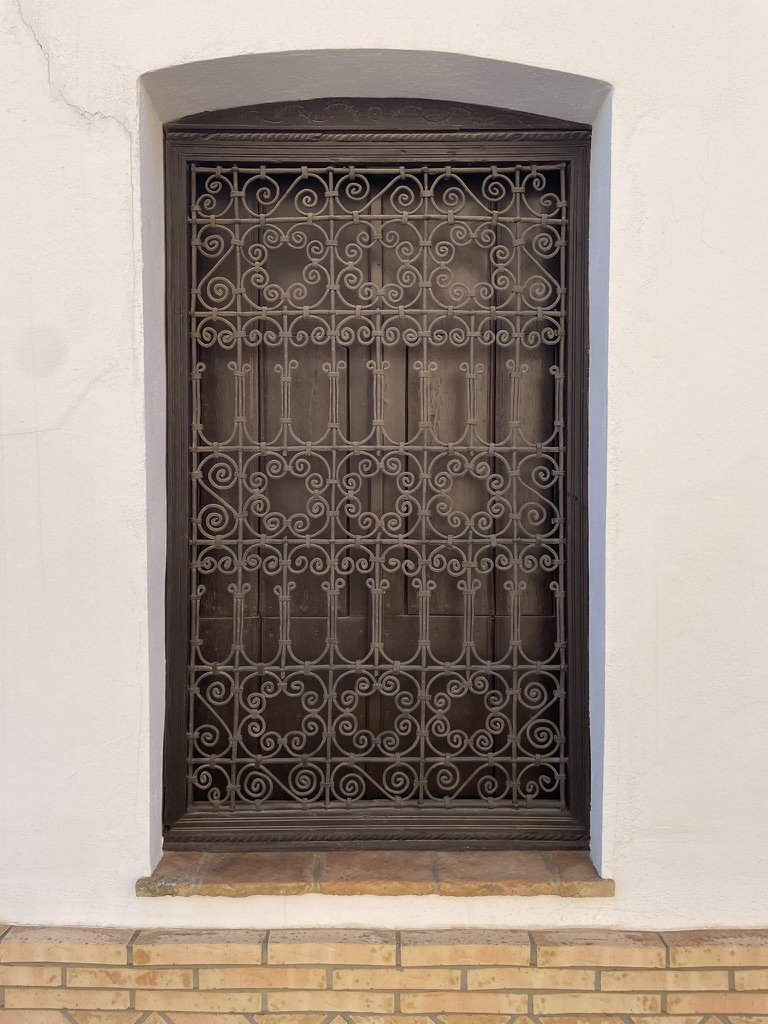
More intricate iron work.
The city is full of these stone mosaics.
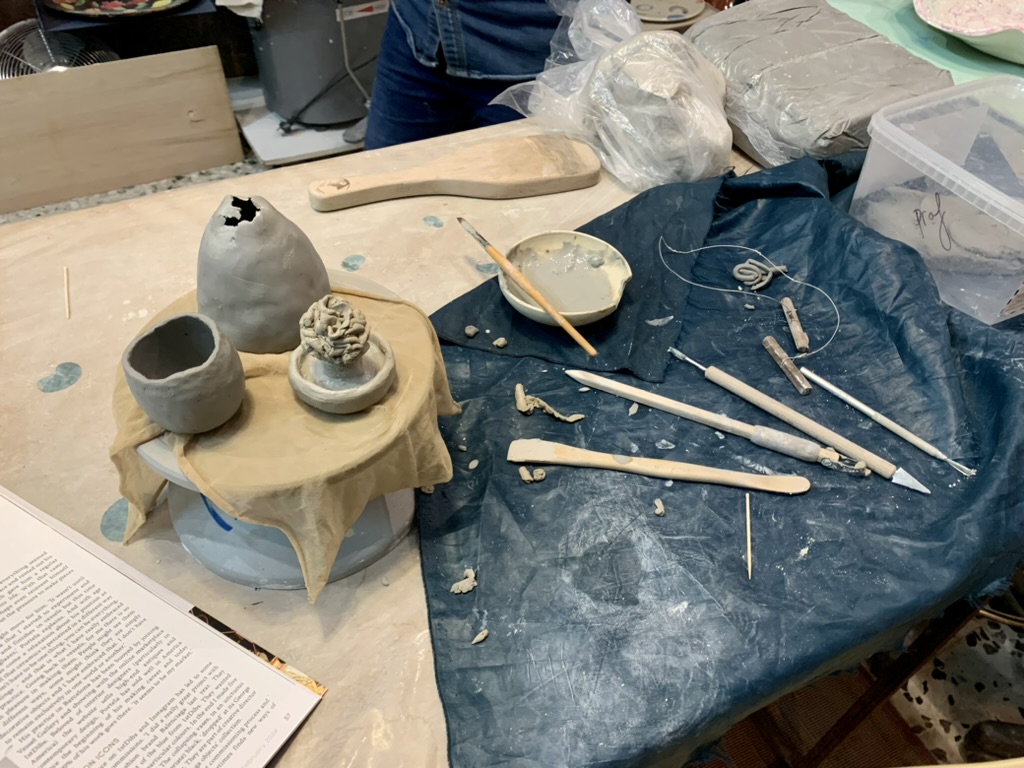
Denise got a pottery workshop for Christmas!
Not Las Vegas…
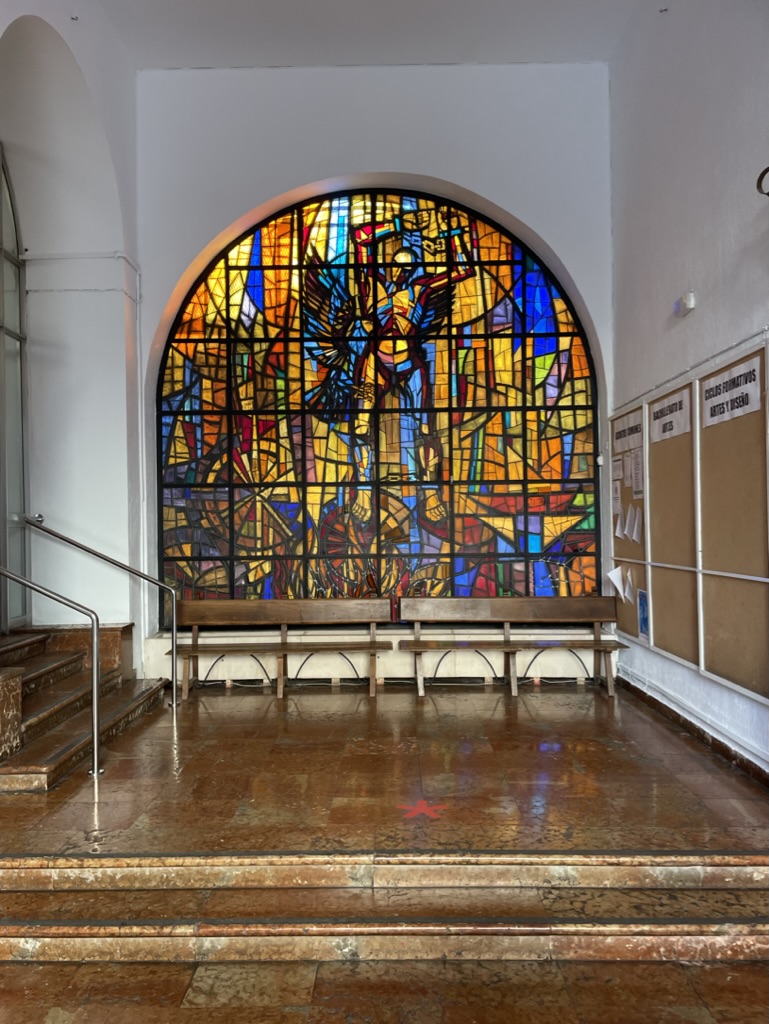
This is a stained-glass window inside an art school.
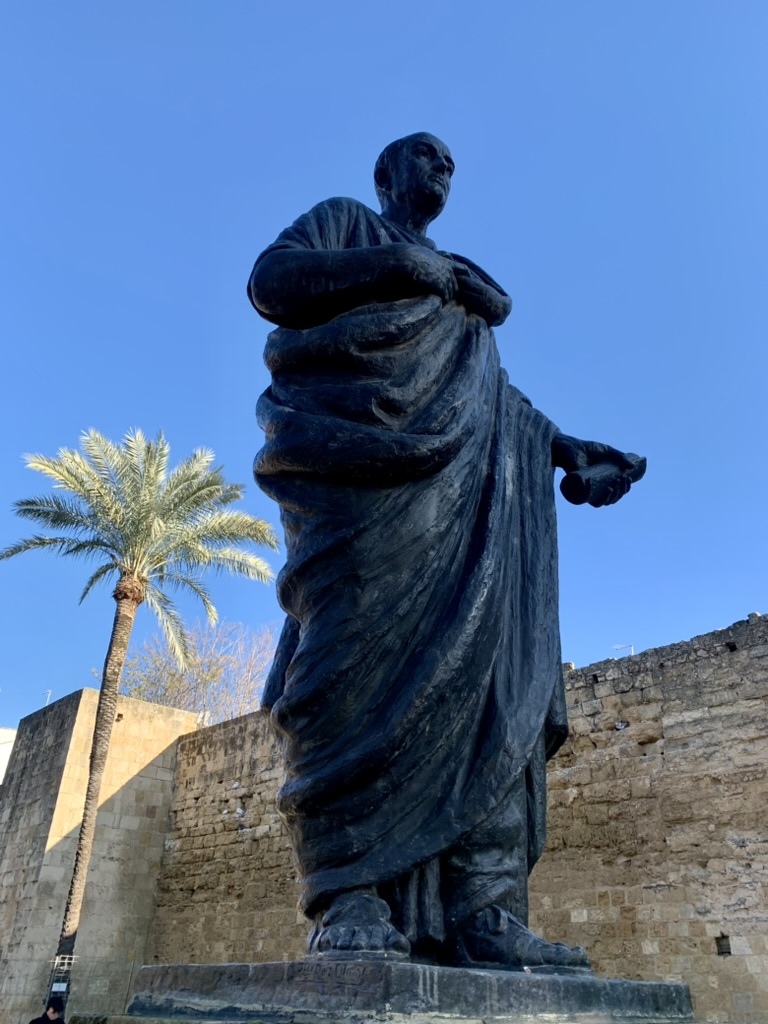
The Roman philosopher Seneca (3 BC -AD 65)was from Córdoba and he’s much-celebrated here. As you can tell from this picture, he was a stoic.
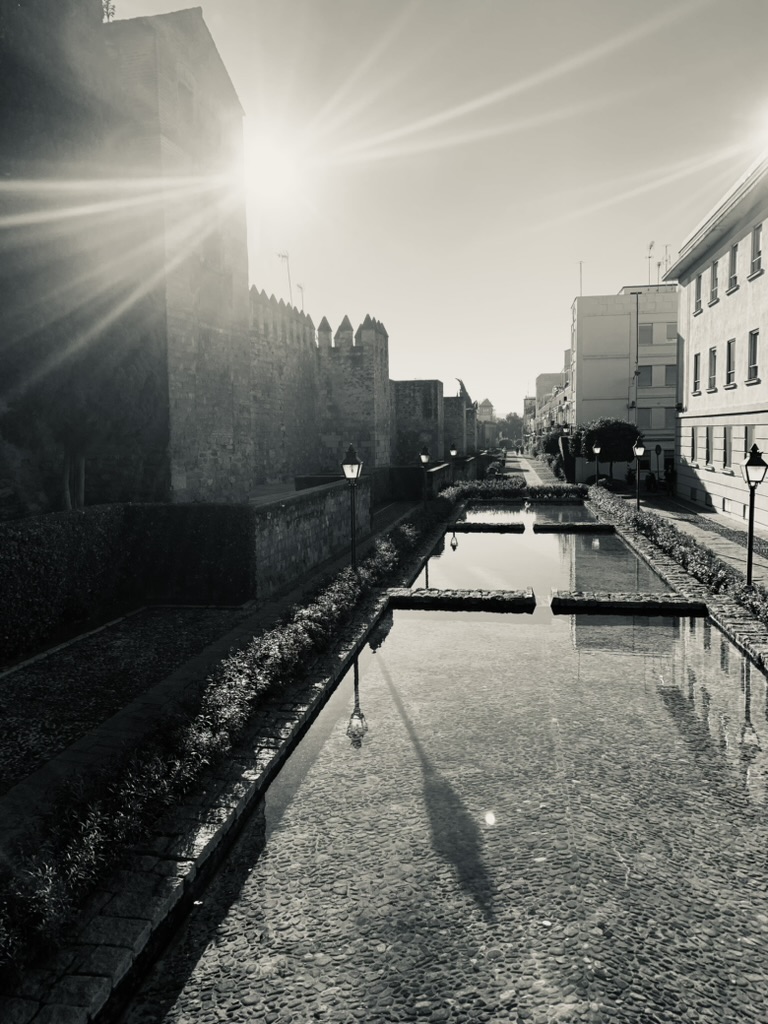
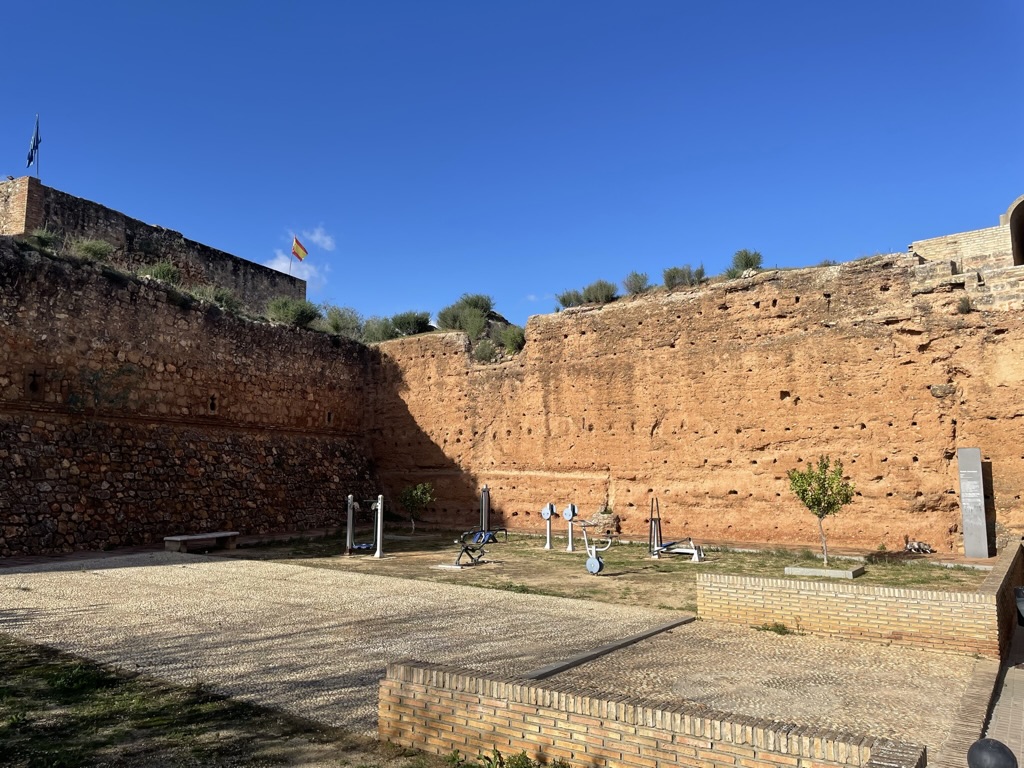
The old city wall.
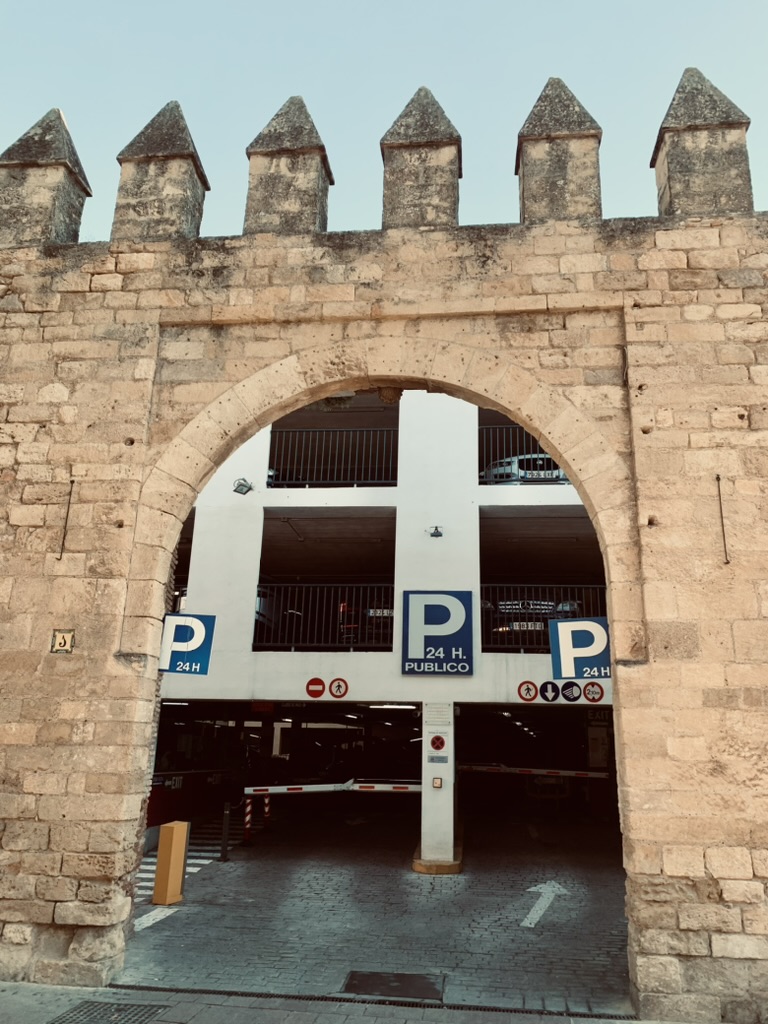
The 1000-year-old city wall here is doubling as the entrance to a parking garage.
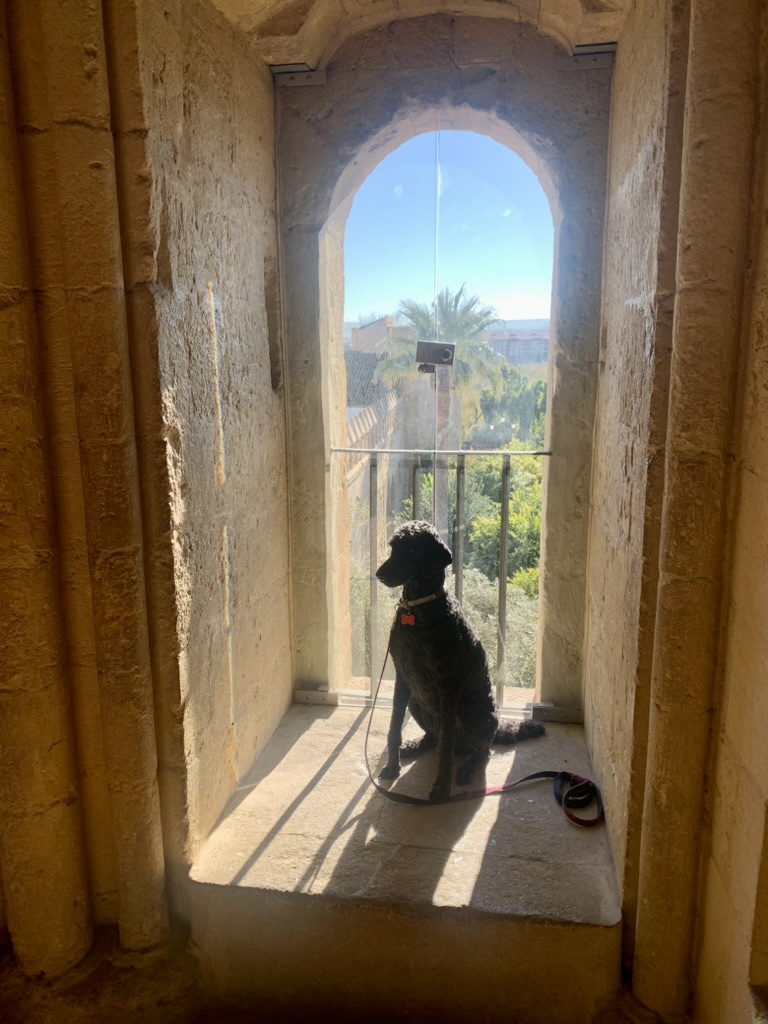
Coco in the Alcázar.
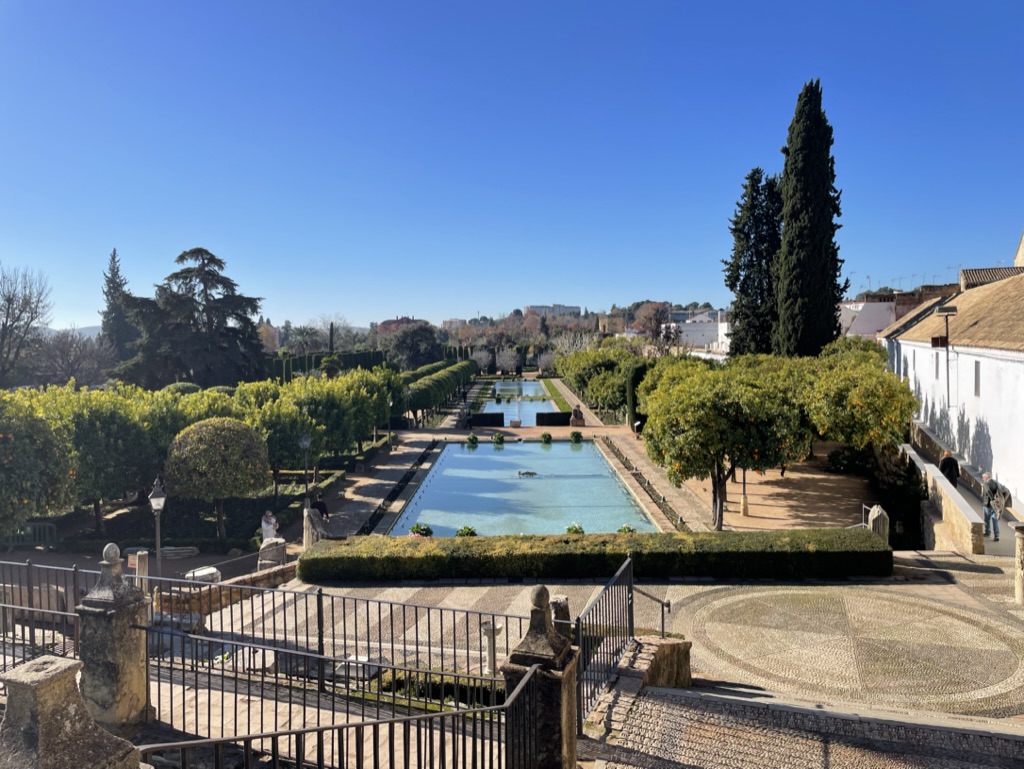
The gardens at the Alcázar.
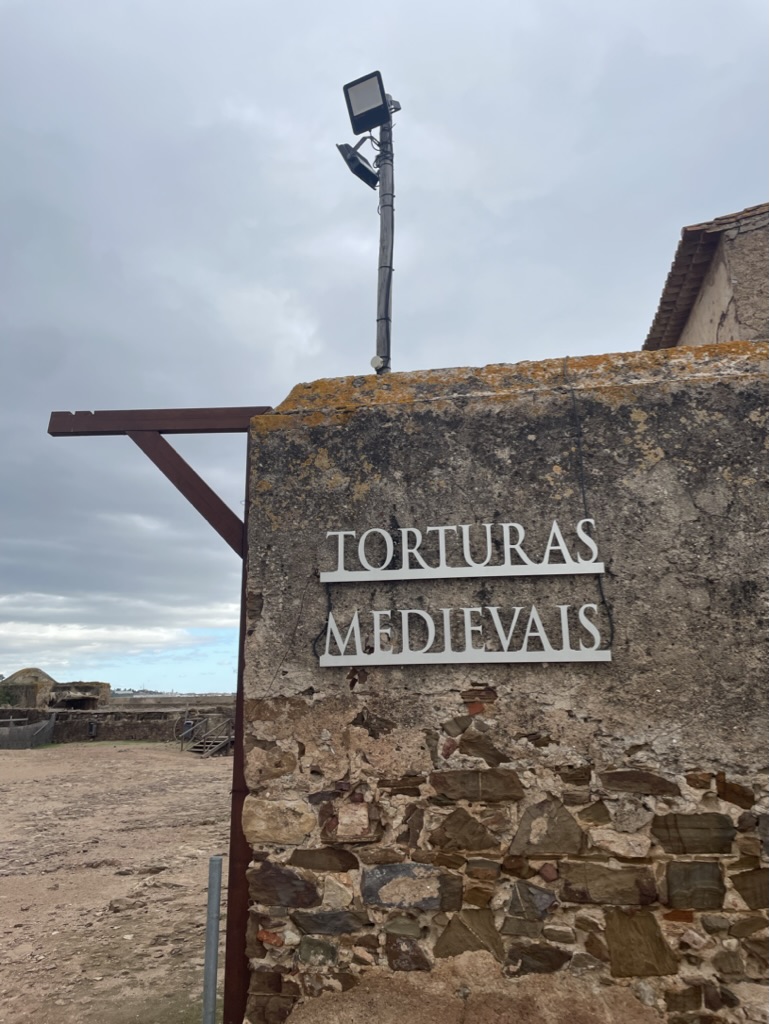
Denise and Coco. The tower behind them was used as a torture hall during the Inquisition. But hey, look at that topiary!
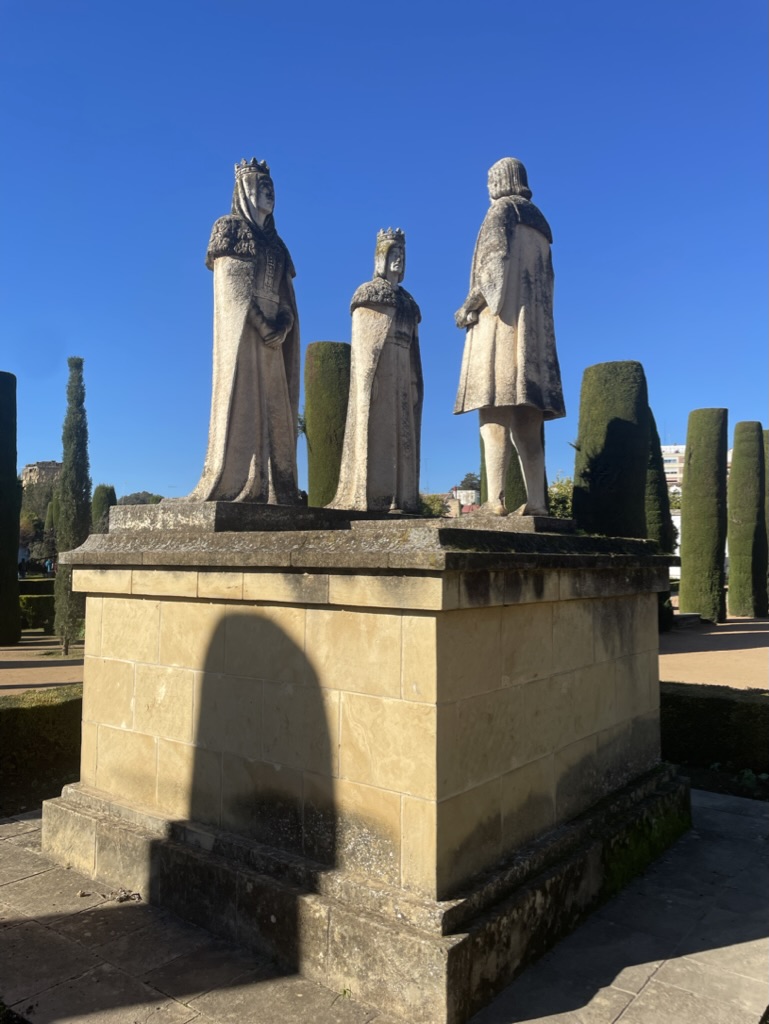
Columbus begging for money from the King and Queen of Spain. Think of how much trouble they could have saved us all by saying “no.”
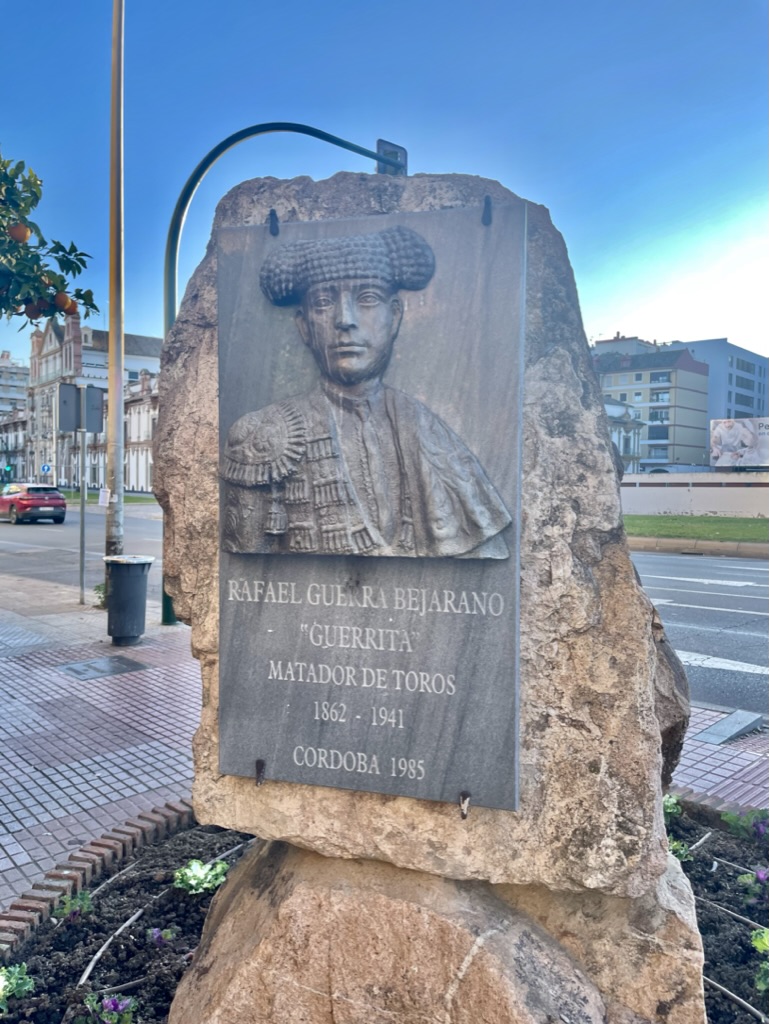
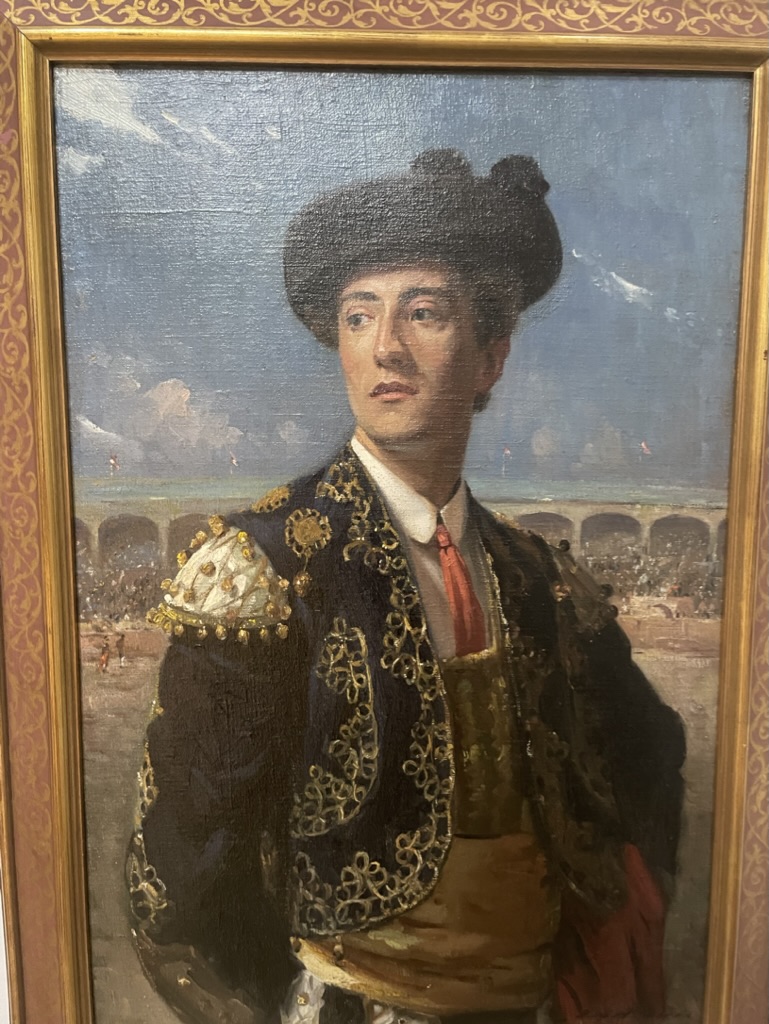
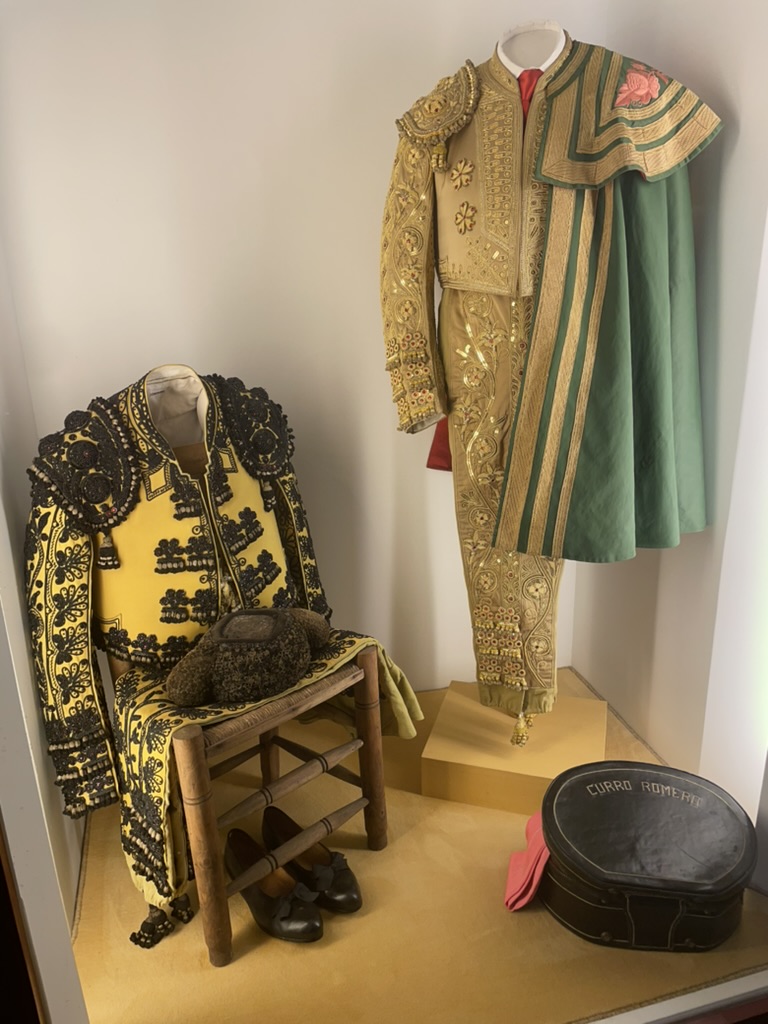
Matadors are heroes here in Spain.
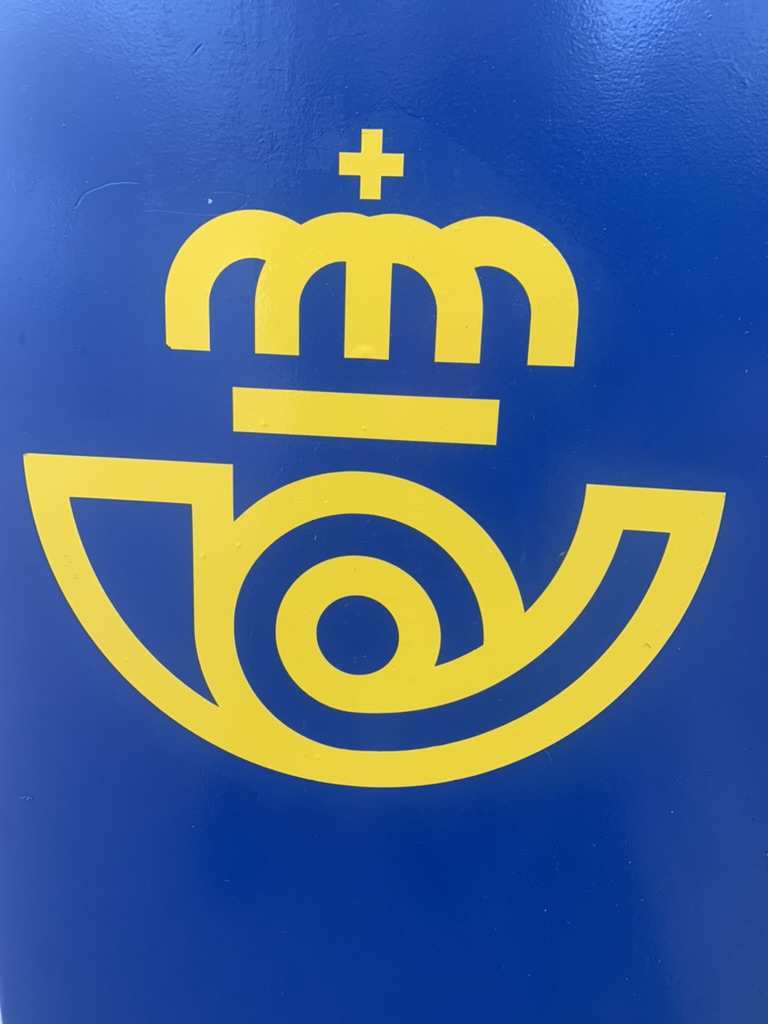
The graphic designers are my heroes. This is the logo for Spain’s postal service. 
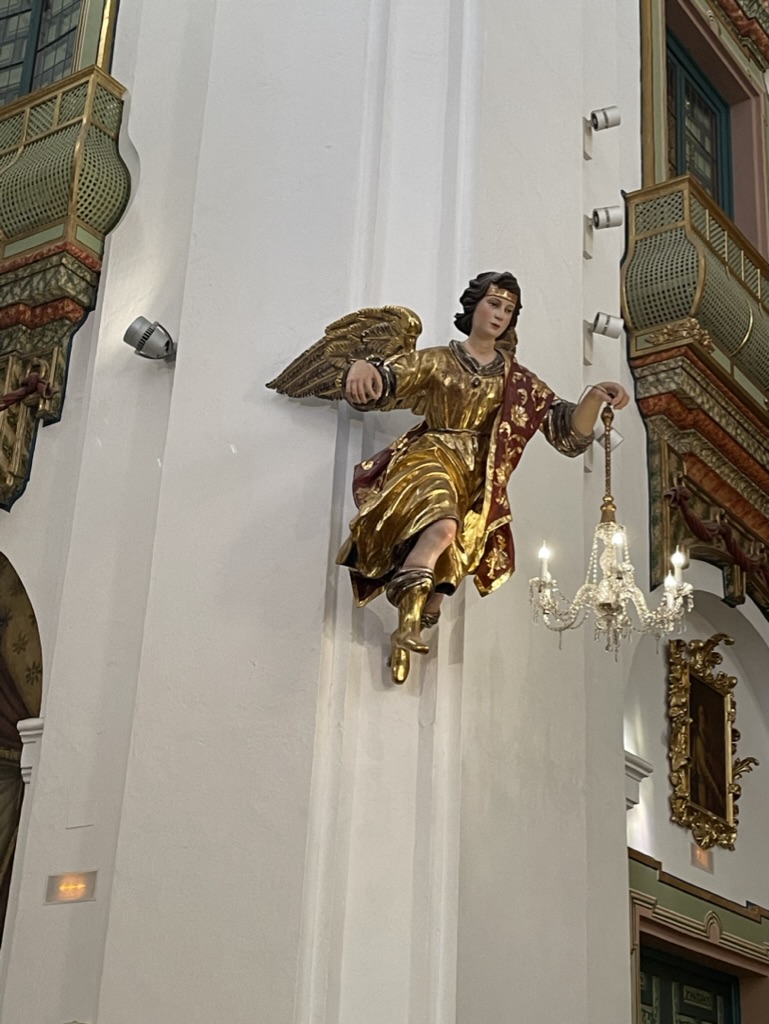
Saint Wonder Woman.
Modest altar at Parroquia de Nostra Senorita de la Merced.
Olive Tree from the 13th century still bearing fruit.
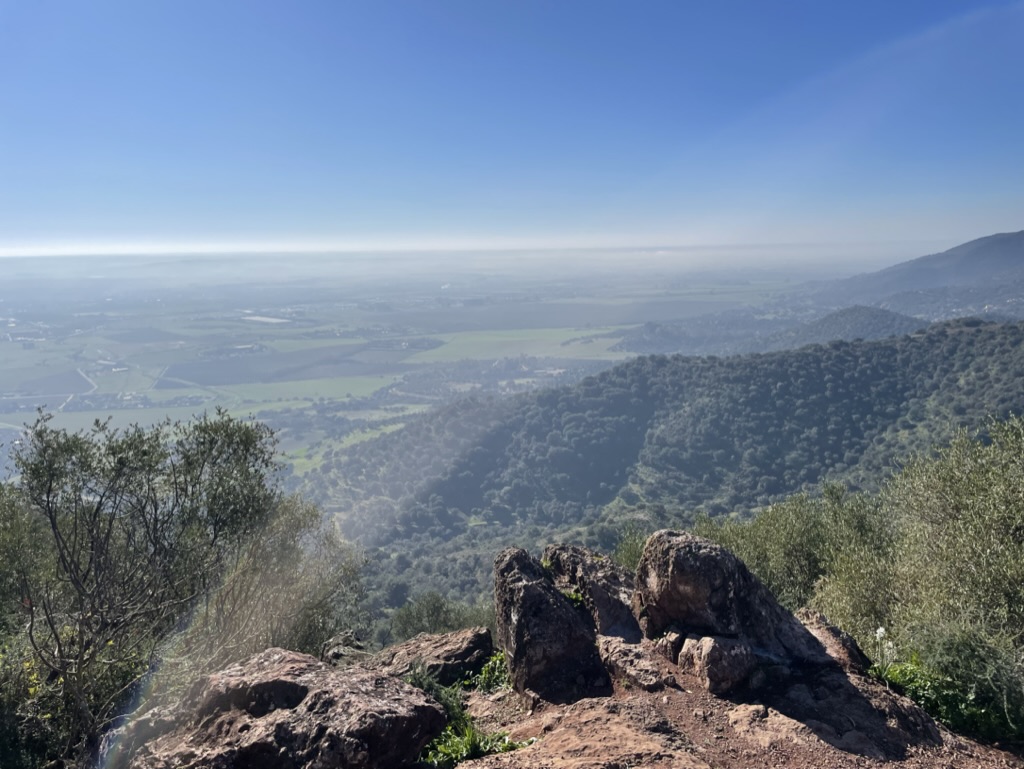
We took a drive up to the hills overlooking the city. This is a view of the farmland just west of town.
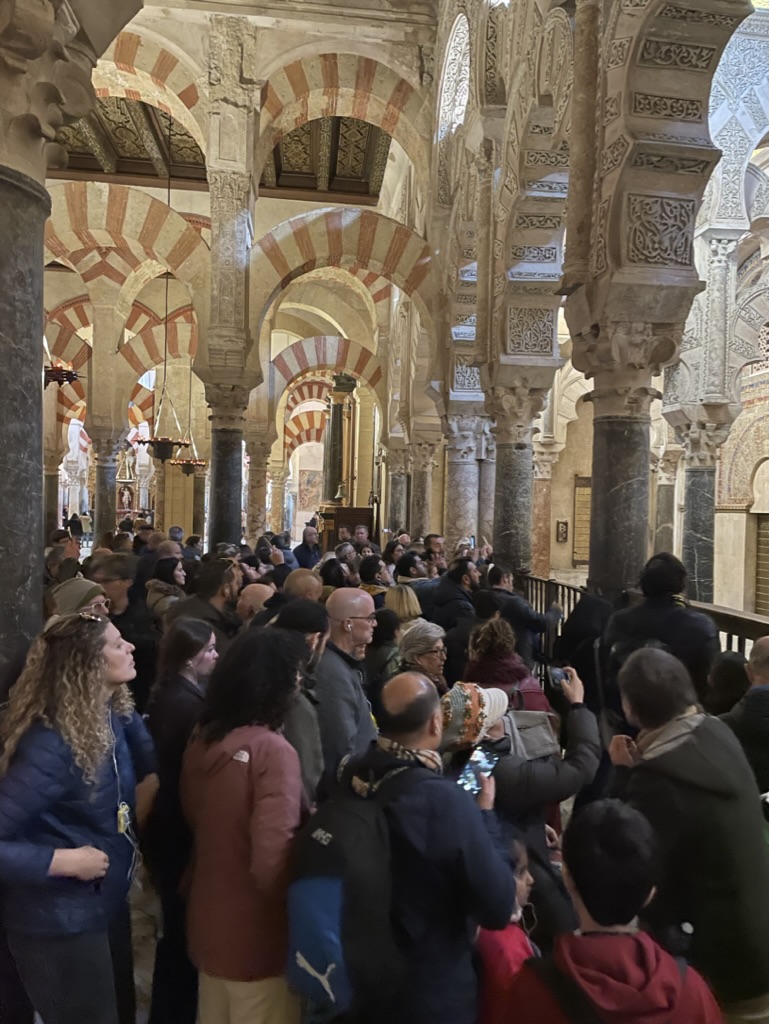
The crowds at the Mosque-Cathedral.
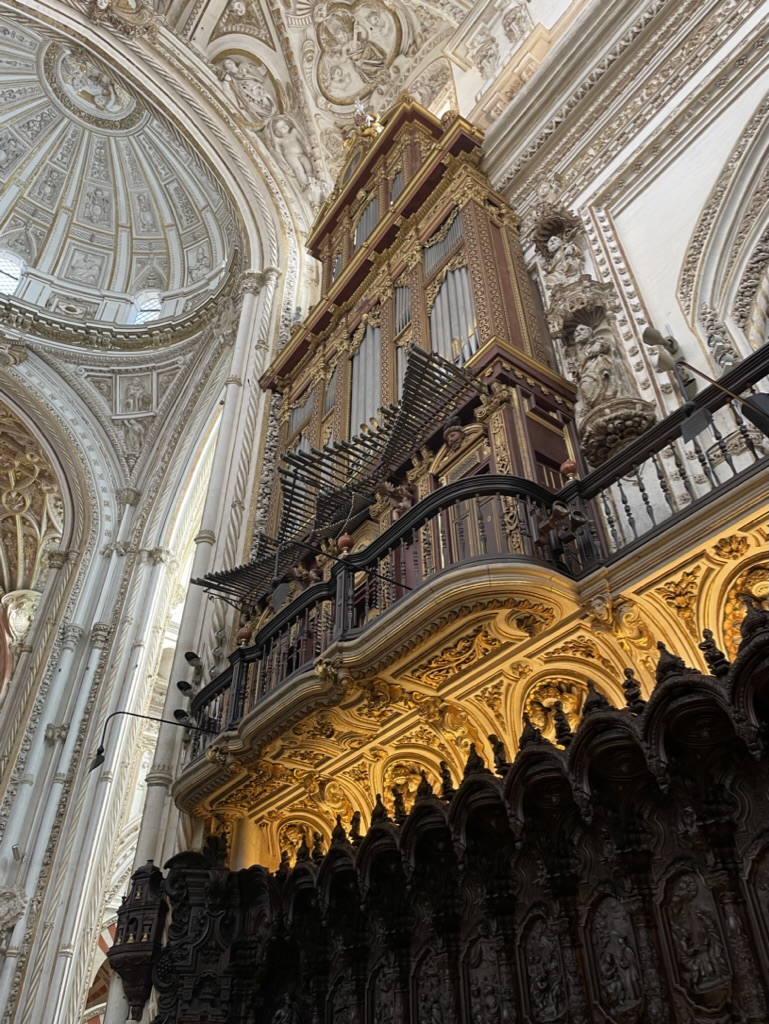
The giant organ…
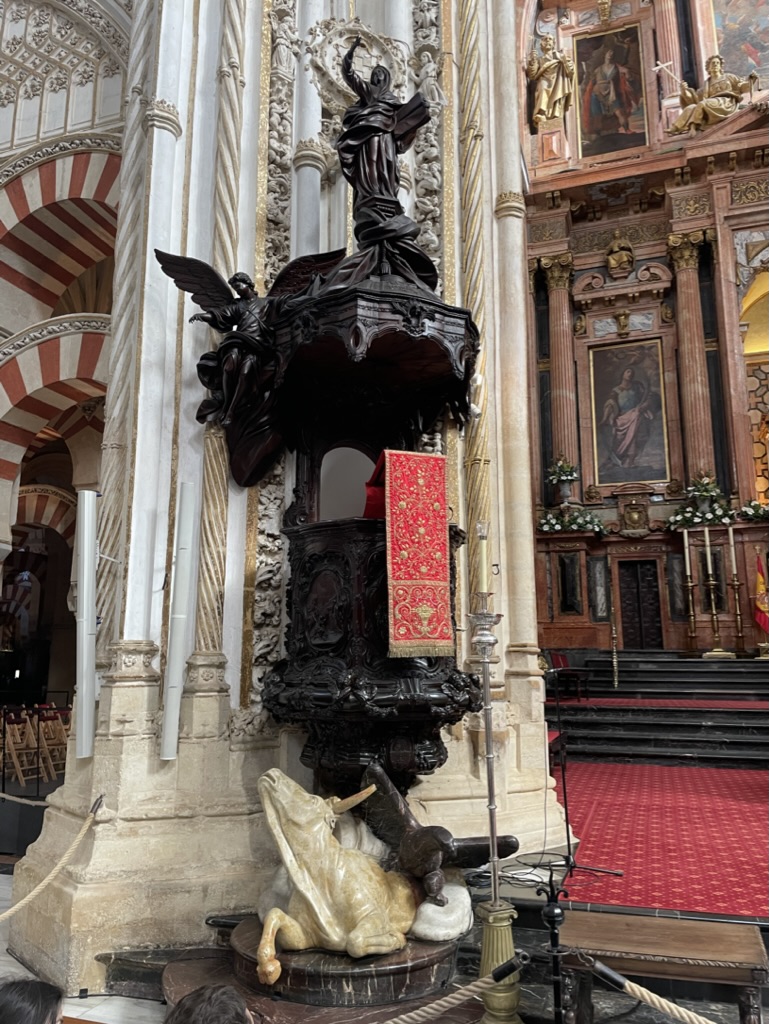
Carved mahogany pulpit.
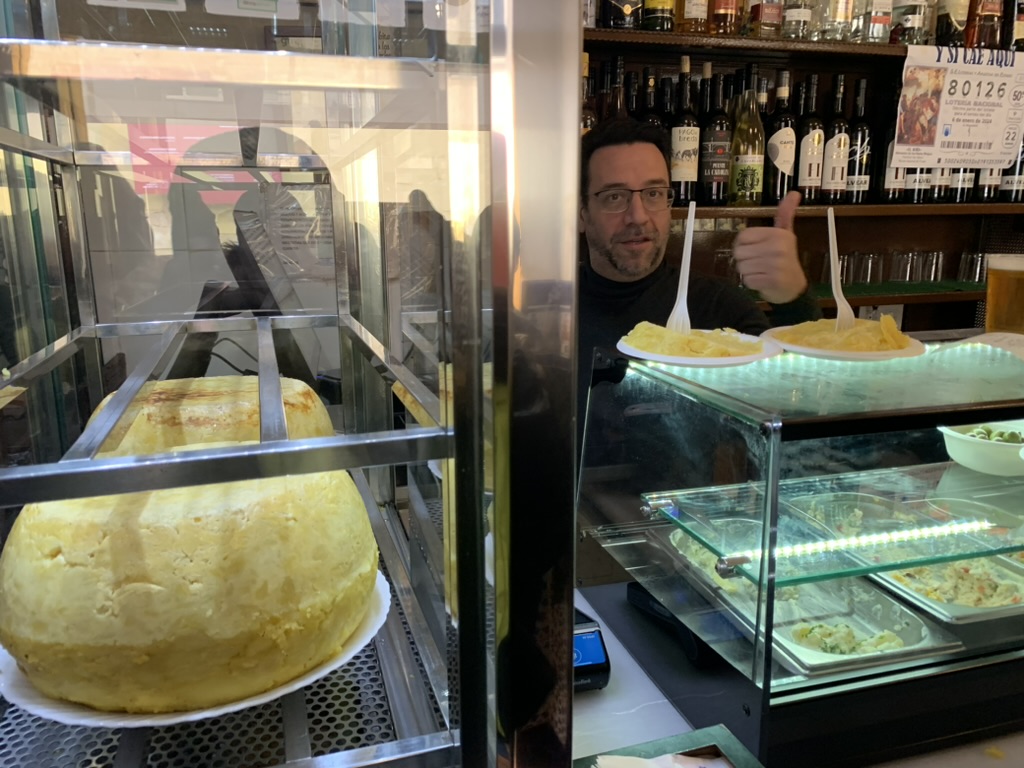
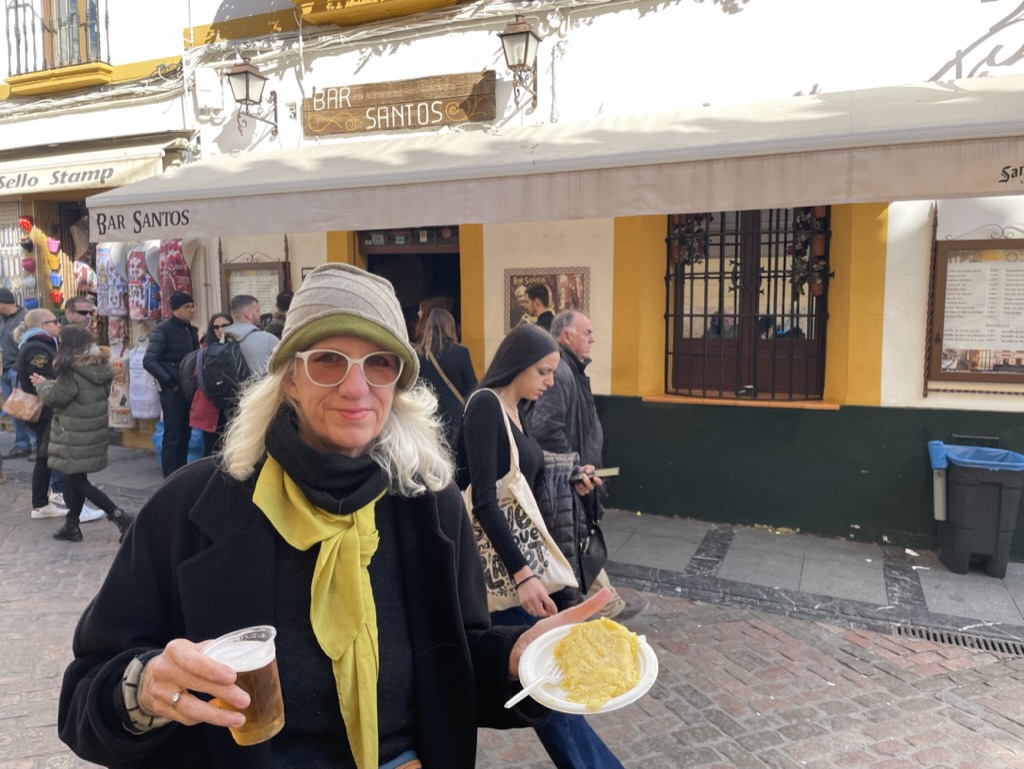
Bar Santos is a friendly place right across from la Mezquita that serves up slices of Spanish Tortilla (whole on the left, sliced on the right).
Caña y tortilla
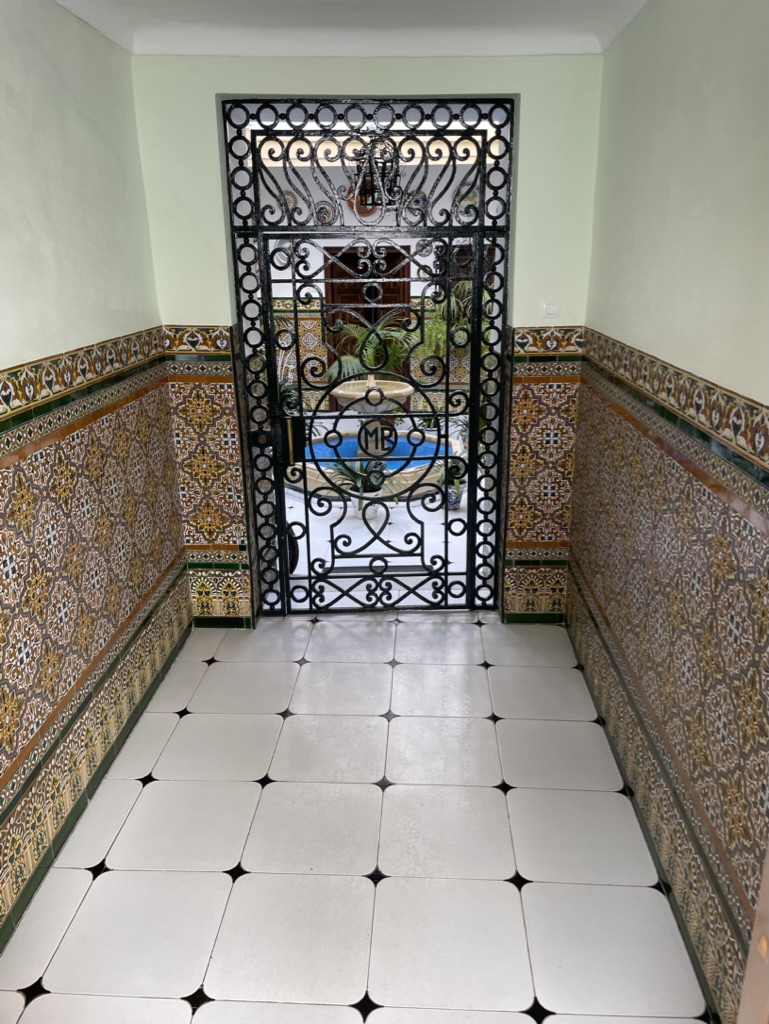
One of the many beautiful entrances to the beautiful patios.
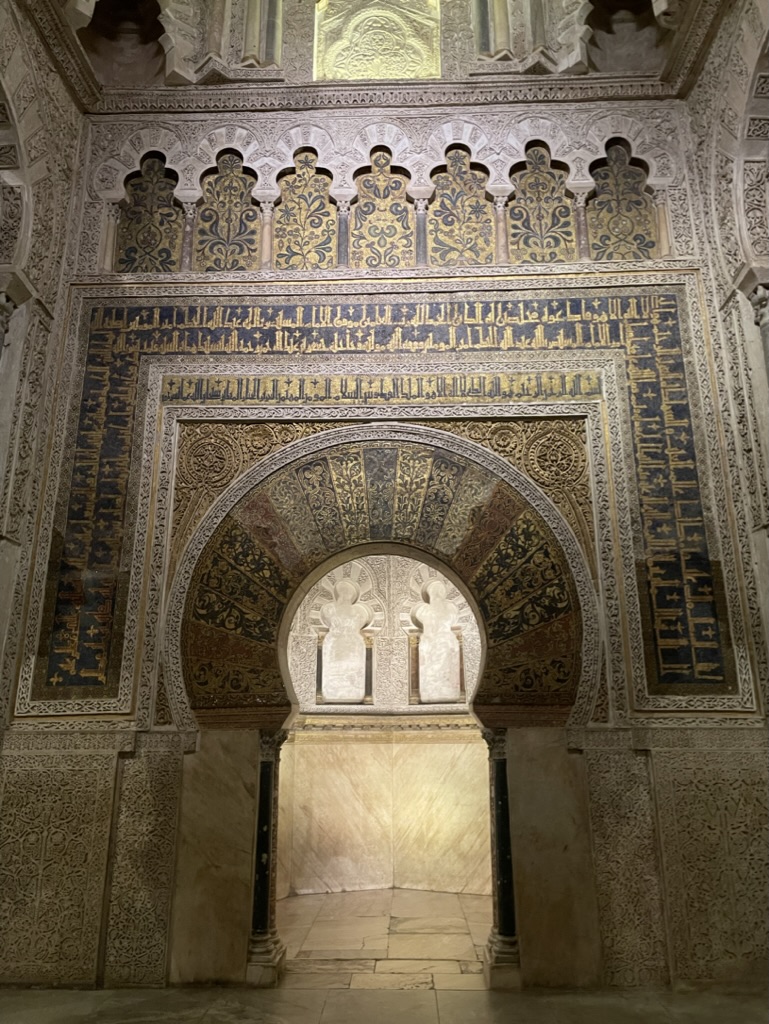
The Mihrab, an important part of La Mezquita. The Imam would speak with his back to the assembled crowd of up to 20,000 people at at time and the Mihrab room would amplify his voice. 
The arches actually have seismic safety feature built into them. Pretty, pretty clever.
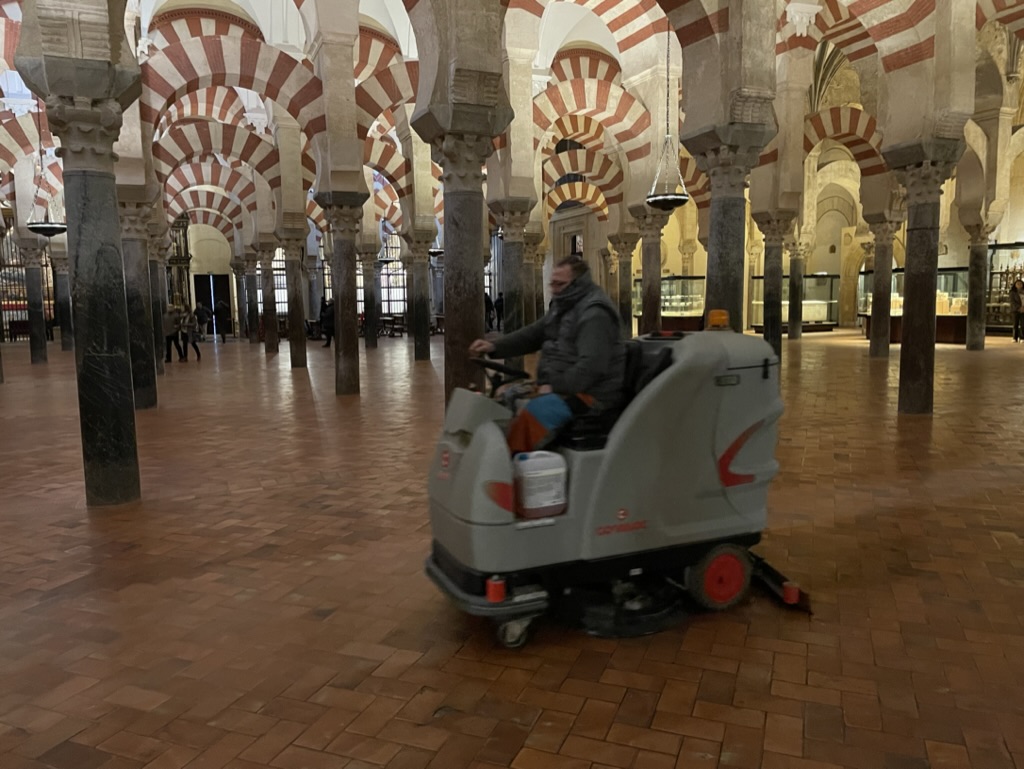
I like to think his family has had held the job of floor-cleaner at the Mosque-Cathedral for 1000 years. Or maybe he just answered an ad on CraigsList.
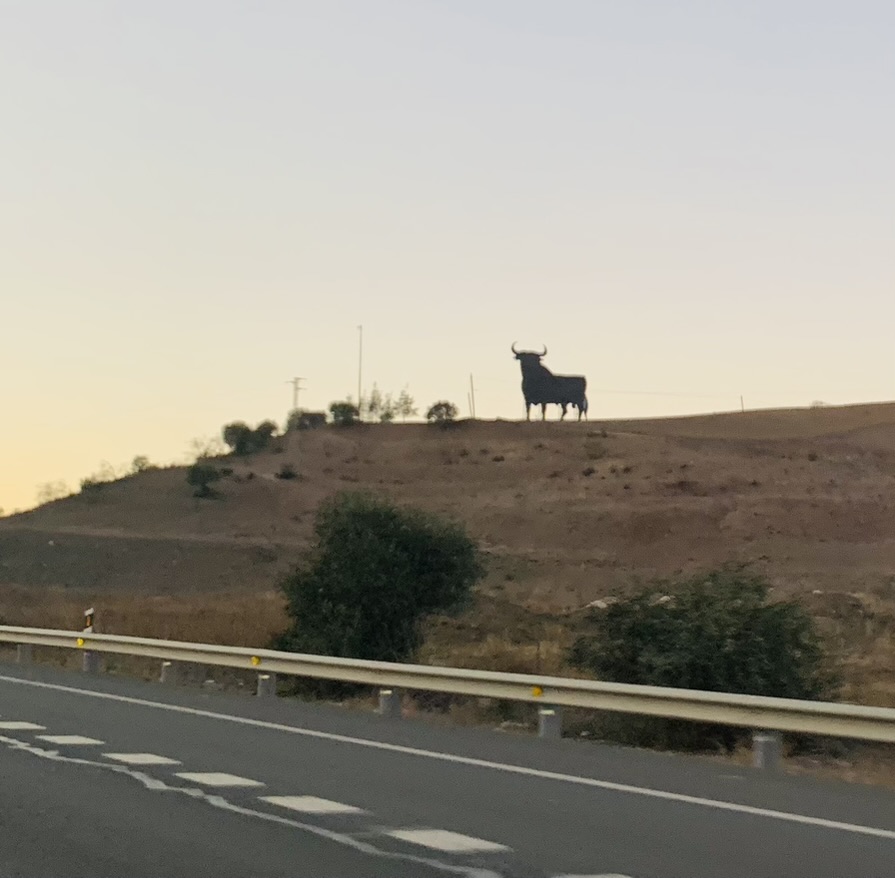
The giant bull welcomes you to Spain.

* A Hallmark Films production.

Land’s End

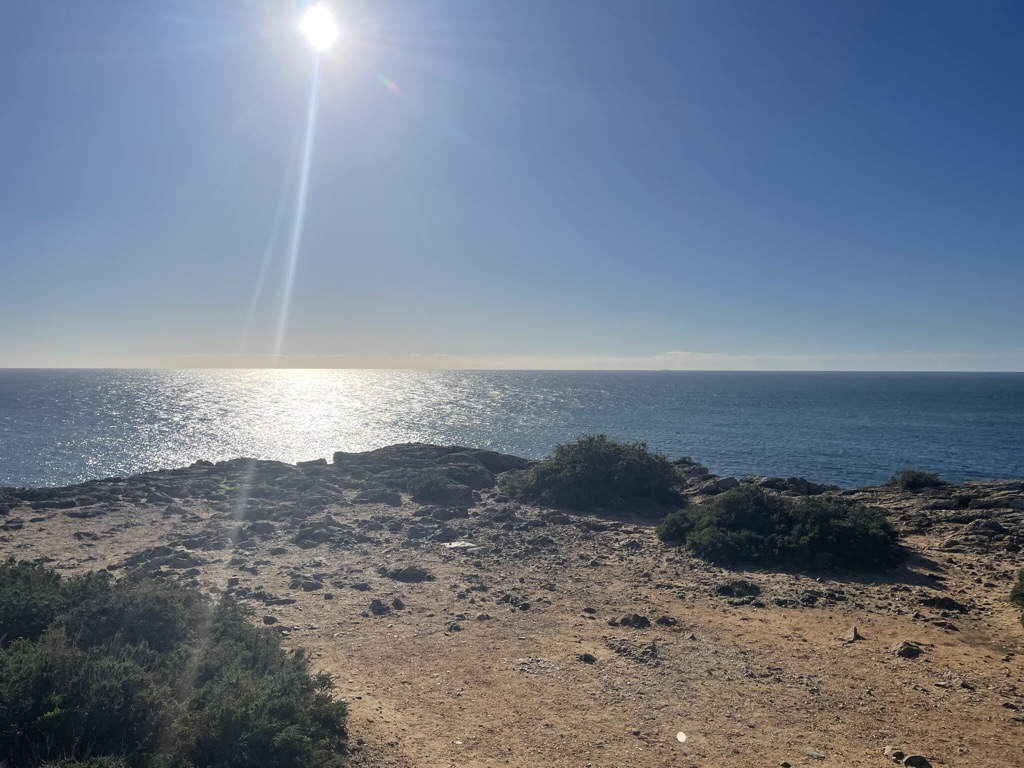
The Westernmost point in Portugal. By my sextant, that’s North Carolina over there

Well, the tourists are returning to the Algarve for the holidays, so that must mean it’s time for us to leave. The other day, I went to the grocery store and was shocked to discover that the normally empty parking lot was full of caravans, all laying in provisions for their winter break. After six weeks here, we’re both ready to go and start the next adventure but I think Coco will miss it here: she’s had the run of the Monte da Lagoa compound with her doggie friends Kalya and Luna as well as daily ball-throwing sessions on the endless beach. It’s also great being able to let her out in the morning to do her business in the field so we can enjoy our coffee in bed a while longer. Our place in Spain will be a lot more urban, so there goes our second morning cup of java. 

We’re doing lots of pictures this time with less text. You’re welcome.

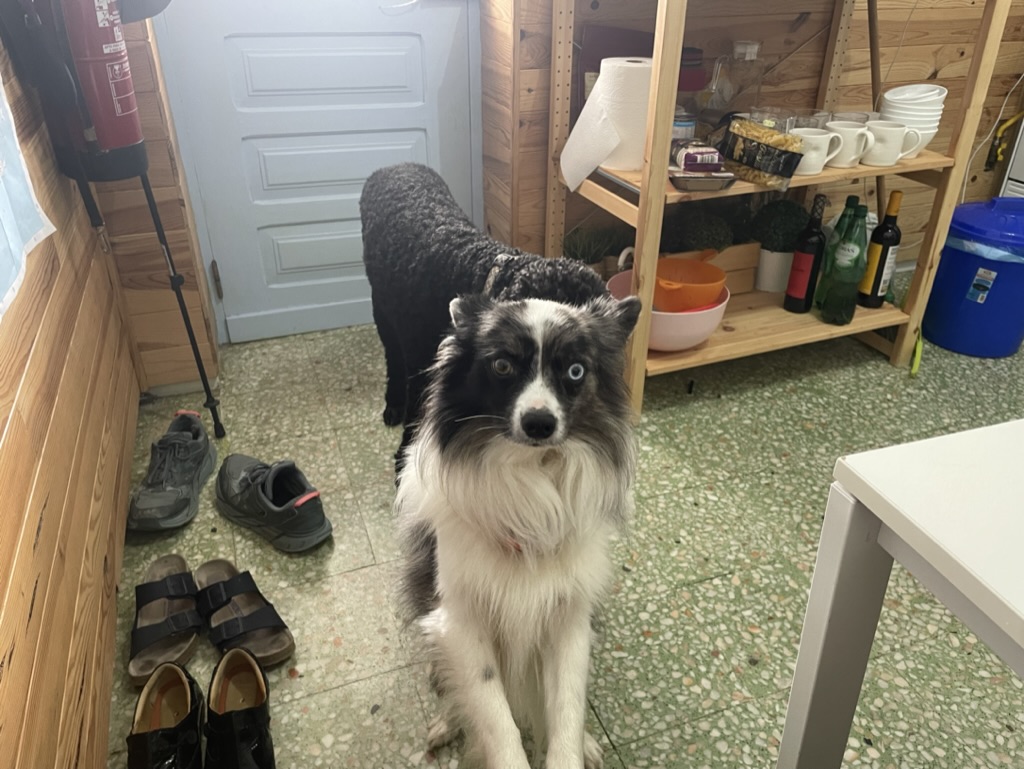
Here’s one of Coco’s friends, Kalya. She has heterochromia- one blue eye and one brown.
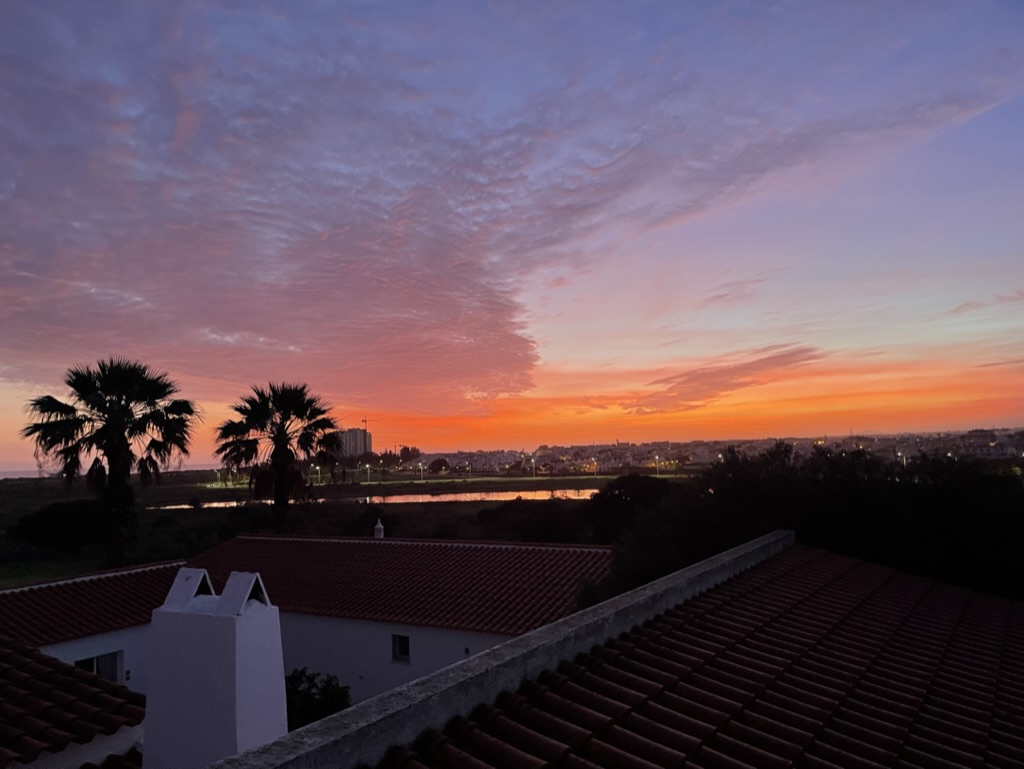
Sunset at Monte da Lagoa
More of Denise’s beach shack photo essay.
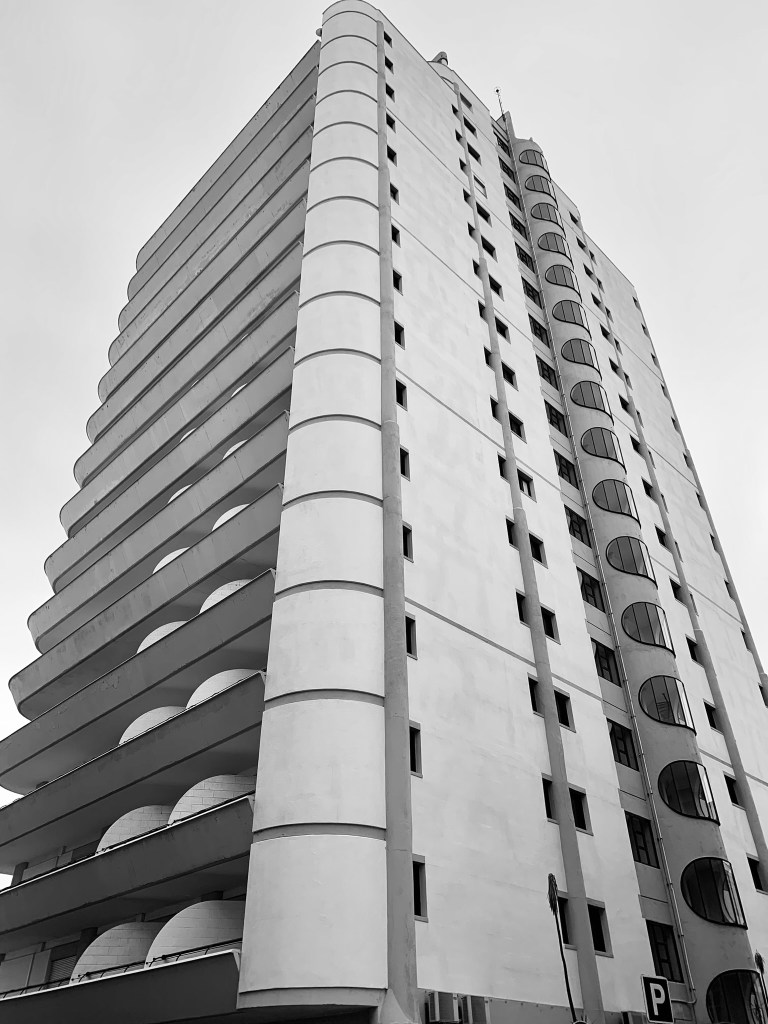
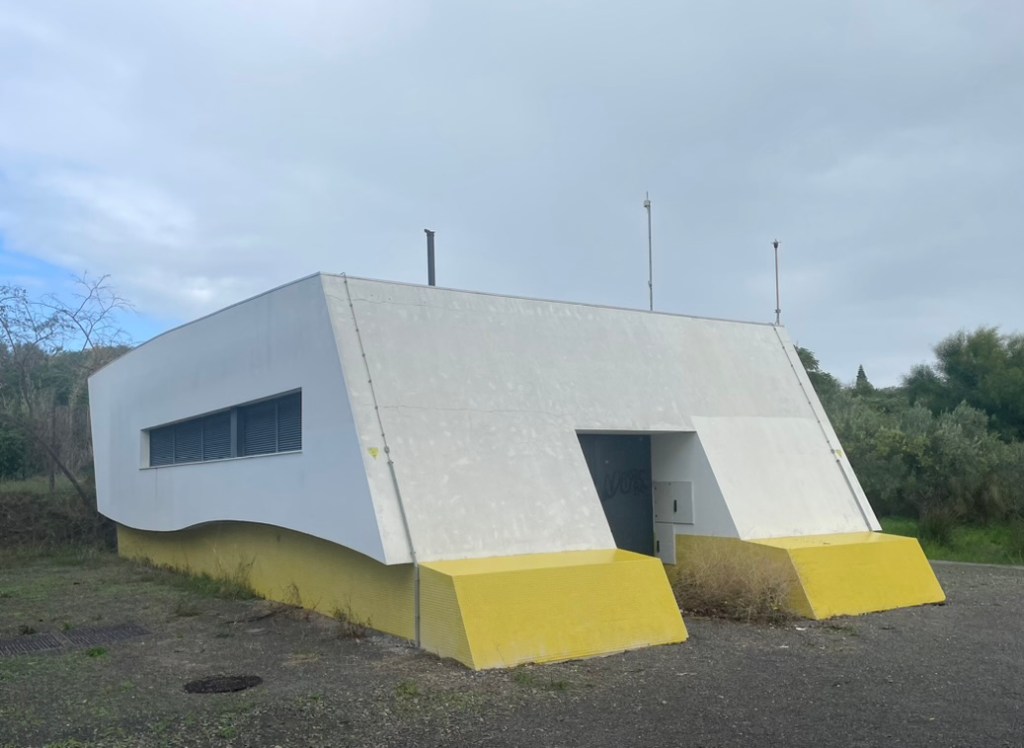
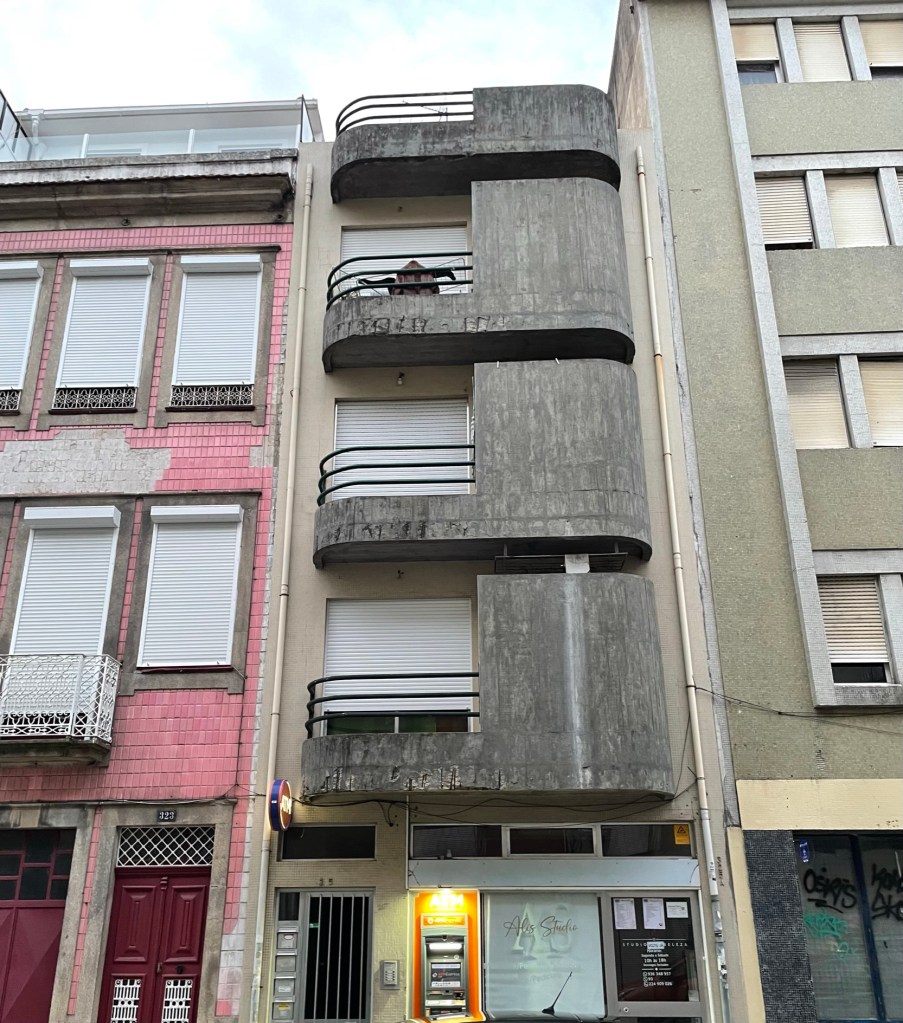
Modernist-brutalist apartment building in Monte Gordo
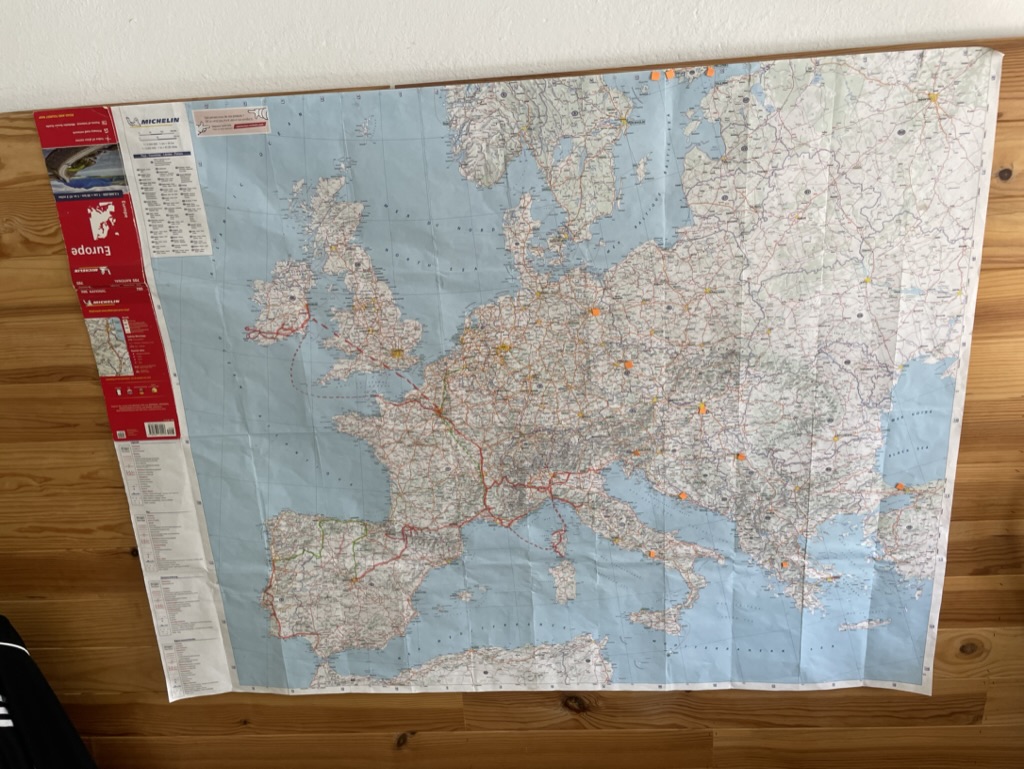
Here’s our map in progress. We had to buy extra highlighters for trips taken by Steve and Coco but not Denise.
Steve giving his best Kenergy vibe at the beach.

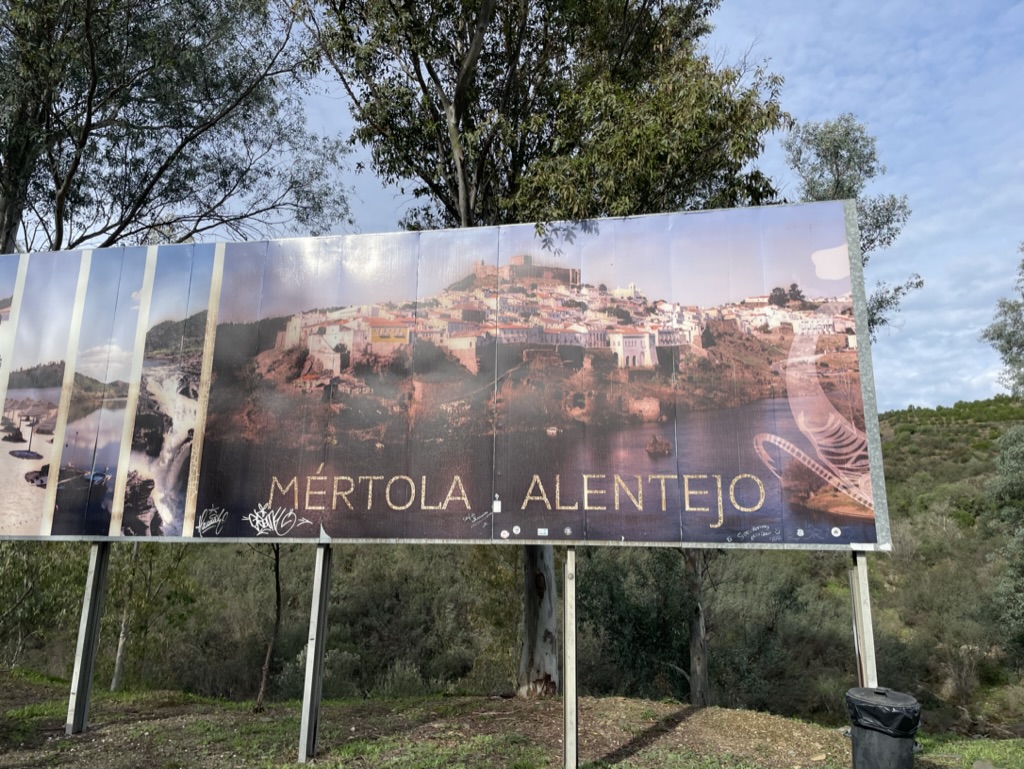
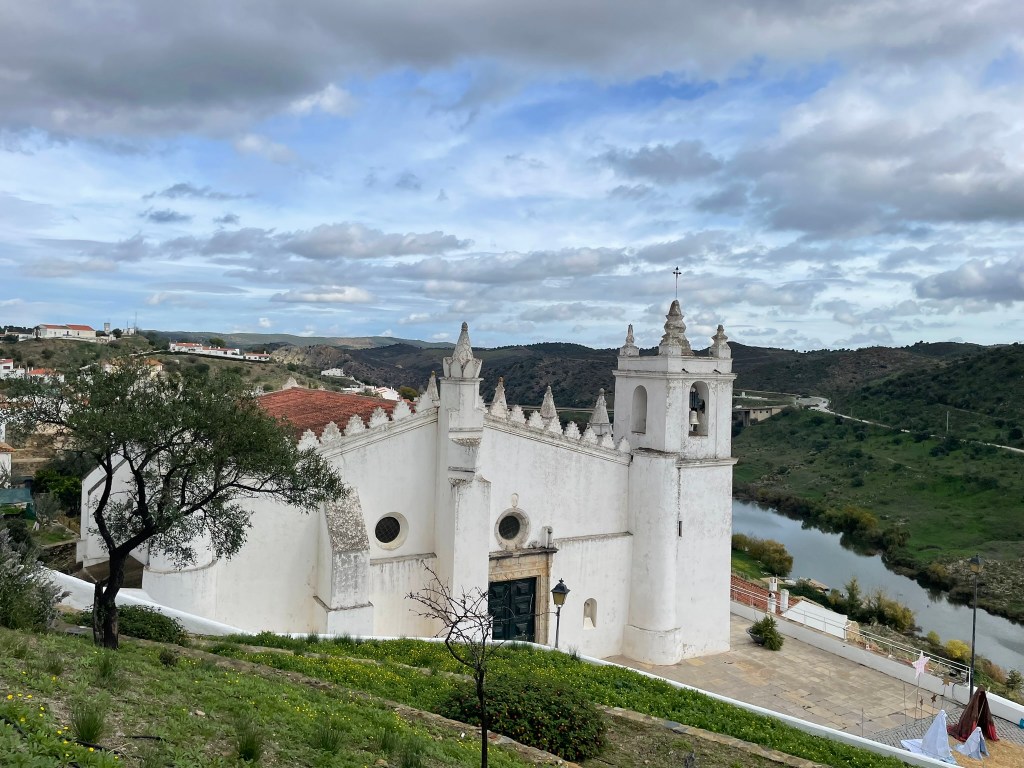
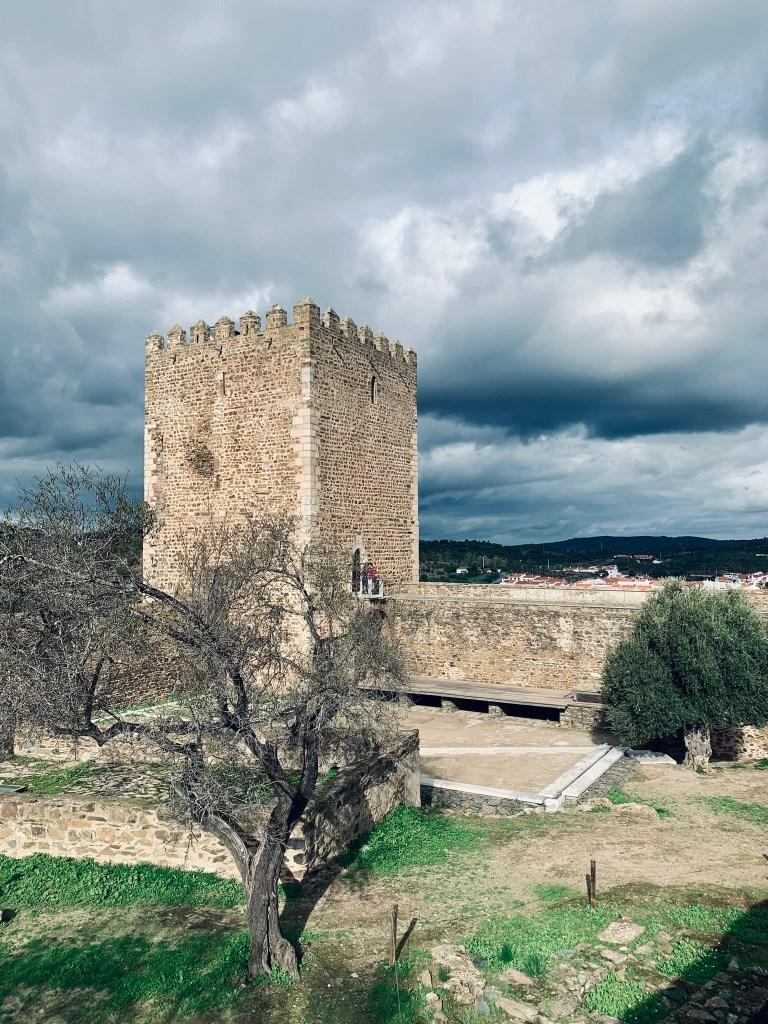
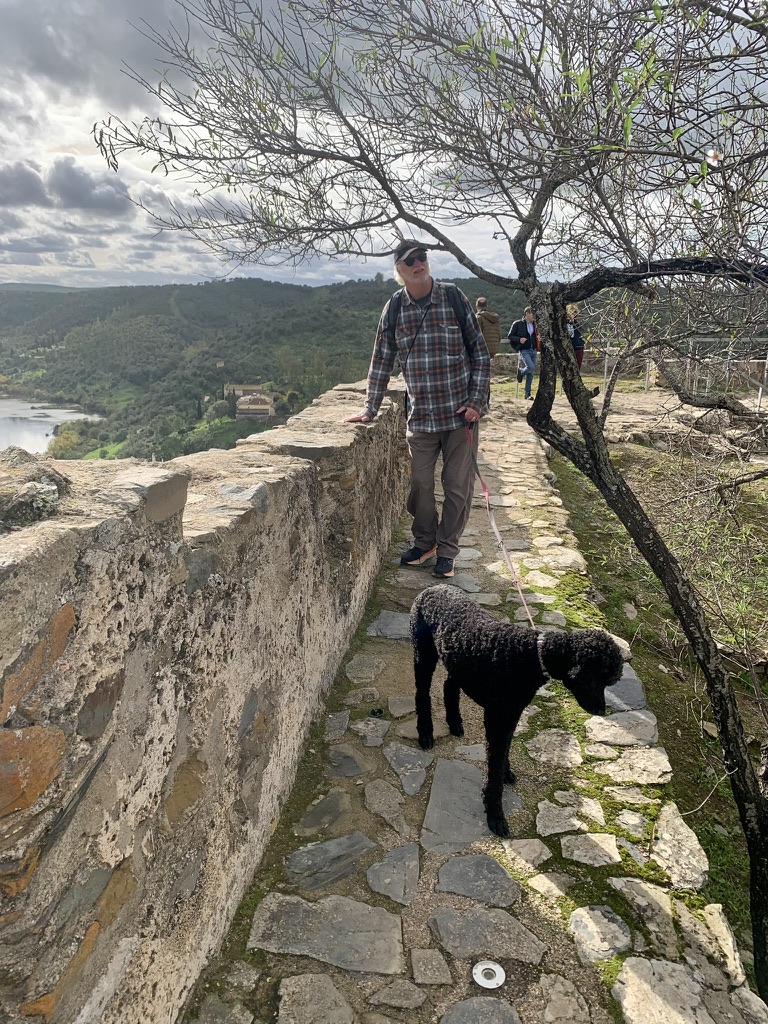
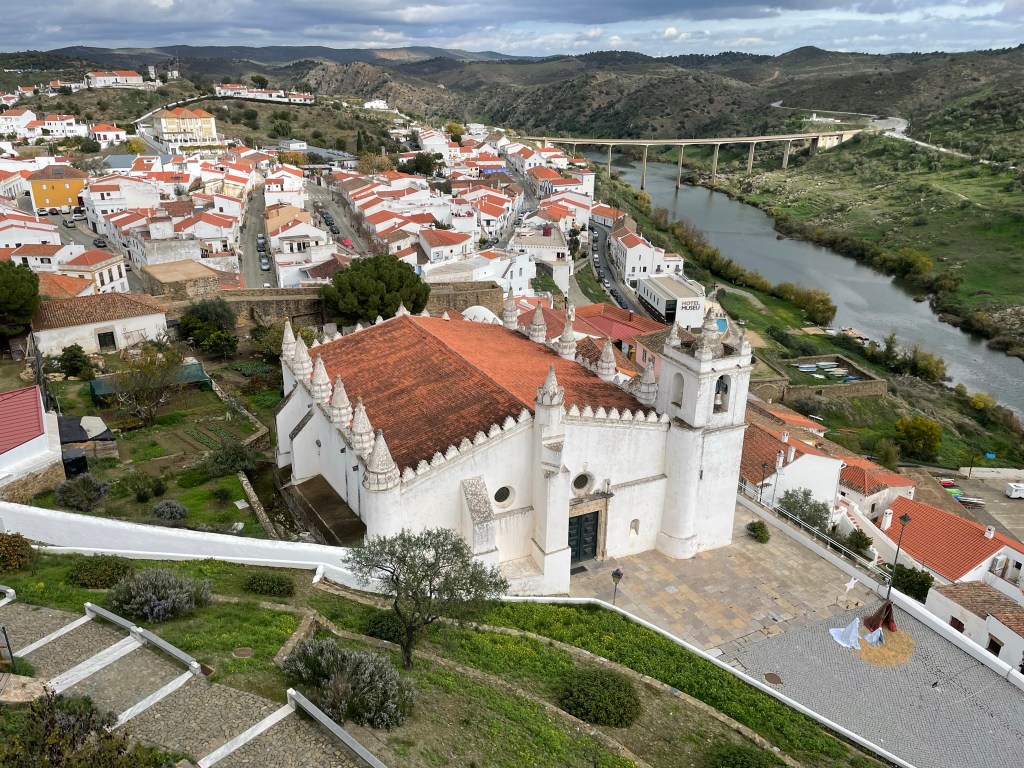
Recently, the weather has improved and we’ve been taking advantage of the sun and relatively warm temperatures — 15°C (or 60°F for the gringos) and above — to get in some exploring. We spent a day in the Alentejo city of Mértola, just north of here, and did a little shopping at the Thursday market, a giant, mobile mercado where you can buy just about anything you could need to wear or to furnish your house, not unlike the one that we had in Novi Ligure in Italy. We walked up to the centuries-old castle that overlooks the town and had a picnic lunch in the courtyard. You could walk along the 10-foot-high stone castle walls with no pesky guardrails or nagging warning signs like you might see in the States — I guess the EU doesn’t enjoy the same liability laws that we enjoy back home. By the time we made it back to the car, the market had packed up and disappeared without a trace, like the circus, heading to the next town.

We finally crossed the river into the Alentejo, leaving the Algarve briefly
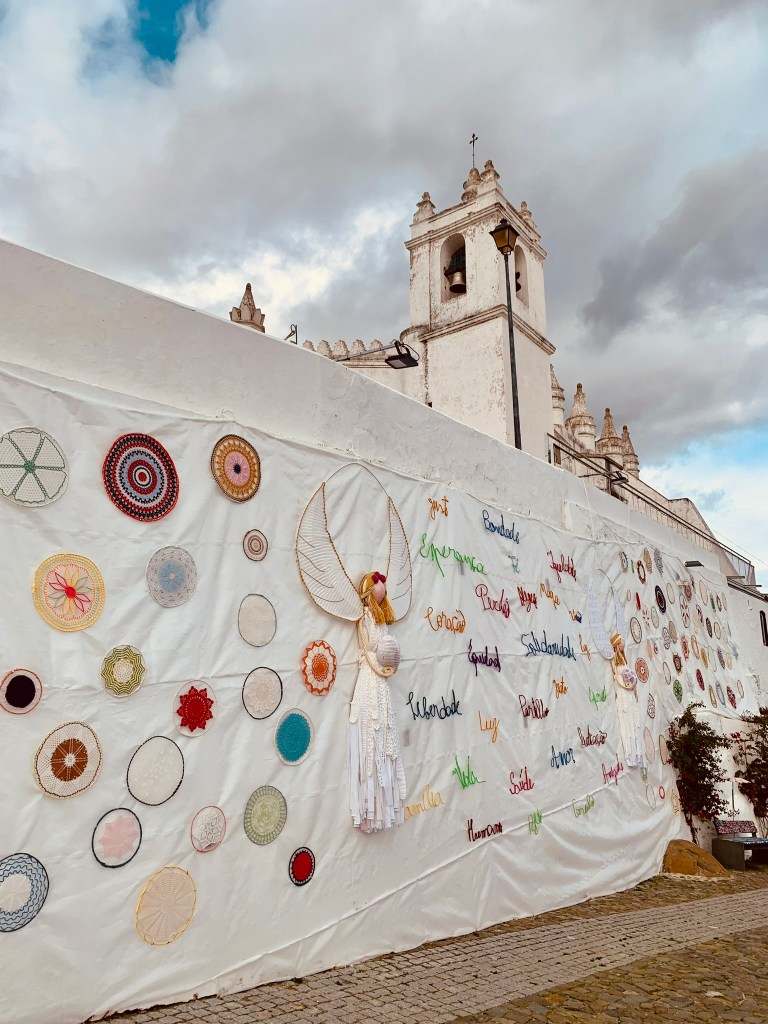
Mértola has been invaded by many civilizations, but none more fierce than the Yarn Bombers.
Aerial A.F.C.
The castle keep. I believe Kate Bush lives there in the summer.
The photo doesn’t give a sense of how high these walls are but Coco was keeping her distance from the edge.
Another shot of Mértola from the castle.
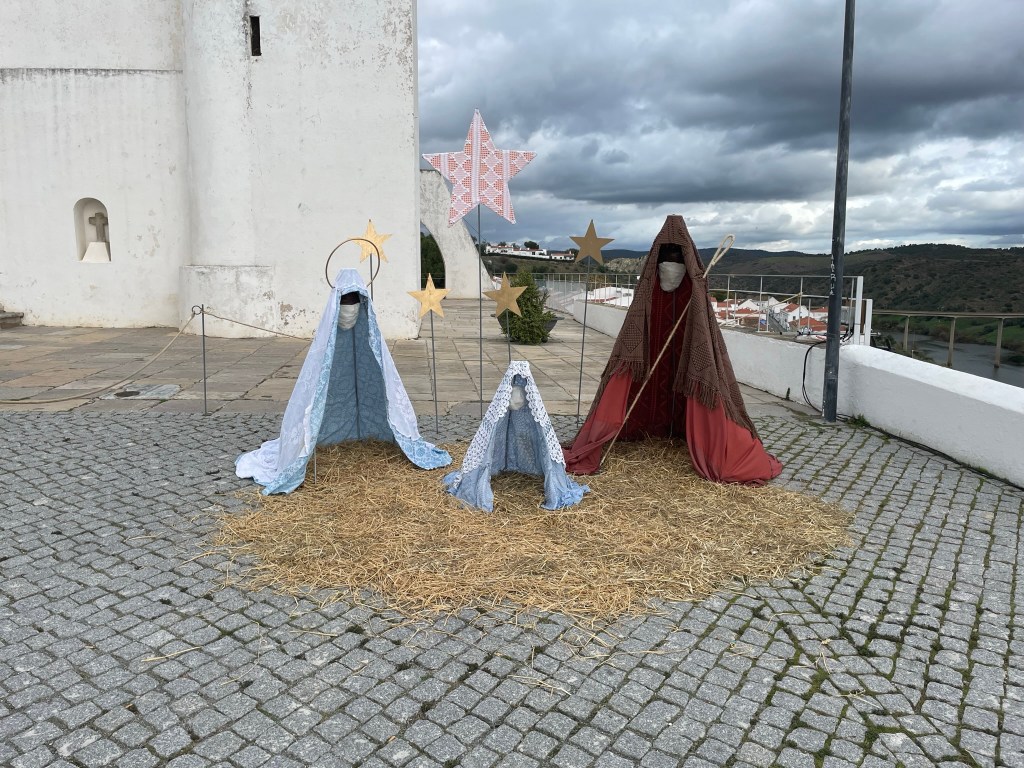
The first in a series of The Creches of Portugal. Two stars for Mertola’s spartan entry.
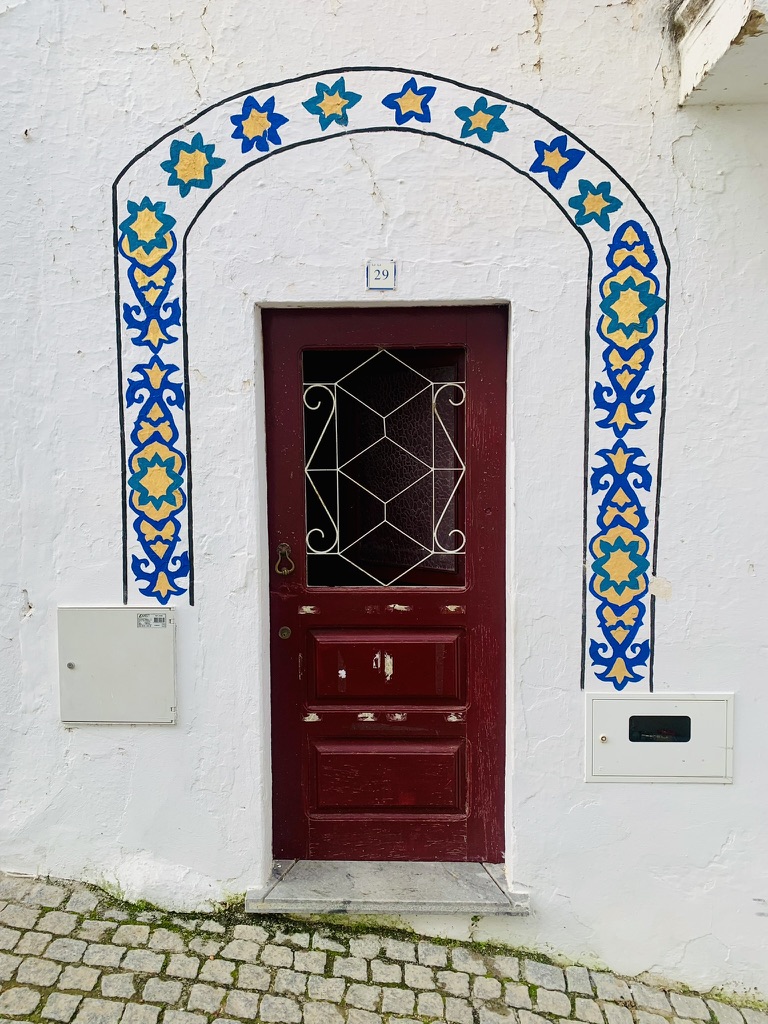
Doors of Mértola
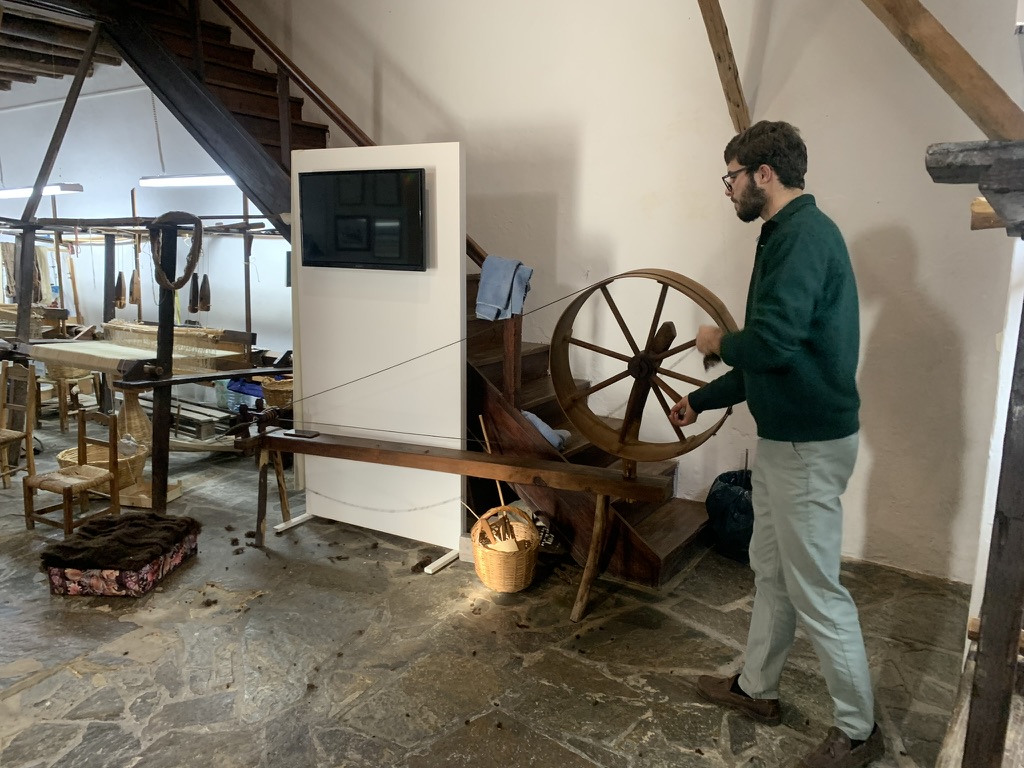
Denise visited the weaving cooperative and caught this guy spinning, though thankfully not out of control!
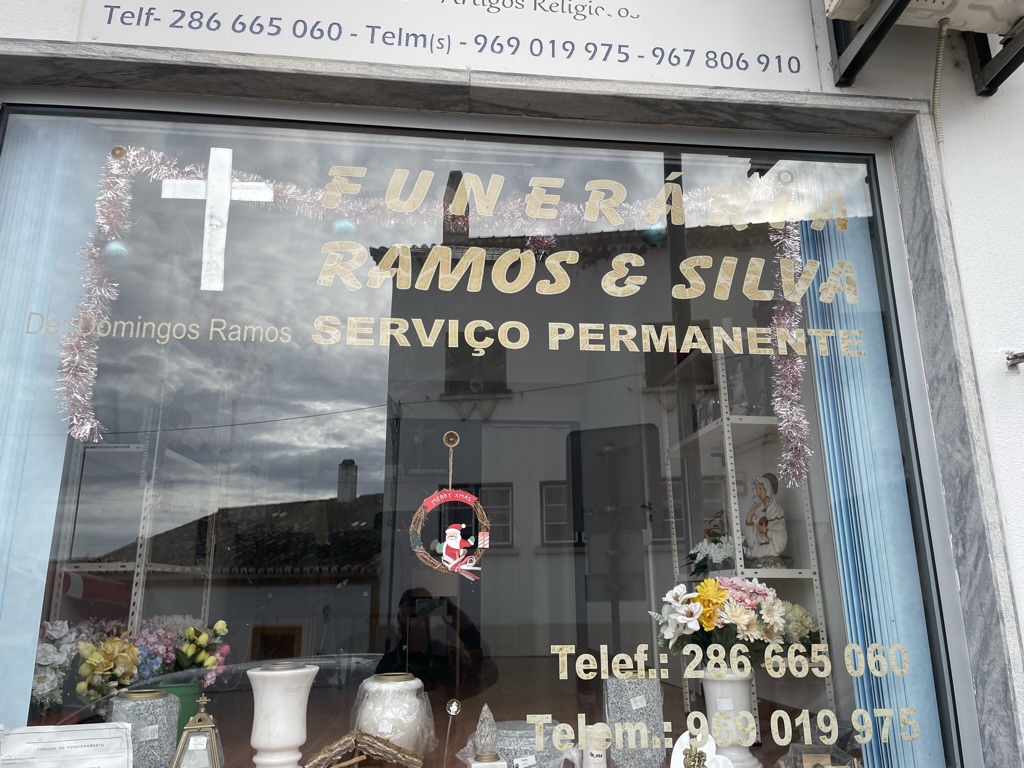
Ramos and Silva assure you that their funeral services are permanente. NO zombies.

On Friday, we took a relatively flat seven-mile hike around the nearby rural town of Cacela, crossing through small towns and farmland, and across the railroad tracks. Before the hike, we stopped to get some food to go at a restaurant but the owner told me that they didn’t do takeaway and we’d have to go to the restaurant next door. I nodded and made my way down the sidewalk to the takeout counter, only to have the same guy appear behind the counter. The Monty Python effect only increased when I went back for a plastic fork to eat our rice and beans and he turned me down flat(ware), telling me that they only had those for the eat-in customers. I was tempted to run back to the other restaurant and ask for a fork but he didn’t look like he was as amused by the situation as I.

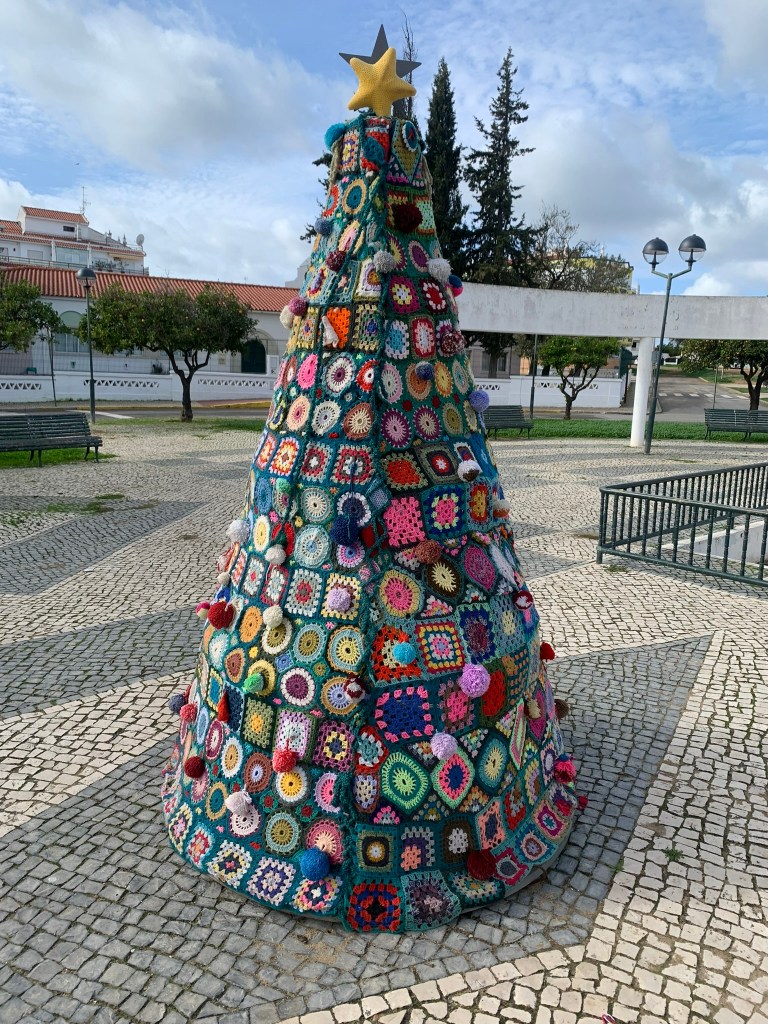
Cacela didn’t have a creche, but they had this lovely crocheted Xmas tree.
Glamping
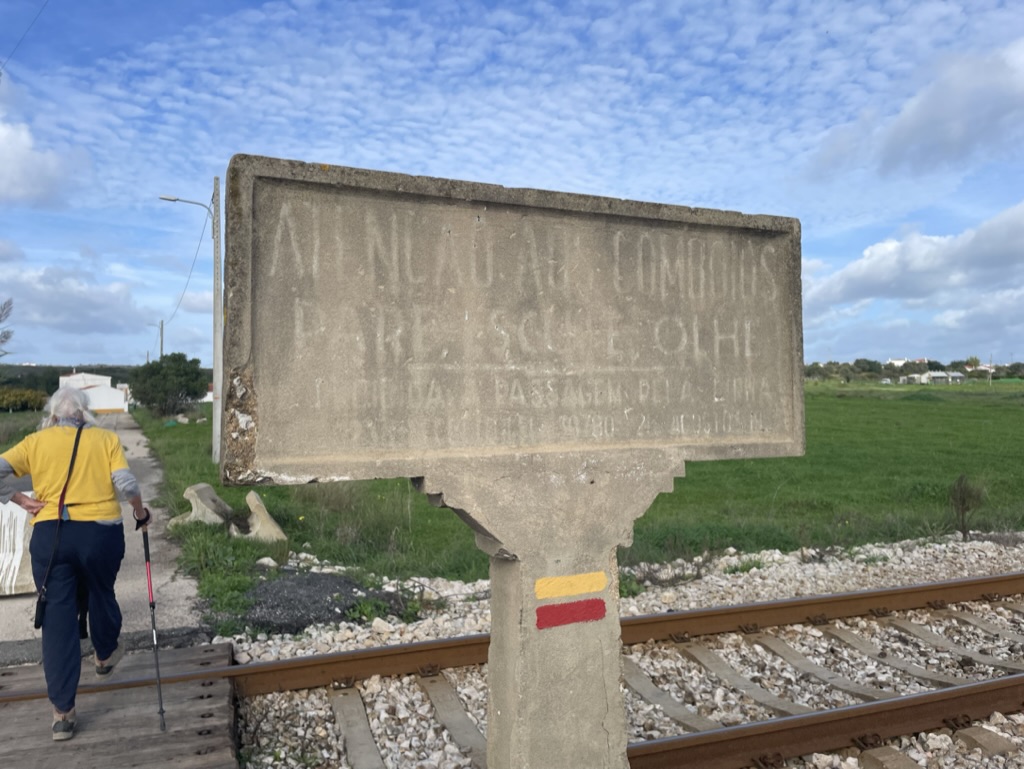
Crossing the tracks in Cacela

The next day, we hiked through old-town Ayamonte, the first town you come to after crossing the Spanish border. Saturday lunch there is a big deal and we grabbed one of the last seats at a place near the harbor and ordered the paella — with no seafood, of course — our first time enjoying the famous rice dish since arriving on the Iberian peninsula. There’s not a lot to Ayamonte beyond the bustling waterfront full of restaurants and shops but our new friends Olaf and Lorraine clued us in to the fact that it’s the hometown of the famous Spanish singers Pitingo and Maria Isabel. We hadn’t heard of Pitingo either but, apparently, he’s huge in Spain, mostly from a cover of “Killing Me Softly with His Song,” and he recently did a big concert there, giving away free tickets to anyone with an Ayamonte address — very classy. Maria is, of course, best known as the winner of the Junior Eurovision contest in 2004. 

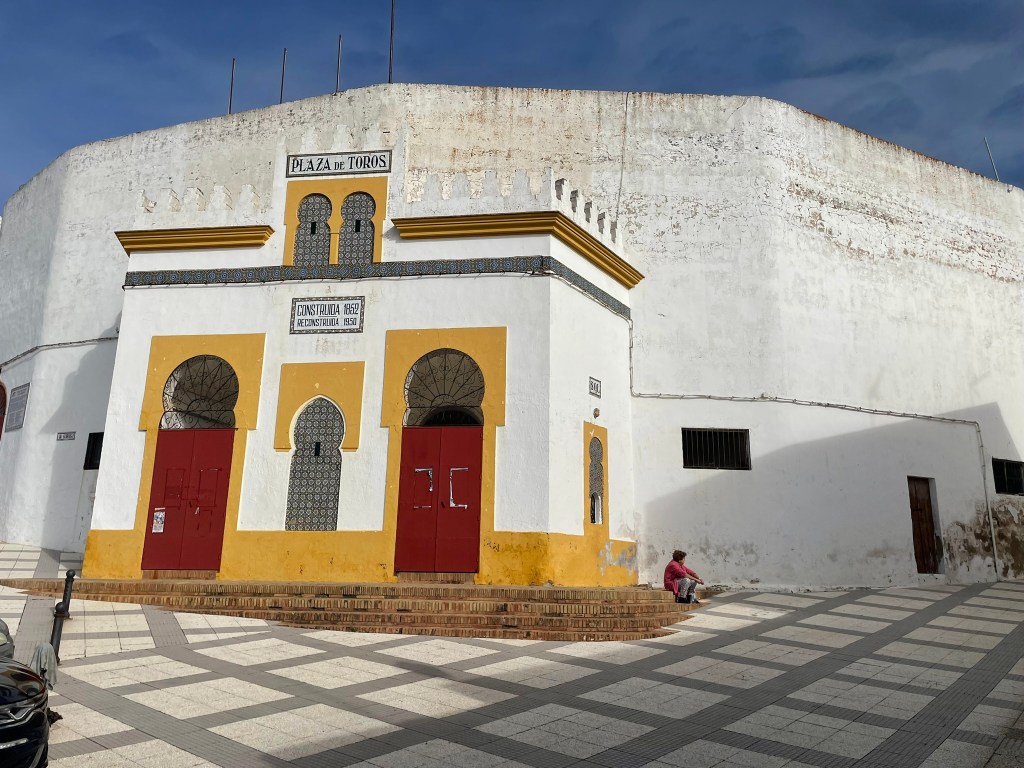
Like every decent-sized Spanish town, Ayamonte has a bullring. Dark for the winter.
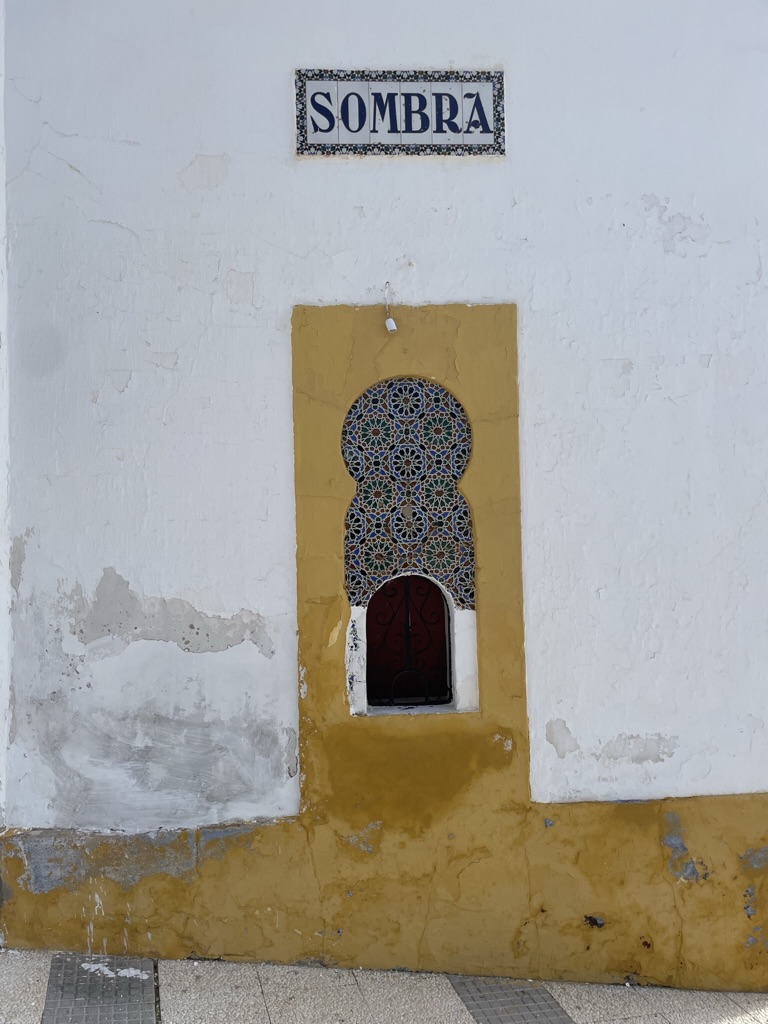
Sombras, going fast.
Looking from old town Ayamonte, down to the river.
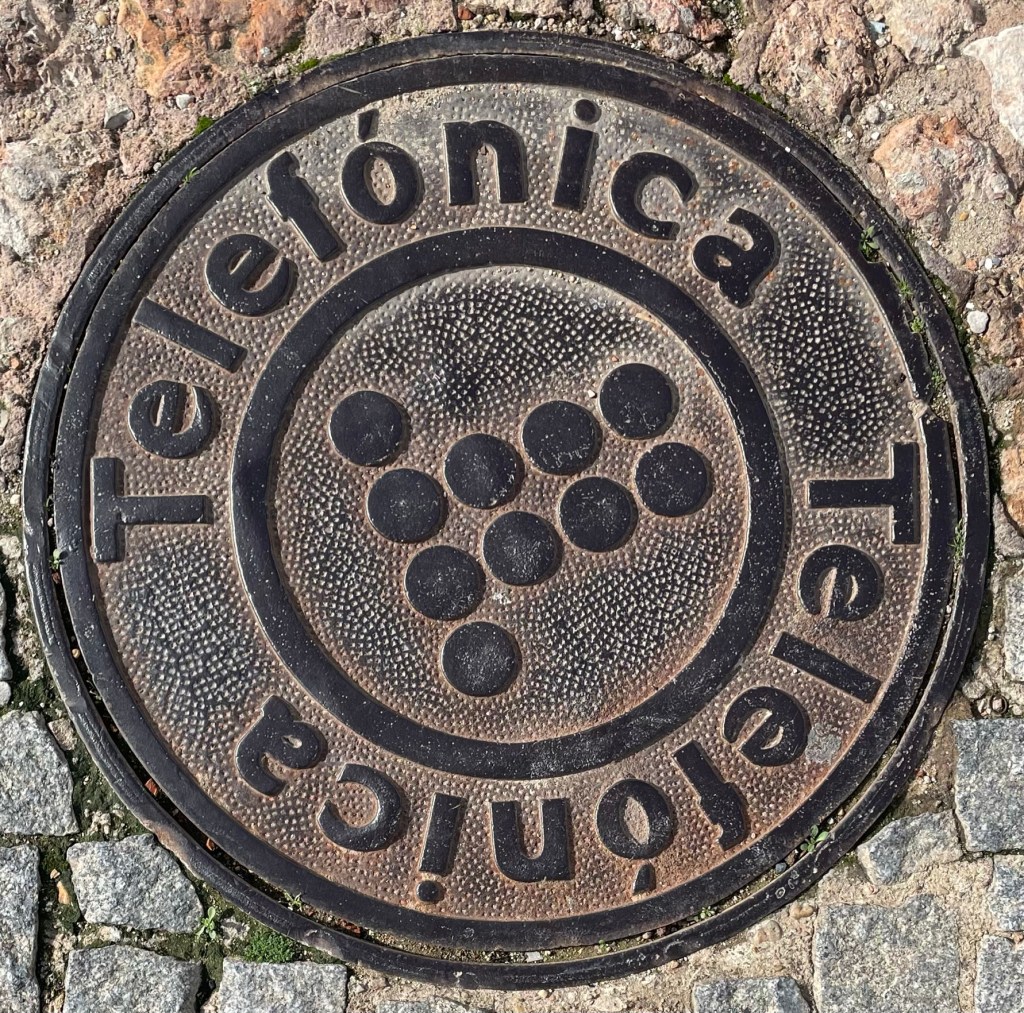
The typeface on these manhole covers is Gill Sans, I’m told.
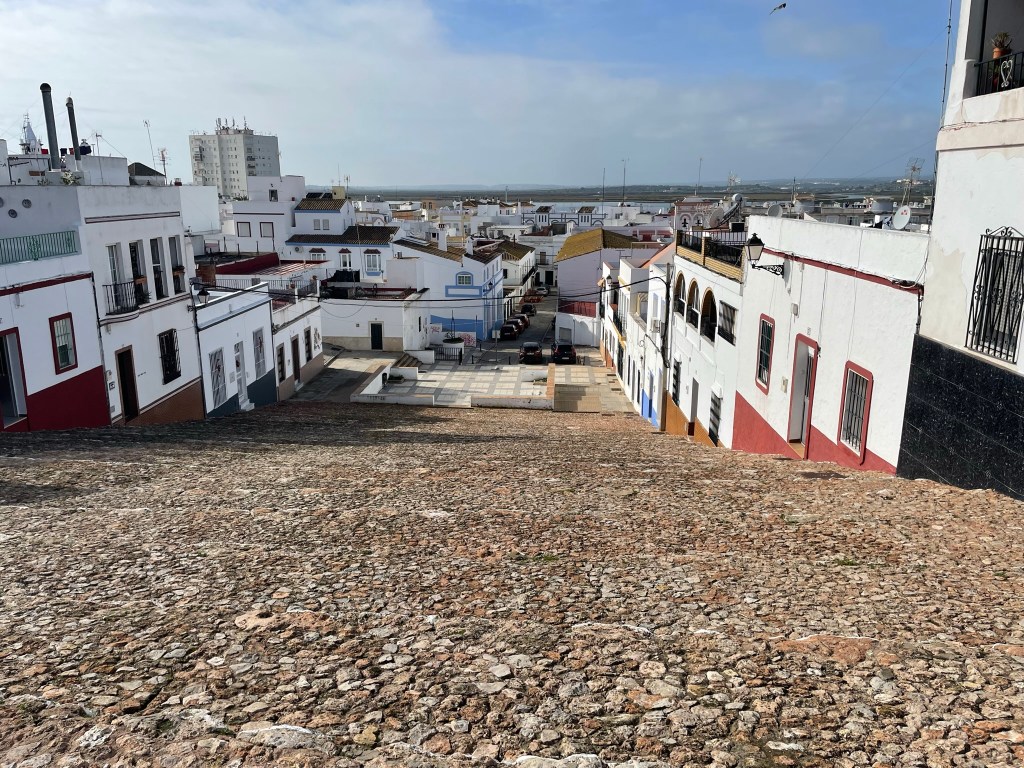
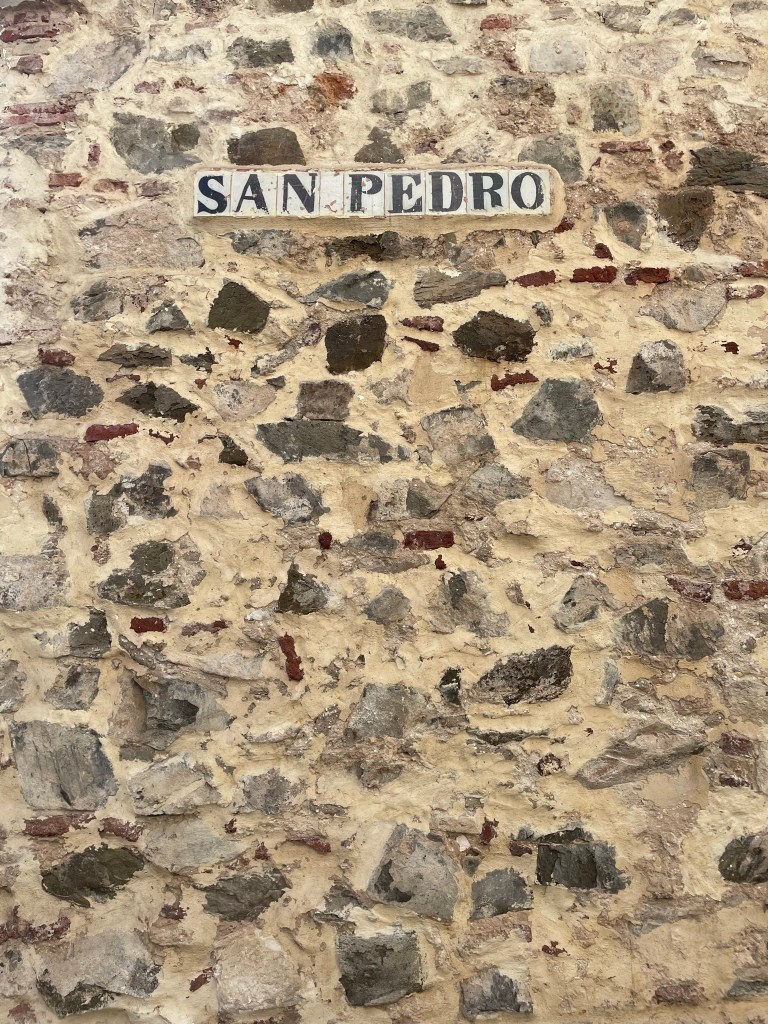
Hey, all these streets are named after places in California!
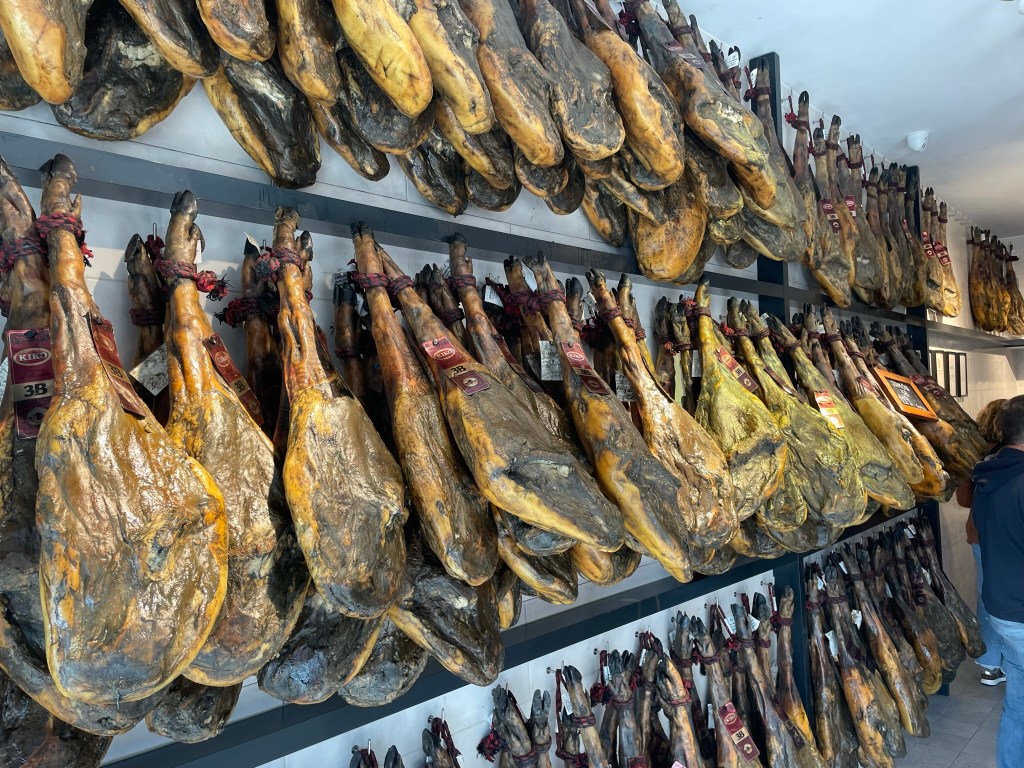
Spanish hams in Andalucia…
The harbor. Three-hour tours available at your own risk…
This ferry runs from Ayamonte across the river to Vila Real de Santo Antonio.
Denise, hard by the Guadiana River
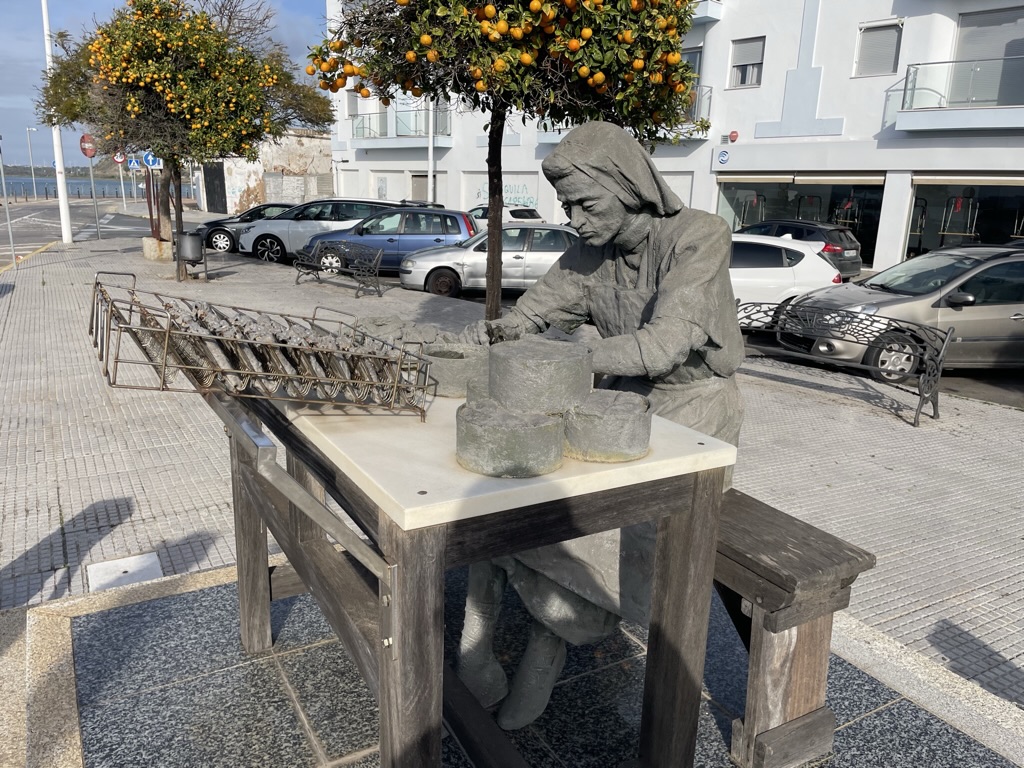
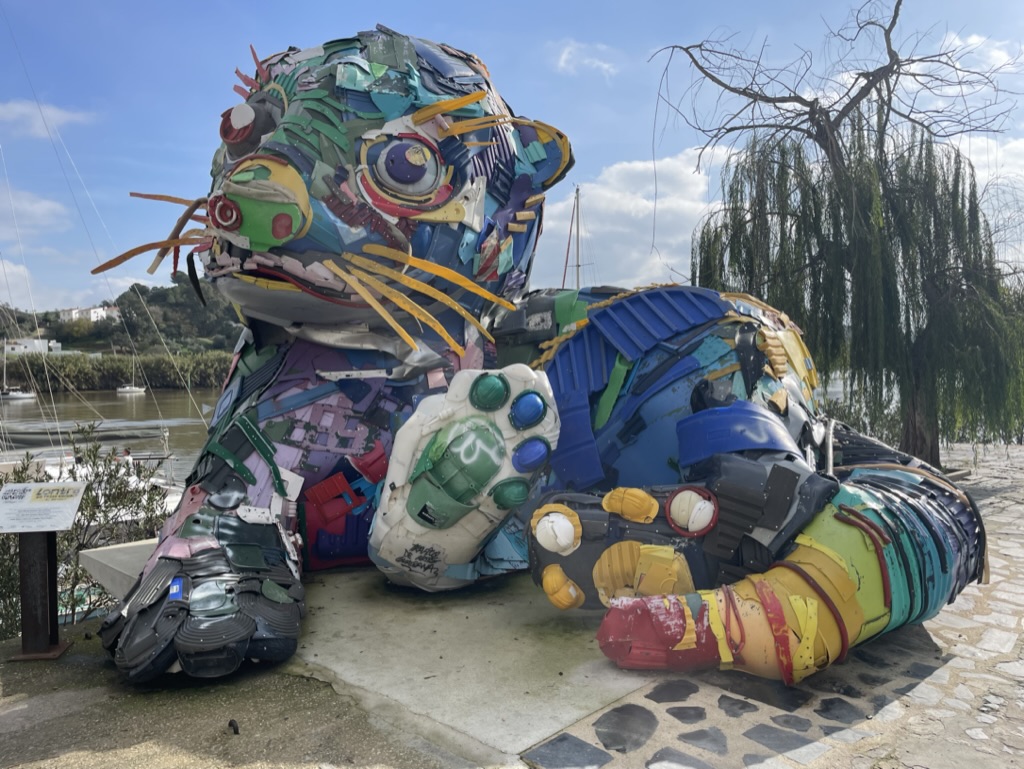
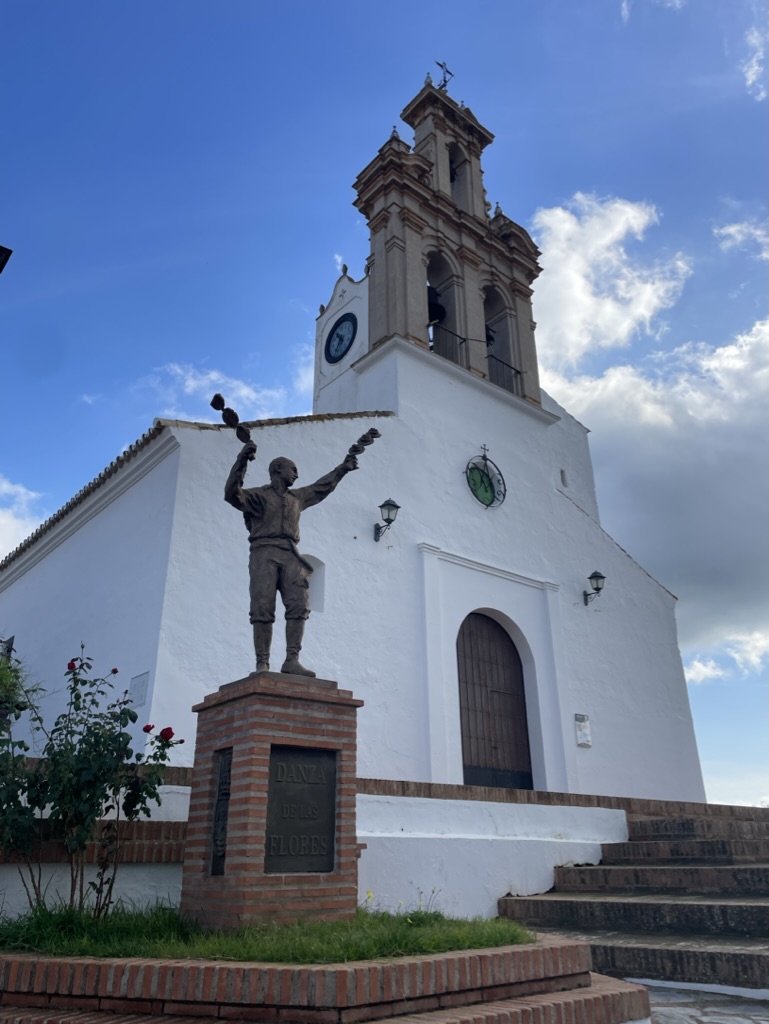
Public art sculpture of artisan in Ayamonte. Or maybe it’s Pitingo or Maria Isabel. Would it kill them to put up a sign?

As I mentioned last time, our compound was filling up and so we decided to have a drinks party to get everyone together. Five countries and four languages were represented — a mini Tower of Babel — and much wine was consumed. It was good getting to know them all a little better and Pilar, our hostess, even made a rare social appearance. We learned that she lost her husband a few years ago and is still grieving, but that managing the property has helped to keep her busy. 

Steve tending bar at the party.
Our neighbors, John, Pilar, Stefan, Anita, Inge, and Astrid. Missing from photo: Corrine and Jonas.
And later, after a few drinks

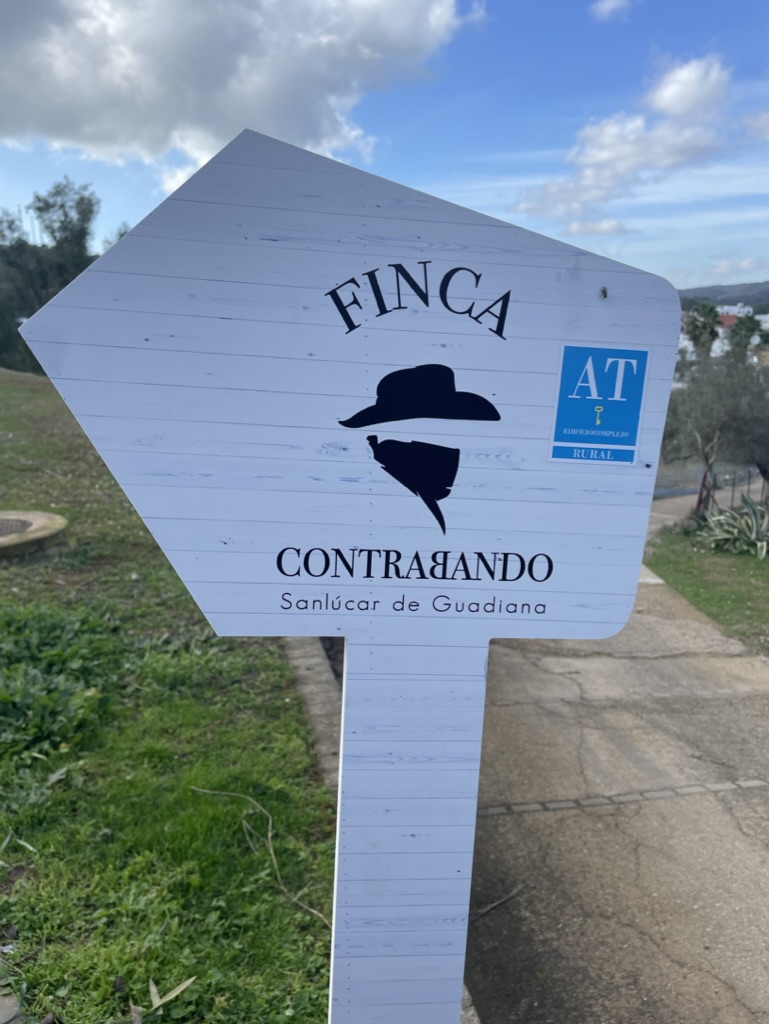
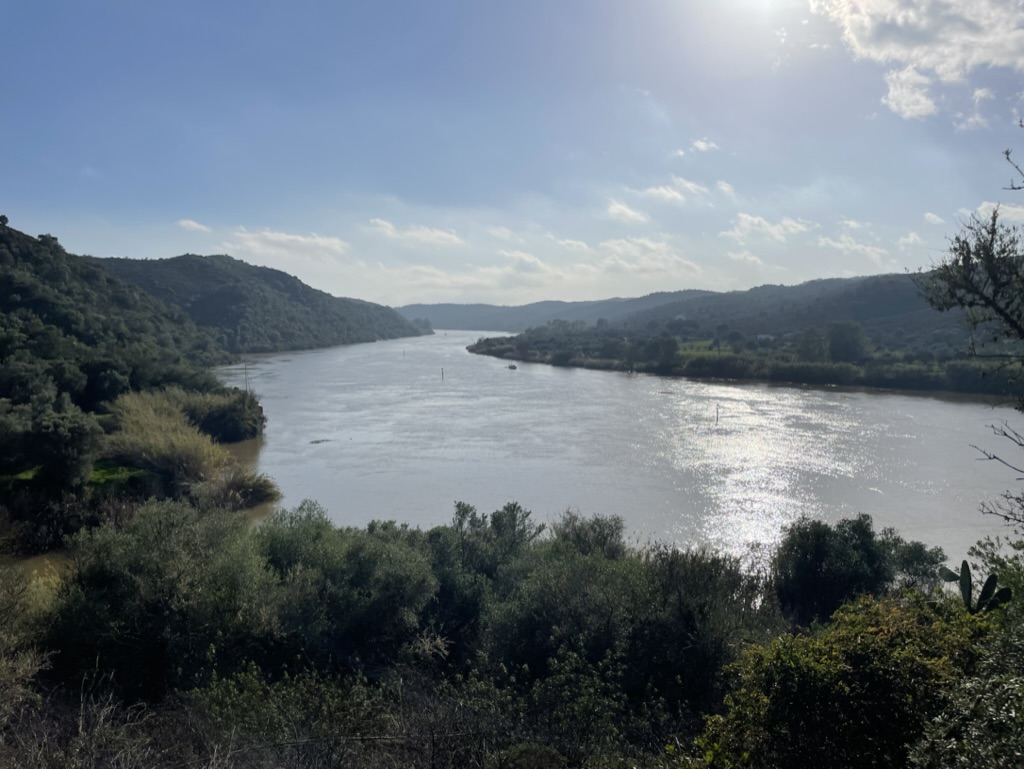
The next day, despite our mild hangover, we took a long, somewhat arduous hike around Odeleite, a village that we had visited earlier in the month. We didn’t get a lot of nature or arduous exercise in Porto so it’s nice to be playing ourselves back into shape. Surprisingly, over the seven miles on the trail, we only saw three other hikers! I guess a lot of the visitors to the Algarve stay in their RVs on the beach. After another day of much-needed rest, we explored the ancient city of Alcoutim, hard by the Guadiana River, and then took a one-hour-and-one-minute ferry ride — that’s including the one-hour time zone change — across the river to Sanlúcar in Spain and did a beautiful, if hilly, two-hour loop walk along the river and back to the ferry. There’s a lot of history between the two border towns, going back centuries, but the bond was broken during the Spanish Civil War when, in 1936, Franco shut down all river traffic between the two municipalities. Since they had come to rely on each other so heavily, a network of smugglers kept the trade going on the sly. Legal traffic resumed in 1973 but the legacy of the contrabandos is still celebrated on both sides of the river.  Alcoutim has it all: a fort, a castle, windmills, boats, a river, a ferry, British expats drinking in cafes, multiple churches, cobblestones, and two countries in close proximity. Highly recommended.

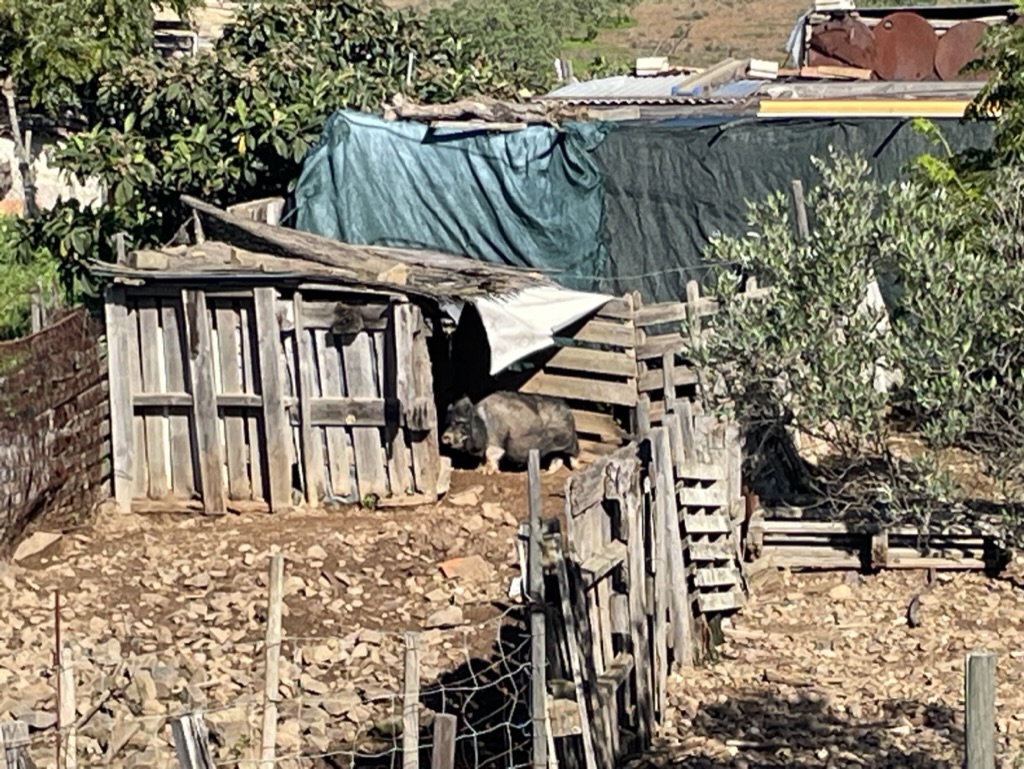
An ex-wild boar in a makeshift cage near Odeleite. Are they then just called “boars” or is it always “ex-wild boar”? What’s the boar etiquette here??
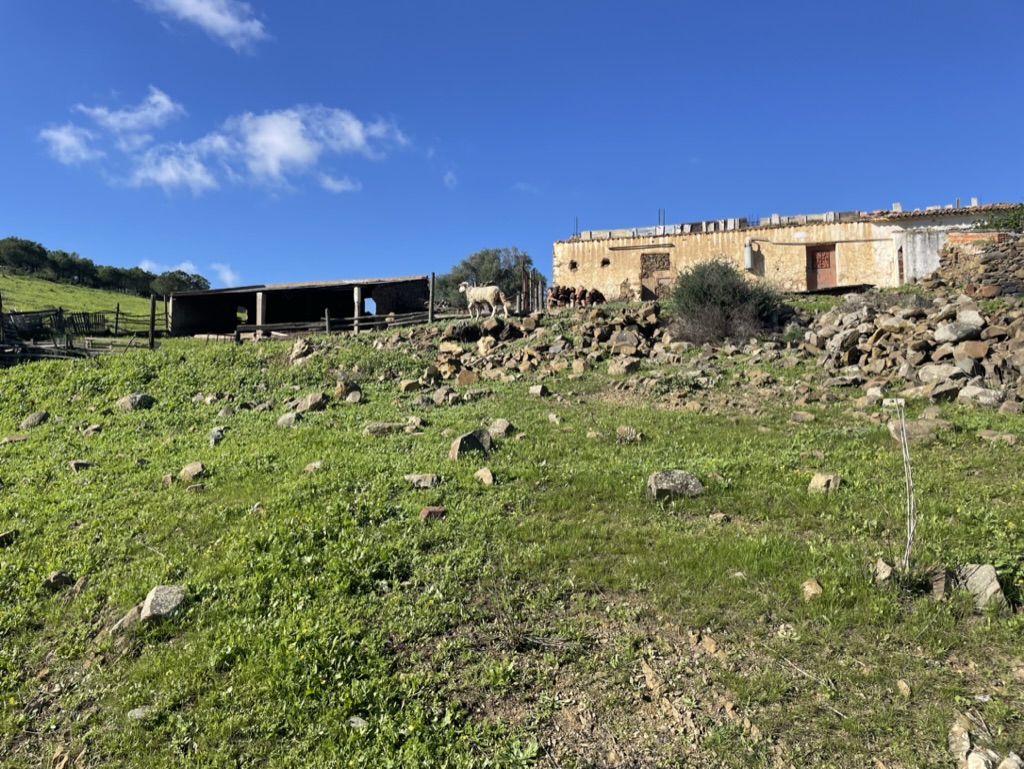
A lone sheep on the trail. They seem like a lot of work, the sheep.
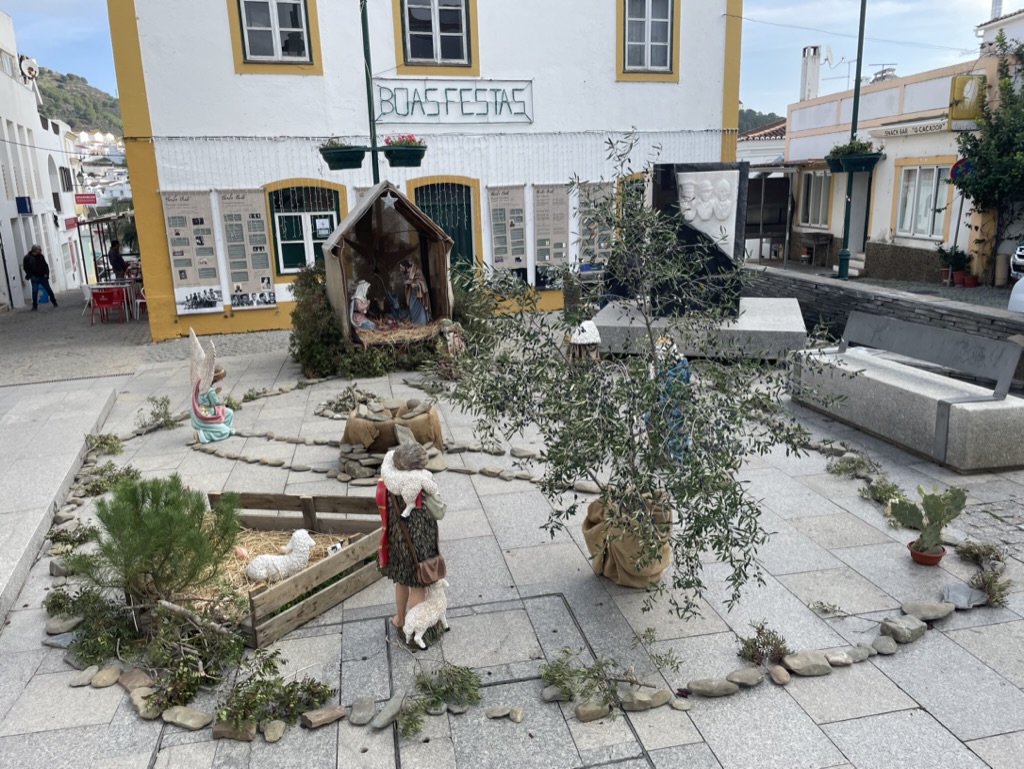
Alcoutim’s entry into our creche contest. They get three stars for having a little path for the three wise men.
Alcoutim has one of these, although I don’t think it’s a Koons.
Guadiana River crossing. Retracing the route of the Contrabandos but with cushy seats.
Safely on the shores of Spain with our smuggled poodle.
Grand Spanish church in Sanlucar.
You can stay at one of the smuggler’s cabins, now a luxury Airbnb.
Coco with Cacti on the path
The river from the path.
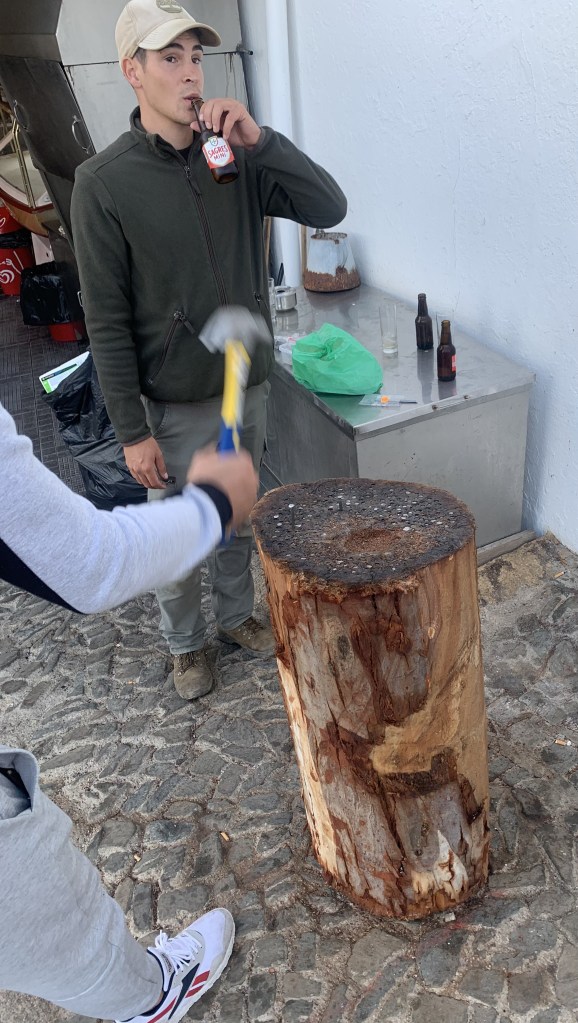
Back at the bar, this is a drinking game the locals were playing. It involved hammering a nail into the stump.
It seemed like there were no losers. (The driver of the last nail in must pay for the round of drinks.)

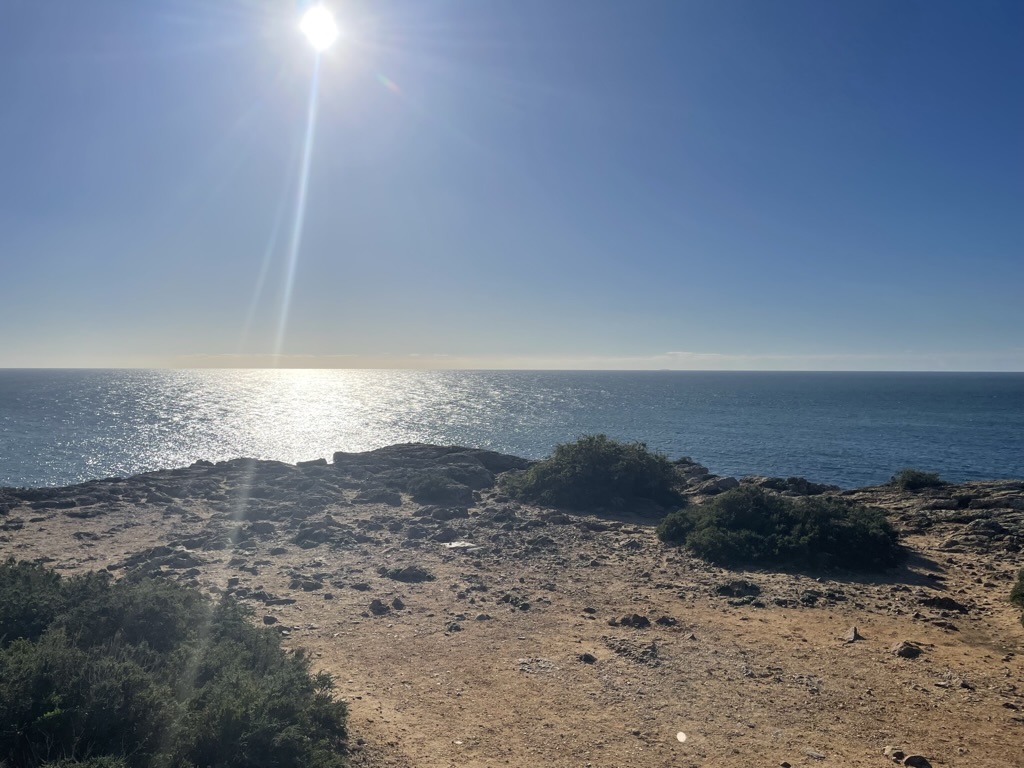
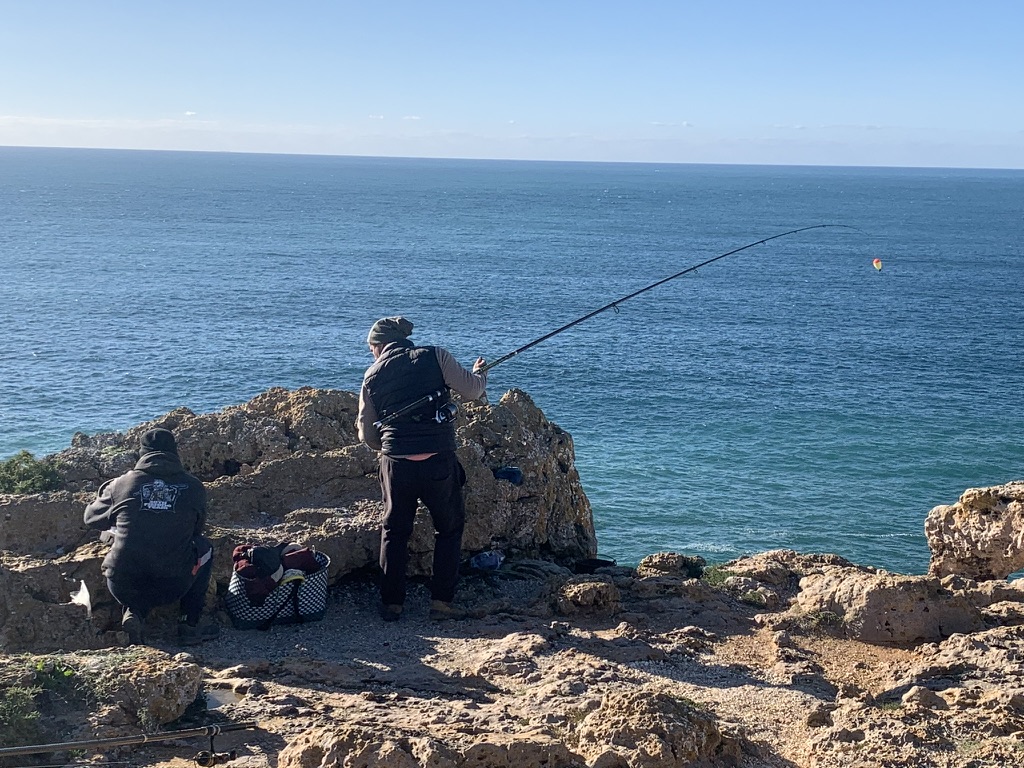
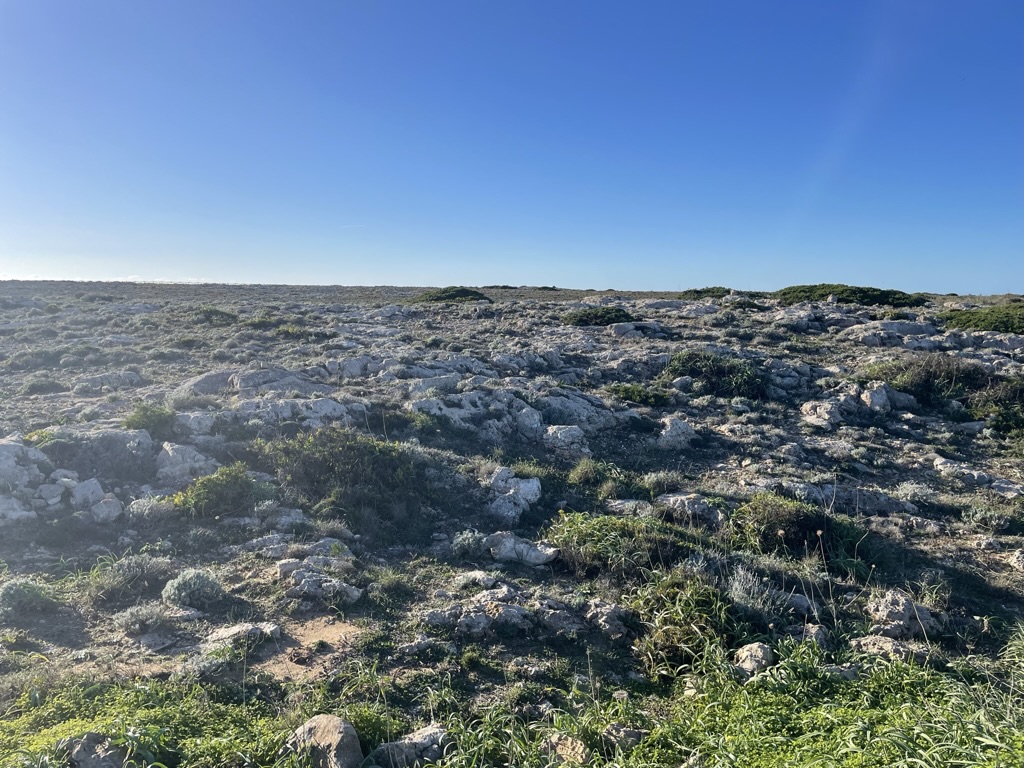
Quickly running out of time here in the Algarve, we took the long drive out past the city of Sagres to Ponta de Sagres and Cabo da Roca, the westernmost tip of Portugal — and mainland Europe, for that matter. With Africa to the south, nothing except 3,000 miles of deep blue Atlantic Ocean (well, and the Azores) between you and North America, and all of Europe over your shoulder, it’s an awe-inspiring site. There’s an old fort, a lighthouse, and an easy walking path out on the promontory that takes you past fishermen casting their lines from the cliffs to the ocean, about 200 feet below — not that you can’t buy fresh fish at a dozen markets in the nearby town. 

The westernmost tip of mainland Europe.
Fishermen on the cliffs.
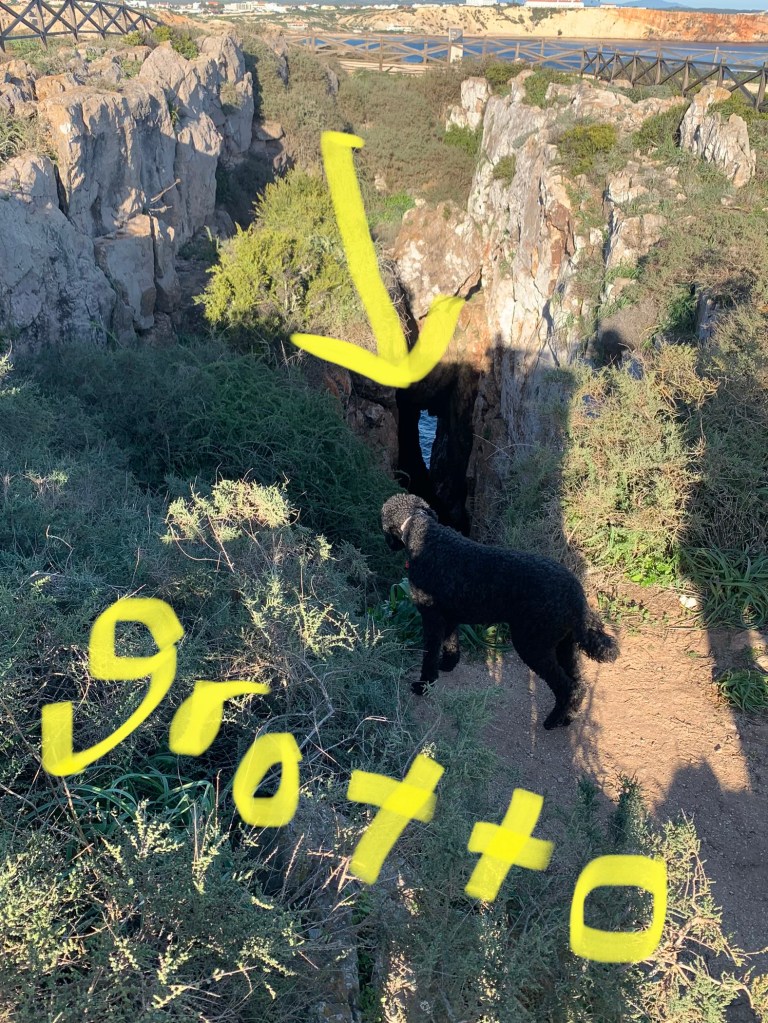
The limestone allows for grottos to form.
In 1969, parts of Kubrick’s moon landing were filmed here.
Kilometer 0.0 of the European bike trail.
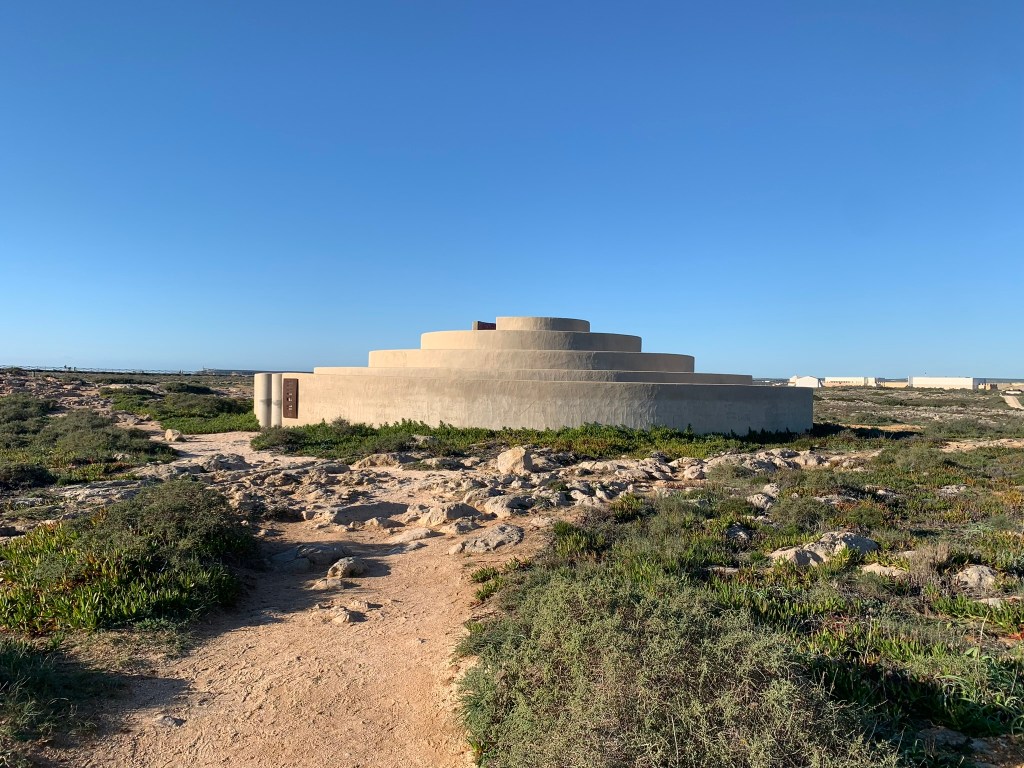
You could walk into this chamber and experience the magnified sounds of the waves from a grotto located beneath. It freaked Coco out.
Europe starts here!

We’d now covered the whole southern coast of Portugal, from the western tip to the border of Spain, and on the long drive home we agreed that our work here was done. We’ll pack up on Sunday and hit the road early Monday morning.  We enjoyed our stay in Portugal but both agreed that we haven’t yet been sold on living here. Show us what you’ve got, Spain! 

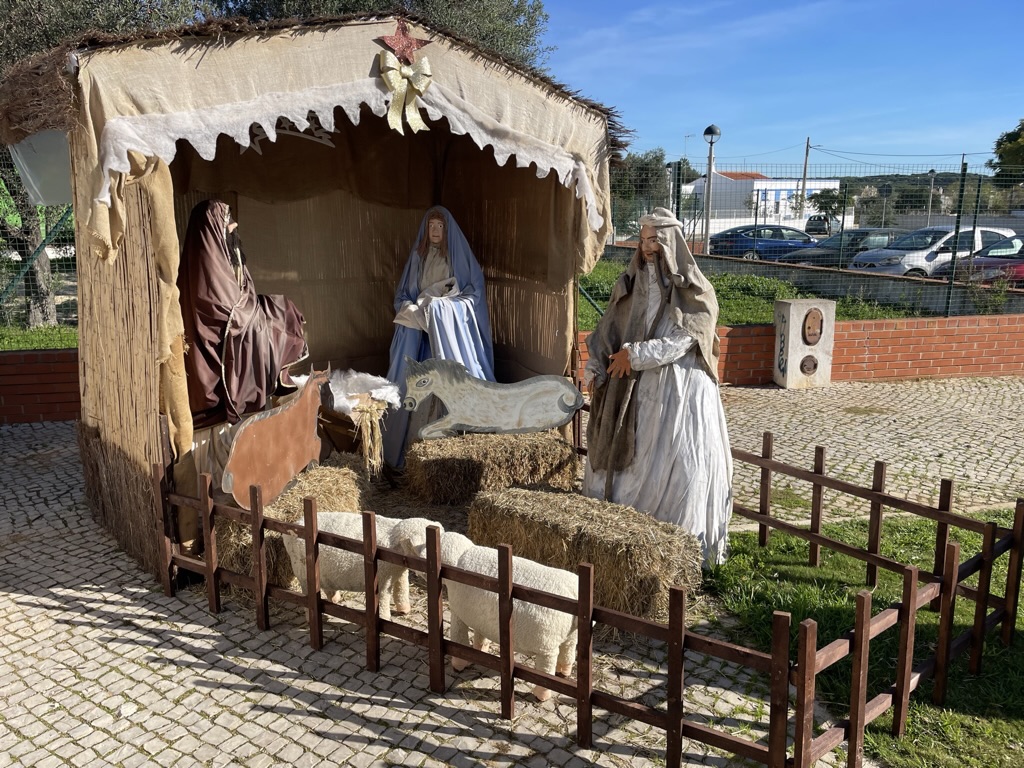
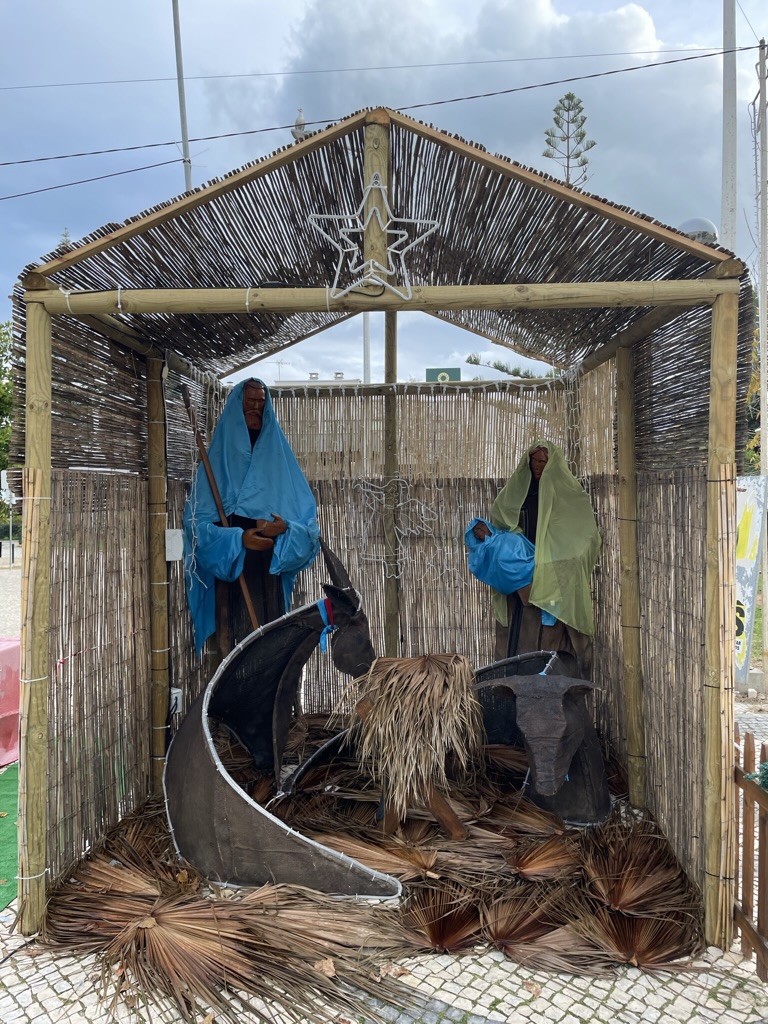
Hometown creche entry: Altura obviously has a big budget. Four stars for mixing the 3D sheep with the 2D donkeys.
Joseph realizes that shit is getting real…
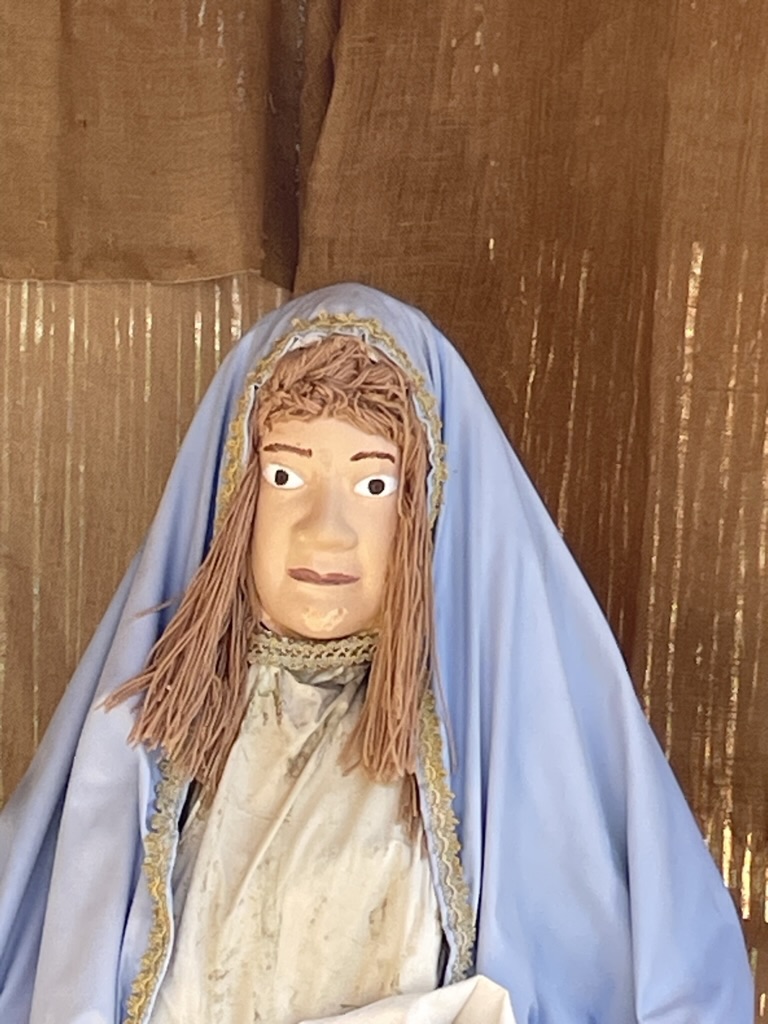
…meanwhile Mary is wondering if they’ll ever get out of this manger.
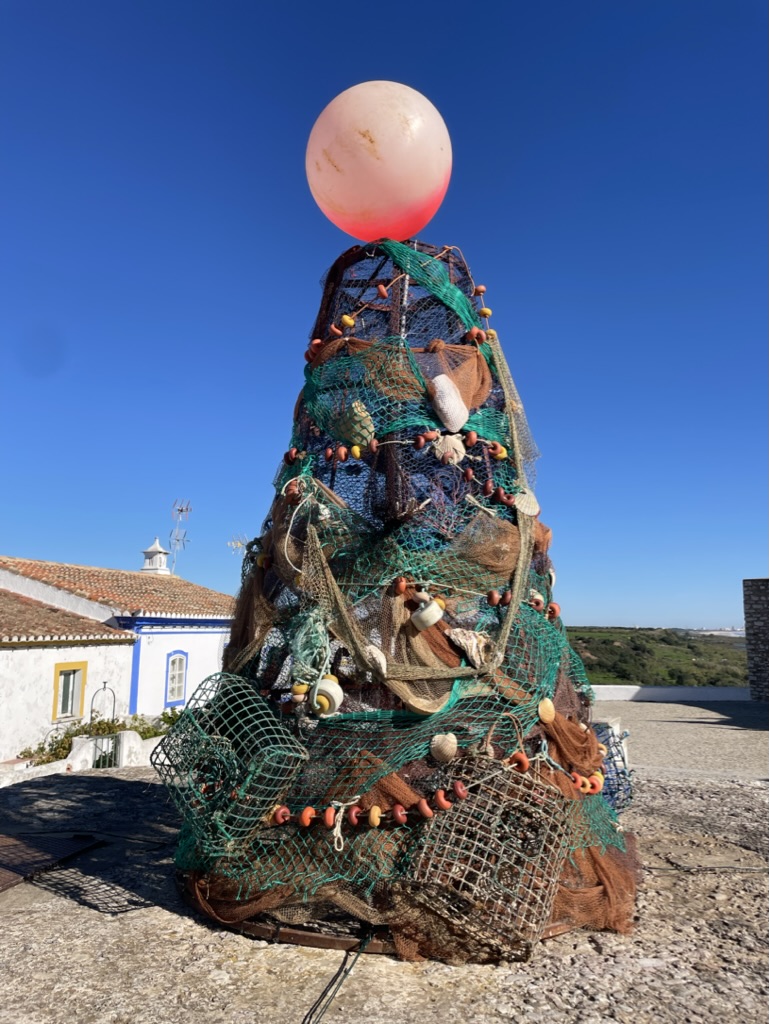
Nice work by the fishing village of Vila Nova de Cacela on this fishing-themed Christmas tree.
Abstract beach creche in Monte Gordo. Three stars. Baby Jesus in a poncho is a nice touch.
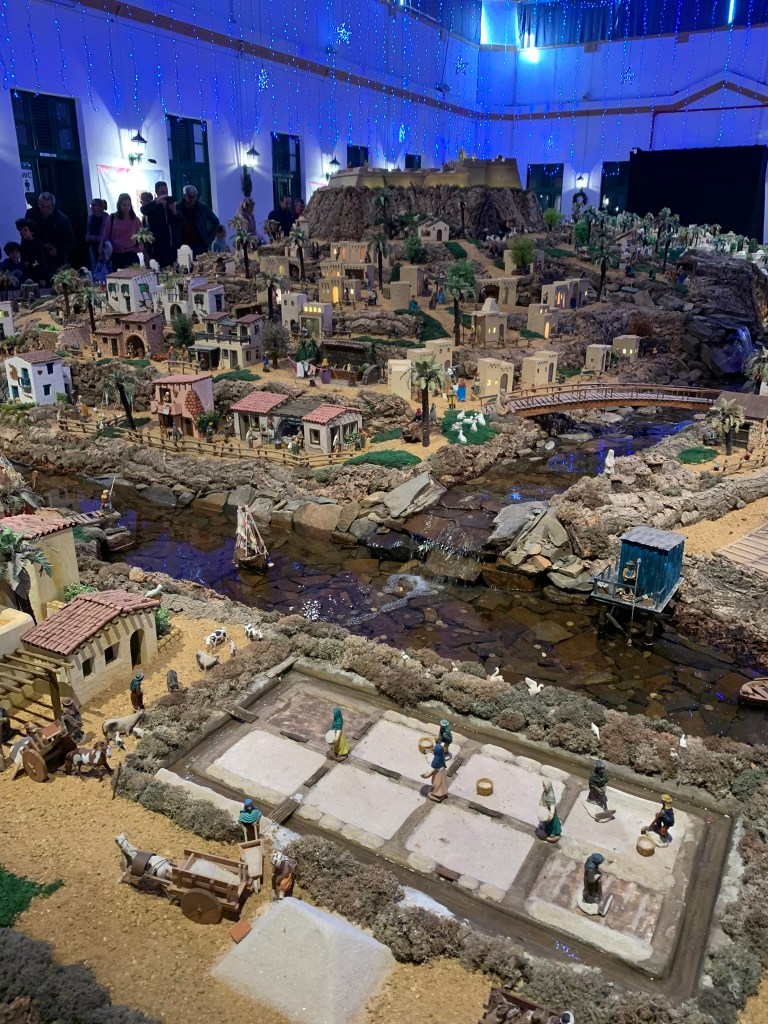
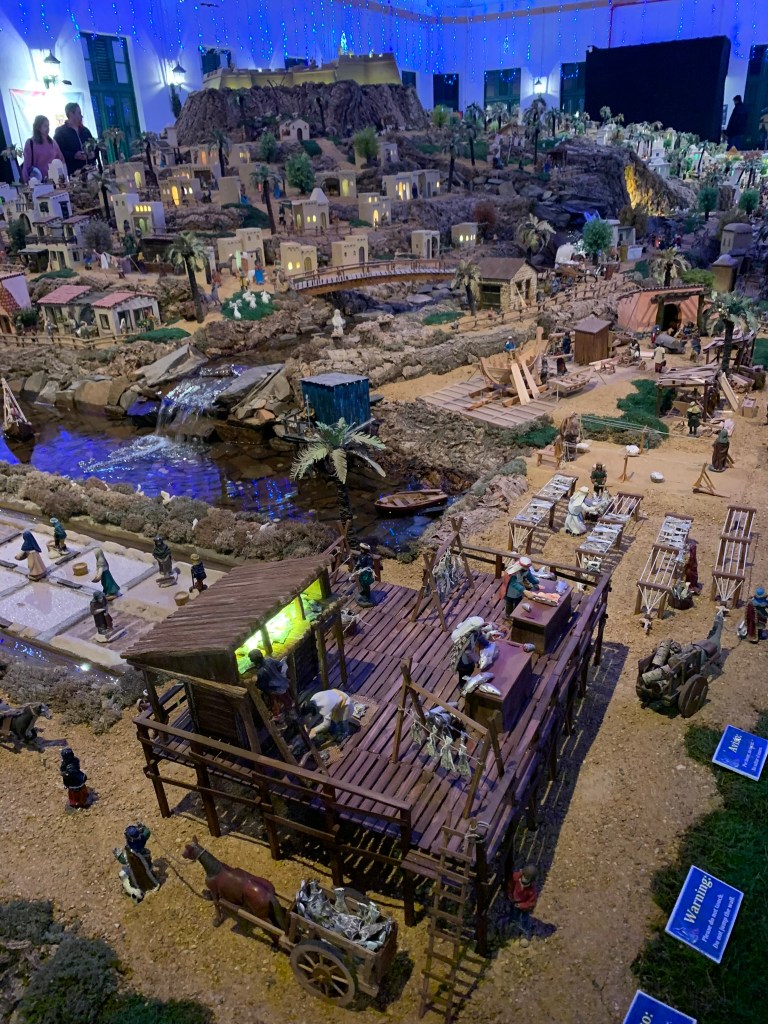
Over in VRSA, they go all out for Christmas. This is the largest recreation of a Holy Land village anywhere in Portugal, probably the world. It’s room-sized, made of sustainable materials and only cost one euro to visit. They add in some local color like the salt pans you can see in the foreground.
And the drying and salting of the cod. Always with the cod, these Portuguese. The Romans, of course, live in the castle on the hill, the bastards.
This is their creche and we’ve got to give it five stars for the LED lighting and the historically correct absence of the three wise men. Everyone else jumped the gun on the arrival of those dudes.

P.S. Just so you know that we are not just sitting around on beaches or hiking, we are actually both working on different book projects. Steve is reworking and rewriting his LP-based project from his 2022 Facebook posts, all with the help of his friend Michael Azerrad. (Btw, check out Michael’s new book, The Amplified Come as You Are: The Story of Nirvana — makes a good stocking-stuffer!) Meanwhile, across the room, Denise is working on a book project for Tinker Camp, the STEM education group that she was involved with back in Portland. There’s also another secret art/book project she has been developing as well as the ongoing work she’s always drumming up with Therese Randall, her long-time partner in brand communication projects. Coco, for her part, is preparing a memoir about her travels across Europe, to be published next year by Random Doghouse. Does anyone have any ideas for titles? 

Translates to “Block 5”
Coco with her two balls on the beach

The Algarve Blues.

Greetings from Portugal on this Restoration of Independence Day (observed). As I write this, all the stores here are closed to celebrate their independence from Spain in 1668. The two countries seem to be getting along fine now, however, as there’s lots of traffic back and forth over the nearby international bridge, especially when one country is shut down for a national holiday. I notice that the gas is about ten cents per liter cheaper (almost 40 cents per gallon) on the Spanish side, thanks to lower taxes, and I think a lot of people in this part of Portugal make the drive to save that money — also to stock up on ham and Spanish wines. It helps keep the peace. 

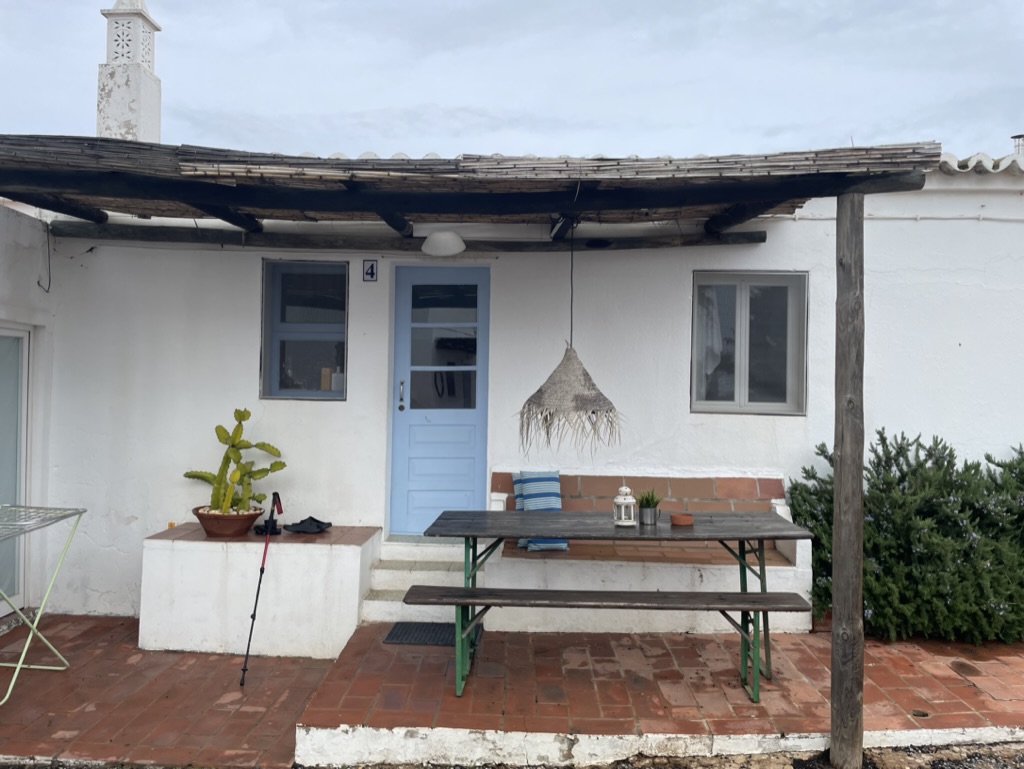
This is our front patio.
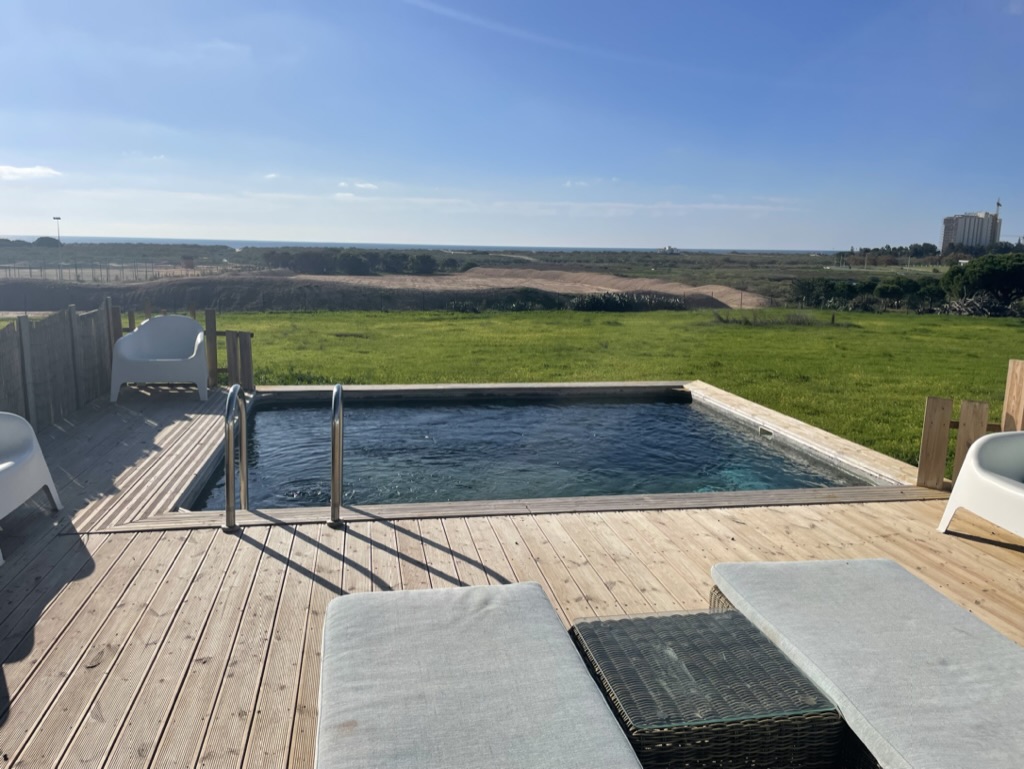
There’s even a little soaking pool on the grounds, but it’s too cold for us.

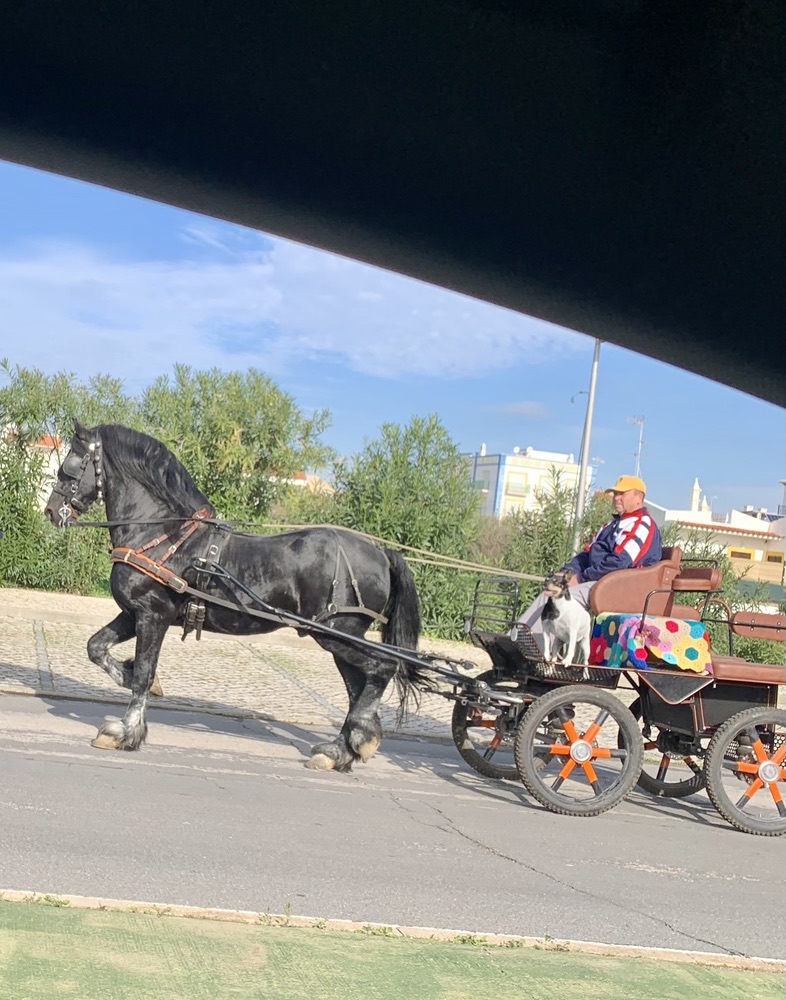
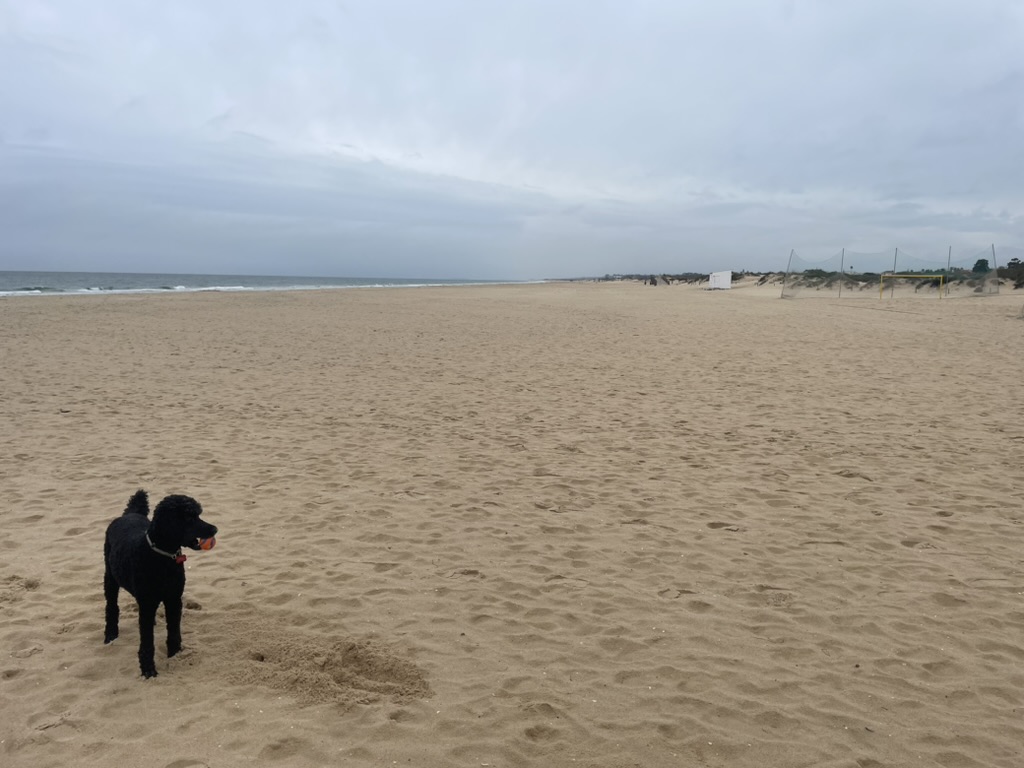
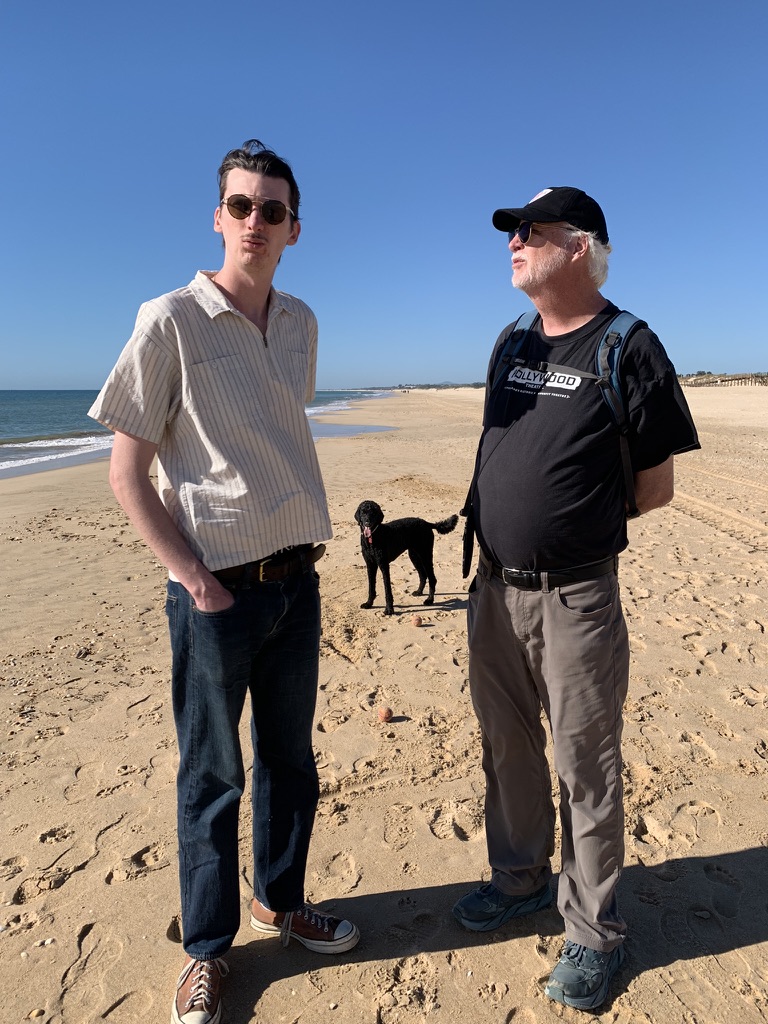
It’s a funny feeling to be living in a beach town in the offseason: almost all the businesses here in Altura are shuttered, save for the cafes serving the locals their morning espresso and/or beers. Like the Spanish — and the Italians and the French — the Portuguese can often be found with a glass in front of them at a time of day when most Americans are still finishing off their pumpkin spice lattes. Some other charming small-town scenes we’ve enjoyed include a farmer who places his horses out to pasture in various fields each morning and then gives his family horse-and-wagon rides around town in the evening and, on weekend afternoons, a bunch of South Asian guys who get together in the soccer field near our house to play a lively game of cricket. The best part of being here is, of course, the nearly-empty beaches, and we spend a lot of time walking in the sand. The holiday brings out some people but, on most days, we can count the number of fellow beachgoers on both hands. 

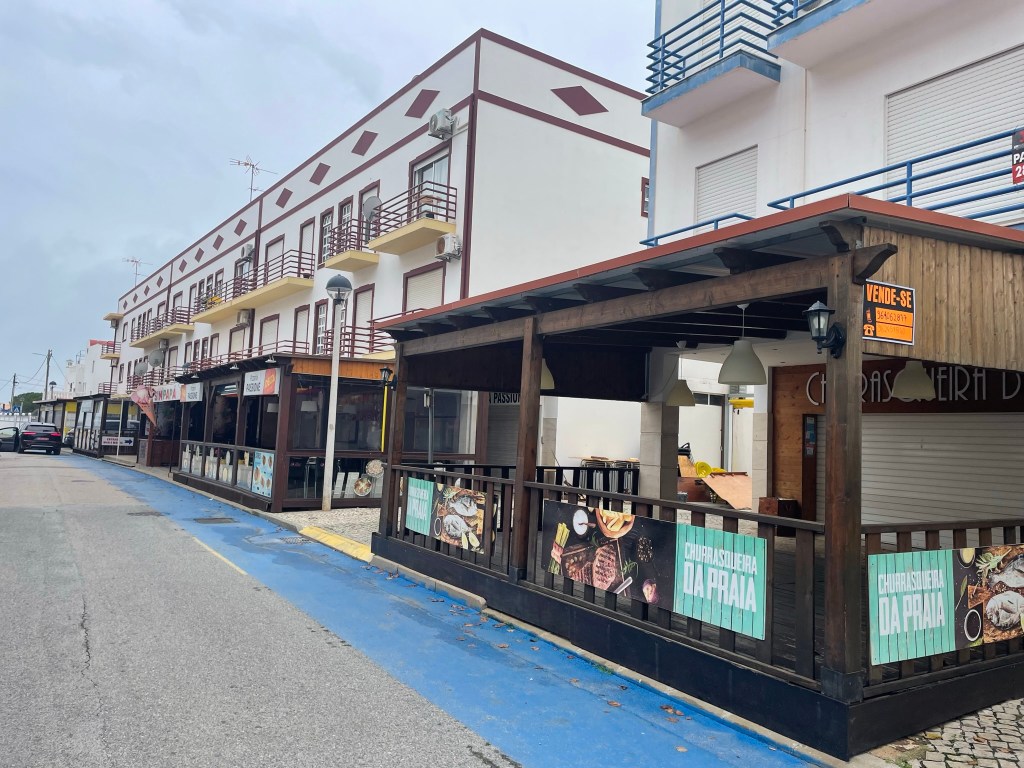
The street leading to the beach is pretty empty. In fact, you can buy the chicken restaurant! Make an offer!
One of our local horses, apparently owned by a local Roma family
Doggie buggy rides.
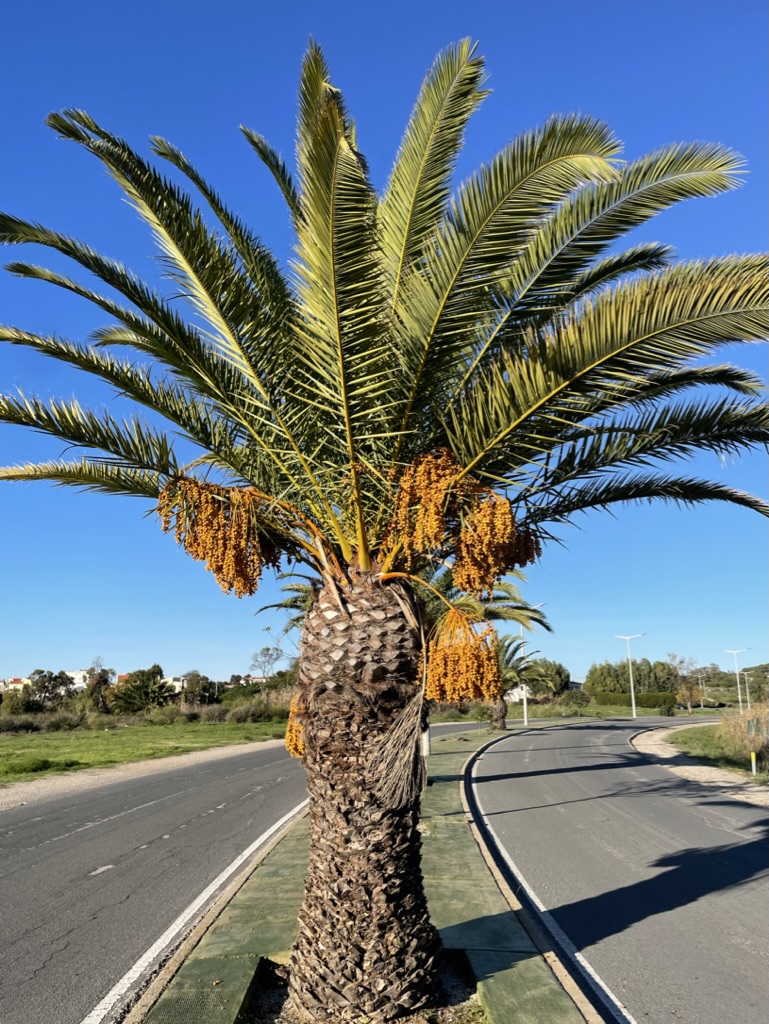
One of the palm trees that line Avenida 24 de Juhno
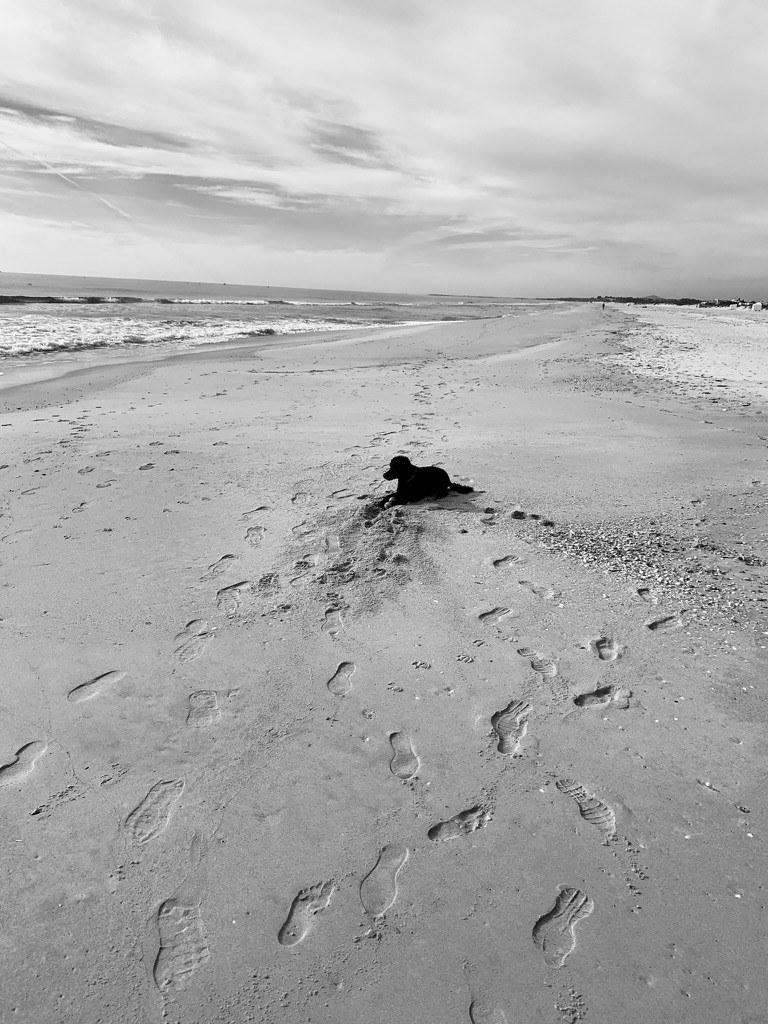
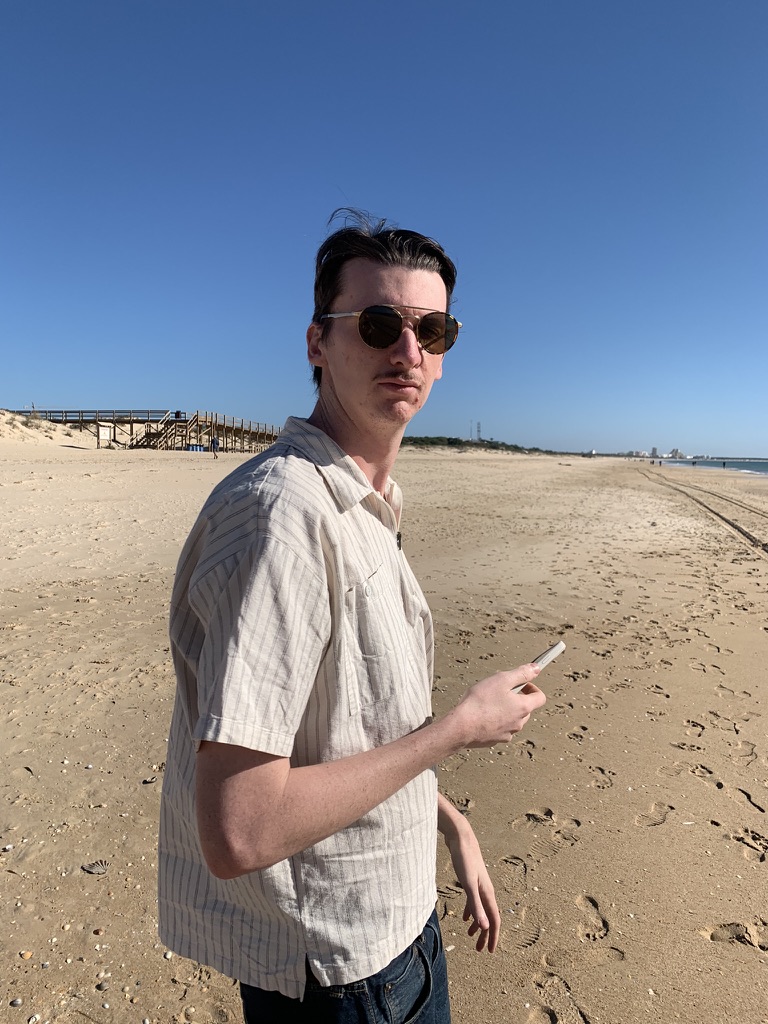
Coco has the beach to herself.
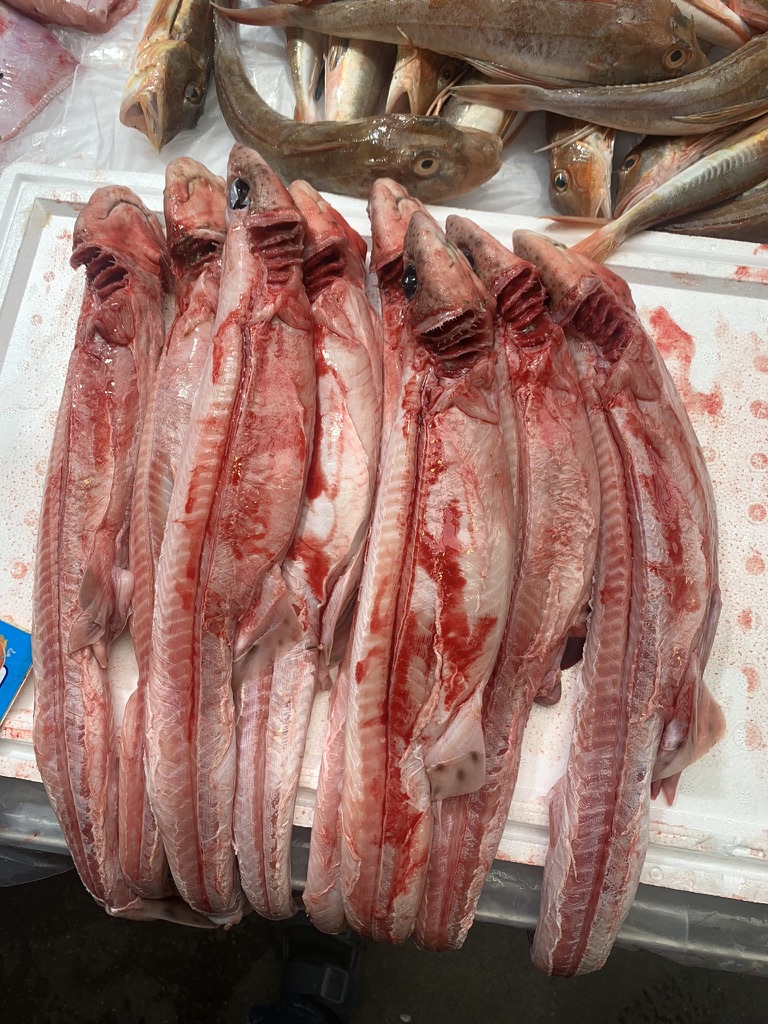
The local mercado
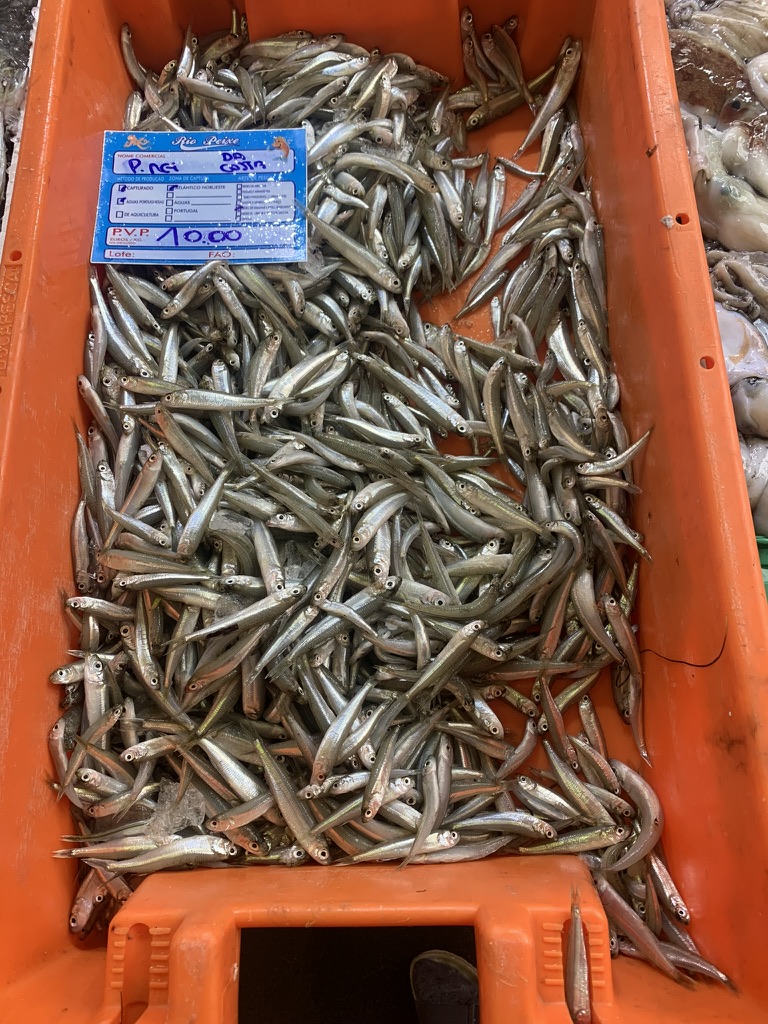
These are either sardines or anchovies. We are not the people to ask.

Most of the tourists have gone back up north to Lisbon and Porto or returned to England and Germany. Our compound is currently populated by two telecommuting single ladies, one from Hamburg and one from France; an elderly couple from the north of Germany who ride their bikes everywhere; John, the only other American; and a newly arrived Austrian couple with a couple of dogs of their own. We’ve also made friends with Olaf and Lorraine, a German-South African couple we met on the beach who now live full-time in Ayamonte, the first town over the bridge in Spain. All of this Teutonic influence makes it easy for me to practice my faded high school German and the people are very patient with me. 

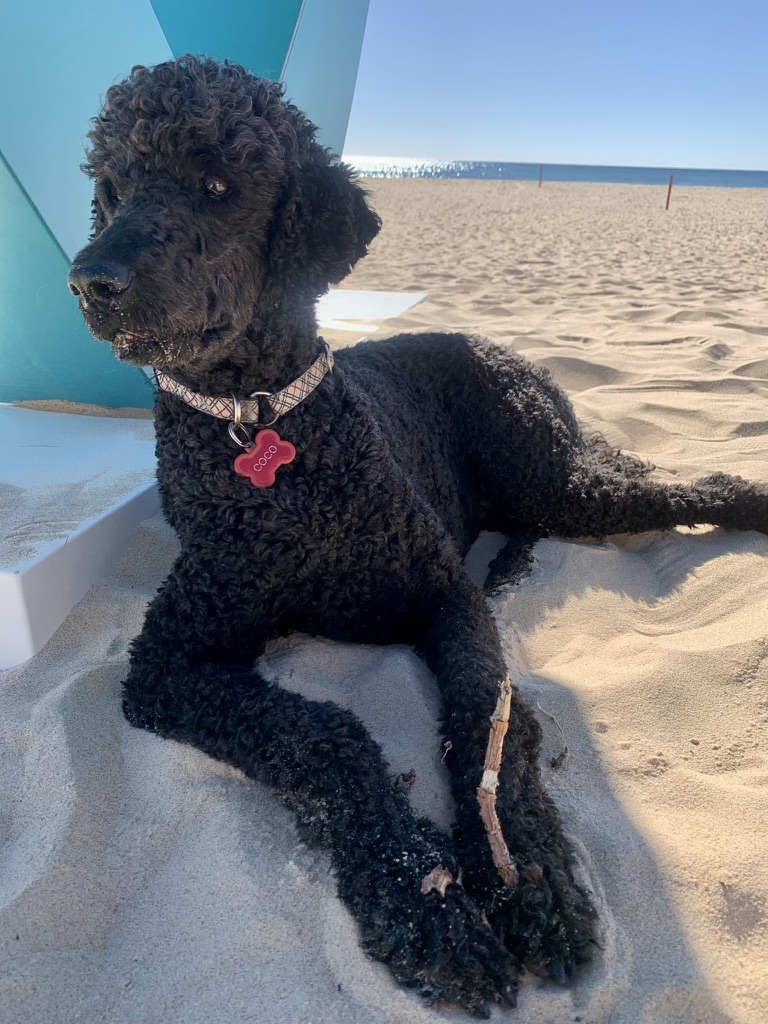
Coco’s heritage is German: she’s a Puddel, a water dog, but mostly she likes to lie on the sand.

After Reilly went back to Portland, we both felt a bit blue: he’s such a fun kid to hang out with and we miss him and his brother quite a bit. I anticipated such feelings, especially around our first winter holidays away from home, but I was surprised by how much the thought of our boys tugged at my heart. To help shake our ennui, we took a road trip up to the rural area north of our town, an area filled with dams, reservoirs, and hiking trails. None of the trails panned out for a hike so we just pulled into the charming small town of Odeleite and had a picnic lunch in the village square. The countryside is hilly and the vegetation is mostly desert scrub brush, but there are lots of attractive long-distance views of the Atlantic Ocean, about 14 miles south. Later, we stopped at an RV park located high on a hill, overlooking both the ocean and the Guadiana river, and marveled at the range of camping vehicles, from simple VW vans to enormous land yachts with their own solar power units. We sipped our espressos at the café and discussed whether that was the lifestyle for us. No, it wasn’t, we decided and got back in the car.

No matter how small the town, there’s always A.F.C. , Odeleite edition.
Odeleite relies on the system of reservoirs and dams that supply the local agriculture. Lots of oranges and olives.
You really have to keep your wits about you on the mean streets of Odeleite.
No gym memberships required.
There’s towns like this every few miles in the north of the Algarve but it’s mostly agriculture and scrubland.

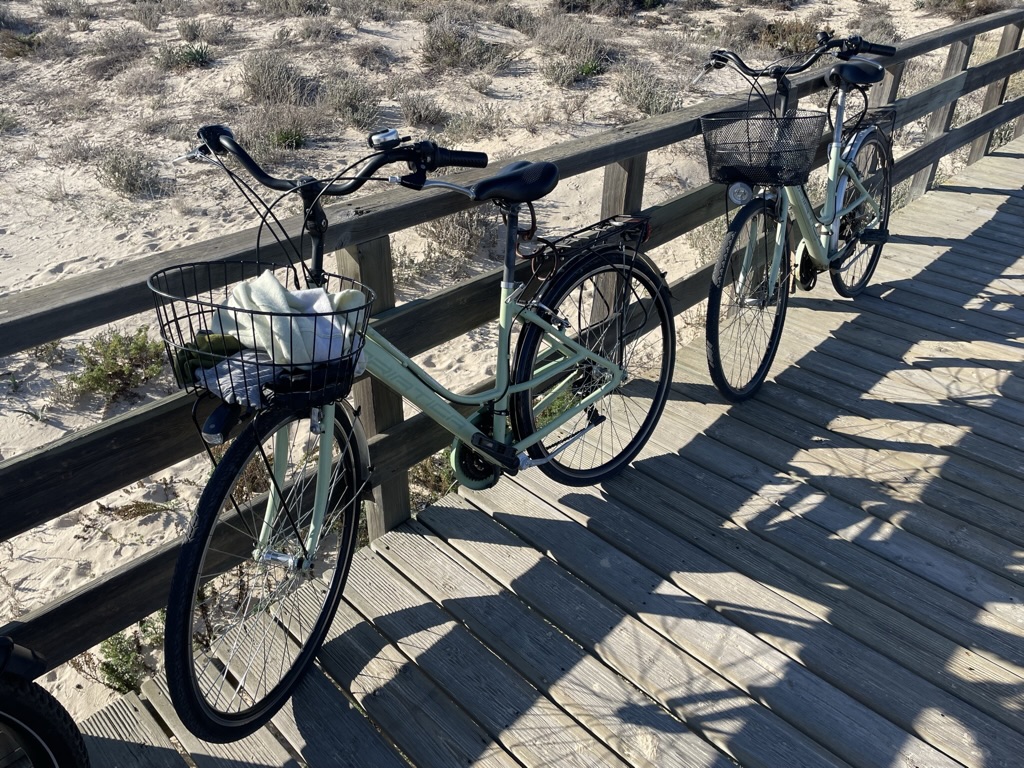
The weather has turned a little colder and wetter, a marked change from the warm and sunny days of our first few weeks here. However, it mostly rains at night, so we can still enjoy our walks on the beach. We decided to rent some bikes and so Pilar, our hostess, put us in touch with her rental connection, Angela, who set us up with two of the most poorly maintained bikes you could imagine but at such a low price that made it seem silly to complain. The ramshackle bikes allowed us to explore the furthest reaches of the boardwalk and the towns to the west, while never going fast enough to cause worry about their spongy, almost-nonexistent brakes. Of course, Coco had to stay home since the sight of us riding bikes drives her a little batty for some reason. 

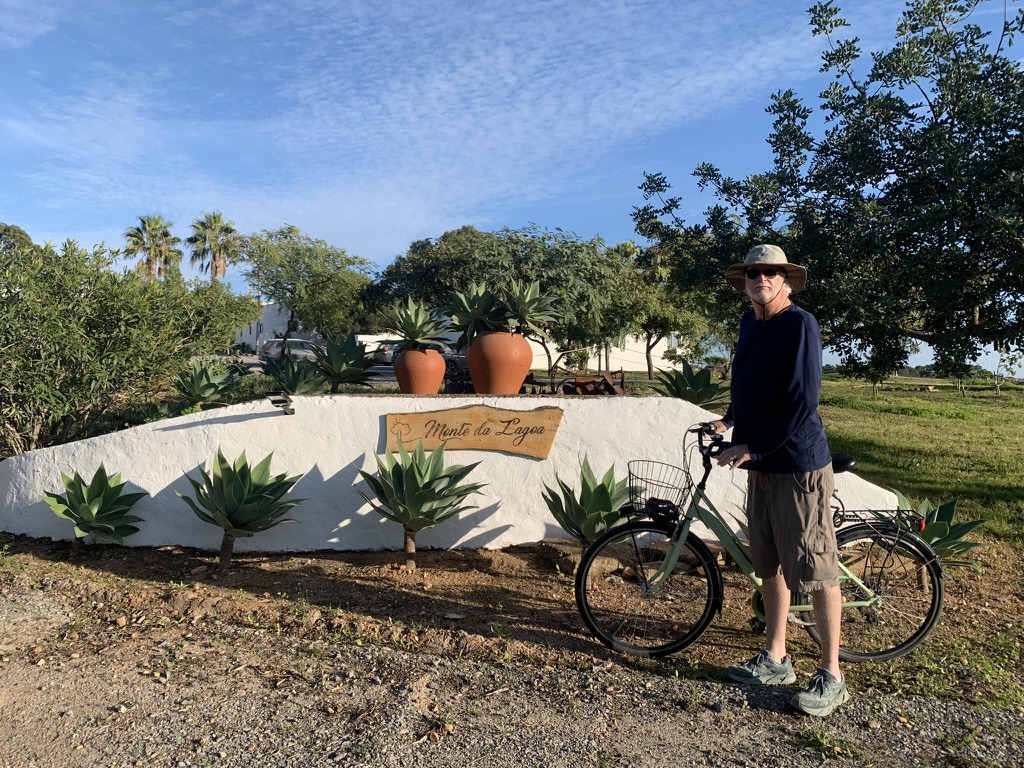
Our bikes. Apparently, brakes cost extra.
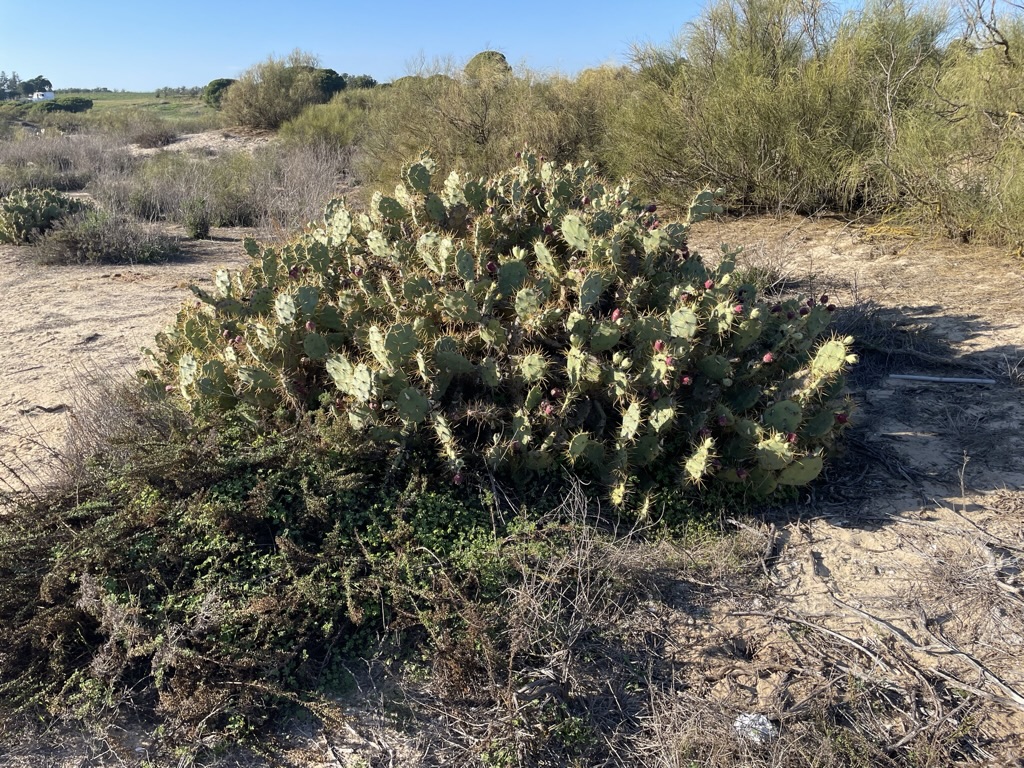
The landscape is peppered with these types of cacti.
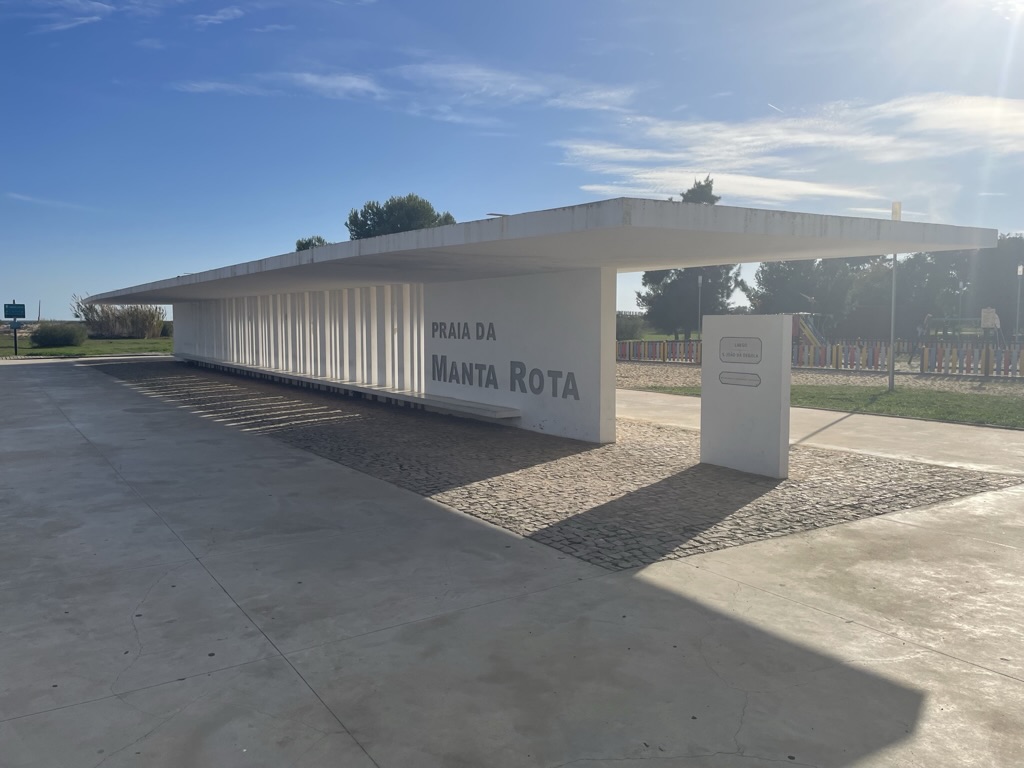
And the beach is peppered with these shacks, closed for the winter, which appear to be lifeguard stations or maybe snack shacks. The jury is out.
The entrance to our compound.
The plaza at the next town over.
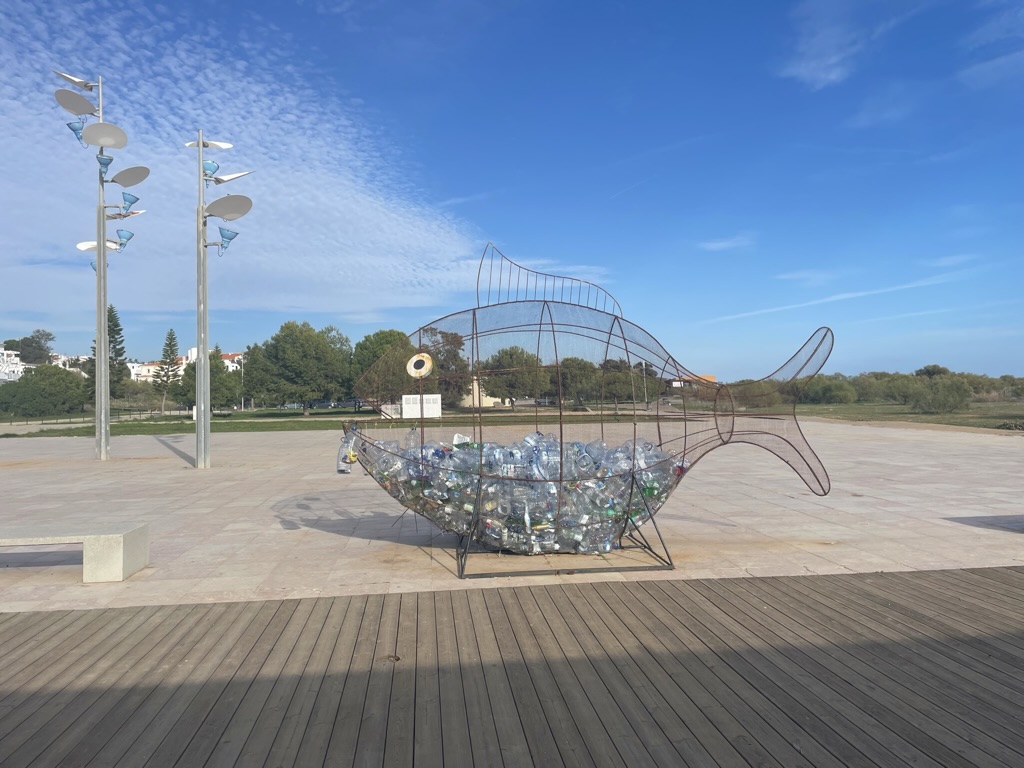
All the beaches have these plastic-eating fish to feed.
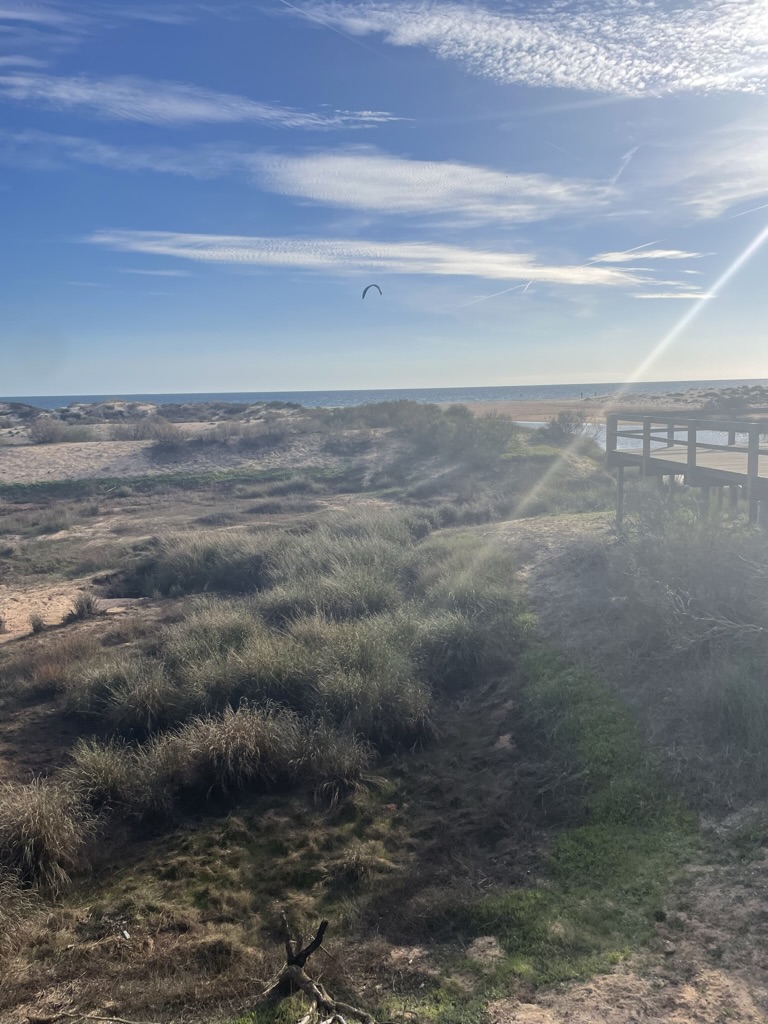
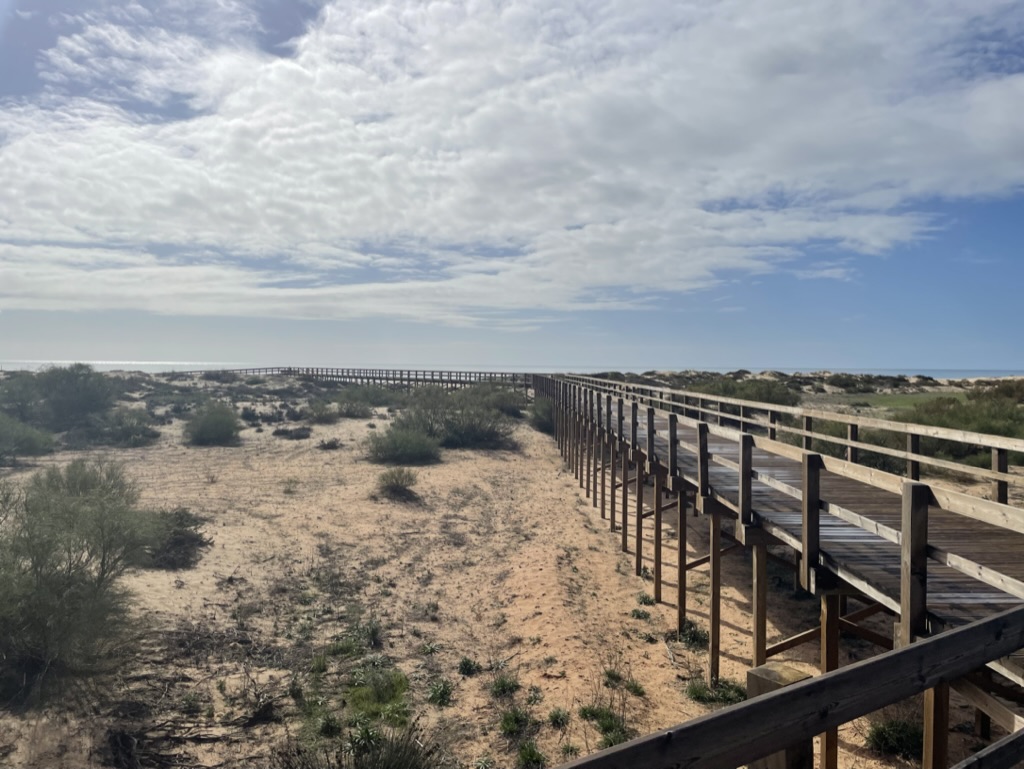
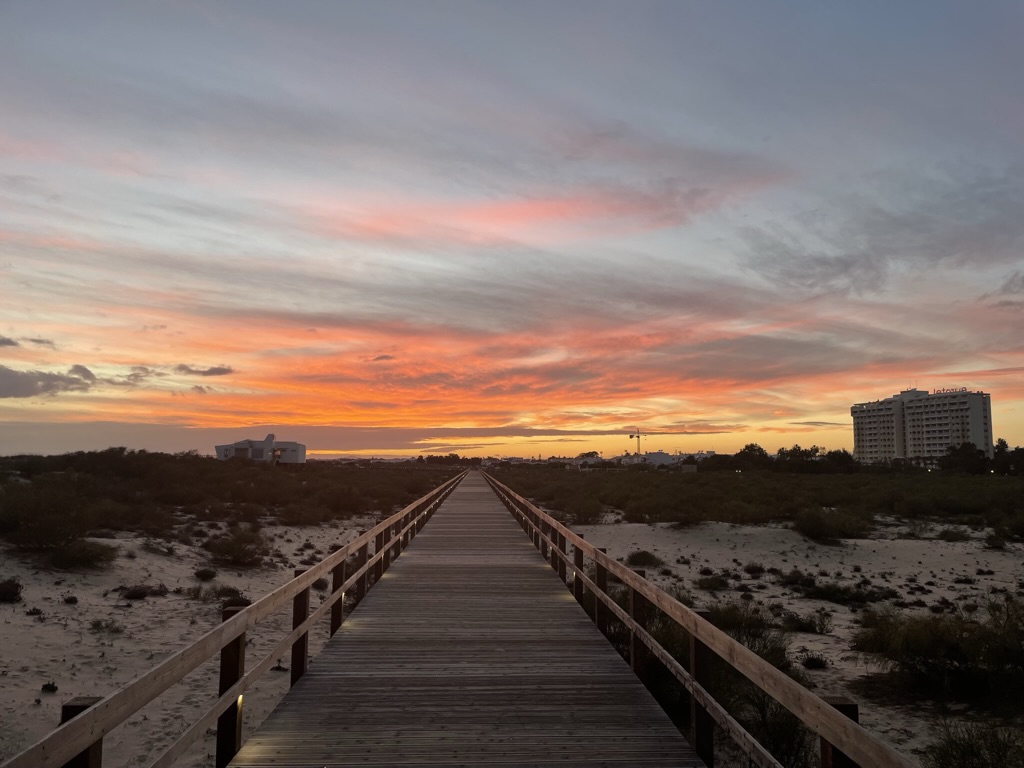
The boardwalk, the dunes, the river, and a kite in the distance.

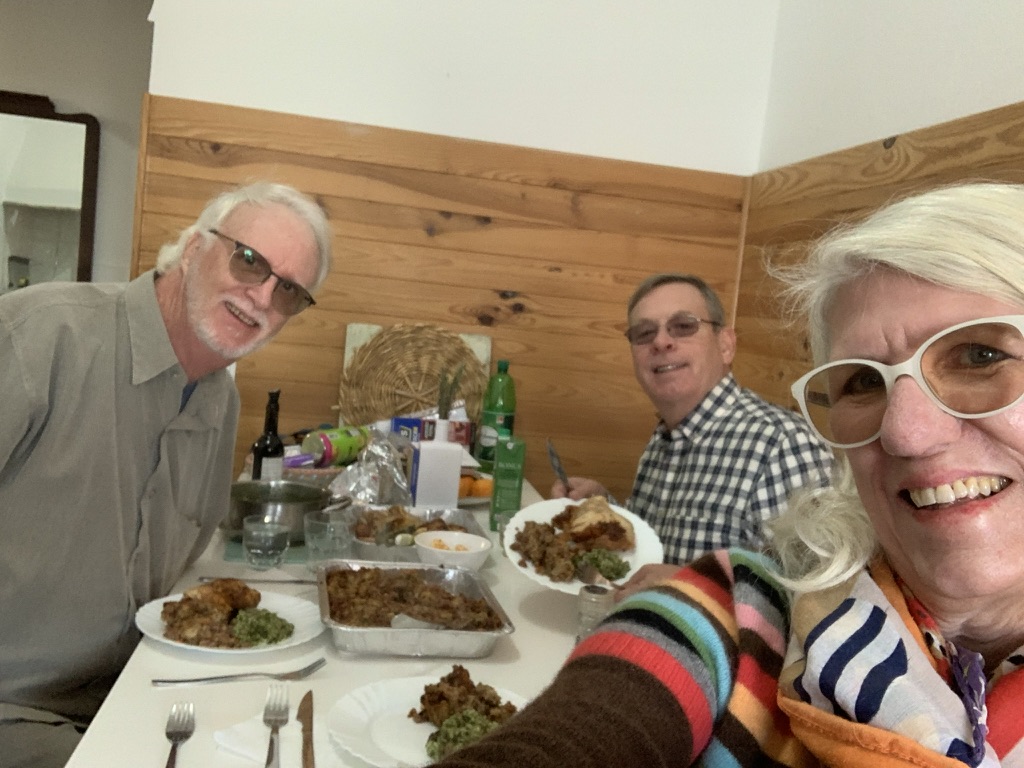
Shortly before Thanksgiving — or, as it’s known in Portugal, just another Thursday in November — we became friendly with John, the other American in our complex, and we made plans to celebrate together. John has been traveling for many years, most frequently in Brazil, and has even written articles for International Living, the magazine that helped inspire our current adventure. He teaches English as a second language online and he took some time to show Denise how she and I could do the same. Afterwards, we had an early dinner on the special day, featuring store-bought barbecued chicken, Denise’s famous stuffing, green beans, and a rice-and-beans dish from John’s native Louisiana. Neither of our kitchens were equipped to bake any pies so we made do with some dark chocolate for dessert. We finished the holiday with a lively zoom call with Denise’s extended family, most of them back in California. 

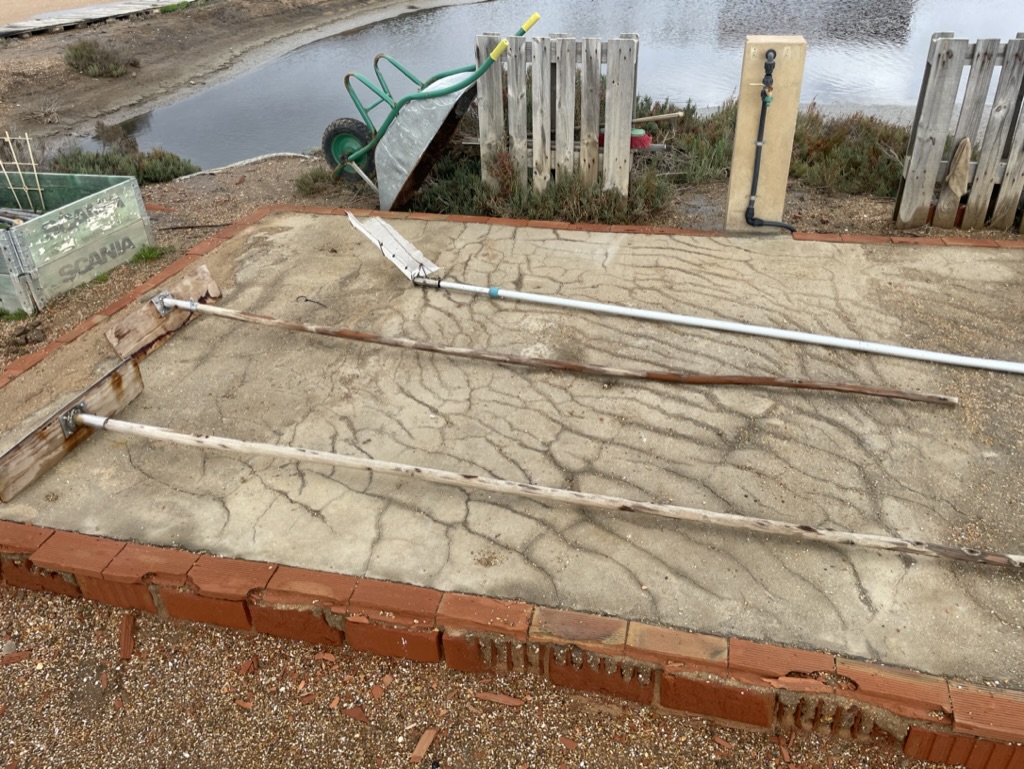
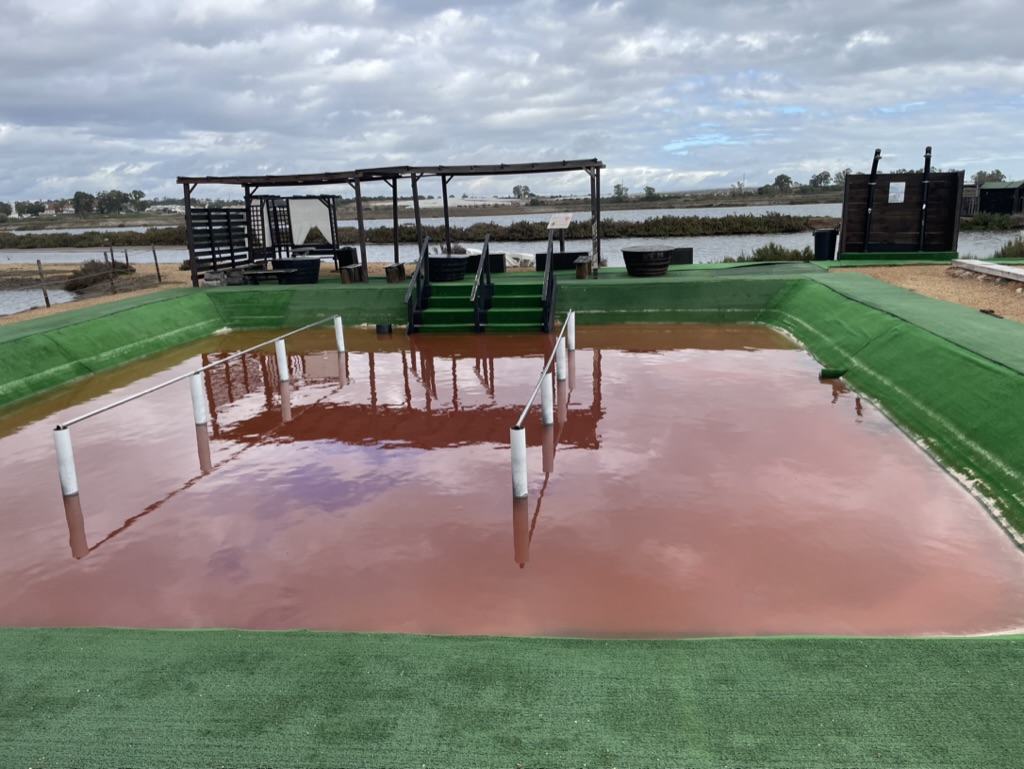
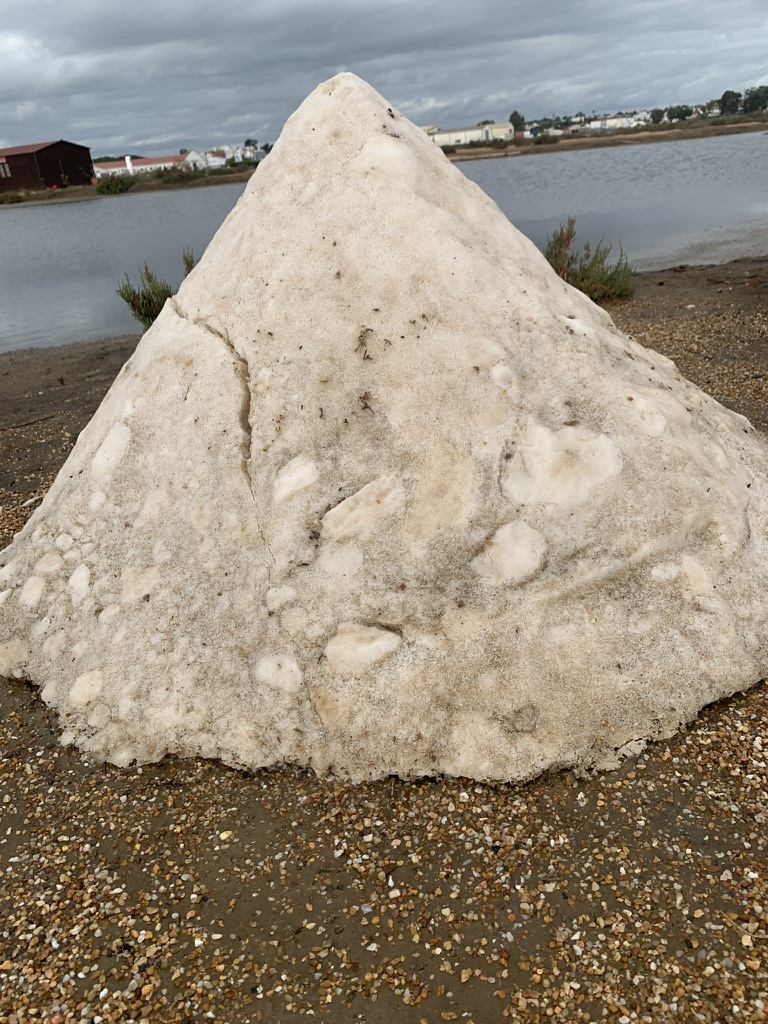
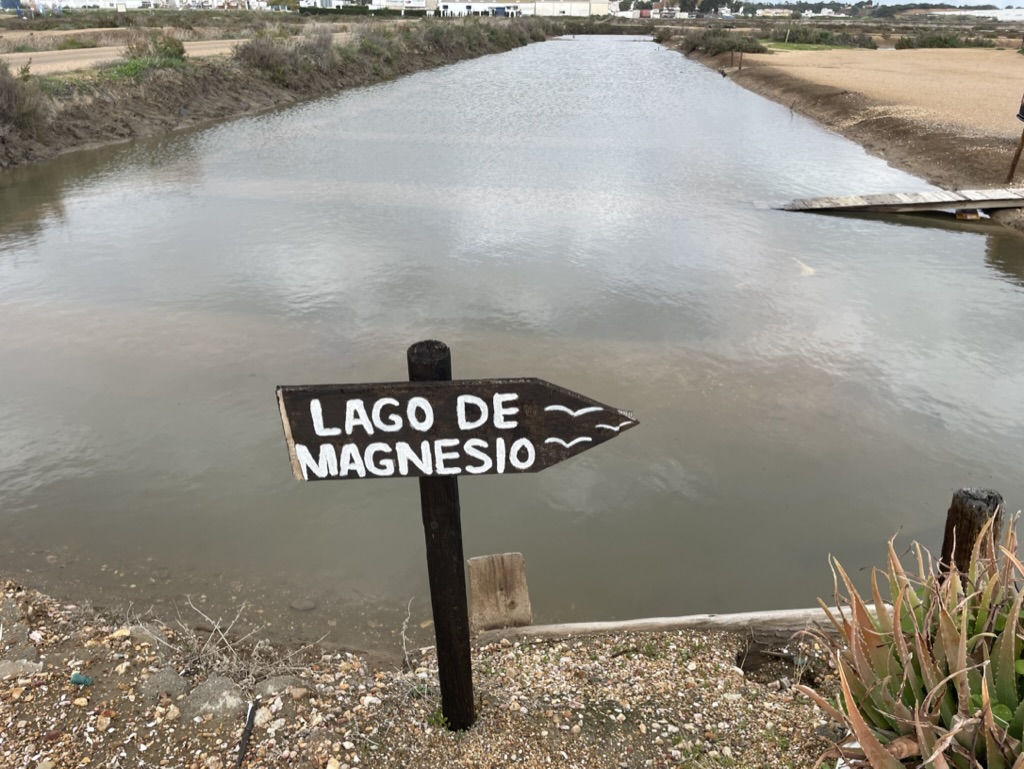
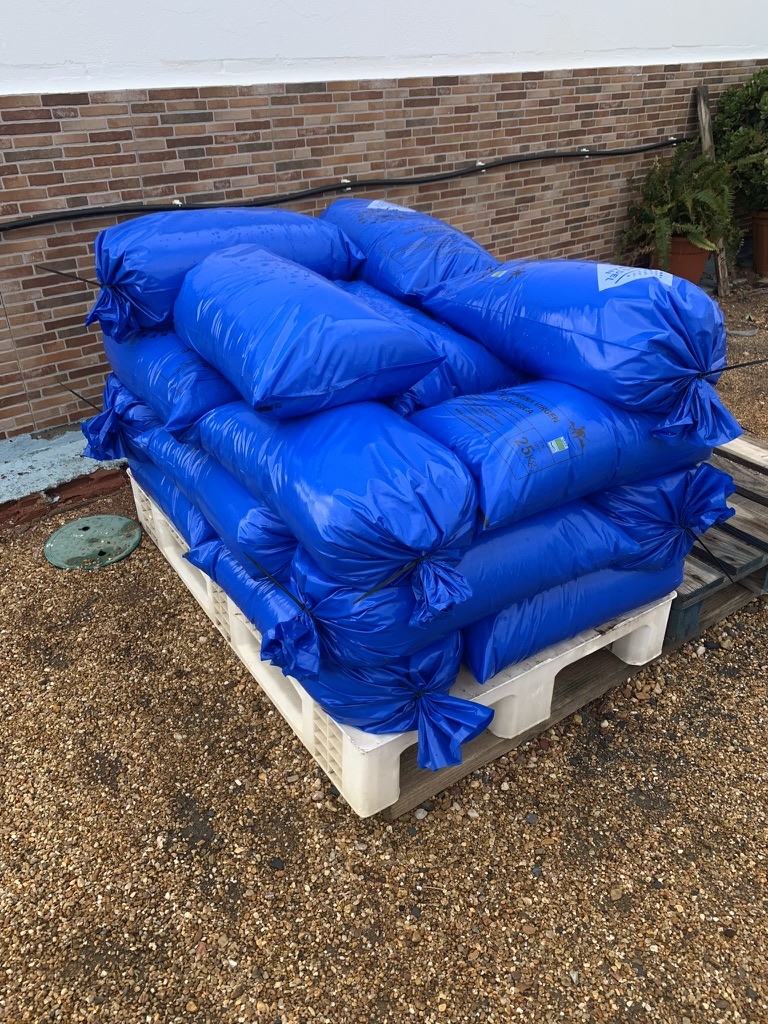
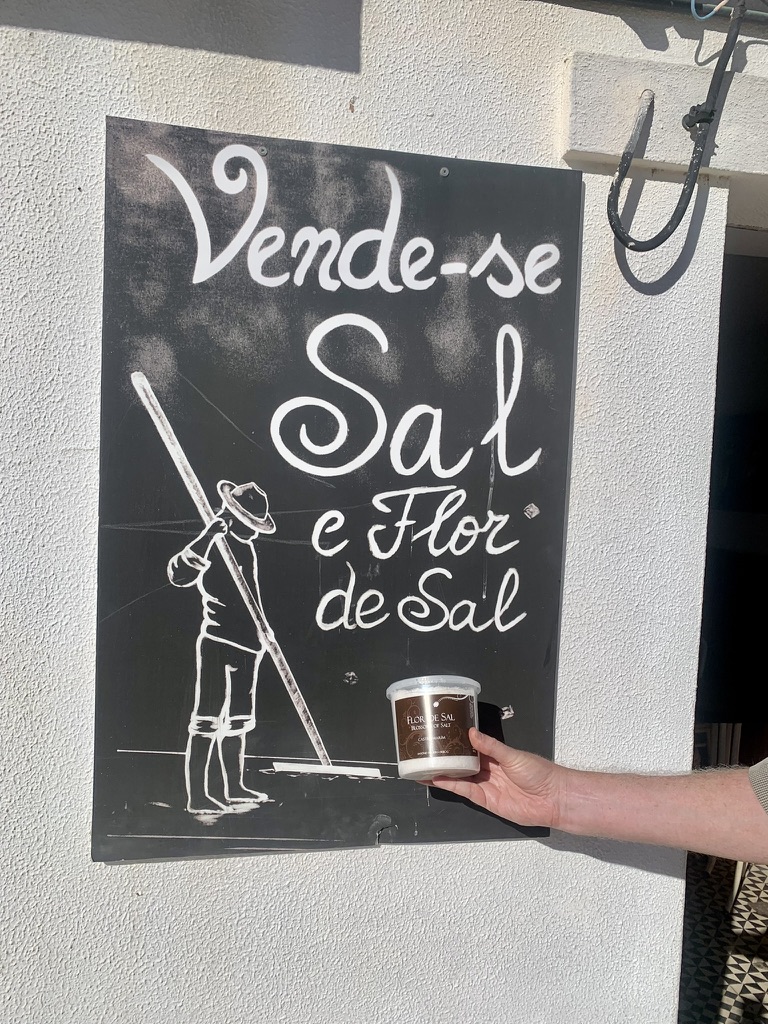
We made a rainy day trip out to Isla Cristina to visit the Salinas del Aleman salt mines and mud baths, although salt production and the baths were shut down for the season. There’s a lot of salt harvested all over the Guadiana River delta, but we hadn’t seen the likes of these mud baths. Apparently, tourists come during the summer to slather themselves with the mineral-rich muck, and the on-site literature claims significant health benefits from its application. Of course, we are born suckers so we bought a small spray bottle of the magnesium salts, which promised us long life and good health similar to the mud baths, sans the need to hose off later. 

The tools of the salt miner.
Mud baths. Not quite as scenic as the Blue Lagoon in Reykjavik.
Dirty snow or leftover salt?
Beachfront properties going fast.
The product, ready to be used to make salt cod.
Very intense salt.

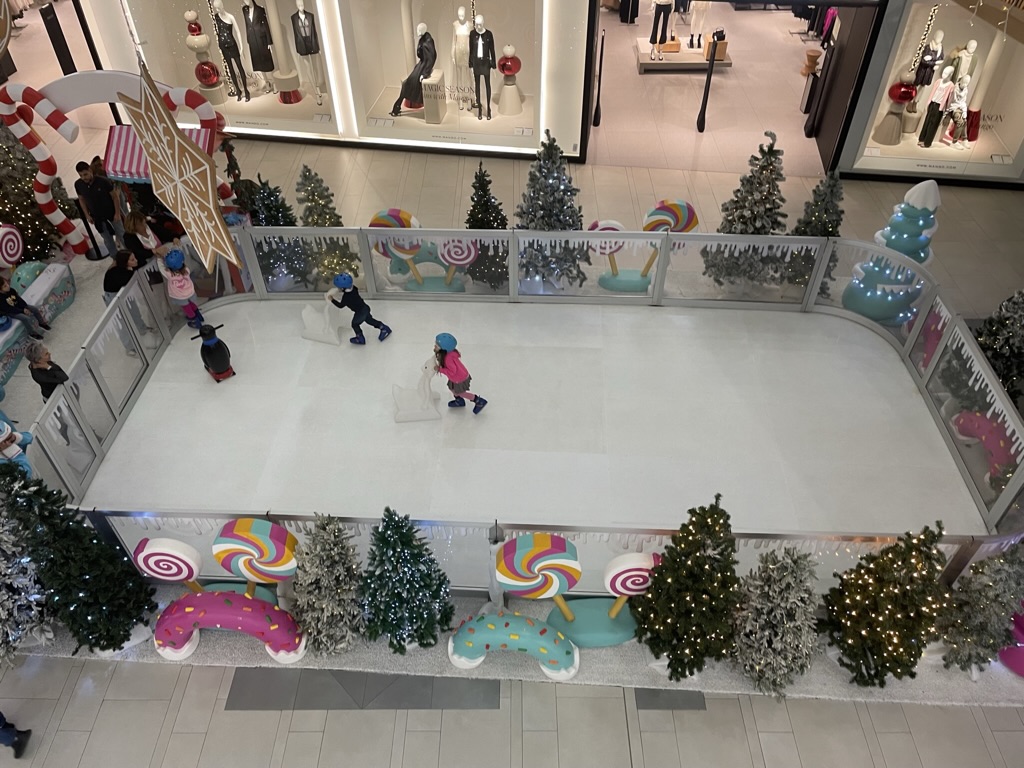
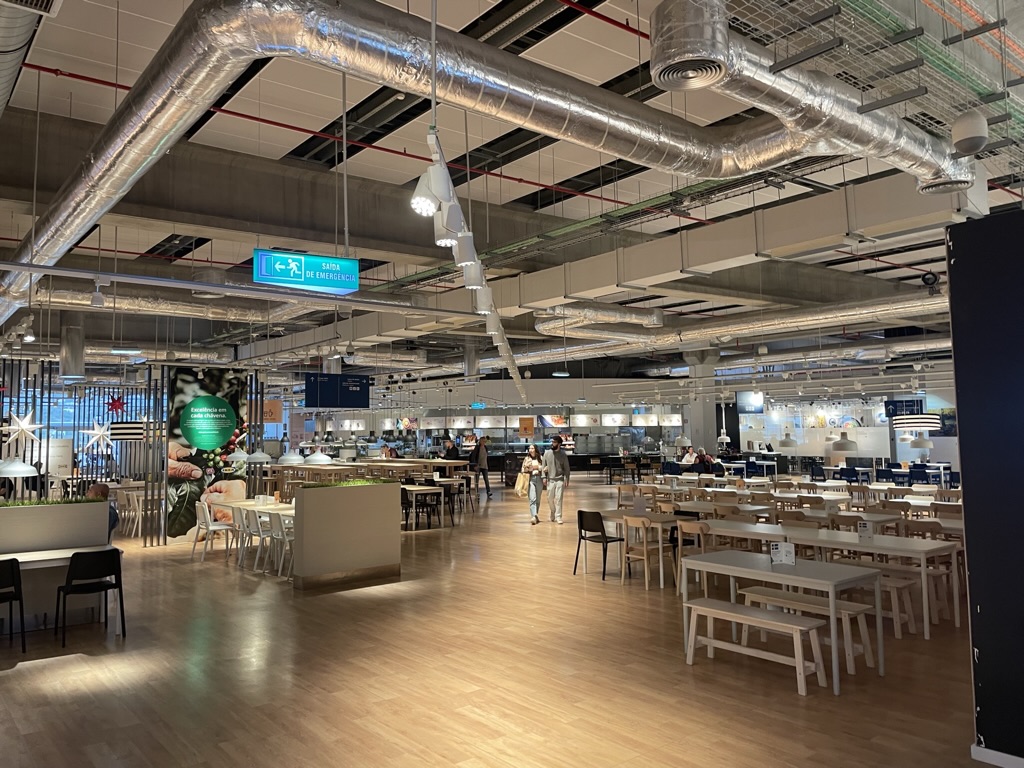
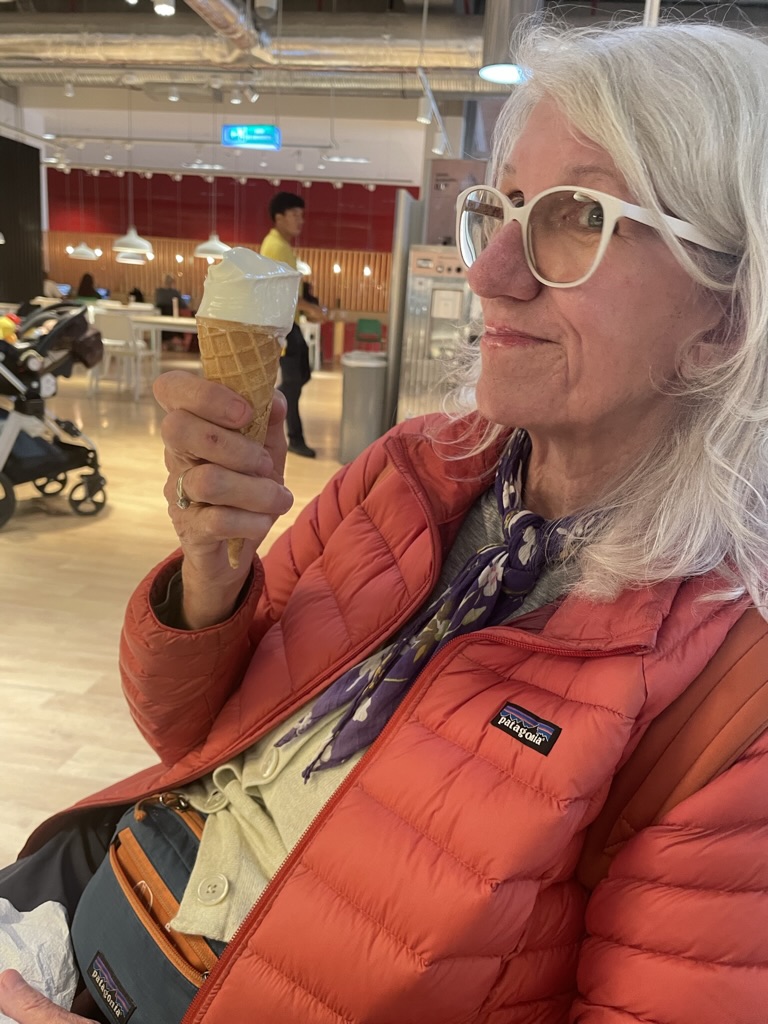
One really rainy day, we headed to the nearby city of Loulé to take care of some small-but-lingering shopping needs at their large indoor mall. The Christmas promotions were in full swing and kids could see Santa Claus or skate on a small, simulated ice rink while the parents took advantage of the Black Friday sales — apparently a thing here, despite the absence of the Thanksgiving holiday. The mall is anchored by an Ikea store, and their restaurant is sprawling and shiny, featuring some local favorites along with the traditional Swedish meatballs with lingonberry jam. We each had an ice cream cone that set us back one euro and sixty.  We’ve decided not to let expenses like that get in our way of enjoying life.

HODL.
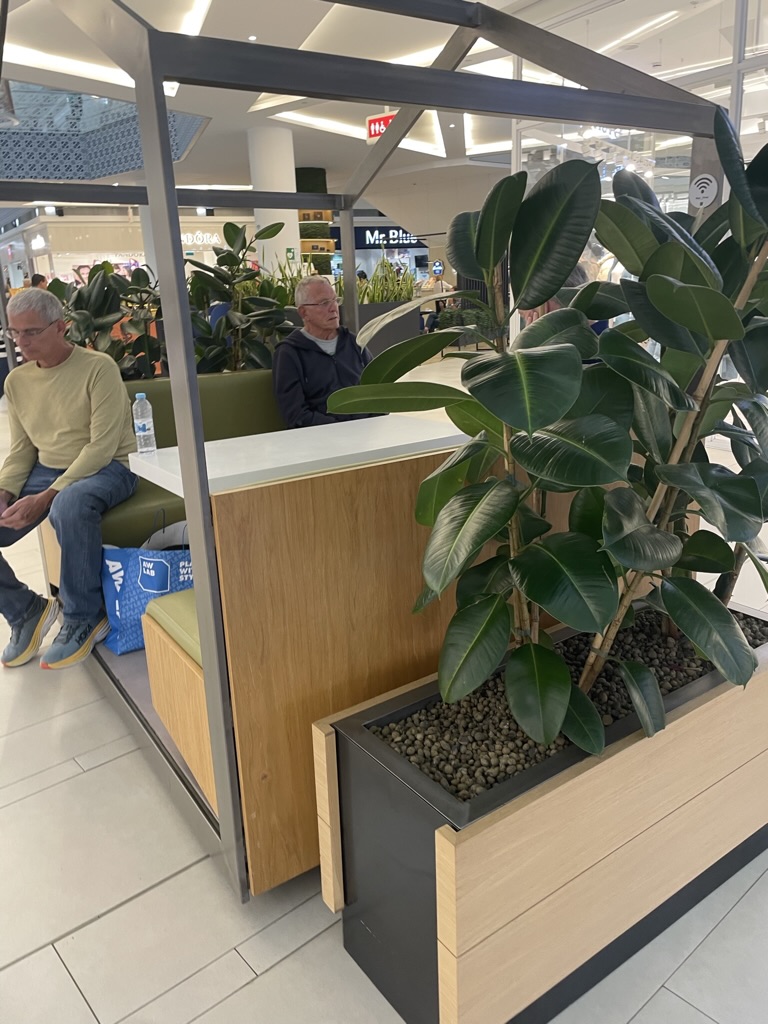
This is where the husbands are kept at the mall while the wives shop.
The fake rink. I”m guessing that ice skating is not a popular sport on the Algarve.
The gleaming cafeteria at IKEA.
Denise enjoying her cone
Unfamiliar brands keep things interesting. They do have many US stores like Chico’s.

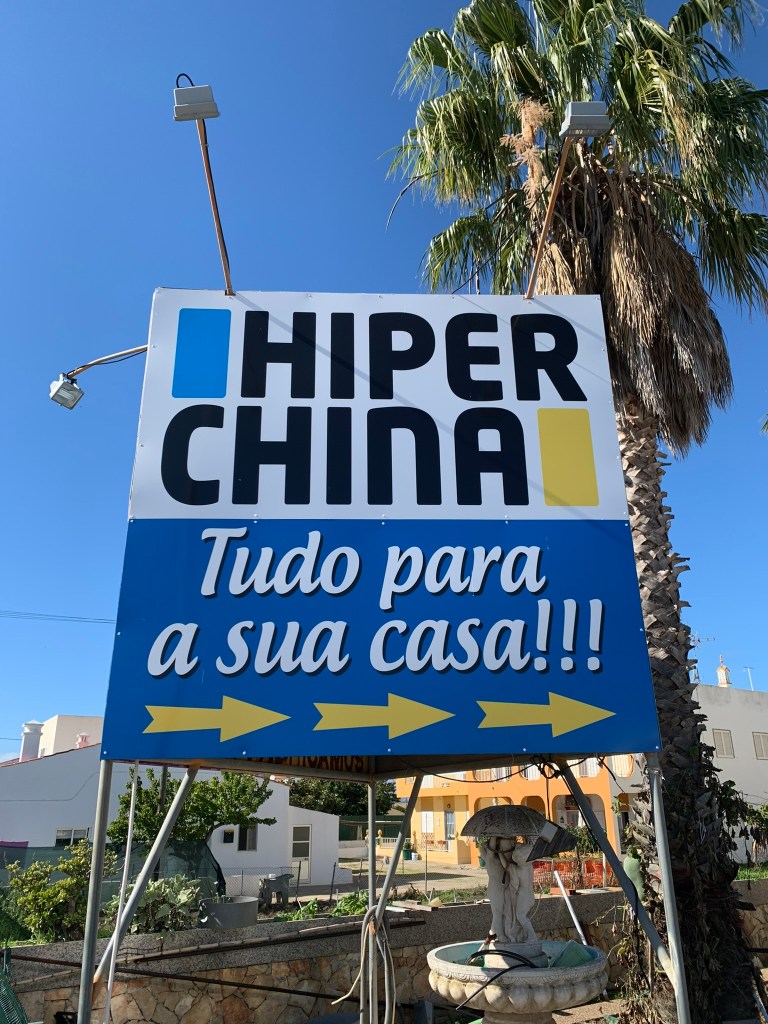
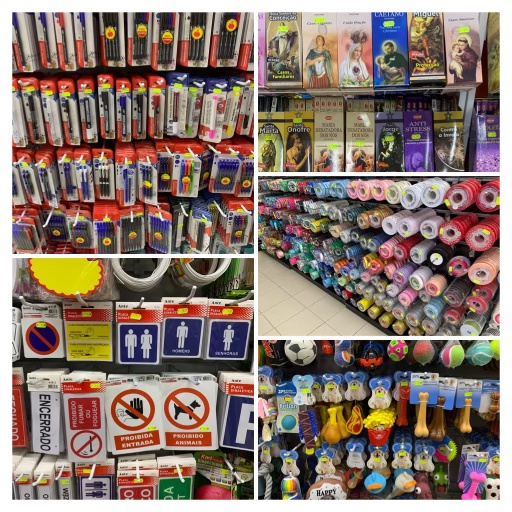
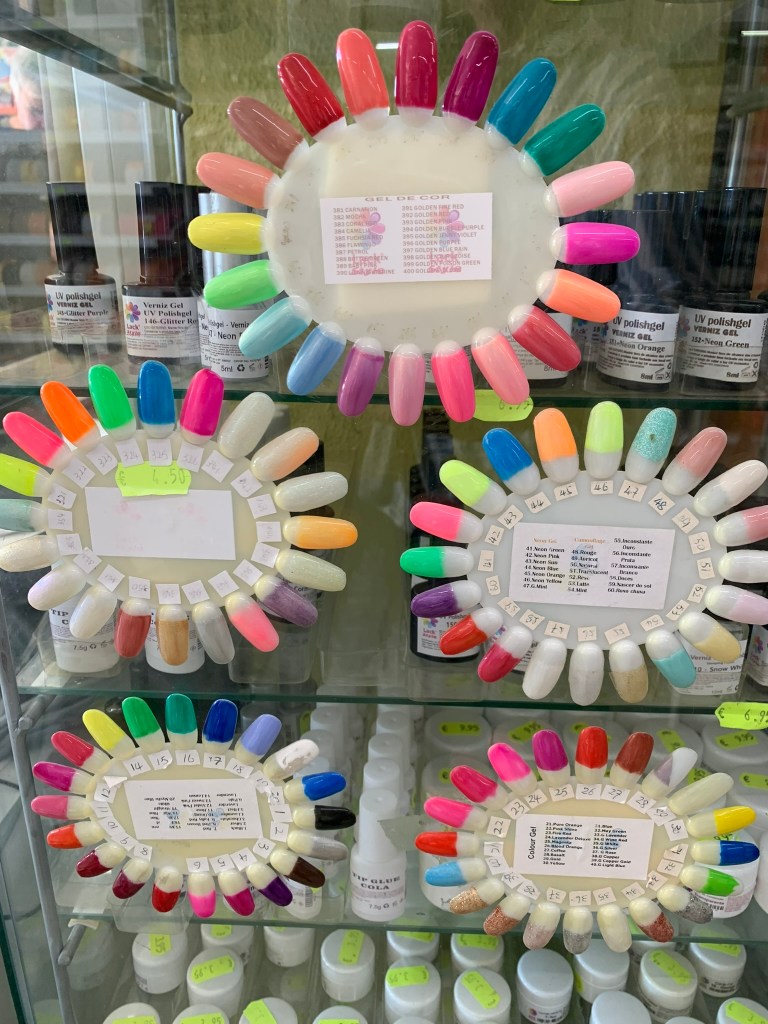
Hanging around a shopping mall is not nearly as fun as popping into one of the Hiper China stores that can be found in most of the smaller towns. They have virtually anything you can think of for sale, in multiples, and it’s all made in — you guessed it — China!  Denise likes getting lost in the vast depths of the store only to emerge later with a fistful of random off-brand stuff that we simply have to have. They are generally run by what appears to be extended Asian families and can be real life-savers when you need something cheap. Our last haul included a measuring cup, a potato peeler, and some off-brand Post-It notes. We’ve seen this type of store occasionally in France and Spain but they seem to be a big part of the economy here in southern Portugal. 

Hiper Collage
Not sure what they are but, for one euro fifty, who really cares?
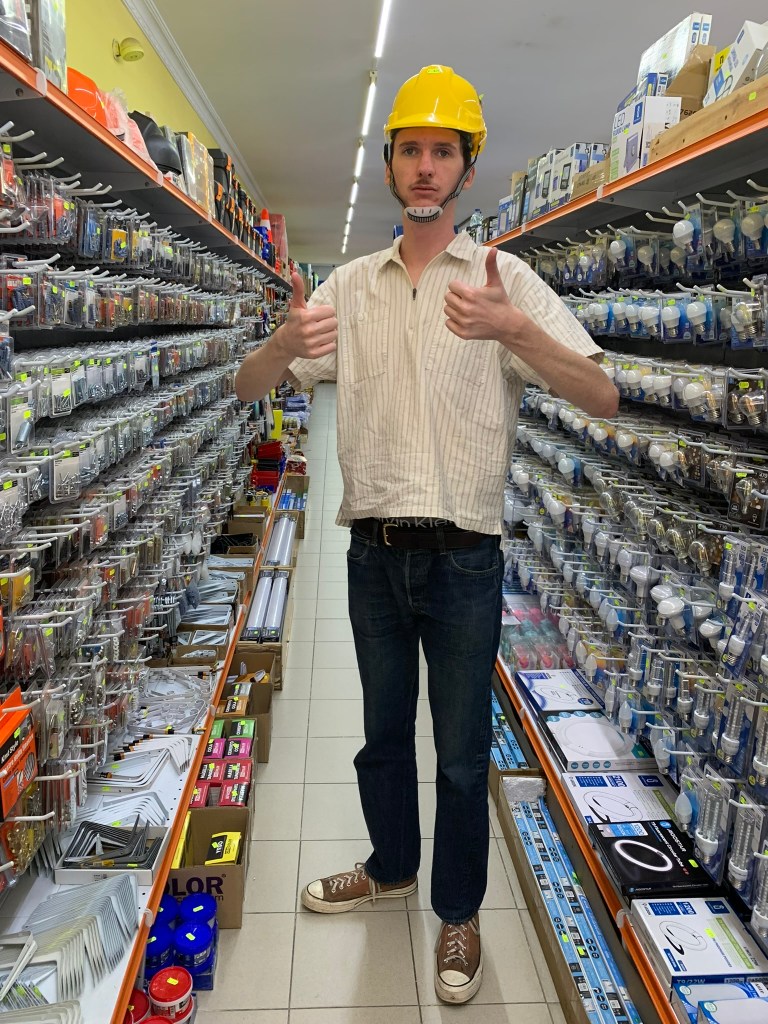
Reilly enjoyed shopping for safety equipment at Hiper China when he was here.
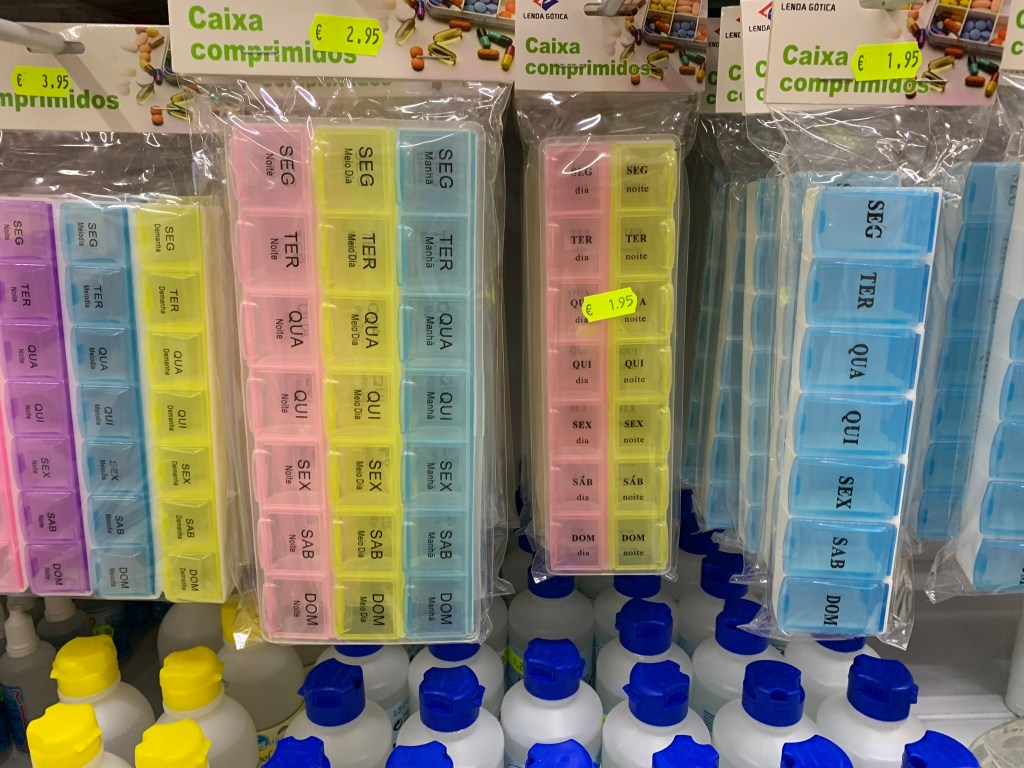
Pill organizers: a big seller in this part of Portugal.

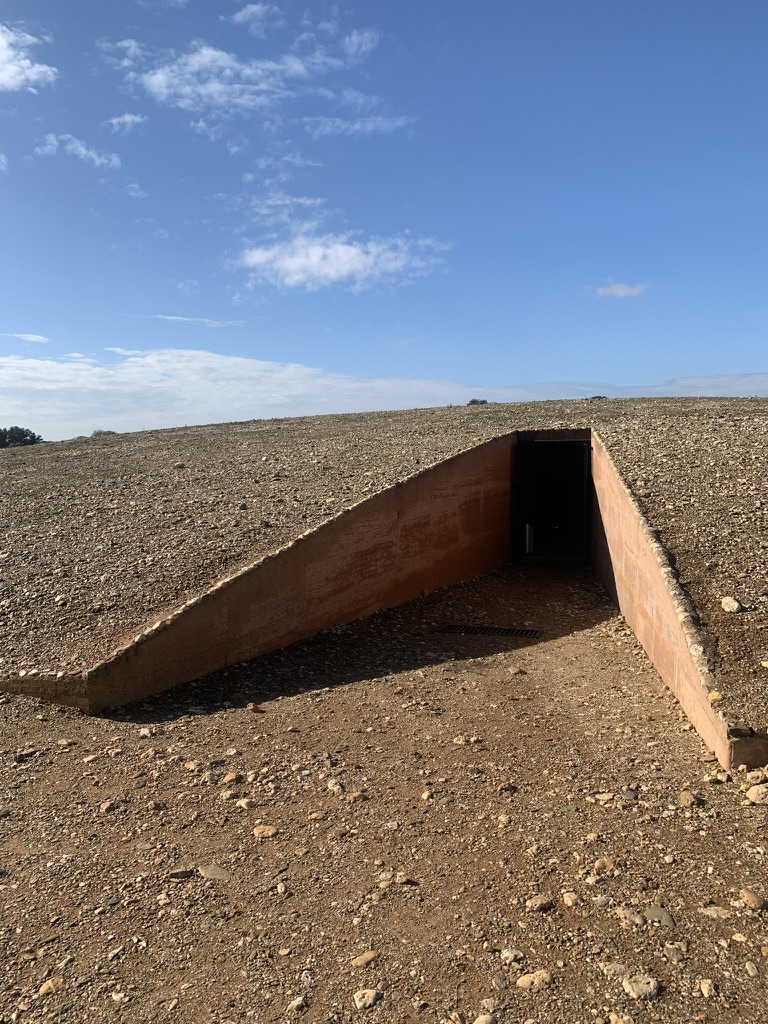
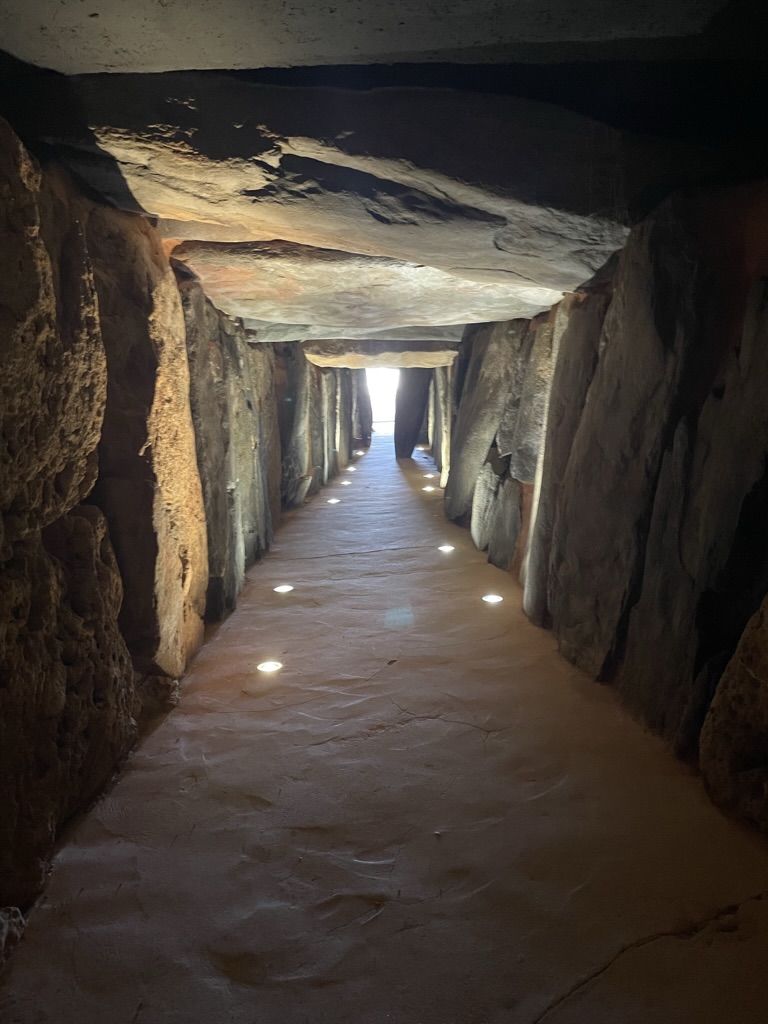
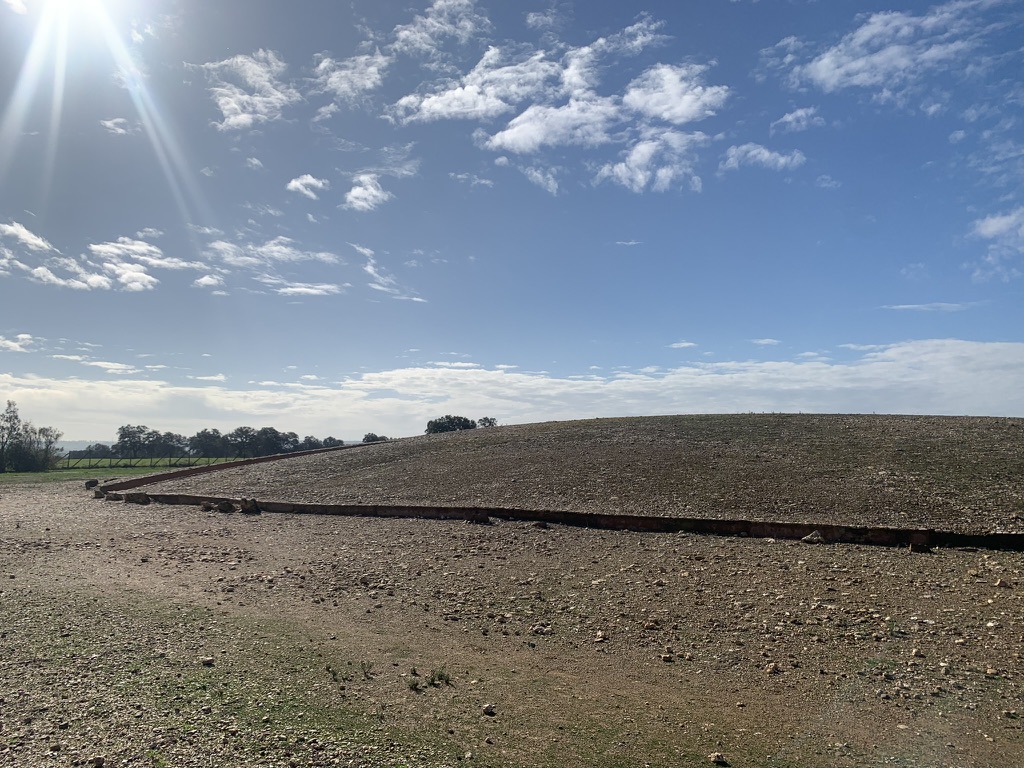
On Saturday, we took a drive over to Spain to see the Dolmen de Soto, a Neolithic site near Huelva, and received a guided tour of the chamber, which is believed to be 5,000 years old, give or take, and was only uncovered in 1923 by a farmer excavating to build a new house. The site is on a dirt road in the middle of groves of olive trees, on the outskirts of the small town of Trigueros, a very modest setting for such an important discovery. These primitive peoples had a very good understanding of the stars and the cycles of the sun, which figures since we all know that the aliens were here to educate them and give them joy rides in their spaceships. The guide didn’t speak English so I didn’t bother to ask where they buried the bodies of the space visitors but I gave him some meaningful glances so he knew that we knew. 

The unassuming entrance to the site.
The entrance to the spaceship. I mean, the burial chamber
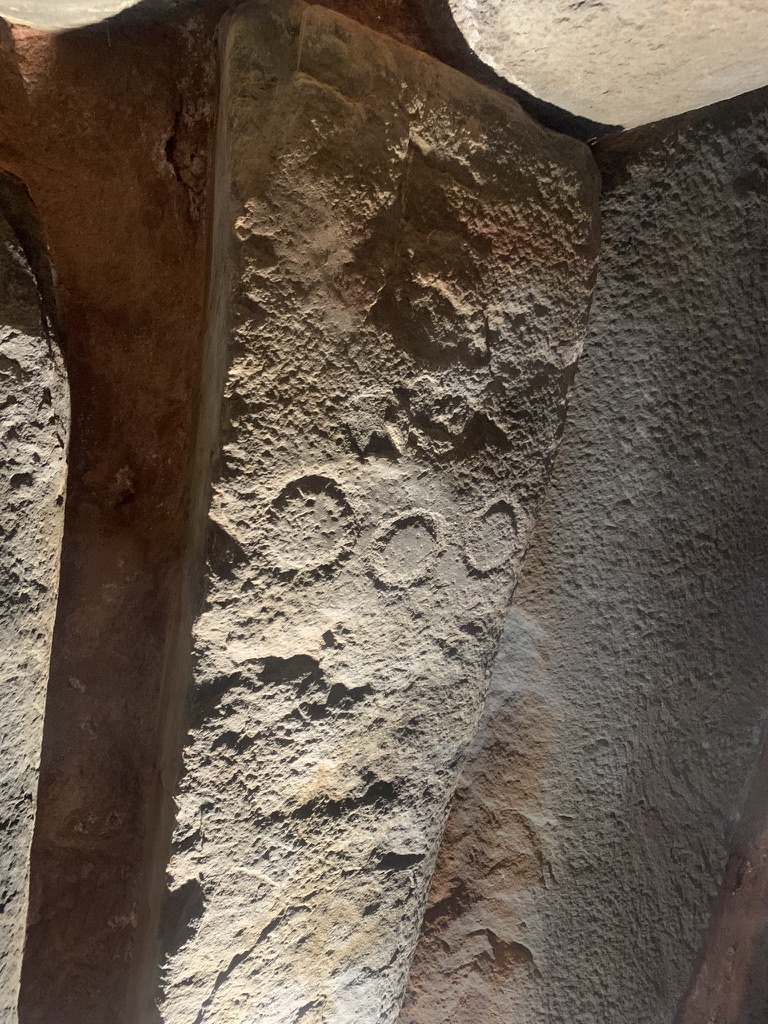
The chamber. Of course, at solstice time, the sunlight is perfectly lined up.
Stone carvings from approximately 2500 BCE.
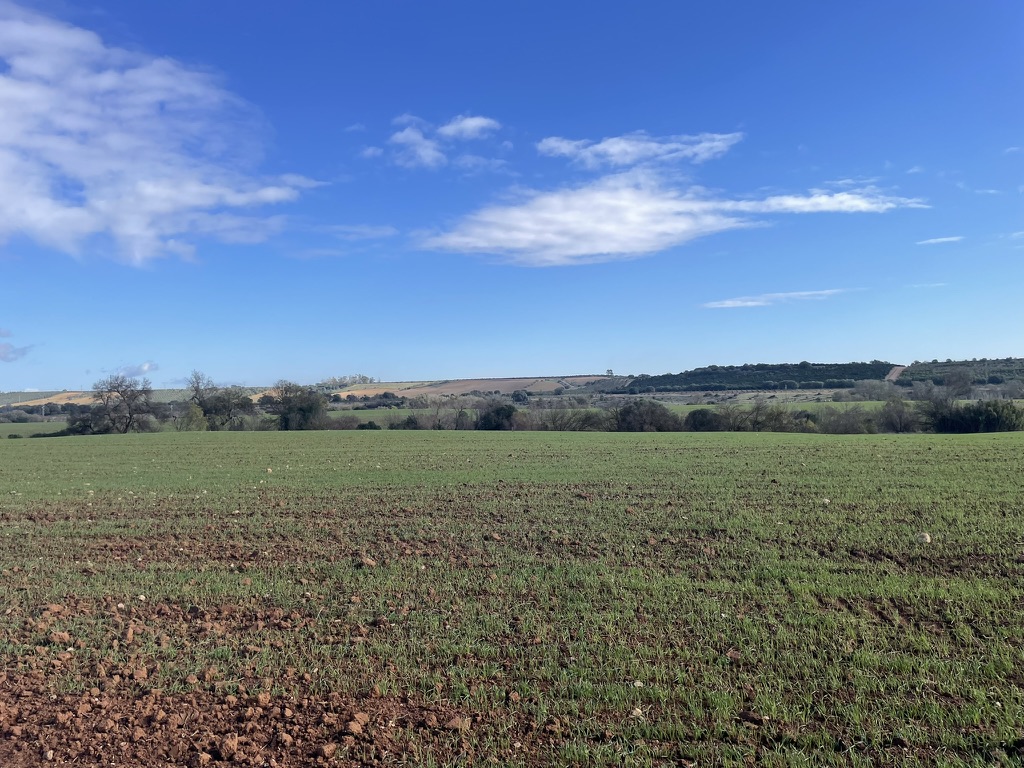
Farmland adjacent to the site: it’s very isolated.
Not unlike the things we saw at New Grange in Ireland.
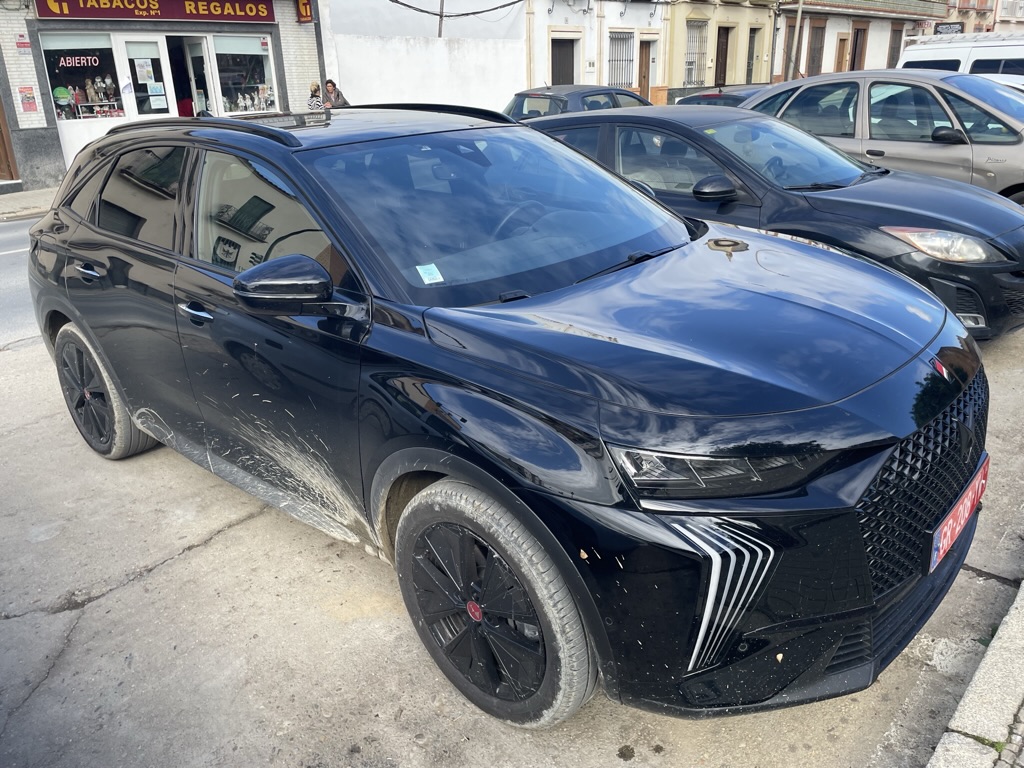
Our car, a DS-7, after the off-road trip through the farmland. Much sportier than our Citroen/

 After our tour, we continued down the dirt road and stumbled upon the not-quite-so-ancient city of Niebla, a charming ciudad with a largely intact city wall dating from 700 CE. We had a picnic lunch outside the gates and then strolled the empty streets — the absence of people due to either the siesta or a neutron bomb — enjoying the church with the Mudéjar architecture and the beautiful tile work on the walls of the homes. I think that, if a town with this much history were in the States, it would have tour buses arriving hourly but here, people are like, oh it’s just another walled city with a still-functioning Roman bridge… whatever! This whole part of the country is lousy with Neolithic sites and Roman ruins, so I guess they’re a little spoiled. 

Our picnic at Niebela
Denise and Coco (with improvised leash) outside one of the old gates to Niebela.
This was a church that was later handed down to the local Jewish community to use as a synagogue. Hand-me-down houses of worship.
The newer church. I thought Denise took close up pictures and she thought that I did. Amateurs.
Tile work on the front of a house.
Peacock tile.
This window grate is almost mid-century modern. Maybe mid-15th century.
Keeping it Real.
More cool window treatments
Interior of the old wall with exercise equipment to keep the soldiers in shape.
Iron or Bronze Age exercise equipment that is still in great shape!
Even these thick walls couldn’t stop Seville from conquering Niebela back in the 1300s.
The old Roman bridge is still a major part of the highway system here.

The next day, a sunny Sunday, we took up Olaf and Lorraine’s invitation to join them for lunch in a riverside restaurant about 30 minutes upstream from Altura. They are both chatty and engaging types with a lifetime of globetrotting behind them — no kids, so no ties — and they were equally interested in the stories of our journeys, making for easy conversation. Over the four-hour repast, we shared two large carafes of a local white wine, two barbecued chickens in the Portuguese style, a tomato and onion salad, and all the frites we could eat, capped off with coffees. The view was beautiful and the friendly owners slipped some meat from the grill to Coco, who was enjoying the sunshine and attention. The entire bill was a total of 40 euros — just 10 euros each for a delicious and fresh meal. We finally felt like natives, frittering away the whole afternoon at lunch, something we hadn’t done since arriving in Altura. 

Coco joined us at the table for leftovers.
You just pull your yacht up to the ramp and have lunch.
Olaf in helmet, Denise, Lorraine and Steve.
The barbecue set up.

We said goodbye to Olaf and Lorraine as they headed back on their motorcycle to their house in Spain and we took a leisurely drive through the countryside to our place just over the border. The get-together helped, I think, to snap us out of our melancholy and remember that we are here to live our own lives and make memories. We miss our family and friends at home but we’re still having a great time exploring and meeting interesting people helps keep the adventure alive. 

Coco is very happy that Denise is back.
Some old farm implements at the cottage.
Chameleons performing circus tricks ahead.
Chameleon tracks, the closest we’ve come to a sighting.

In the next couple of weeks, we’ll leave here for Córdoba, Spain, where we’ll spend Christmas and New Year’s and from there we’ll turn north, hugging the Mediterranean for a while. We’re planning on spending the summer in Belgium and the Netherlands. If you’ve got European travel plans for next year, let us know and we’ll try to meet up with you. 

Endless Summer

Greetings from Altura, a small town in the Algarve, the southernmost region of Portugal, renowned for its sandy beaches and year-round sunny weather, which is why we chose to come here in November. In summer, it’s packed with tourists from all over Europe and the UK but right now, it’s virtually empty. We’re staying about a 15-minute walk to the beach, known as the Praia de Altura, which goes for miles in either direction. To the east, you can walk to the Guadiana River that divides Portugal and Spain in the southern part of the country. To the west, the beaches stretch for miles to Faro, the biggest town in the Algarve. Our Airbnb is run by the charming Pilar, whose hospitality immediately made us feel like a part of her family. Her place is a cluster of darling whitewashed bungalows that was once a large farmstead and is situated on a hill, providing a beautiful view of the sparkling sea.  She has a few tenants who come here every year to escape the rain and cold of the northern climes and there’s a very friendly vibe between all the residents, but we pretty much have the place to ourselves.  But before we get into this place, here’s a few leftover pictures from Porto.

The people of Porto love their sardines.
Serralves Museum grounds.
With our new friend Meredith, a Chicagoan currently living in Porto
This was a city wide gathering of all the university students of Porto celebrating something – we were not sure. But in typical dress, always in all black suits and wool capes, they traipsed through the streets and plazas in clusters defined by their filed of study. What a great tradition!

On the drive down from Porto, we stopped off in the seaside town of Nazare, formerly just a remote fishing village but now a worldwide surfing mecca, boasting some of the highest waves in the world. That particular day happened to be the official start of the big wave season, and with a hurricane storming in off the Atlantic and high wave warnings in effect, the tiny town was inundated with tourists hoping to get a glimpse of the surfers riding the giant swells. After a few circuits through the narrow, winding street of the old town (complete with a bullring at the top), I gave up on parking and just dropped Denise and Coco near a trail to the lighthouse while I improvised a legal spot a half-mile away.  On her return, Denise told me about the gale-force winds knocking her and Coco around, thus making it impossible to reach the lighthouse where the best viewing takes place. But it was no matter, as the huge winds made it unsafe for even the most daring riders to try to catch a wave. Still, people packed the trail down to the lighthouse just to get a feel for what it might be like to actually see a 100-foot wave barrelling down the coastline.  For a safer viewing experience check out the documentary 100 Foot Wave on HBO.com.

Denise on the trail to the famous surfing site at Nazare. The wind was blowing Coco around and creating 50 foot swells in her hair.
Here’s the lighthouse where people crowd to see the big wave action. Not quite 100 feet on this day but still pretty dramatic.
The ancient bullring in Nazaré

After a night near the charming town of Melides, we explored the nearby beach area that we fell in love with when we stayed in 2019. We had read that, shortly after we left, members of the British Royal Family had moved in to develop the area so we expected the previously sedate area to be overrun by luxury hotels and Michelin-starred restaurants but, much to our delight, the place was even shabbier in some ways than when we left it. There was a small cluster of luxury homes being built but the beachside restaurants we dined in both looked permanently shuttered. We explored the gorgeous beach and revisited the memory of when Denise almost drowned while I read my book under the sun umbrella, oblivious to the dramatic rescue by the handsome lifeguards. After a nice drive through the beautiful Alentejo district, we arrived at Monte da Lagoa, Altura, our home for the next six weeks. 

A.F.C. in Vila Nova de Santo André. Starting to see the Moorish design influence
Coco resting after a long drive. (Gratuitous poodle shot to keep the poodle people happy)
Marble books in town square of Melides
Beach snack shack near Melides. Believe it or not, we had one of the best meals of our 2019 trip here.
Typical gated entrance to a ranch in the Alentejo region, near Melides.

When we told Pilar that we were expecting our oldest son Reilly to join us for a week, she immediately upgraded us to a larger cottage for no extra charge. We met our neighbor Astrid, a friendly German digital nomad, and her two little dogs, who made fast friends with Coco. Our cottage is a sunny, cozy place that feels like a beach house and, for the first time in a while, has a comfortable bed — at least by my firmness standards. The best part is the sunny patio where you can see the ocean in the near distance. We visited the nearby Aldi supermarket — it’s a German company, and it’s right next door to the French-run Intermarche grocery and the Portuguese-owned Pingo Doce market, all catering to the tourists — to stock up on provisions. We found the usual inexpensive foodstuffs, along with an excellent German dark chocolate by Moser-Roth (one euro, 59 per bar) and nice Alentejo red wine by Reguengos (two euros, 59).

Breakfast on the patio. That’s yogurt and granola, fyi.

The next morning, we headed to the beach, discovering that the water is accessible only by an elaborate network of raised wooden boardwalks opened a couple of years ago, stretching for miles across the dunes, all designed to protect the habitat of the indigenous common chameleon. It’s a really cool thing to have and it makes getting to the beach a breeze. We haven’t seen any chameleons yet but hey, that’s their gig, right? Coco loves the beach, and it’s always great to see her come alive in the sand, prancing and zooming through the surf — although she refuses to go in the ocean above her paws, in open defiance of her breed traits.

The Atlantic Ocean with Africa in the background. You can’t see it, I checked.
The boardwalk stretches out to the horizon
Mysterious building on the beach. Aliens, is my guess.
Another mysterious building, this one in the town. The only usable space is a small room in the center but it’s all papered up.
Very nice sunsets around here.
Apparently, Aldi has a deal with Trader Joes so there are a few random items like this one peppered throughout the store.

After a couple of days of exploring the area, including a nice nature hike from the town of Azinhal, we headed to Faro airport to pick up Reilly. He’d been traveling for many hours, including an eight-hour layover at Amsterdam’s Schiphol Airport, and he was hungry for some authentic Portuguese food. Unfortunately, all the well-reviewed places we wanted to go to were either closed — it was a Monday night — or couldn’t accommodate the dog, and so we ended up enjoying a nice Italian meal on an osteria patio instead.

The next day, we took a long walk on the beach and then headed to the town of Castro Marim to visit the old castle and fort. The lady at the ticket counter strongly encouraged us not to miss the torture museum and I’m still having nightmares about it — I’ve never seen such a visceral depiction of the cruelties that the Spanish Inquisition inflicted upon the Jews, whom the crown feared were corrupting their precious Catholic Church. In case the exhibits weren’t enough to turn your stomach, the accompanying descriptions would certainly put any reasonable person off their feed. And I thought the nuns at St. John’s Elementary School were bad!

Denise and Coco on the trail out of Azinhil
ON the hike, you can see the Guadiana River, the International Bridge, and Spain in the near distance.
Number One Son on the beach!
Coco is thrilled to have her old playmate visit.
These fishing shacks sit between the boardwalk and the beach. They are populated by old fishermen and lots and lots of cats.
Inside the old fort at Castro Marim is the Medieval Torture Museum.
Not sure what this stylish headdress accomplished but it doesn’t look comfy
No wonder people were trying to find a New World.: The Spanish — and really all the Europeans — were terrible people.
The old Spanish Spider…
Ye Olde Forte

The next day, Reilly and I let Denise stay in bed and recover from a head cold while we left to explore Faro, the capital of the Algarve. It’s not much to see, I have to admit, and, outside of the old town, I wouldn’t recommend it — it’s pretty trafficky and run-down. The highlight for me was when we were walking back to the car and came across an obviously inebriated guy on the waterfront, playing the bombastic Celtic death metal anthem ”Valhalla Calling” at ear-splitting volume on his boombox. The next day, with Denise feeling a little better, we all traveled to nearby Tavira — unlike Faro, it has retained much of its charm and we found it much prettier and more hospitable. On Thursday, with Denise fully recovered, we did an incredible Reilly-led hike on the Seven Hanging Valleys trail. I don’t think we made it to all seven valleys — they’re more like rock formations but from the sea — but we enjoyed what we saw. Highly recommended if you’re in the area.

This is what a lot of Faro looks like: drab.
But they do have one of these, although I think you’re pretty far from any ski areas here.
The Old Town still retains some charm
Faro has a series of natural canals between the city and the beaches. Lots of stand up paddling and birdwatching opportunities
Coco keeps an eye out for intruders to our compound.
Ceramics are everywhere in Portugal.
On the Roman Bridge in Tavira. Photo by Reilly, who knows how to use the iPhone camera
That nitrate from Chile is the shit!
Reilly at a local rural Church.
On the trail at the Seven Hidden Valleys.
There’s a lot of this kinda stuff happening on the trail. There are kayak and motorboat tours of the various caves.
HIkers
There’s a well-placed cafe in the town of Benagil, overlooking a beautiful beach.
Back at our beach, Reilly (sporting a custom hoodie with Finn’s design) carries Coco like he often did when they were roomies.
It’s always good to come across my people, this center in Loulé.
Here’s one of Astrid’s dogs. They love to come over and steal Coco’s food.

All of this local tourism was just a lead-up to our big adventure in Seville, Spain, about 90 minutes east of our town in Portugal. Reilly had come to Europe determined to attend a major professional soccer game and we spent a couple of days trying to find the proper match to attend. We looked into some local matches on the Algarve and then at the big Sporting v. Benfica match up in Lisboa but decided that the six-hour round-trip drive was too much. Instead, we decided to attend the Seville FC match against their crosstown rivals Real Betis, not really knowing what we were getting in the bargain. First things first, however, as we had to get a tapas lunch. No one can find great restaurants like Reilly and we had a delicious lunch at La Bartola, sitting on stools on the sidewalk while the waiter brought us one delicious plate after another. It’s a great way to eat — each plate giving you a taste before you move on — and, at only two or three euros per serving, a great value.

The enchanting streets of Seville
Tapas, Tapas, Tapas.

Our next stop was the Cathedral of Seville, certainly one of the largest and most ornate churches I’ve ever seen. I have to admit, however, I still had a sour taste in my mouth from the wretched crimes of the Church depicted in that torture museum, and I had a hard time enjoying the ostentatious wealth on display in the gilded altars and statuary. On the plus side, they did have the tomb of Christopher Columbus, my old nemesis from Genoa, and it was good to see that he was still dead. I got to make my “Genoa-cide” joke to myself and that made me happy. We made the ill-advised decision to climb the 35 ramps to the top of the bell tower, or Giralda, a total of 343 feet above the Cathedral. The view is impressive but, by the time we made it back down to earth, my knees were barking. Reilly wanted to get to the stadium early to see the festivities before the match, so we left Denise to wander the charming old streets of the Barrio Santa Cruz on her own and started following the crowds over to the game.

You don’t really notice the bells until the half-hour comes.
The view from the bell tower
The modest main altar of the Cathedral
High ceilings, closer to G-d.
The Cathedral is thick with the art. This one is by Goya depicting Saints Justa and Rufina, third century Romans who had a habit of smashing pottery.
The scale of the cathedral is enormous but this tiny chapel off the main sacristy was really very lovely.
The Tomb of Christopher Columbus, aka Cristobal Colon. Who know how many other aliases he had.

As we got closer to the stadium, we passed bar after bar filled with Seville FC fans pre-gaming — alcohol is not served in the stadium — and decided we’d better join them. As we enjoyed our drinks outside the bar, we started to hear a commotion approaching. Suddenly, there were helicopters overhead and mounted police everywhere on the street, pushing the sidewalk drinkers back with batons. All of this was because a few hundred fans of the rival Betis team were doing the traditional pre-game parade from their stadium a mile away to the Seville FC stadium. As they passed, the green-and-white-clad Betis fans in the street traded jeers and projectiles with the red-adorned Seville FC fans on the sidewalks. (The scene was very chaotic and violent, reminding me of the time I got caught up in a riot while waiting to get into a concert by the Clash in Times Square — here I ducked into a nearby subway entrance to get away from the cops and their horses and watched through the glass until the worst of the craziness passed.) Reilly, of course, was thrilled to be in the middle of it all, and he made a nice video of the excitement. What really struck me was the sheer hatred that the fans from opposite sides of the aisle had for each other. The Seville and Real Betis rivalry used to be more along class lines, but now it was apparently just passed down through families. It occurred to me that these people were neighbors, co-workers, maybe even married couples but, twice a year — the parade was repeated with the teams and stadiums switched later in each season — they summoned up more vitriol than I’ve seen even between Red Sox and Yankees fans

The Real Betis parade past the Seville FC fans.
Reilly’s footage. At the end of the clip, you can see me in the light red shirt, cowering in the subway entrance.
Reilly in front of the Estadio

Sometime after all this, chaos, there was a game, and the abuse between the rival fans continued, this time with the visitors protected by plexiglass and hordes of police in their open-air prison. Our seats were on the upper level, with almost no legroom and yet cost more than I think I’ve ever paid for a sporting event. Still, it was fun, and I was glad that Reilly got his chance to see a La Liga game. By chance, we were seated next to an English soccer fan who had traveled from London for the match — his 197th of the year by his count, mostly in the UK, where he follows West Bromwich. He was actually rooting for Real Betis in this game but was smart enough not to show that in a sea of red-clad fans. The game ended in a 1-1 draw — of course — with both goals coming late in the game. Afterwards, Reilly and I met up with Denise for another round of tapas and some beverages before heading back to the hotel. I should mention at this point that Coco was back in Altura, staying with Astrid, who had kindly offered to dog-sit, and her puppies. As much as we missed Coco, we were able to fully enjoy Seville since I’m pretty sure they don’t allow dogs in the cathedral or any restaurants.

Like all teams, Seville FC has their “Ultras” who create elaborate signs and spend the whole game chanting and singing.
This is the visiting section where the Betis fans are corralled. They are protected by plexiglass and more cops than at a donut shop.
42,714 of the faithful await the start of the match
After the game, with souvenir.

The next day, we were up early for our tour of the Real Alcázar de Seville, originally a Moorish palace but eventually taken over by the Christians in the 1300s. It’s a fascinating building, with a mix of Islamic and Western decor called Mudéjar.  The Royal Family still stays there on occasion, and even though Seville is one of the hottest places on the Iberian Peninsula, they’d be wise to come in the summer, due to the clever design which keeps the palace cool even on the hottest days. As striking as the interior is, the surrounding gardens are just as impressive. You have to pay a fee to enter the complex — and wait in a long line despite your timed ticket — but the gardens are free for residents of the city. After a walk around Maria Luisa Park, Denise headed back to the Airbnb for a Zoom meeting and Reilly and I spent the afternoon walking around Seville, eventually ending up with a self-guided tour of the Maestranza Bullring. For ten euros, you get to wander around the museum, the ring itself, and the brick stands. I enjoyed seeing the chapel that the matadors pray in before they meet their bull. I think that scenario would make me religious too. It was the bullfighting offseason so there was nothing happening but it would have been interesting to see if the bulls were treated any better than the Real Betis fans.

Inside the Alcazar and next to the original wall. It’s been added on to for centuries.
The interior garden and pool.
15th century tile and 2oth century compressor.
Looking up at the ceiling
Underground pools
Outside in the gardens
Lots of peacocks in Portugal.

On our last day there, we spent some time walking around the beguiling neighborhoods of Seville. James Michener, who spent a lot of time here and wrote a novel based in the city, said that “Seville doesn’t have ambiance, Seville is ambiance,” and I’d have to agree: even though there are many, many tourists here, the city’s personality is never dimmed by the crowds, which I sometimes felt happened in Porto. It’s truly a grand city of Europe, with wide boulevards, sprawling parks, and incredible architecture. It was our first visit to the city and we can’t wait to go back. I’m sure we only scratched the surface in our two days there.

At Plaza de España
Seville boasts great fall weather, although I’m sure it’s unbearably hot in the summer.
We found the Betis neighborhood in the Triana district, where the team has their roots.
The Spanish and their galleons…
The bull ring at the golden hour.
Very few people know that John Lennon was a toreador when he wasn’t playing guitar with The Beatles.
Some matador costumes.
I could do this job.
The oh-so comfortable seating area in the bullring.
The royal box.
Entrada to the bull ring.
We passed by many Christmas-themed shops in Seville.
The Parasol, a large wooden structure that houses a mall and a museum.
It’s hard to tell if it’s ugly or beautiful but it is imposing. Check out this link with video https://setasdesevilla.com/
Seville street scene
Wine ad
I have to give them credit for this obvious, but still clever, name.
All Tapas’ed out and ready to go back to Portugal

Back in Altura, we laid low until it was time to take Reilly to the airport. He had a grueling 24-hour trip back to Portland ahead of him, including an overnight at Schiphol, and we didn’t want to say goodbye. It seemed like he had just arrived. I think he was ready to go back to his real life and get away from his crazy parents but we would have loved for him to stay another week.  Still, we were glad that he’d be back with his brother, who can use the moral support. Speaking of Finn, he’s doing great and even has a new T-shirt for sale that he designed. It makes a great holiday gift for the hipster in your life.

Relaxing in Altura
One last walk on the beach
Street scene in Faro, en route to the airport.

We said our tearful goodbye at the Faro airport, with Reilly saving his last hug for Coco. 

Back to just the two of us.

Reunited and It Feels So Good…

Denise rejoins the pack! Pictured here with Coco in front of the giant Porto sign in front of the town hall. Almost every town has one of these kind of signs nowadays, designed to promote tourism via social media. I had managed to evade the thing but Denise loves a big sign.

Denise is back! She arrived last week, much to the delight of Coco and me: the pack is back together. It was an arduous 30-hour journey for her, from Portland, Oregon to Porto, Portugal, with stops in Los Angeles, Paris, and Madrid before finally touching down here late Tuesday night. With an itinerary like that, it would take her a few days to get reacquainted with Portuguese time but she was up on Wednesday morning, ready to start exploring Porto, despite the jetlag. 

Before moving on to present day highlights, we should say that Finn is back in Portland and doing great: he’s moved into our basement apartment and got his old job back at Settlemiers, working on the design team, doing collaborations with Nike. Denise wants to name check some of the many family and friends who helped her and Finn in small and big ways during her time in the States, and are continuing to help in so many ways! Big cheers and thanks to Nora and Ken Ross, Reilly, Sarah Whistler, Marianne Mullen and Chris Cirillo, Connie Hendrix and Todd Freeman, Sean and Izumi Mullen, Joe and Becca Mullen, Bridget Stolee, Ann and Sean Mullen, Karen and John from next door, Eileen and Richard Stolee, Holly Haber, Greg Perrin and Gail Butensky, Pat and Tim, Pat Slattery, Therese Randall, Vicki and Rosie Amorose, Blake Swensen, Katie Boucher, Chuck and Karen Michener, Maureen and Louie Melchor, Mark and Elaine Israel, and Ginni Harriman. All stand and take a bow. Now it’s back to Porto!

Here’s the video of the reunion between dog and Dee. I know, I know… I should have shot this in landscape mode, but look at those rich browns.

Naturally, the first place I had to show her was Coco’s dog park, where she had learned some new tricks. With Denise gone for seven weeks, I took over as Coco’s alpha human by default, much to Dee’s chagrin, so she’s working on regaining her “top-dog” status. After that, it was off to the Ribeira, or riverfront, where we had fallen in love with Porto in 2019, pausing for some glamor shots on the Dom Luîs I Bridge. The next few days, we did more of the same, exploring parts of the city that I had uncovered in her absence. It was fun seeing the places through Denise’s eyes and she pointed out a lot of things that I had missed

Another made-for-tourists shot: one of the traditional boats used to haul Port wine from the facilities up the Douro River down to Gaia for aging.
Golden hour on the Dom Luis I Bridge
Sunlight can even sometimes make me look good…
The other side of the bridge, looking towards Gaia.
More of that disused housing stock on the Ribeira.

Unfortunately, we then lost a few days to a bout of Covid that Denise caught either in Portland or in her travels. Luckily, thanks to my nursing training, I managed to avoid contagion. In addition, her arrival coincided with the rainy season here and so our wanderings are generally timed to avoid the worst of the downpours. We are from the Pacific Northwest so, naturally, we have good rain gear — the Tripeiros seem to prefer the umbrella as the first line of defense against the moisture — but it’s still a lot less fun to walk around when it’s raining. Sometimes, we get lucky and make it home before the downpours, and other times we arrive drenched. What can you do? I should mention that Coco hates the rain and will often flat out refuse to walk when it’s more than drizzling. We’ve gotten our steps in when possible but we’ve also received numerous warnings from the Portugal Emergency Notification Service via text about “coastal events” and “heavy rain, localized flooding, and high winds.” My advice to tourists planning on visiting northern Portugal on the Atlantic Ocean would be to get out by mid-October at the latest. 

More Student Demonstration Time. These hardy protestors braved the rain.
We spent a lot of time under the Trindade Station overhang, waiting out the rain so we could throw the ball for Coco.
For those of you watching my National Geographic Network show, In Search of the Ford Sign, Denise helped me find this vantage point, the best shot so far. The smokestack to the left actually belongs to the cemetery, not sure why they would have one of those…
Here’s a blurry shot of those caped students from U of Porto, taken from the roof of the Trindade station. They’re up to no good, I’m sure of it.

We are leaving here next week, heading south to the drier, warmer, and, hopefully, sunnier Algarve district of Portugal, staying in Altura, a small, rural town hard by the Atlantic. After seven weeks in the big city, I’m ready for some small town energy. Today, I purposefully stepped in front of a speeding BMW — always the German cars —  that was barreling down the small alley near our house at a dangerous speed. This same guy had nearly hit Coco the other day as I struggled to get her out of the way so I was ready for him this time. After he stopped, I gave him some helpful tips on his driving style and he let me know what he thought of my mother. I think it’s time I got to a remote area with fewer cars and fewer people. The best part of our next stop is that our oldest son Reilly is going to join us for a week or so. He found a cheap airfare from Portland and is looking forward to spending a week with us on the beach, his happy place. We are getting another car from the French leasing scheme before we head down that way so we’ll be able to explore the Algarve and parts of Andalucia in Spain. We were planning a trip with Reilly to Morocco but their recent earthquake put an end to that adventure. 

Here’s Reilly, back in Portland with Denise, celebrating his 25th birthday with friends and family.
Here’s the gang in Portland, relaxing after cake.
And Finn, who really, really liked the cake. And no, he probably can’t name three Rolling Stones songs.

I feel like I’ve covered Porto pretty well in previous editions so, for the rest of the story, we’ll let the photos and the captions (mis)lead you.

Our balcony-patio at night.
On the Rua de Flores. I read the sign but can’t remember what the original use of the building was.
Another example of Porto’s fine architecture and tile work.
Non-traditional tile art by Berriblue, whose work appears in various sites around the Cedofeita neighborhood
Cool mural in the Cedofeita district.
Materia Prima: a very hip book, ‘zine, and record shop on Rua de Miguel Bombarda, the arts street.
Remember this hotel!
The British Council. Here to keep an eye on the Port wine.
Built in 1893 when wrought iron was, apparently, going cheaply.
Denise was bored being sick with the COVID and, using AI, made this portrait of Coco.
Okay, NOW it’s chestnut season!
Half-dozen chestnuts, roasted on an open fire. Not surprisingly, they taste like nuts. Meaty, smoked nuts. They’re worth trying but I wouldn’t wait in line for them again.
We discovered where all the spray paint for the murals comes from in a shop near Trindade.
Denise makes friends wherever she goes…
Salazar-era apartments.
Porto in a nutshell: cool old building, but falling apart.
For sale. Bring your contractor!
Finally made it inside the Lisbon School of Design, featured in a prior blog post. Sadly, they don’t sell T-shirts but they do have a cool lobby view.
Cool sign outside vintage theater.
Sadly, we missed Plim.
The cinema.
A different kind of cinema…
Repeating my joke from our 2019 visit to these tile works in the Såo Bento train station: The three seats of power in 17th century Portugal, L to R- the King, the Archbishop, and the general manager of the regional Peugeot dealerships.
These Såo Bento tile works were restored recently restored to their original blue.
Part of our “Cool Sign” collection, coming soon to a bookstore near you (after the A.F.C.coffee table book).
Coco and I had walked past this store many times but Denise dragged us inside. It’s a Leica dealership but also a museum of their old cameras and lenses, as well as a photo gallery. Truly amazing. Here’s a link
Zooming in: eat your heart out, Wes Anderson.
Breakfast on the patio with coffee, juice, granola with yogurt and my pills.
Poster for a housing rights demonstration.
Finally found a place to get my player-piano repaired!
Love the sign with silhouetted letters above Rua do Almada. And I didn’t need spell check to get “silhouetted” right on the first guess!
The old trolley tracks run through this store on Almada.
Portuguese Folk and murder ballads.
Orderly barber shop.
Deco-brutalist balconies on Rua da Alegria
Watching the news…
Fixing cars since before they were even invented.
Taking turns in the guard hut outside the Museum of Portuguese Military History.
I would have probably been assigned elsewhere.
Ancient water fountains that were uncovered during the construction of the subway station.
Two euros for two minutes to the States.
What if I do both?
Unfortunately, it looks like that “K” is an imposter.
Yikes.
2020 was the International Year of the Nurse? Thanks, that was a great year to pick.
I took Denise out of Parque do Covelo to see the water feature.
Gotta get a Donk Cut!
Much like the Spanish “Menu del Dia,” the Portuguese restaurants often have a four-course lunch for a good price. Five courses here for seven euros.
Make sure you zoom in on the window treatments of the center building…
Great wine from Setabul district.
Surfing school at Matosinhos Beach.
Coco loves the beach almost as much as Reilly does.
The last time I was here, the architecturally significant cruise terminal was shrouded in fog so here you go!
The fishing net-public art installation in Matosinhos, a large fishing community just north of Porto. The net sways in the breeze. Car included for scale.
Cannon at the old fort.
Liberals throwing batteries at the Absolutists. Can’t we all just get along?
Denise in the parapet of the fort.
Once I got my player piano fixed, I had to get my radio components sorted.
If we’d found this earlier, it might have been a contender for the name of our blog.

Okay, that’s enough of that! We’ll report in from the Algarve soon!
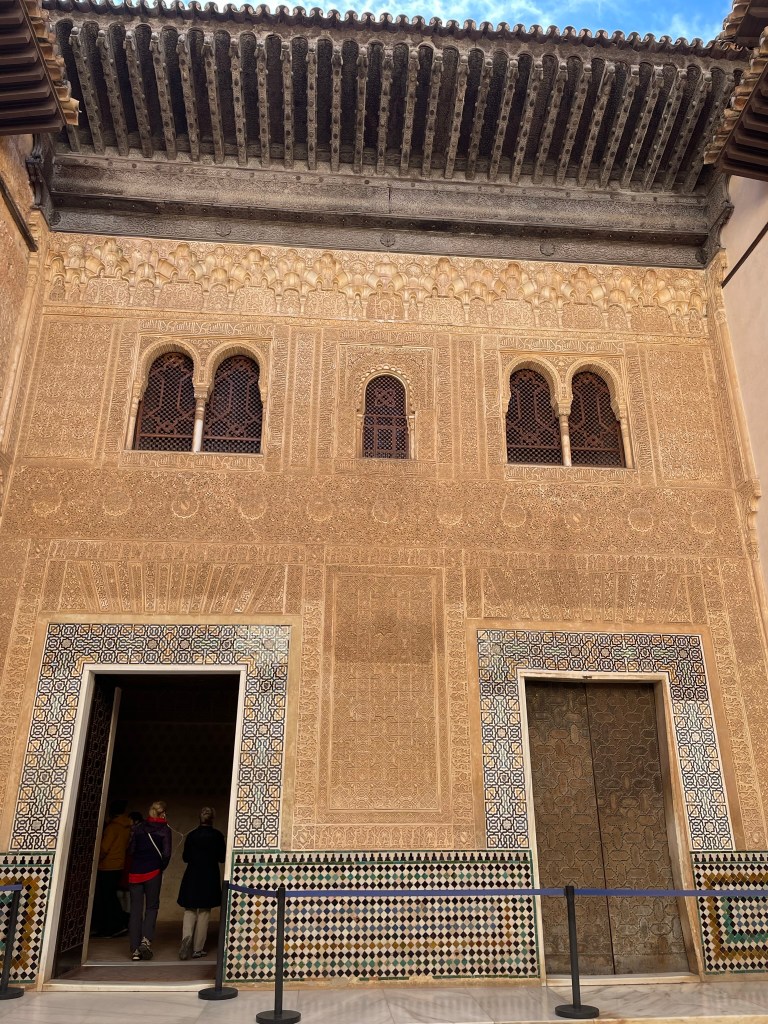
Porto Nation-Nação Porto

I’m still waiting for Denise to return but trying to stay busy with frequent walks around the charming, if grimy, city of Porto. The names have been changed to protect the innocent.

This is the Ribeira District, the touristy riverfront on the Douro, west of the Dom Luis I bridge.
East of the bridge, however, the neighborhood gets more dicey, and many of these homes are unoccupied.
Best I can tell, this graffiti refers to the 2012 decision to raze a riverside public housing development that had become an “urban nightmare,” according to city officials. Obviously, this artist disagrees.
I could see some urban campsites down there. I’m a little surprised that a developer hasn’t built riverside condos here…

I got “Franced” again today. It’s been a while and I had become complacent, even after being “Franced” in Spain once or twice. I’m referring to our nickname for the phenomenon of waking up to what you assume will be a normal day, only to find out that everything is closed due to some national or religious holiday that we knew nothing about. For example, we both grew up in the Catholic Church, but neither of us had paid much attention to Ascension Day since grade school, when the nuns made us go to church to honor the Virgin Mary’s one-way trip to heaven — sorry, Sister Mary Joseph!
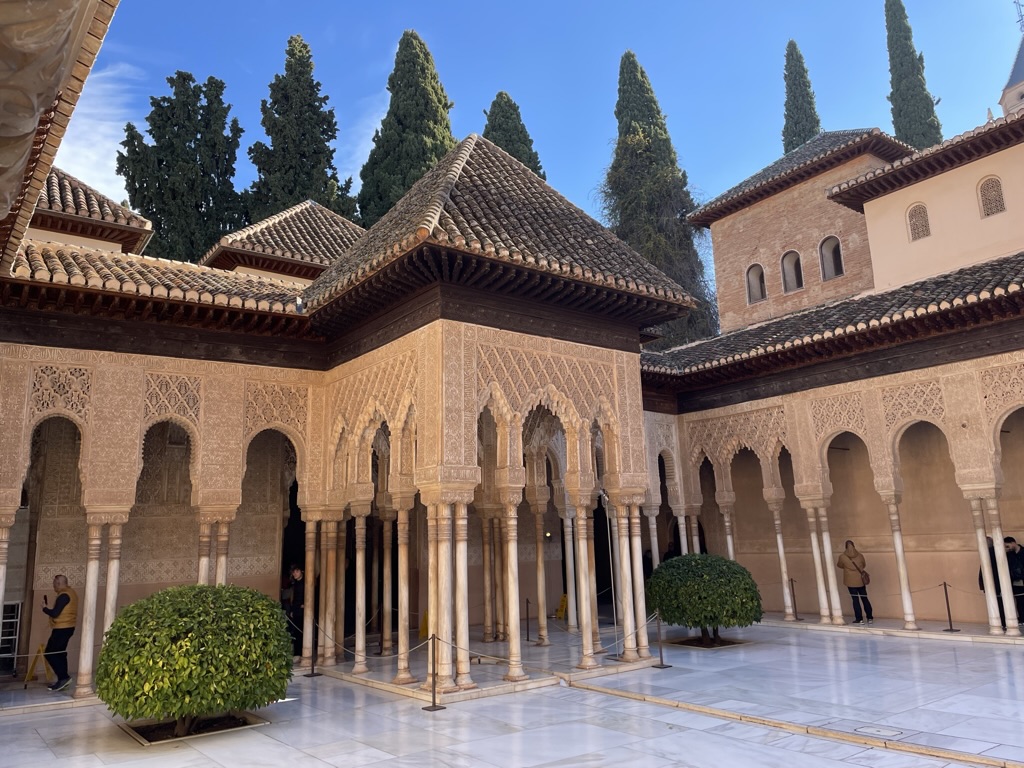
Hey! I went to see a rock n roll band! Teenage Fanclub from Scotland played at the Hard Club and Phil, Marta, and I were there to judge from the crowd
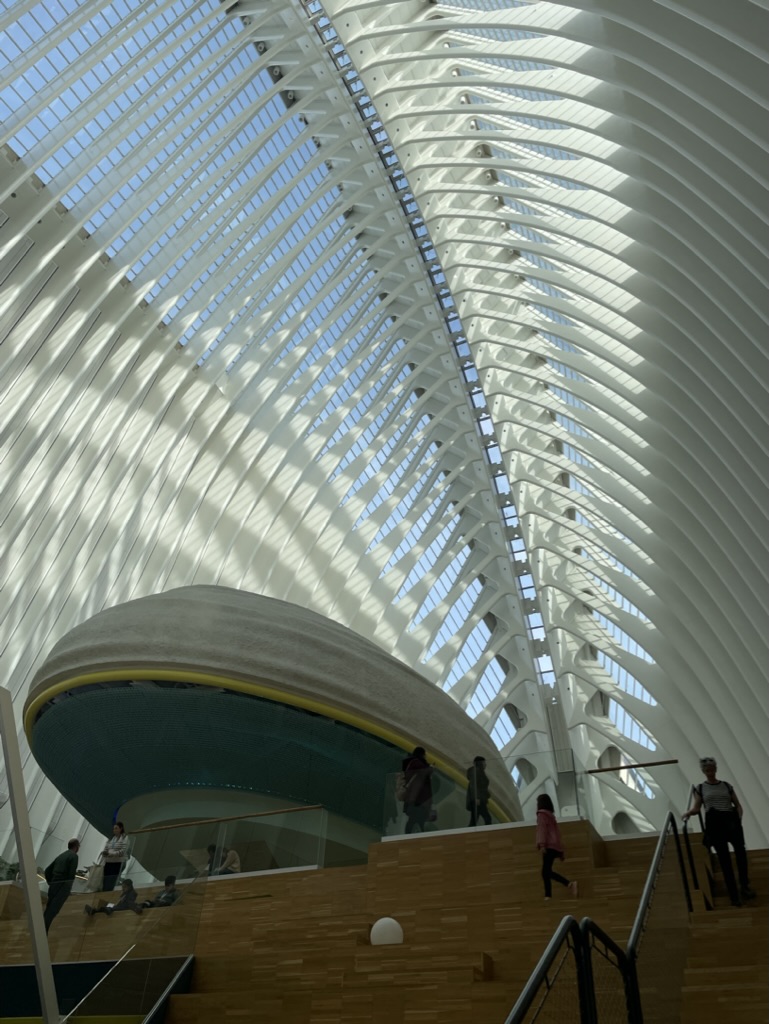
Today, it is “Republic Day” here in Portugal — or “the Implantation of the Republic,” which sounds a bit medical, frankly — celebrating the day in 1910 when the Portuguese threw off the chains of monarchy in a bloodless coup and became a fully constitutional republic. My first hint something was different was when Coco and I stepped outside for our morning walk and the sidewalks were virtually empty. Maybe the tourists have left? I wondered. But no, they were still there, stopping in the middle of the sidewalk to consult their phones as usual, oblivious to the pedestrian traffic gumming up behind them. No, it was the Portuguese themselves who were missing, sleeping in and pondering whether or not they were better off with or without Manuel II.

Installation of headlines from history of the Expresso, the local newspaper celebrating 50 years. Which corresponds, roughly to the end of Salazar.

Unfortunately, that first Republic didn’t really take, and a military coup in 1926 eventually led to the authoritarian reign of Antonio Salazar, who ruled until he fell into a coma in 1968. Like his neighbor Francisco Franco in Spain, Salazar was a bastard who used censorship and his secret police to maintain order, imprisoning and torturing anyone who would challenge him. There’s really no way to defend Salazar, except by comparing him to the thuggish Franco: at least he wasn’t a fascist, and he had some interesting ideas on government. He kept Portugal neutral during WWII, while siding with the Allies in all matters outside of actually sending troops to fight.  I don’t think anyone here looks back on his reign favorably.

Obviously, I didn’t take this and please don’t tell anyone at Getty Images that I borrowed this.

A few days afterwards, fully recovered from our Republic Day celebrations, Coco and I set off on a long walk in the general direction of the Campahnå train station, a part of town we hadn’t yet visited. We started out at Cemiterio Prado do Repouso in the working-class Bonfim neighborhood, where we soon discovered a community of stray cats who, no doubt, find ample hunting among the tombstones and crypts. Just on the other side of the south wall, I could see in the near-distance a large art deco-style sign spelling out F-O-R-D (though with no similarity to the automobile manufacturer logo). As a collector of photos of cool signs and cool typography, I felt compelled to get closer and so we left the grounds and headed in that general direction. Unfortunately, the structure was behind a solid row of apartments on one side and encircled by the Porto Water Works on the other. I asked the guard at their gate for access but he told me it was “restricted.” I took a roundabout perimeter walk in hopes of finding a clear shot but alas, I failed. I just wanted you to know that I tried my best and that, if you’re a fan of good conspiracy theories, my guess is that this area is probably where they are keeping the alien bodies recovered from the UAPs

Waiting for Morrissey…
This poor bugger’s family built him a giant memorial, only to have it obscured by a dumpster.
I believe this is the first mausoleum in the Brutalist style that I have seen.
No one was gonna put a trash bin in front of this guy…
Points for dramatic appeal but a little overwrought for my tastes.
The elusive Ford sign (with multiple filters applied to cover up for poor picture quality). Apparently, it was an abandoned facility owned by the U.S. car manufacturer. Or so they tell you…
This was as close to the Ford sign as I could get from the other side. It’s probably the Portuguese equivalent of a Superfund site.

Once I found the underwhelming Campahnå station, a quick check of the map told me that I wasn’t too far from the Porto city soccer stadium, so I headed up the hill to see Estádio do Dragão — Stadium of the Dragon, the Porto mascot — an imposing, modern, steel and concrete stadium with a retractable roof and a seating capacity of 50,000. I passed the ticket office and popped in, mostly to give Coco a break from the sun, and asked the lady behind the counter if there were any upcoming fixtures (gotta know your futebol lingo). She said that there was indeed: Portimonense FC were in town from the Algarve to play the hometown team that very night at six p.m. Quickly checking my social calendar and finding it blank, I bought the cheapest ticket available — 17 euros — and told Coco that she’d have to eat dinner on her own that night. 

Where the bodies are hidden. And where you pay your water bill.
Not the grand train station that I was expecting. Såo Bento is much nicer. The Campahna train station has connections to lots of towns you can’t pronounce.
Thriftshop projector with Monkeys Fishing in the Stream, an overlooked stone-cold classic, loaded and ready to show.. Miss it at your peril.
Just about every place we’ve been so far has had one of these “sundial” bridges. I think it’s the 21st century equivalent of the monorail.
I came across this largely hidden statue of a topless woman spitting water while i was looking for the Ford sign. Manneken Pis energy without the crowds.
“Born for Sports.”
Porto FC dragon, the team mascot, emblazoned on. the side of the stadium. Most of the living dragons have been driven out of Portugal, I believe.

I headed back to the stadium that evening and found my place among the blue-and-white clad Porto FC supporters. My end-zone seat, despite the low price, gave me an excellent view of the field and the seat was spacious with good legroom — I’m looking at you, Fenway Park. Before the match began, everyone stood and sang the Porto FC fight song, a catchy ditty that, to my ears, bore more than a passing resemblance to the Jaca anthem that Denise and I had heard so many times during the folklore festival there. The only word in the song that I could figure out was “Porto,” so I sang that loudly when that part of the lyrics came up on the scoreboard. With play underway, Porto scored a goal at the nine-minute mark, turning the rest of the game essentially into an 80-plus-minute session of “keep the ball away from Portimonense.”  It was fun just seeing the game, however, my first European soccer experience, but the fans weren’t as crazy as I expected. For comparison, it wasn’t any nuttier than the Portland Timbers games I had experienced back home: the fans in the other end zone were singing and waving flags right from the beginning and everyone booed the referees loud and long anytime the calls went against Porto, but otherwise, it was fairly calm. The relatively subdued nature of the crowd might have something to do with the prohibition on alcohol sales at the game. The teams’ main sponsor is Super Bock beer — they seem to sponsor everything here — but the only product of theirs for sale at the stadium was their alcohol-free version. That early goal held up and Porto won 1-0, moving up to — if you’re keeping track — third place in the Primeira Liga. It was a great experience and I’m really happy I stumbled upon the opportunity. 

The parade of flags before the match.
He’s here, he’s there, he’s every fucking where, Evanilson, Evanilson….
Golo!

I’d like to write about the local cuisine but, truth be told, I haven’t had much of it. There’s a reason why, unlike Italian, French, or Spanish eateries, you don’t see many Portuguese restaurants outside of Portugal: the food is not that interesting. Sure, it’s hearty and fresh, but it’s also a simple cuisine, I’m guessing because of the generally low standard of living here, and it’s mostly fish, pork, and organ meats — tripe is big here — served with rice, potatoes, and some salad greens for decoration. Admittedly, we aren’t the best judges because we aren’t big seafood eaters but, when I asked my expat friend Meredith for restaurant recommendations, she suggested a pizza place, a burger joint and a middle Eastern restaurant, admitting that she wasn’t that fond of the local food either. I did have an appetizer of cod fritters at a local bar and they were good, but that’s as close to authentic Portuguese cooking as I’ve gotten. Desserts are big here, of course, and I’ve eaten my share of Pastel de Natas, the national pastry.  I’ve got my eye on some small, authentic Portuguese places for when Denise returns, so I’ll get back to you.

The pizza at Generoso is as good as it looks but the baker is American, not Portuguese.
Coco begging for crust.
Pastel de Nata, the national pastry. Translates to “custard tart” and many calories

The wine is generally good, with the reds from the Douro Valley reminding me of big California reds, such as the Napa Cabernets,  while the Alentejo wines are more rustic, European-seeming, and, to me, more interesting. They are versatile food wines and pair well with pastas or meat dishes. I haven’t tried any top-shelf white wines, preferring to stick with the simple boxed branca wines for the sake of my budget. I did buy a bottle of a tawny port for after dinner purposes but I’m not a big fan of those wines, I’m sorry to say, being in Porto and all. I was much more intrigued by the Portuguese national liquor, Beirão, a digestif originally produced to calm the stomach. The mixture of herbs and plants is a secret closely held by the manufacturer but I’d say it’s not dissimilar to Pimm’s, Amaro, or Chartreuse. If you’re a fan of those types of liqueurs, I’d recommend it. 

An old slogan of theirs translated to “the one from Beirao that everyone likes,” a subtle dig at Salazar, who was also from Beirao.
With a name like “Esteva,” I had to give it a try. Not as bitter and acidic as its’ namesake.
I actually remembered this brand from our 2019 trip here. An excellent bargain wine.

I’m warming a little to the Portuguese language — or at least I’m starting to see the similarities to Spanish in the written form. When it’s spoken, however, I am completely lost. In the other countries that we visited, I took pride in learning the basics and enjoyed seeing how far into a conversation I could get, but here, I go right for my Fala Inglés? I heard a street performer singing in Portuguese the other day and wondered how the language could sound so beautiful when sung and so harsh when spoken. If we move here, I’ll definitely put the work into learning as best I can but I can tell it won’t be easy.

And now, here are some random photos from my walks:

Translates to “House of Bearings.” Bearings! Get yer bearings heah…
I was tempted to buy the little green enfermeiro in the foreground to add to my “male nurse” statuette collection.
Porto doors.
I keep meaning to post a picture of the elaborately tiled Capela das Almas (Chapel of Souls) that is just around the corner from our place.
Unfortunately, a lot of Porto Centro looks like this as the city expands the Metro system.
Geographically, Porto in the foreground and “not Porto” in the distance.
Garden of Discarded Water Pumps at Aquas do Porto
Otra Maldita igreja (O.M.I.)
The labyrinth at Parque Såo. Roque. A great place to safely (and legally) ditch your kids for a couple of hours (as long as they’re not too clever).
I thought this was interesting: a neighborhood connected to the rest of the city with a lot of concrete passageways. Well, I thought it was interesting.
The panorama from atop Parque de Såo Roque. The River Douro winds its way inland.
The eucalyptus trees and the Mission-style architecture brought me back to San Francisco.
“Table of Farts?”
The Communist Party reminding you to “Vote Red No Matter Who.”
University of Porto. Gryffindor House.
I found this movie program lying on the street. Lynn was the wife of my boss in the early 1990s. She was an interesting person…
Murals are everywhere.

Back in Portland, Denise is doing great work getting our son settled and she’s planning on returning early next week. I’m excited to show her the unique parts of Porto that I’ve discovered while she was gone. Of course, the rainy season will start soon, so we’ll have to wear our raincoats, but at least the bulk of the tourists will be driven away, clearing the sidewalks for our explorations. Until then, bom dia!

Here’s a shot from Denise and the boys back in Portland. I miss them all. And that coffee grinder too.